A GM 8L90 that will not move in any gear, Park through Reverse, looks like a dead transmission from the driver's seat. Engine runs fine, selector works, nothing happens when you put it in gear. That symptom sends a lot of these units straight to the bench on a hunch, and a surprising number of them did not need to come off the truck at all. The real causes cluster into a short, well-documented list: a loss of line pressure from the pump or valve body, a module communication fault that has nothing to do with the clutches, or a valve body built with a control valve dropped into the wrong bore. Work the list in order and you will usually find it before the transmission is even on a stand.
Diagnose Communication First, Not the Transmission
Before you check a single hydraulic reading, confirm the TCM is actually on the network. A documented 2020 Chevrolet Express case had the classic no-move complaint, StabiliTrak and check-engine lights on, and no gear displayed in the cluster. A scan revealed only the ECM and ABS modules were communicating; the TCM, fuel pump control module, and body control module gave no response at all. The technician traced it to a wiring and harness-routing problem, not an internal transmission failure. If your scan tool cannot establish communication with the TCM, stop there. Chasing line pressure or pulling a valve body on a transmission that is not even hearing from its own controller wastes a day.
If the unit was recently reprogrammed with a J2534 tool, or just went through a TCM fast-learn relearn, try the simple reset before anything else: remove the key, shut the doors, and leave the vehicle alone for about 15 minutes before restarting. Per Sonnax's writeup on 8L45/8L90 no-move conditions, this resolves a surprising share of post-programming no-move complaints on its own.
Check Line Pressure in P, N, D and R
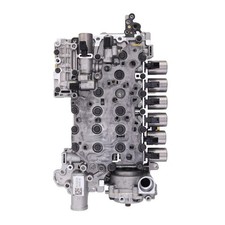
Once communication checks out, the next move is a line pressure check, not a teardown. GM's 8L90 valve body gives you pressure taps at C12345R, so you can read pump output directly rather than guessing from symptoms. Pressure that reads normal in Park but drops toward zero in Drive or Reverse points squarely at the pump or the pressure regulator valve, since Park and Neutral do not load the clutch circuits the way a commanded gear does. Pressure that is low or absent even in Park points at the pump itself, a stuck-open regulator, or a major internal leak that is dumping fluid before it ever builds.
Here is the diagnostic shortcut worth knowing before you start pulling anything apart: if the unit has any basic hydraulic function left, the TCM's failsafe or limp-mode gears on this platform are second and reverse. A transmission that can still find 2nd and Reverse under failsafe is having an electronic problem, a solenoid, a wiring fault, or a TCM issue, because the hydraulics are clearly still capable of applying clutches. A transmission with zero movement in every position, including Reverse, is telling you it has lost line pressure entirely, and that narrows your search to the pump and the valve body.
The Missing Valve Body Test Plug (Most Common After a Valve Body Swap)
If the no-movement complaint showed up right after a valve body exchange, check this first. Transmission Digest documented a GM 8L90 case where valve bodies carrying part numbers 24296270, 24296272, 24296273, 24297634 and 24297637 left the supplier missing a test plug that belongs in a specific casting hole. With that plug absent, line pressure dumps out through the open hole as fast as the pump can build it, and the vehicle will not move in any gear. The fix is straightforward once you know to look for it: bolt the correct test plug into place, or return the valve body to the point of purchase and exchange it for one that already has the plug installed. This is a supplier quality-control issue on certain reman and aftermarket valve bodies, not a wear failure, so it is worth inspecting on any 8L90 valve body before it goes in the truck, not just after a complaint.
Pump Prime Failure
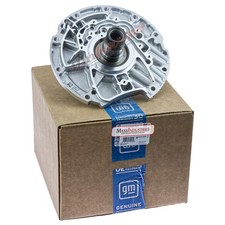
The 8L45/8L90 uses an off-axis, chain-driven pump design that GM markets as strongly self-priming, but Sonnax lists pump prime failure as a distinct no-move/no-pressure cause on its own. On a bench rebuild, a pump that never catches its prime will spin without ever building line pressure, producing the same complaint as a valve body problem. The documented bench fix: set the valve body top-down in a clean drain pan, position the manual valve in Park with the first land flush against the casting, insert a funnel into the pump suction and fill it with ATF, then rotate the pump shaft clockwise with a half-inch chuck electric drill until it primes. Confirm prime before you button the unit back up; a pump that will not take a prime on the bench will not take one in the truck either.
Pressure Regulator Valve Assembly Error
This is an assembly mistake that produces a hydraulic symptom indistinguishable from a worn-out pump until you pull the valve body apart. The pressure regulator valve includes an inner shuttle boost valve and bushing that has to be installed facing inboard. Install it facing outboard instead, and the regulator cannot build proper line pressure, which reads as low or no pressure in exactly the pattern described above. Sonnax sells kit 154740-02K to address worn regulator valves, sleeves, and bores when the casting itself has worn beyond spec rather than just being assembled wrong; CoreTransmissionParts carries the equivalent oversized pressure regulator and O-ringed shuttle valve kits (154740-29K and 154740-31K) sized for this exact repair.
Chasing a no-move or no-pressure 8L90 this week?
Get the pressure regulator and shuttle valve kit sized for the exact repair, plus the valve body, pump, and solenoid parts that actually restore line pressure.
Shop 8L90 parts →Missing Case Seal and Wrong Valve Body Type
Two more assembly-side causes show up often enough to check every time a valve body has been off the unit. First, the 1-2-7-8-R case seal goes into the case underneath the valve body gasket, and Sonnax notes that some installers leave it out entirely; GM's own tech bulletins specify different seals for the 8L45 versus the 8L90, so using the wrong one, or skipping it, creates a leak path that can starve the apply circuits. Second, confirm the valve body matches the vehicle's equipment: a stop-start valve body installed on a non-stop-start 8L90 creates a leak at the rear of the casting, where the stop-start accumulator would normally seat on a stop-start-equipped unit. Neither of these is a wear item. Both are things a tech installed wrong, and both are quick to verify with the pan down.
The Clutch Control Valve Mix-Up That Fakes a Dead Transmission
This one is specific to rebuilds using aftermarket valving, and it is easy to miss because the parts look nearly identical. Per Transmission Digest's Jim Mobley, the 8L45/8L90 valve body uses clutch control valves in two bore sizes: a small inner-land valve at .426 in. diameter and a larger inner-land valve at .443 in. diameter, with all three valve types sharing an outside land of .531 in. where they meet the solenoid. That shared .531-in. land is exactly what makes it possible to drop the wrong valve into the wrong bore during a rebuild, and it generally only happens with replacement aftermarket valving rather than reused OE parts.
The symptom pattern depends on which bore gets the wrong valve. Mobley documents a .426-in. valve dropped into an S4 bore on a 2019-and-later ("S4 late") valve body as producing a true no-move-forward condition, sometimes with code P0722, while Reverse continues to work fine. A .426-in. valve mistakenly placed in an S3 bore instead causes code P0722 along with delayed forward engagements and sloppy upshifts that will not adapt out. On an early (2019-and-earlier) S4 bore, the same mix-up produces a flare on the first 1-2 shift that looks like it might clear on relearn but repeats every key cycle, again with a good Reverse. Mobley also notes that most of these valve mix-ups will not pass the TCM's Fast Learn process, which is itself a useful clue: a valve body that fails fast learn after a rebuild deserves a second look at valve placement before you condemn anything electrical.
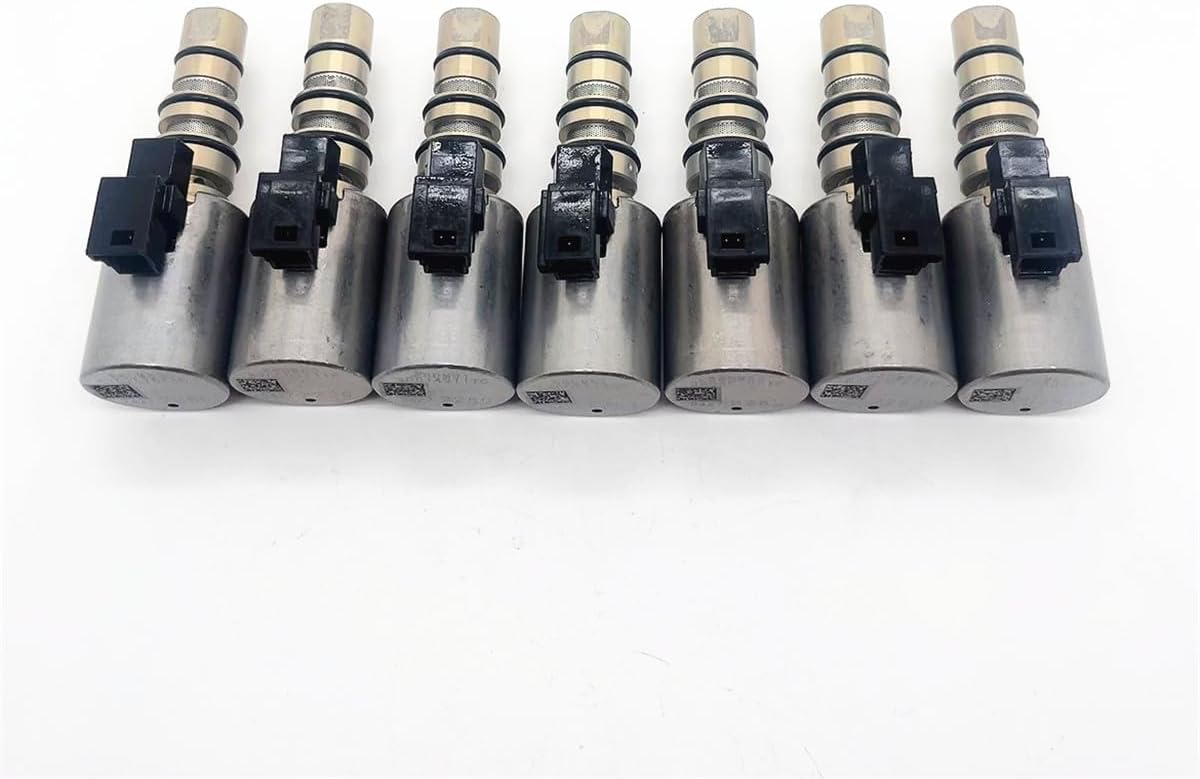
Solenoid placement is a related trap. All three 8L pressure control solenoid types share identical snout and O-ring dimensions, so they can physically plug into any harness connector regardless of which solenoid belongs there. Mobley is explicit that techs who assume the harness design prevents a mismatch are wrong; the four largest numbers printed on the back of each solenoid can are the only reliable identification, and swapped solenoids of different ID types can produce a neutral condition on the 1-2 shift that mimics a solenoid failure rather than an installation error.
Fluid Type and Capacity
Before you close anything up, confirm the fluid is correct. GM's own 8L90 product specifications list DEXRON High Performance ATF as the required fluid, not Dexron VI and not Dexron ULV (ULV is specified for other GM units like the 10L80, not the 8L90). GM's published dry-fill capacity is approximately 10.3 liters. GM's TechLink transmission capacity chart lists a smaller service drain-and-fill figure, roughly 7.0 to 7.4 liters, for Express van and Low Cab Forward applications; your exact service-fill volume depends on vehicle application and whether you are doing a full dry fill versus a pan-drop service, so confirm the number against your specific VIN before you commit to a quart count.
| Spec | 8L90 (N8X) |
|---|---|
| Fluid type | DEXRON High Performance ATF |
| Dry-fill capacity | ~10.3 L (GM estimate) |
| Service drain-and-fill (van/LCF apps) | ~7.0–7.4 L per GM TechLink |
| Pressure taps | C12345R |
| Failsafe/default gears | 2nd and Reverse |
| Max gearbox torque rating | 665 lb-ft (900 Nm) |
Diagnostic Order, Start to Finish
- Scan all modules. Confirm the TCM responds on the network before assuming an internal transmission fault.
- Try the fast-learn reset. If the unit was just programmed or had a fast-learn run, remove the key, shut the doors, wait 15 minutes, and retry.
- Check line pressure at the C12345R taps in P, N, D and R. Normal in Park but low in gear points at the pump or regulator; low everywhere points at a total pressure loss.
- Note whether failsafe gears (2nd/Reverse) are present. If they are, you are chasing an electronic fault, not a hydraulic one.
- If a valve body was recently swapped, check for the missing test plug on part numbers 24296270, 24296272, 24296273, 24297634, 24297637, the 1-2-7-8-R case seal, and stop-start versus non-stop-start casting type.
- If the unit was recently rebuilt with aftermarket valving, verify clutch control valve placement against the .426-in./.443-in./.531-in. bore map and confirm solenoid ID numbers match their bores.
- If none of the above explains it, pull the pump and attempt a bench prime, and inspect the pressure regulator's shuttle valve orientation.
Shop the pressure regulator kit →
Or browse all 8L90 parts at CoreTransmissionParts →
Need parts for this job? Our own 8L90 parts page carries the valve bodies, pumps, and solenoid kits referenced above, in stock and shipped fast.
FAQ
Why does an 8L90 have no movement in any gear but still start the engine?
Because the no-move fault almost always lives in the transmission's hydraulic or electrical control path, not the engine. The most common causes are a loss of line pressure (a missing valve body test plug, a pump that never primed, or a backwards pressure regulator shuttle valve), a module communication fault that leaves the TCM unable to talk to the rest of the network, or a valve body built with a control valve in the wrong bore. None of those touch engine operation, so the engine runs fine while the transmission sits in neutral internally.
What is the first thing to check on an 8L90 that will not move?
Scan all modules before you touch the pan. Confirm the TCM is actually communicating on the network; a lost TCM, fuel pump control module, or body control module response can produce a no-move complaint with no gear shown in the cluster that has nothing to do with the transmission's internal hydraulics. Once communication checks out, check line pressure in Park, Neutral, Drive and Reverse. Pressure that is normal in Park but drops to zero in Drive or Reverse points at the pump or the pressure regulator valve, not the clutches.
Does the 8L90 have a default or limp-mode gear?
Yes. When the unit has basic hydraulic function but the TCM pulls it into failsafe, the default gears are second and reverse. That distinction matters diagnostically: a transmission that still moves in 2nd and Reverse is in an electronic limp condition, which points at a solenoid, wiring, or TCM fault. A transmission with true zero movement in any gear, including Reverse, points at a total loss of line pressure from the pump or valve body instead.
Can a valve body swap cause an 8L90 to have no movement?
Yes, and it is one of the most documented causes. Certain replacement valve bodies (GM part numbers 24296270, 24296272, 24296273, 24297634 and 24297637) can leave the factory with a test plug missing from the casting. That open hole dumps line pressure as fast as the pump can build it, which produces a complete no-movement complaint right after the valve body goes in. The fix is bolting on the correct test plug or exchanging the valve body for one that already has it installed.
What fluid and how much does an 8L90 need?
GM specifies DEXRON High Performance ATF for the 8L90, not Dexron VI and not Dexron ULV. GM's own published capacity is approximately 10.3 liters dry fill, with service-fill volumes varying by vehicle application; GM's TechLink capacity chart lists roughly 7.0 to 7.4 liters for a drain-and-fill on Express van and Low Cab Forward applications. Running the wrong fluid spec changes friction material behavior and can contribute to pressure and shift-quality complaints on top of whatever mechanical issue you are chasing.
Sources
- Sonnax — "Troubleshooting GM 8L45/8L90 No-Move, No-Pressure Conditions." Backs the pump prime failure cause and bench-prime procedure, the pressure regulator inner shuttle boost valve/bushing inboard-vs-outboard assembly error, pressure regulator kit 154740-02K, the stop-start-vs-non-stop-start valve body leak, the missing test-plug condition, the 1-2-7-8-R case seal, and the 2nd/Reverse failsafe gear note. sonnax.com
- Transmission Digest, Wayne Colonna — "GM 8L90 No Movement," published May 4, 2026. Backs the documented case of an 8L90 with no movement after a valve body exchange, caused by a missing test plug on valve bodies with part numbers 24296270, 24296272, 24296273, 24297634 and 24297637, and the correction of bolting on the plug or exchanging the valve body. transmissiondigest.com
- Transmission Digest, Jim Mobley — "GM 8L45, 8L90 Valve Body Traps and How to Avoid Them," published May 6, 2026. Backs the .426-in./.443-in. clutch control valve bore mix-up, the shared .531-in. outside land that allows the mistake, the specific symptom patterns and codes (including P0722 and a true no-move-forward condition on 2019-and-later S4 bores), the Fast Learn failure pattern, and the solenoid ID-number identification requirement despite interchangeable harness connectors. transmissiondigest.com
- GM Powered Solutions — "8L90 8-Speed Automatic Transmission" product specification page. Backs the DEXRON High Performance ATF fluid specification, the approximately 10.3-liter dry-fill capacity (GM estimate), the C12345R pressure tap designation, and the 665 lb-ft (900 Nm) maximum gearbox torque rating. poweredsolutions.gm.com
- GM TechLink — Transmission Fluid Capacities reference chart. Backs the approximately 7.0–7.4-liter DEXRON HP service drain-and-fill figure for the 8L90 (N8X) in Express van and Low Cab Forward applications, as distinct from the larger dry-fill total capacity. gm-techlink.com