A GM 8-speed that will not back up sends most shops straight to a teardown quote. On an 8L90 that is usually the wrong first move, because this transmission has no dedicated reverse element. There is no reverse band and no reverse-only drum. Reverse is made by three clutches that all do work in forward gears too, which means the gears the truck still has are the most valuable diagnostic data on the vehicle, and they are free to collect.
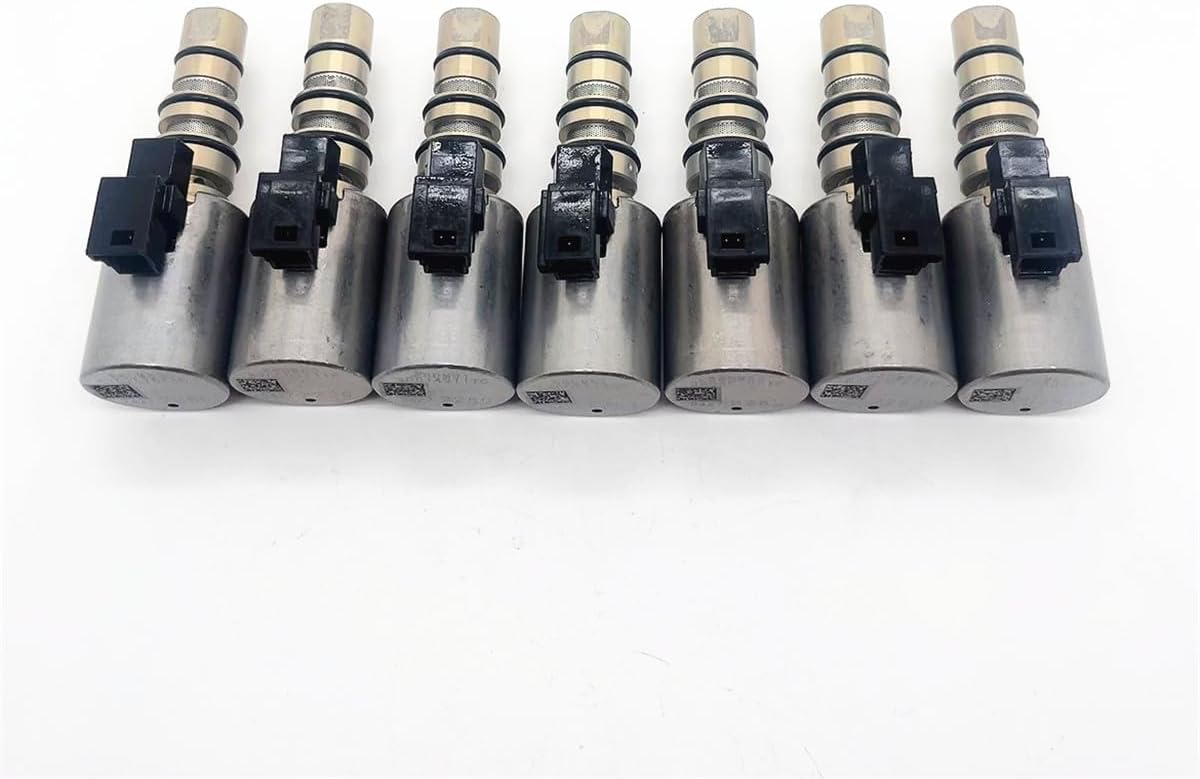
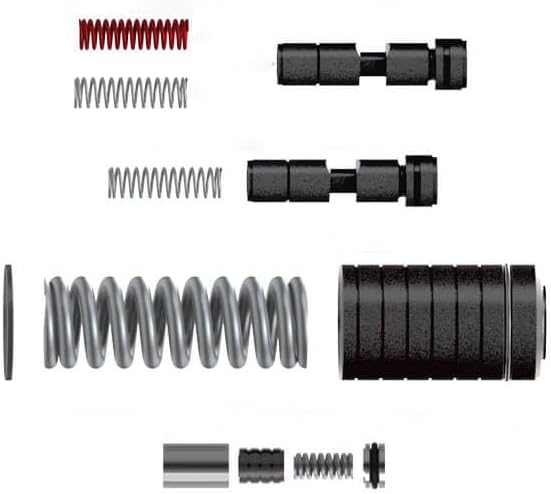
Reverse on an 8L90 is three clutches, and all three work in forward too
Old-school no-reverse diagnosis leaned on a dedicated element. On a 4L60E you had a reverse input clutch and a low-reverse band, parts that did nothing in drive, so losing reverse while forward stayed fine made sense. The 8L90 does not work that way. It uses five clutches and no bands, and every element that applies in reverse also applies somewhere in the forward range.
Here is the application chart, taken from the Raybestos Powertrain component breakdown of the 8L90 (M5U) clutch pack:
| Clutch | Applied in | In reverse? |
|---|---|---|
| C1 | 1, 2, 7, 8, Reverse | Yes |
| C2 | 1, 2, 3, 4, 5, Reverse | Yes |
| C3 | 1, 3, 5, 6, 7 | No |
| C4 | 2, 3, 4, 6, 8 | No |
| C5 | 4, 5, 6, 7, 8, Reverse | Yes |
Reverse is C1 + C2 + C5. First gear is C1 + C2 + C3. Reverse and first share two of their three elements, and the only thing separating them is C3 against C5.
Read that chart back the other way and the diagnosis writes itself. If the truck drives through all eight forward gears and will not back up, C1 is holding (you have 1st, 2nd, 7th and 8th), C2 is holding (you have 1st through 5th) and C5 is holding (you have 4th through 8th). Three good clutches. Whatever is wrong is not friction material — it is command, hydraulic routing, or pressure.
That is the single most useful thing to know about this complaint, because it keeps a perfectly serviceable clutch pack out of the scrap bin.
Read the forward gears first
Before you pick up a tool, drive the truck and log what it actually has. Use a scan tool that shows commanded gear against calculated gear ratio, and confirm the ratios rather than trusting the PRNDL display. Then use this table.
| What you still have | What is proven good | Where to look |
|---|---|---|
| All 8 forward gears, no reverse | C1, C2 and C5 all hold torque | Range signal and manual valve position, S1/S5 clutch control valve, boost circuit, line pressure |
| No reverse, no 4th through 8th | C1, C2, C3 hold | C5 circuit: S5 solenoid, S1/S5 clutch control valve, C5 piston seals and clutch pack |
| No reverse, no 1st, 2nd, 7th, 8th | C2, C3, C4 hold | C1 circuit, including the 1-2-7-8-R case seal under the valve body |
| No reverse, no 1st through 5th | C1, C3, C4 hold | C2 circuit and the clutch boost valve feed |
| No reverse, no forward movement at all | Nothing | Pump prime, pressure regulator assembly, line pressure loss, valve body sealing |
| Limp mode, reverse still works | C1, C2, C5 circuits alive | Electrical or sensor fault, not a reverse hydraulic problem |
That last row deserves a note. Sonnax states that when an 8L45 or 8L90 still has basic function, the failsafe and default gears are second and reverse. A truck that drops to limp and still backs up is confirming that C1, C2 and C5 are all being fed. A truck in limp with no reverse has lost something more fundamental than a solenoid command, and pressure is the first place to look.
Do the cheap checks before the pan comes off
Fluid level, done to spec
There is no dipstick. Per GM bulletin 18-NA-355, the transmission uses a tube in the bottom pan to set level, and the level must be checked with transmission fluid temperature (TFT) between 35–45°C (95–113°F). GM is specific about what happens if you ignore that: above 45°C you leave the unit underfilled, below 35°C you overfill it. Reverse is one of the first circuits to complain about a low level, so a lazy level check has cost people whole valve bodies.
The fluid is DEXRON HP — not DEXRON VI, not ULV. GM's 2025 TechLink capacity chart lists the 8L90 under RPO N8X at 7.0 liters (7.4 quarts) for a fluid change. The current part is Mobil 1 Synthetic LV ATF HP, GM 19417577 in the US and 19418066 in Canada. Torque the level check plug to 9 N·m (80 lb-in).
Write down the TUN and PUN, and leave the adapts alone
ATRA's GEARS coverage of this unit is emphatic on two points. First, record the TUN (Transmission Unique Number, passenger side at the rear of the case), the PUN (Part Unique Number, on the valve body) and the current programming part number before you do anything else. Second, do not run a fast learn or clear adaptive values as an opening move. Dumping the adapts on an 8L90 induces new shift complaints and forces a complete drive learn that can run 45 minutes, and now you are diagnosing two problems instead of one.
If you do end up running a fast learn later, the fluid has to be between 131–198°F (55–96°C) or the procedure aborts.
Put a gauge on it
Line pressure is where a no-reverse complaint on this unit gets decided, and the numbers are worth respecting. Sonnax states that line pressure on the 8L45 and 8L90 should peak at around 315 psi. In their own evaluations they measured units running above 415 psi, caused by a worn pressure regulator valve lineup leaking badly enough that the valve cannot stroke to its lower pressure position, combined with an OE blow-off spring calibrated over 400 psi. The damage from that is not a shift complaint. It is cracked worm tracks in the valve body casting — unrepairable, the casting is scrap — and shattered drums.
Low pressure and high pressure both surface as reverse problems, for different reasons. Low pressure will not fill and hold three clutch packs against the torque multiplication reverse sees. Runaway pressure breaks the parts that were holding it. Either way, a gauge on the tap at idle in Park, in Drive and in Reverse costs ten minutes and tells you which conversation you are having.
Sonnax S1/S5 Clutch Control Valve Kit 154740-13K
C1 and C5 are two of the three clutches reverse needs, and both are fed through the S1/S5 clutch control valve. When that bore wears, the symptom set is exactly this complaint: reverse gone or delayed, sometimes with the 4-8 range dropping out alongside it. This is the drop-in repair for that bore instead of a nine-hundred-dollar valve body.
See the S1/S5 clutch control valve kit →The six traps that kill reverse after a rebuild or a valve body swap
If the unit only lost reverse after somebody worked on it, the odds shift hard toward an assembly or programming issue. The Sonnax TASC Force list of 8L45 and 8L90 no-move and no-pressure conditions covers the ones that come up over and over, and most of them apply equally to a reverse-only complaint.
- It just came off a fast learn or a J2534 flash. Pull the key, get out, shut the doors, walk away for 15 minutes and come back. Sonnax reports this usually clears the condition on its own. Do this before you pull anything apart.
- The pump never primed. The off-axis chain-driven pump is presented as self-priming and routinely is not. Prime it on the bench: valve body face down in a clean drain pan, manual valve in Park with the first land flush with the casting, funnel in the pump suction, fill with ATF, then spin the pump shaft clockwise with a half-inch electric drill.
- The pressure regulator boost valve went in backwards. The inner shuttle boost valve and its bushing must face inboard for boost. Installed outboard, you get a low- or no-pressure condition. Reverse asks for the most boost of any range, so it is often the first thing to disappear when this is wrong.
- Wrong valve body: stop/start on a non-stop/start unit. This leaks at the rear of the valve body, where the stop/start accumulator would normally attach. Check the RPO before the part goes on.
- The test-port plug got pulled. New OE valve bodies carry a plug bolted into a casting hole the original does not have. Remove it and you have opened a large line pressure dump. If somebody was tidying up a new valve body, look here.
- The 1-2-7-8-R case seal was left out. This one is aimed straight at your complaint. That seal sits in the case under the valve body and feeds C1 — the 1-2-7-8-Reverse element. There are bulletins covering the correct seal for 8L45 versus 8L90 and people still leave it out entirely. No seal, no C1 apply, and reverse goes with it.
The repair, in the order that costs the least
- Verify the complaint and log the forward gears. Confirm ratios with a scan tool, then use the elimination table above to name the suspect circuit.
- Scan every module, not just the TCM. Record codes and freeze frame. Do not clear them yet.
- Record TUN, PUN and the programming part number, then search bulletins against that VIN. Some shift and range complaints on this unit resolve with a calibration.
- Set the fluid level correctly at 35–45°C and confirm the fluid is actually DEXRON HP. Mixed or wrong fluid produces genuinely strange behavior on this transmission.
- Gauge the line pressure in Park, Drive and Reverse before the pan comes off.
- Drop the pan and read the debris. Clutch material versus bronze versus steel tells you whether you are looking at a clutch pack or a bore. A clean pan with all eight forward gears present and no reverse points at the valve body.
- Valve body work. Vacuum test the S1/S5 and S2/S3/S4/TCC clutch control valve bores and the pressure regulator lineup. Recondition what is worn rather than replacing a casting that is fine.
- Teardown last. If the elimination table pointed at a specific clutch and the valve body tested clean, now you go inside for seals, pistons and friction material.
What to replace whether or not it looks bad
The Sonnax position on this unit is blunt: when you rebuild an 8L45 or 8L90 valve body, replace the pressure regulator lineup and the line pressure blow-off spring every single time. That is not an upsell, it is the difference between a repaired unit and a casting that cracks in six months under 415 psi. Their pressure regulator and O-ringed shuttle valve kit 154740-29K paired with pressure relief ball valve spring 154740-18 holds peaks in the 300–315 psi range.
While you are in the valve body, vacuum test the clutch control valve bores even if they are not your current complaint. These valves oscillate constantly, the aluminum bores wear, and a marginal bore that passes today is the next comeback.
Keeping reverse from going away again
Three things do most of the work. Keep the fluid correct and at the right level, set to the 35–45°C window rather than by feel. Keep line pressure inside the 315 psi ceiling by refreshing the regulator lineup during any valve body service. And do the programming properly after a valve body, solenoid or TCM change, so the TCM is working from the right solenoid characterization data instead of somebody else's.
An 8L90 that lost reverse is usually telling you something specific and cheap. The chart at the top of this article is how you get it to say so out loud.
FAQ
Can an 8L90 lose reverse but still drive forward normally?
Yes, and it is the most common version of this complaint. Reverse on an 8L90 applies C1, C2 and C5, and each of those three clutches also applies in forward gears, so if all eight forward ratios are present, all three reverse elements are holding torque. That points at hydraulic control or command rather than friction material: a stuck clutch control valve, a boost circuit problem, low line pressure, or a manual valve and range signal fault.
Which clutches apply in reverse on an 8L90?
C1 (1-2-7-8-Reverse), C2 (1-2-3-4-5-Reverse) and C5 (4-5-6-7-8-Reverse). First gear applies C1, C2 and C3, so reverse and first share two of their three elements. The only difference between them is C3 versus C5. If the truck has first gear but no reverse, C1 and C2 are proven good and C5 becomes the prime suspect.
Why does my 8L90 have no movement at all after a rebuild or a reflash?
Sonnax reports two routine causes. After a fast learn or J2534 programming, pull the key, get out, shut the doors and come back in 15 minutes; the condition usually clears on its own. If it does not, the off-axis chain-driven pump likely never primed. Prime it on the bench with the valve body face down, the manual valve in Park, a funnel in the pump suction and the pump shaft spun clockwise with a half-inch drill.
What fluid and how much does an 8L90 take?
DEXRON HP, not DEXRON VI and not ULV. GM's 2025 TechLink capacity chart lists the 8L90 under RPO N8X at 7.0 liters (7.4 quarts) for a fluid change. The current fluid is Mobil 1 Synthetic LV ATF HP, GM part 19417577 in the US. There is no dipstick: level is set through the plug in the bottom pan with transmission fluid temperature between 35 and 45 C (95 to 113 F), and the plug torques to 9 N.m (80 lb-in).
Does an 8L90 still have reverse in limp mode?
Usually yes. Sonnax notes that when the unit still has basic hydraulic function, the failsafe or default gears on an 8L45 and 8L90 are second and reverse. So a truck stuck in limp that still backs up is telling you the C1, C2 and C5 circuits are alive. A truck in limp with no reverse has lost something more fundamental, usually pressure.
Sources
- General Motors — Service Bulletin 18-NA-355, “Shake and/or Shudder During Light Throttle Acceleration Between 25 and 80 MPH at Steady Speed” (April 2020, NHTSA-hosted PDF). Backs the 8L45/8L90 fluid identification and service data used here: Mobil 1 Synthetic LV ATF HP, GM part number 19417577 (US, 1 quart) and 19418066 (Canada); the note that the transmission has no fill tube or dipstick and uses a tube in the bottom pan to set level; the requirement to check fluid level with transmission fluid temperature (TFT) between 35–45°C (95–113°F), with a TFT above 45°C producing an underfill and below 35°C an overfill; and the 9 N·m (80 lb-in) torque on the oil level check plug. https://static.nhtsa.gov/odi/tsbs/2020/MC-10174266-9999.pdf
- General Motors — GM TechLink, “2025 Transmission Capacities & Fluids (U.S. and Canada only)” reference chart (May 2025). Backs the 8L90 fluid specification of DEXRON HP and the fluid change capacity of 7.0 liters / 7.4 quarts, listed under RPO N8X. https://gm-techlink.com/wp-content/uploads/2025/06/TechLink-transmission-fluid-capacities-2025_A.pdf
- Sonnax TASC Force / Transmission Digest — “How to fix GM 8L45/8L90 no-move and no-pressure conditions,” Jim Mobley (December 2022). Backs the six field conditions listed here: the 15-minute key-out reset after a fast learn or J2534 programming; the bench pump prime procedure for the off-axis chain-driven pump; the pressure regulator inner shuttle boost valve and bushing that must face inboard and cause a low- or no-pressure condition when installed outboard; the stop/start valve body installed on a non-stop/start unit leaking at the accumulator location; the OE valve body test-port plug that dumps line pressure if removed; the omitted 1-2-7-8-R case seal under the valve body; and the statement that the failsafe/default gears on this unit are second and Reverse. https://www.transmissiondigest.com/how-to-fix-gm-8l45-8l90-no-move-no-pressure-conditions/
- Sonnax — “Watch Out for High Pressure in GM 8L45, 8L90 Valve Bodies,” Chris Leach (April 2024). Backs the roughly 315 psi design peak for 8L45/8L90 line pressure, the measured pressures above 415 psi in Sonnax evaluations, the worn pressure regulator valve lineup and mis-calibrated blow-off spring as the root cause, the cracked valve body worm tracks that cannot be repaired and the drum failures that follow, and the recommendation to replace the pressure regulator lineup and blow-off spring on every valve body rebuild along with kits 154740-29K and 154740-18. https://www.sonnax.com/tech_resources/1379-watch-out-for-high-pressure-in-gm-8l45-8l90-valve-bodies
- Sonnax — GM 8L45, 8L90 Valve Body Layout. Backs the valve body circuit names referenced here, including the S1/S5 clutch control valve, the S2/S3/S4/TCC clutch control valve, the actuator feed limit valve, the converter feed limit valve, the 1-3-5-6-7 accumulator piston and the pressure regulator and shuttle valve lineup. https://www.sonnax.com/tech_resources/1055-gm-8l45-8l90-valve-body-layout
- Raybestos Powertrain — GM 8L90 (M5U) Steel Clutch Pack STMGM23 component listing. Backs the 8L90 clutch application chart used throughout this article: C1 (1, 2, 7, 8, Reverse), C2 (1, 2, 3, 4, 5, Reverse), C3 (1, 3, 5, 6, 7), C4 (2, 3, 4, 6, 8) and C5 (4, 5, 6, 7, 8, Reverse), along with the plate thicknesses and thick bottom-plate callouts for C1, C2 and C4. https://www.raybestospowertrain.com/steel-clutch-packs/stmgm23
- ATRA / GEARS Magazine — “8L90 Diagnosing Strategies: A Look at Diagnosing New Technology.” Backs the pre-teardown discipline used here: recording the TUN on the rear of the case and the PUN on the valve body along with the programming part number before any repair; the instruction not to run a fast learn or clear adaptive values during initial diagnosis because it induces new shift complaints and forces a full drive learn of up to 45 minutes; and the 131–198°F (55–96°C) fluid temperature window the fast learn procedure requires. https://gearsmagazine.com/magazine/8l90-diagnosing-strategies-a-look-at-diagnosing-new-technology/