Ask a tech what a shift solenoid does and you will usually get the answer that fit a 4L60E: it is an on/off valve that the computer energizes to move a shift valve and trade one gear for the next. Bring that mental model to a GM 8L90 and you will condemn good parts. This unit does not shift that way, and the parts catalog word "shift solenoid" hides what is really in the valve body.
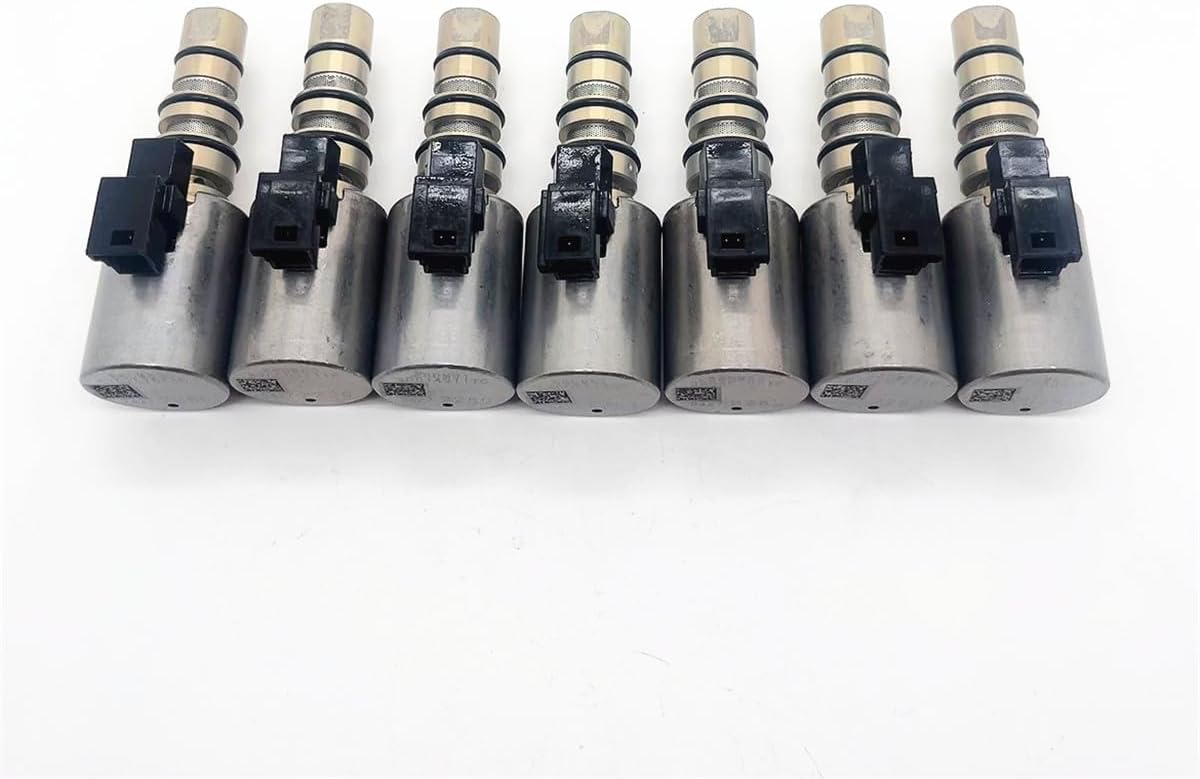
The 8L90 carries nine solenoids. Seven of them are variable force pressure control units that never switch anything on or off; they meter a signal pressure that strokes a much larger control valve, and that valve applies the clutch. The other two are genuine on/off devices, and they do not control shifts at all. Understanding which is which, and what each one is actually capable of failing at, is most of the diagnosis.
The nine-solenoid map
Per GEARS Magazine, the 8L90 control solenoid valve body holds seven variable force pressure control (PC) solenoids and two on/off solenoids. The PC solenoids split into two logic types, and getting this backwards is how techs misread live data:
- Normally high (NH): with the solenoid off, it passes pressure to stroke its clutch control valve. Commanding more current reduces output. S1, S4, S5 and the line pressure solenoid are NH.
- Normally low (NL): with the solenoid off, it blocks the signal and the clutch stays released. More current means more output. S2, S3 and S7 (TCC) are NL.
| Solenoid | Circuit | Type | Function |
|---|---|---|---|
| S1 | 1-2-7-8-R | NH PC | Clutch apply, 1st, 2nd, 7th, 8th, Reverse |
| S2 | 1-2-3-4-5-R | NL PC | Clutch apply, 1st through 5th, Reverse |
| S3 | 1-3-5-6-7 | NL PC | Clutch apply, 1st, 3rd, 5th, 6th, 7th |
| S4 | 2-3-4-6-8 | NH PC | Clutch apply, 2nd, 3rd, 4th, 6th, 8th |
| S5 | 4-5-6-7-8-R | NH PC | Clutch apply, 4th through 8th, Reverse |
| S7 | TCC | NL PC | Torque converter clutch control |
| Line pressure | Main | NH PC | System pressure regulation |
| S8 | Default / fault control | NC on/off | Default override valve |
| S9 | 1-2-3-4-5-R boost | NC on/off | Boost valve control |
Two things follow from that table. First, there is no solenoid whose job is "2nd gear." Every forward gear is a combination of clutches, so a single weak solenoid shows up as a symptom in several gears at once, not one. Second, because the PC solenoids are low-flow signal devices, they are only as good as the bore their signal passes through, which is where most of this job actually lives.
Symptoms, and what each one is really telling you
Harsh, flared or soft shifts and burnt clutches
This is the complaint that sends the most 8L90 solenoid kits out the door, and it is usually not the solenoid. Sonnax traces chronic 8L45 and 8L90 shift complaints to wear in the signal accumulator bores of the control solenoid valve body. Every one of the seven VFS circuits feeds a small accumulator piston that damps pressure instability so the shift feels controlled. Those pistons ride directly in cast aluminum and oscillate every time the circuit is commanded, so they wear their bores oval.
Sonnax names S3 and S4 as generally the worst of the seven. When those bores leak, the symptom list they publish reads like a used-truck complaint sheet: low line pressure, poor shift quality, soft shifts, flared shifts, no converter apply, hydraulic converter codes and burnt clutches. Put a new solenoid on a worn bore and the shift does not change, because the solenoid was never the restriction.
Neutral between 3rd and 4th
If the unit drops to neutral on the 3-4 shift, particularly after someone has had the valve body apart, check the harness before anything else. Per Sonnax, the classic cause is the S8 default control solenoid and the S9 boost solenoid being plugged in backwards. They use identical connectors, so nothing resists the mistake. Tell them apart by the pigtail:
- S8, default control, terminal 1: 3.75 inch conduit, green wire with a blue tracer.
- S9, 1-2-3-4-5-Reverse boost, terminal 7: 1.75 inch conduit, yellow wire with a red tracer.
Reversed, the default override valve will not latch in 2nd and the 4-5-6-7-8-Reverse clutch apply pressure exhausts, which is your neutral. Sonnax also warns that popular tech resources have these two solenoids mislabeled with incorrect wiring diagrams, so verify against the conduit length and wire colors rather than trusting a printout. A failed solenoid or a missing number 3 checkball produces the same complaint.
Limp, no move, or damage that looks violent
Pressure control belongs in this conversation because the line pressure solenoid is one of the seven. Sonnax puts 8L45 and 8L90 design peak line pressure at roughly 315 psi, and reports measuring field units running above 415 psi. The cause is a worn pressure regulator valve lineup that leaks enough to keep the valve from stroking down, combined with an OE blow-off spring calibrated over 400 psi in some units. The results they document are cracked worm tracks in the valve body casting and shattered drums. A cracked casting is not repairable.
Testing before you buy parts
1. Resistance, as a screen and nothing more
All of the pressure control solenoids in this unit measure 4.5 to 5.5 ohms per GEARS. That test catches a shorted or open winding. It will not catch a solenoid that is slow, sticky or flowing off its characterized rate, which is precisely why GM stores per-solenoid flow data in the TCM instead of treating them as generic parts. Passing the ohm check is not a clean bill of health.
2. Vacuum test the signal accumulator bores
This is the test that separates a real solenoid failure from bore wear. Sonnax recommends vacuum testing the signal accumulator pistons with the spring still in the piston, placing the test port opening in the center of the spring. If you do not have a vacuum tester, gauge pins will identify bore wear, and the OE piston and spring can be blocked in place with pins of varying length in different positions to map wear across the full stroke of the piston rather than at one spot.
3. Put a gauge on line pressure
Compare against the 315 psi design figure in both directions. On a pressure performance complaint, high is as much a failure as low, and high is the version that destroys hardware while you are deciding.
4. Read the PUN and TUN before you disturb anything
The Part Unique Number is on the valve body; the Transmission Unique Number is on the case. GEARS explains that these identify the solenoid performance characteristic data stored in the TCM through the SPS programming system. If a previous repair fitted a valve body and skipped the PUN update, the TCM is commanding current against the wrong flow curve and the shift complaint is programming, not hardware.
Replacement: the traps that bite
GM does not sell these solenoids as individually characterized service pieces the way an older unit sold a shift solenoid, which is why the practical repair is a solenoid set or a replacement control solenoid valve body. Whichever route you take, three details decide whether the job sticks.
The 2019 S4 valve change. Per Sonnax, the S4 (2-3-4-6-8) control valve was redesigned for 2019. The earlier valve has two diameters; the new one has a single diameter, and it came with a new-design solenoid that improves control of the 1-2 upshift, particularly with Dynamic Fuel Management active. Sonnax states plainly that the .443 inch diameter valve found in their 154740-11K clutch control valve kit cannot be used in the 2019-and-later S4 location or shift complaints will occur. Identify the new design by a triangle marking on the canister, or by comparing valve diameters during teardown. The oil circuit plumbing did not change, so nothing else will warn you.
The fluid. The 8L90 takes DEXRON HP and nothing else. Per Mobil, DEXRON HP carries GM license code J-62120, and fluids approved against it are labeled accordingly. GEARS notes the revised HP formulation is identified by GM part number 19417577 with blue labeling, and to avoid the older black bottles and grey labels. GM TechLink lists the 8L90 fluid change capacity (RPO N8X) at 7.0 liters, 7.4 quarts. Getting this wrong is not a small error on a unit whose entire shift control depends on signal pressure behaving predictably at temperature.
The programming. New solenoids or a new valve body means entering the VIN into SPS and downloading the correct solenoid characterization data for the PUN you installed. GM's own service literature warns that failing to characterize the solenoid valves after transmission installation may result in customer shift concerns. Torque the valve body fasteners to the values and sequence in GM service information for the model year in front of you rather than a remembered number; this family has seen running changes.
The relearn, which is not optional
GEARS is explicit that an adaptive relearn has to follow solenoid replacement or reprogramming, or the unit shifts harshly and erratically regardless of how good the parts are. The procedure runs from the scan tool under Diagnostics, Global Vehicle Selection, Module Diagnostics, Transmission Controls, Configuration/Reset Functions, Transmission Adaptive Values Learn, and it will not execute unless transmission fluid temperature sits between 75 and 85 degrees C (167 to 185 F). Afterward, cycle the ignition off for at least two minutes so the TCM completes its shutdown before the vehicle is driven.
For coast-down shift quality specifically, GEARS describes a drive relearn of accelerating to 65 mph and decelerating to 25 mph under light braking, repeated ten times, with the broader adaptive window given as 131 to 198 F. Budget the road time. A unit handed back before the adapts have settled comes back as a harsh-shift complaint, and the second diagnosis is always harder than the first because now there are new parts in it.
Preventing the repeat
Three habits keep 8L90 solenoid work from becoming a warranty job. Service the signal accumulator bores rather than inspecting and reusing them, because the wear is progressive and the pistons never stop moving. Treat the pressure regulator lineup and blow-off spring as replacement items on any valve body you open, since runaway pressure is what turns a shift complaint into a cracked casting. And confirm what fluid is in the pan before you diagnose anything, because on this unit signal pressure is the whole control strategy and fluid is what carries it.
Shop the part for this fix
If the ohm check or the scan data condemned a solenoid, CoreTransmissionParts stocks the 8L90 shift solenoid kit along with the Sonnax signal accumulator and clutch control valve kits for the bores behind them.
View the 8L90 shift solenoid kit →Need something else for the unit? The full 8L90 parts collection at CoreTransmissionParts carries valve body kits, solenoids and Sonnax repair kits.
Need parts for this job?
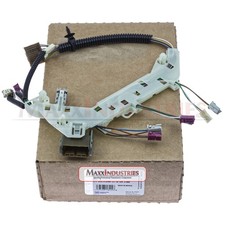
We stock 8L90 solenoid kits, valve bodies, internal wiring harnesses, filters and overhaul kits, plus the correct DEXRON HP. Everything to finish a solenoid job in one trip is on our 8L90 parts page.
FAQ
How many shift solenoids does a GM 8L90 have?
Nine. Seven are variable force pressure control solenoids: S1, S2, S3, S4 and S5 for the clutches, S7 for the torque converter clutch, and one dedicated line pressure solenoid. The other two, S8 and S9, are three-port normally closed on/off solenoids that handle default override and the 1-2-3-4-5-Reverse boost function. None of them are the old-style on/off shift solenoids that simply switch a shift valve.
What should an 8L90 shift solenoid read on an ohmmeter?
GEARS Magazine lists all of the pressure control solenoids in this unit at 4.5 to 5.5 ohms. That check finds a shorted or open winding and nothing else. A solenoid can measure perfectly in range and still be slow, sticky or flow-shifted, which is exactly why GM stores individual flow-rate data for each one in the TCM rather than treating them as interchangeable.
Why does my 8L90 neutral out between 3rd and 4th after a valve body job?
Sonnax traces that specific complaint to the S8 default control solenoid and the S9 boost solenoid being plugged in backwards. They use identical connectors, so the swap is easy to make during reassembly. S8 has a 3.75 inch conduit with a green wire and blue tracer; S9 has a 1.75 inch conduit with a yellow wire and red tracer. With them reversed the default override valve will not latch in 2nd and the 4-5-6-7-8-Reverse clutch apply pressure exhausts. A faulty solenoid or a missing number 3 checkball can produce the same complaint.
Do I have to program the TCM after replacing 8L90 solenoids?
Yes. The valve body carries a Part Unique Number and the case carries a Transmission Unique Number, and those numbers tell the TCM the measured flow rates of the solenoids actually installed. Fit new solenoids or a new valve body without entering the new PUN through SPS and the TCM controls clutch pressure from the wrong flow-rate table. GM's own literature warns that skipping solenoid characterization causes shift concerns.
Is a harsh 1-2 shift on an 8L90 a bad solenoid?
Usually not. Sonnax attributes chronic 8L45 and 8L90 shift complaints to wear in the signal accumulator bores of the control solenoid valve body, with S3 and S4 generally the worst of the seven. The pistons ride directly in cast aluminum and oscillate constantly, so the bore wears and bleeds off signal pressure. Vacuum test the bores before you buy solenoids, because a new solenoid feeding a worn bore shifts exactly the same.
Related guides
- 8L90 P0748: Pressure Control Solenoid Electrical Causes and Fix — the circuit-code side of a solenoid complaint
- 8L90 P0961: Line Pressure Control Performance Causes and Fix
- 8L90 Pressure Testing: Taps, Specs and Readings
- GM 8L90 and 8L45 Shudder and Harsh Shift Fix
- 8L90 Common Problems and Fixes
Sources
- GEARS Magazine (ATRA), "8L90 Solenoid Strategies" — backs the nine-solenoid count (seven variable force PC plus two on/off), the S1–S9 circuit assignments and NL/NH logic, the 4.5–5.5 ohm resistance specification for all PC solenoids, the PUN and TUN solenoid characterization data stored in the TCM through SPS, the scan tool path for Transmission Adaptive Values Learn, the 75–85°C (167–185°F) fluid temperature window for the relearn, and the two-minute key-off requirement. gearsmagazine.com
- Sonnax, "Diagnosing 8L45 & 8L90 Shift Complaints: Always Check the VFS Solenoid Circuits" (TASC Force Tips) — backs the seven low-flow VFS circuits and what each controls, the signal accumulator piston in every circuit, S3 and S4 as the worst wear locations, the complaint list (low line pressure, poor shift quality, soft and flared shifts, no converter apply, burnt clutches), the vacuum test method with the spring left in the piston, the gauge pin alternative, and kits 154740-06K and 154740-01K. sonnax.com
- Sonnax, "Diagnosing the Infamous GM 8L45, 8L90 3-4 Neutral" (TASC Force Tips) — backs the S8/S9 connector swap as the cause of the 3-4 neutral condition, the S8 default control identification (terminal 1, 3.75 inch conduit, green wire with blue tracer), the S9 1-2-3-4-5-Reverse boost identification (terminal 7, 1.75 inch conduit, yellow wire with red tracer), the default override valve failing to latch in 2nd and exhausting 4-5-6-7-8-R apply pressure, the warning that common tech resources mislabel these solenoids, and the faulty-solenoid and missing-number-3-checkball alternatives. sonnax.com
- Sonnax, "GM 8L90 Model Year 2019 S4 (2-3-4-6-8) Control Valve Changes" — backs the 2019 S4 control valve redesign from two diameters to one, the accompanying new-design solenoid and improved 1-2 upshift control with DFM active, the warning that the .443 inch valve in kit 154740-11K cannot be used in the 2019-and-later S4 location without causing shift complaints, the triangle marking on the canister as the external identifier, and the unchanged oil circuit plumbing. sonnax.com
- Sonnax, "Watch Out for High Pressure in GM 8L45, 8L90 Valve Bodies" (TASC Force Tips) — backs the roughly 315 psi design peak line pressure, the 415+ psi measured in field units, the worn pressure regulator valve lineup and over-400 psi OE blow-off spring calibration as root cause, and the cracked valve body worm tracks and shattered drums that follow. sonnax.com
- GEARS Magazine (ATRA), "What is Causing That? A Look at the GM 8L90's Most Common Concerns" — backs the DEXRON HP LV requirement, the revised fluid identified by GM part number 19417577 with blue labeling and the warning against older black bottles and grey labels, the 131–198°F adaptive window, the 65-to-25 mph coast-down relearn repeated ten times, and the mandatory PUN/TUN programming after valve body or transmission replacement. gearsmagazine.com
- ExxonMobil, Mobil 1 Synthetic LV ATF HP product data sheet — backs the DEXRON HP specification and GM DEXRON license code J-62120 that an 8L90-approved fluid must carry. mobil.com
- GM TechLink, 2025 Transmission Capacities & Fluids (U.S. and Canada) — backs the 8L90 (RPO N8X) fluid change capacity of 7.0 liters / 7.4 quarts and the DEXRON HP fluid specification. gm-techlink.com (PDF)