The fastest way to waste a day on a GM 8L90 is to treat P0961 like a wiring problem. It is not one. The code sits in the range and performance family, which means the TCM already knows the electrical side of the line pressure control solenoid is responding normally. What it is complaining about is the result: it asked for a line pressure and the unit did not produce it.
That distinction is the whole diagnosis. If P0961 shows up next to P0748 or another circuit code, chase the electrical fault first, because a solenoid that cannot receive its command obviously cannot deliver pressure either. If P0961 is standing alone with a clean electrical picture, the fault is downstream of the solenoid, in the hydraulics. On this unit that almost always means one of four things: bore wear in the valve body, a pressure regulator lineup that is worn or assembled wrong, a programming step that got skipped, or the wrong fluid.
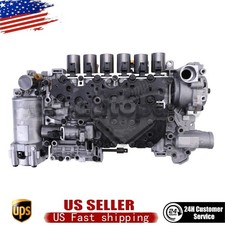
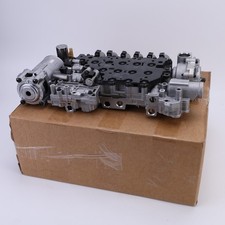
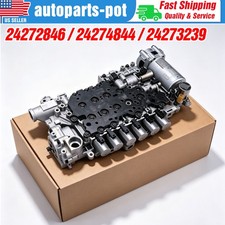
How the 8L90 actually controls line pressure
The 8L90 (RPO N8X) is GM's rear-drive eight-speed, rated to 665 lb-ft of gearbox torque with a 4.56:1 first gear and a 0.65:1 eighth, running four gear sets and five clutches in roughly the same envelope as the 6L80 and 6L90 it replaced, per GM's own 8L90 specification sheet. ATRA identifies it in the field by RPO codes M5Q, M5X and MQE, with the smaller 8L45 carrying M5T and M5N.
Pressure control on this unit is not a duty-cycle solenoid pushing on a regulator. It is a variable force solenoid family. Per Sonnax, there are seven VFS circuits: five clutch controls, one for the torque converter clutch, and one dedicated line pressure current control. All seven are low-flow devices. They do not move fluid to a clutch. They generate a signal pressure that strokes a much larger control valve, and that valve does the real work.
The line pressure VFS is a normally-high solenoid, meaning increasing solenoid current decreases its output pressure and flow. Its signal goes to the pressure regulator valve, which sets main line pressure for the whole transmission. Two things follow from that design, and both matter for P0961:
- A tiny leak is a big error. Because the solenoid is low-flow, there is very little volume in the signal circuit. A leak path that would be trivial in a high-flow circuit bleeds off enough signal here to move the pressure regulator valve to the wrong position.
- Every VFS circuit has a signal accumulator piston. Sonnax notes each circuit carries a small piston that damps pressure and flow instability so the shift feels right. Those pistons ride directly in cast aluminum, and they oscillate constantly. They wear the bore. On the line pressure circuit that piston is the S6 location, and Sonnax lists its related complaints explicitly: low line pressure, slipping and burnt clutches, and various shift complaints.
So the mechanism behind a genuine hydraulic P0961 is usually simple to state. The TCM commands a current. The solenoid produces the correct signal pressure. That signal leaks past a worn S6 accumulator piston bore or past a worn pressure regulator bore before it can fully stroke the regulator valve. Line pressure lands somewhere other than where it was commanded, the TCM sees the mismatch, and it sets the code.
The number that defines pass or fail: 315 psi
You cannot diagnose a pressure performance code without measuring pressure. There are pressure taps on this unit, and there is a published target to compare against.
Per Sonnax, line pressure on the 8L45 and 8L90 should peak at around 315 psi. That is the design number. In their evaluations of field units they measured pressures above 415 psi, and the consequences were not subtle: cracked worm tracks in the valve body casting and shattered drums. A cracked valve body cannot be repaired, so that unit is scrap.
This is the part techs get backwards. P0961 is not only a low pressure code. It is a commanded versus actual code, and runaway high pressure fails that comparison exactly as hard as low pressure does. Sonnax traces the high side to a worn pressure regulator valve lineup combined with an OE line pressure blow-off spring calibrated too high, in some cases over 400 psi. Excess leakage at the regulator valve prevents it from stroking to the lower pressure position, so pressure runs away instead of regulating.
| Spec | Value | Source |
|---|---|---|
| Line pressure design peak | ~315 psi | Sonnax |
| Failure pressure observed in field units | 415+ psi | Sonnax |
| Fluid type | DEXRON HP (not VI, not ULV) | GM TechLink / GM spec sheet |
| Fluid change capacity, RPO N8X | 7.0 L / 7.4 qt | GM TechLink 2025 |
| Full capacity, excluding cooler | 10.3 L | GM 8L90 spec sheet |
| VFS solenoid circuits | 7 (5 clutch, 1 TCC, 1 line pressure) | Sonnax |
| Line pressure VFS accumulator piston | S6 | Sonnax |
| Failsafe / default gears | 2nd and Reverse | Sonnax |
Diagnosing it in the right order
1. Scan every module, not just the TCM
ATRA's guidance on this unit is blunt: you are never diagnosing the transmission alone, you are diagnosing the powertrain management system with it. Scan all modules. If you find codes anywhere, work them before you dismiss them as unrelated. A voltage or ground problem elsewhere in the vehicle will absolutely produce a pressure control complaint here.
2. Record the PUN, the TUN and the program part number before you touch anything
This is the step that separates a clean repair from a comeback. The Transmission Unique Number is on the passenger side, rear of the case. The Part Unique Number is on the valve body. The TCM uses that data to know the actual flow rates of the specific solenoids installed in your unit, because these solenoids are individually flow-rated and are not sold separately by GM.
If someone replaced the valve body and never programmed the new PUN, the TCM is regulating line pressure from the wrong flow-rate table. It will command a current that would have been correct for a different valve body and get a pressure that does not match. That is a self-inflicted P0961 with nothing mechanically wrong. Ask the customer directly whether anyone has been in the unit.
Also read the transmission program part number and run a bulletin search against your specific complaint. GM has issued a number of programming updates for this family covering garage shift feel and harsh shift concerns.
3. Confirm the fluid
The 8L90 takes DEXRON HP. Not DEXRON VI, not the DEXRON ULV that the 10L80 uses. ATRA has reported personally seeing units where someone installed DEXRON VI instead of HP, and describes the resulting shifts as bizarre. If the wrong fluid is in it, flush the unit and refill with the correct spec before you condemn anything, then let it run.
Worth knowing: GM has revised the HP formulation. The label still reads DEXRON HP, but the updated fluid is identified by part number 19417577 and a blue label. ATRA advises against the black bottles and grey labeled HP fluid, which are earlier formulations. GM TechLink lists the fluid change capacity for the N8X at 7.0 L / 7.4 qt.
4. Put a gauge on it and compare to commanded
Pressure taps are available on this transmission. Read actual line pressure on the gauge and compare it against commanded line pressure on the scan tool at the same moment. This single test splits the diagnosis:
- Actual tracks commanded and both look sane: the pressure control system is working. Look at the TCM data and the electrical side again, and look for an intermittent.
- Actual is low and will not come up: signal leak. S6 accumulator piston bore, pressure regulator bore, or a regulator valve assembly error.
- Actual is high and climbing past 315 psi: worn regulator lineup plus a blow-off spring calibrated too high. Fix this promptly. At 415 psi you are on the clock before the casting cracks.
5. Vacuum test the accumulator pistons
Sonnax recommends vacuum testing the signal accumulator pistons for wear, and gives a useful detail: test them with the spring still in the piston, placing the test port opening in the center of the spring. Their experience is that the S3 and S4 locations are generally the worst, but for a line pressure complaint the piston you care about is S6.
One material note that saves comebacks. If you replace a piston, use a like material. Aluminum against aluminum keeps the bore-to-piston clearance stable as the unit comes up to temperature. Mixing in a piston with a very different thermal expansion rate opens that clearance up hot, which is when you need the seal most.
Four assembly errors that set this code on a fresh rebuild
If the unit was just apart, work through Sonnax's no-move and no-pressure list before you assume a part failed. These are all repeat offenders on the 8L45 and 8L90:
- Pressure regulator inner shuttle boost valve and bushing installed outboard instead of inboard. They must face inboard for boost. Installed backwards you get a low or no pressure condition.
- The test-port plug removed from a new OE valve body. New OE valve bodies carry a plug bolted into a hole that the original casting did not have. Pull it and you have opened a large leak that dumps line pressure outright.
- A stop-start valve body fitted to a non-stop-start transmission. This leaves a leak at the rear of the valve body where the stop-start accumulator would normally attach.
- Pump not primed. The off-axis chain-driven pump has a field reputation for failing to self-prime on installation. Sonnax's bench fix: valve body face down in a clean drain pan, manual valve in Park with the first land flush to the casting, funnel in the pump suction, fill with ATF, then spin the pump shaft clockwise with a half-inch electric drill.
One more from the same source that is easy to misread as a hard failure: if you get a no-movement condition right after a fast learn or J2534 programming, pull the key, get out, shut the doors and come back in 15 minutes. It usually clears on its own.
The repair
Once the gauge has told you which direction the pressure is off, the fix is specific rather than a parts-cannon rebuild.
For a worn or leaking regulator lineup, either direction. Sonnax's own recommendation for rebuilding an 8L45 or 8L90 valve body is to replace the pressure regulator lineup and the line pressure blow-off spring every single time. Their drop-in pressure regulator and O-ringed shuttle valve kit 154740-29K paired with pressure relief ball valve spring 154740-18 is intended to hold maximum pressure in the 300 to 315 psi range. The O-ringed shuttle valve matters when the bore is worn, because a shuttle valve without O-rings may not seal that leakage well enough on its own.
For a worn S6 signal accumulator bore. Sonnax offers a drop-in signal accumulator piston kit, 154740-06K, which reconditions up to four bores with no reaming, and an oversized kit, 154740-01K, that includes a full set of seven pistons and requires the matching reaming tool kit. Their pistons are hardcoat anodized with annular grooves specifically to slow the wear that caused the problem in the first place.
Sonnax 8L90 Pressure Regulator & O-Ringed Shuttle Valve Kit 154740-29K
This is the exact kit Sonnax names for holding 8L45/8L90 peak line pressure back in the 300–315 psi range instead of letting it run away toward 415. It is a drop-in for a worn regulator bore and sleeve. CoreTransmissionParts stocks it along with the 154740-06K signal accumulator piston kit for the S6 bore.
View the 154740-29K kit →After any of it, program and relearn. If you changed the valve body, program the new PUN. If you changed the transmission, program the new TUN. Then do the adaptive relearn properly. ATRA gives the calibration window as 131–198°F (55–96°C), and warns that the coast-down relearn is the hard one: lightly accelerate to 65 mph, then decelerate to 25 mph with the brake lightly applied, and repeat that ten times. Rushing it typically produces a hard 1-2 or 3-1 complaint afterward.
A caution from the same source that is worth taking seriously: do not perform a fast learn or clear the adaptive shift values as part of your initial diagnosis. Both procedures reset the unit to factory baseline control values, and you will induce new complaints on top of the one you were hired to fix.
Preventing the repeat
Two habits keep this code from coming back. First, treat the pressure regulator lineup and blow-off spring as service items on every 8L45 and 8L90 valve body you open, not as parts you inspect and reuse. The failure mode is progressive: wear causes leakage, leakage causes runaway pressure, runaway pressure accelerates the wear and eventually cracks the casting. Second, keep the correct current-formulation DEXRON HP in it and flush the cooler when you service it. On this transmission family fluid condition is not a footnote; ATRA found the fluid itself to be the root cause of the vast majority of genuine TCC shudder complaints on these units, and pressure control is no less sensitive to what is in the pan.
Shop the part for this fix
Pressure regulator kits, signal accumulator piston kits, solenoid kits, valve bodies and DEXRON HP for the GM 8L90, in stock at CoreTransmissionParts.
Shop 8L90 parts at CTP →Need parts for this job?
We keep 8L90 valve body components, solenoid kits, filters, overhaul kits and the correct DEXRON HP fluid on the shelf. Everything you need to close out a P0961 in one trip is on our 8L90 parts page.
FAQ
What is the difference between P0961 and P0748 on an 8L90?
P0748 is a circuit code. The TCM commanded current through the line pressure solenoid and the current it measured back did not match, so the fault is electrical. P0961 is a range and performance code. The circuit is doing what it was told and the resulting pressure still is not what the TCM expected, which points at hydraulics rather than wiring. If you have P0961 with no electrical codes alongside it, stop testing wires and put a gauge on the unit.
What line pressure should a GM 8L90 make?
Sonnax puts the design peak at roughly 315 psi. In their own evaluations they measured 8L45 and 8L90 units running above 415 psi, caused by a worn pressure regulator valve lineup combined with a line pressure blow-off spring calibrated too high. That runaway pressure has cracked valve body worm tracks and shattered drums. Both directions matter for P0961: too little pressure and too much pressure are both a failure to hit the commanded value.
Can a worn valve body bore set P0961 on an 8L90?
Yes, and it is one of the most common causes. Every one of the seven variable force solenoid circuits in the 8L90 feeds a small signal accumulator piston, and those pistons wear the cast aluminum bore they ride in. The line pressure control solenoid works through the S6 piston. Because these are low flow solenoids, a small leak past that piston has an outsized effect on the pressure regulator valve, so the TCM commands a pressure it never actually gets.
What fluid and how much does an 8L90 take?
The 8L90 uses DEXRON HP, not DEXRON VI and not DEXRON ULV. GM TechLink lists the fluid change capacity for the 8L90 RPO N8X at 7.0 liters or 7.4 quarts, while GM's own specification sheet gives 10.3 liters as the full transmission capacity excluding cooler volume. ATRA has reported that installing DEXRON VI in place of HP produces bizarre shift behavior, so confirm what went in before you condemn hardware.
Do I have to reprogram the TCM after replacing an 8L90 valve body?
Yes. Each valve body carries a Part Unique Number and each transmission a Transmission Unique Number, and the TCM uses that data to know the actual flow rates of the solenoids installed in your unit. If you fit a valve body and skip programming the new PUN, the TCM is controlling line pressure with the wrong flow-rate table. That alone can set a pressure performance code on an otherwise good repair.
Related guides
- 8L90 P0748: Pressure Control Solenoid Electrical Causes and Fix — the circuit-side companion to this code
- 8L90 Pressure Testing: Taps, Specs and Readings
- 8L90 Rebuild Wear Points
- GM 8L90 and 8L45 Shudder and Harsh Shift Fix
- 6L80 vs 8L90: Differences That Matter
Sources
- General Motors, Hydra-Matic 8L90 Features & Specifications — backs the 8L90 RPO N8X designation, 665 lb-ft gearbox torque rating, 4.56:1 first through 0.65:1 eighth gear ratios, four gear sets and five clutches, DEXRON HP fluid type, 10.3 L capacity excluding cooler volume, and confirmation that pressure taps are available on this unit. gmpoweredsolutions.com (PDF)
- GM TechLink, 2025 Transmission Capacities & Fluids (U.S. and Canada) — backs the 8L90 (RPO N8X) fluid change capacity of 7.0 liters / 7.4 quarts and the DEXRON HP fluid specification, and the contrast with the DEXRON ULV used in the 10L80 and 10L1000. gm-techlink.com (PDF)
- Sonnax, "Watch Out for High Pressure in GM 8L45, 8L90 Valve Bodies" (Chris Leach, TASC Force) — backs the ~315 psi design peak, the 415+ psi field measurements, cracked worm tracks and drum failure, the worn pressure regulator lineup and over-400 psi blow-off spring calibration as root cause, and kits 154740-29K and 154740-18 holding pressure to 300–315 psi. sonnax.com
- Sonnax, "Diagnosing 8L45 & 8L90 Shift Complaints: Always Check the VFS Solenoid Circuits" (Maura Stafford, TASC Force) — backs the seven low-flow VFS circuits, the normally-high line pressure current control solenoid, the signal accumulator piston in every circuit, the S6 line pressure piston and its low-line-pressure and burnt-clutch complaints, the vacuum test method with the spring in place, the like-material advice, and kits 154740-06K and 154740-01K. sonnax.com
- Sonnax, "Troubleshooting GM 8L45, 8L90 No Move & No Pressure Conditions" (Jim Mobley, TASC Force) — backs the four assembly errors (inner shuttle boost valve installed outboard, removed test-port plug on new OE valve bodies, stop-start valve body on a non-stop-start unit, 1-2-7-8-R case seal omitted), the bench pump prime procedure, the 15-minute key-off reset after fast learn or J2534 programming, and 2nd and Reverse as the failsafe gears. sonnax.com
- GEARS Magazine (ATRA), "What is Causing That? A Look at the GM 8L90's Most Common Concerns" (Steve Garrett) — backs the 8L90 RPO codes M5Q, M5X and MQE and 8L45 codes M5T and M5N, the DEXRON HP requirement and the DEXRON VI misfill outcome, the revised HP fluid identified by part number 19417577 and blue label, the 131–198°F adaptive relearn window, the 65-to-25 mph coast-down relearn repeated ten times, the PUN/TUN flow-rate programming requirement, and fluid as root cause of most genuine TCC shudder. gearsmagazine.com
- GEARS Magazine (ATRA), "8L90: Diagnosing Strategies" (Keith Clark, ATRA HQ) — backs the scan-all-modules-first approach, the TUN location on the passenger side rear of the case and PUN location on the valve body, reading the transmission program part number through mode $9, running a bulletin search before repair, and the warning against performing a fast learn or clearing adaptive shift values during initial diagnosis. gearsmagazine.com