A GM 8L90 that will only pull second gear and back up is not broken in the way most customers assume. It is doing what it was programmed to do. The TCM found something it could not control safely, shut off the solenoid drivers it did not trust, and dropped the unit into a hydraulic default state that still moves the vehicle. The useful information is in the code memory, not the pan.
The mistake that costs shops the most time here is condemning the unit on the strength of the symptom. Second-gear-and-reverse is the designed outcome of dozens of different faults, and plenty of them are wiring, connector, or programming problems that never required the transmission to come out. This is how to sort them in order.
What failsafe actually looks like on an 8L90
Sonnax technical specialist Jim Mobley, writing in Transmission Digest, states it plainly: if the unit has basic function, the 8L90 failsafe and default gears are second and reverse. A customer describing a truck that pulls away sluggishly, never upshifts and backs up normally is describing textbook failsafe operation.
That detail works in both directions. If reverse still engages, the pump, the pressure regulator and the reverse apply circuit are all doing their jobs, which rules out a large category of mechanical failure before you pick up a tool. If reverse is gone too, this is not a simple failsafe event but a no-move or no-pressure condition layered on top of one, and that is a different investigation.
The default control solenoid and the valve it strokes
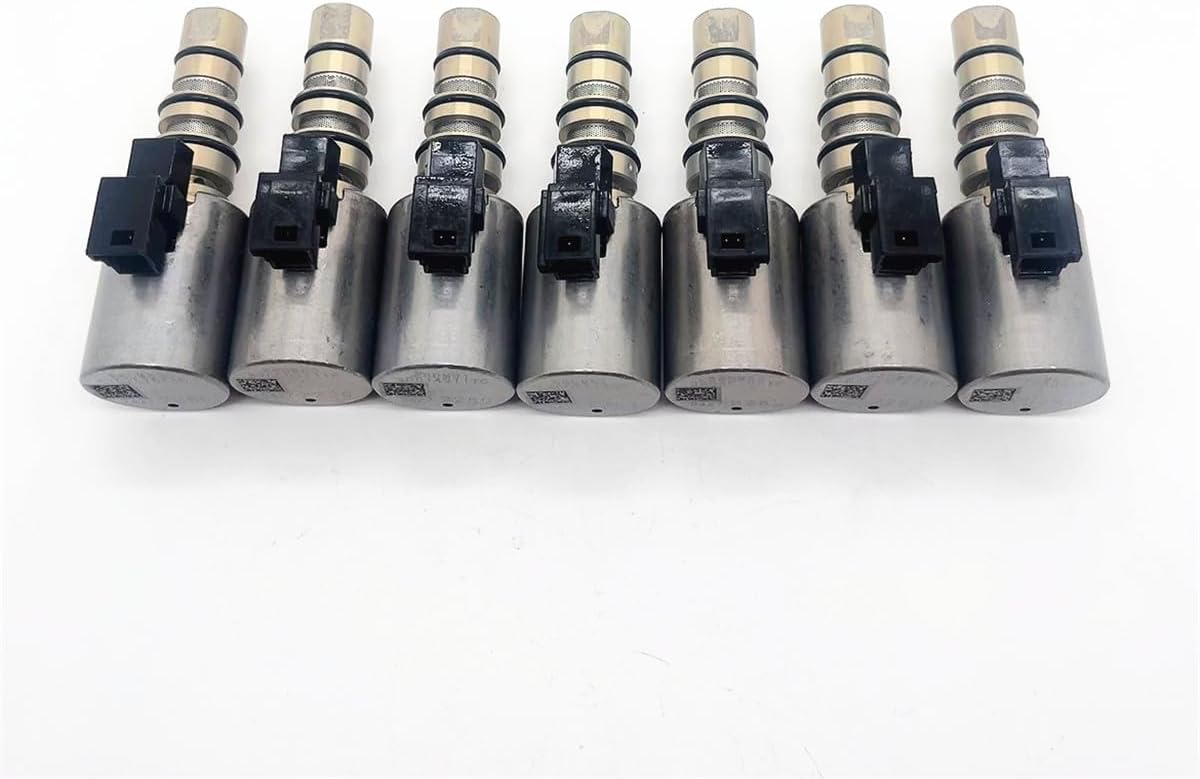
The hydraulics explain why the unit lands in second rather than anywhere else. Per ATRA's GEARS Magazine, the 8L90 valve body carries nine solenoids: seven variable force pressure control and two on/off. The two on/off units are three-port, normally closed designs. S8 is the fault control, or default, shift solenoid; S9 is the 1-2-3-4-5-reverse boost solenoid.
S8 controls the default override valve. With the solenoid off, control pressure exhausts out the back of it and actuator feed limit supply is blocked. When the TCM grounds it, the exhaust port closes and supply pressure opens into the control circuit. In the default state that valve is hydraulically latched in the stroked position, routing line pressure to a fixed set of clutches no matter what the pressure control solenoids are doing. The TCM is not carefully holding second gear; it has handed control to a valve that mechanically commits the unit to one gear and reverse.
It also means a stuck default override valve can produce failsafe symptoms with no electrical fault anywhere in the system, which is why the code comes first in the diagnosis and the valve body comes later.
Read the code before you touch anything
The TCM stores at least one code when it defaults, and that code names the circuit it is unhappy with. Two families matter: solenoid circuit codes, meaning the TCM measured a current it did not expect, and ratio codes, meaning the calculated ratio between input and output speed missed the commanded gear by more than the allowed tolerance.
Ratio codes mislead people, because they read like a slipping clutch and often are not. A solenoid that will not stroke its clutch control valve produces the same ratio mismatch as a burnt clutch pack. The code names which element failed to apply, not why.
The case that illustrates this best was documented in Transmission Digest by Craig Sarokoff. A 2018 Chevrolet Express 2500 with the 2.8L diesel came in going to failsafe intermittently, sometimes in second gear and sometimes in eighth, and it always had reverse. A full health check pulled two codes: P2670 and U0402. P2670 is defined as Actuator High Control Circuit Group 2 Low Voltage, and the GM diagnostic information for it points directly at terminal 19 of the transmission X175 connector, identifying it as shorted to ground or to voltage. That terminal is the voltage supply for six of the solenoids inside the transmission, carried on a gray wire with a brown tracer, and the code sets when the circuit shorts to ground for more than one second.
The repair was a harness rubbing on the tip of a bolt below the battery, wearing through the insulation on exactly that gray-with-brown-tracer wire. The companion U0402-74 code, invalid data from the TCM with a bus signal checksum error, cleared on its own once the wire was fixed. One chafed wire took out the supply to six solenoids and imitated a failed transmission.
Treat an intermittent failsafe with a group supply code as a wiring fault until proven otherwise. Wiggle-test the harness from the TCM down to the case connector, and inspect every point where the loom passes a fastener or a sharp edge.
Testing the solenoids
When the code names a specific solenoid rather than a group supply, the check is simple. All nine 8L90 solenoids measure 4.5 to 5.5 ohms and are controlled by current flow rather than on/off voltage. Anything well outside that window is a failed winding.
Rest state matters when reading scan data. The S1 (1-2-7-8-reverse), S4 (2-3-4-6-8), S5 (4-5-6-7-8-reverse) and line pressure solenoids are normally high; the TCC, 1-3-5-6-7 and 1-2-3-4-5-reverse solenoids are normally low. On a normally-high pressure control solenoid, turning it on shuts off pressure to its clutch control valve and blocks line pressure out of the apply circuit, so a solenoid stuck on behaves exactly like a clutch that will not apply.
Resistance is a weak test on its own, because it cannot see a solenoid that passes current and still fails to flow oil under pressure. The practical bench test is positional: move a suspect solenoid to an equivalent position and see whether the complaint follows it. Each solenoid has its own part number and flow rate, so that is a test only. They go back where they came from.
That flow-rate variation is why programming is not optional. Each valve body carries a Part Unique Number and each transmission a Transmission Unique Number, and the TCM stores the matching performance data. Replace a transmission, valve body, solenoid or TCM without downloading the new characterization data and the module is running the wrong flow tables, which is its own route into failsafe on an otherwise correct repair.
The hydraulic faults that imitate an electrical failure
When the wiring is clean and the solenoids check out, pressure is the next suspect. Sonnax product line manager Chris Leach reported that line pressure on the 8L45 and 8L90 should peak around 315 psi, but Sonnax measured units above 415 psi. The cause is a worn pressure regulator valve lineup combined with an OE blow-off spring calibrated too high, over 400 psi in some cases. Leakage at the worn valve will not let it stroke to its lower pressure position, so pressure runs away.
The consequences are not subtle: cracks in the worm tracks of the valve body casting, which cannot be repaired and scrap the casting, plus shattered drums. Sonnax recommends replacing the pressure regulator lineup and the blow-off spring every time one of these valve bodies is rebuilt, fitting O-ringed pressure regulator and shuttle valve kit 154740-29K with pressure relief ball valve spring 154740-18 to hold peak pressure in the 300 to 315 psi range.
Pressure faults run both ways. Too little slips a clutch and sets a ratio code; too much cracks castings and breaks parts, which also ends in failsafe with far more collateral damage. A gauge on the line pressure tap settles it in minutes.
Check the cooler line before you condemn the unit
One cause worth ruling out early costs nothing to inspect. GM bulletin PIP5792D covers 6L80, 6L90, 8L90, 10L80 and 10L1000 vehicles with harsh shift, shudder, surge, stall or above-normal fluid temperature at low mileage, and gives the root cause as a twisted cooler line. It notes that a twisted line may set P27EC in the TCM on ETRS transmissions. The fix is to disconnect the line at the auxiliary cooler and untwist it, or replace it if the rubber is misshapen.
Restricted cooler flow cooks clutches, and cooked clutches produce ratio codes and failsafe on a truck with very few miles on it. The inspection takes two minutes with the underbody panel off.
Record before you clear
GM bulletin PIP5437, covering 8L45 and 8L90 shift concerns across 2015 to 2017 Escalade, ATS, CTS, Corvette, Silverado, Camaro, Sierra and Yukon applications, sets the diagnostic order. Check codes in all modules and address them first. Test drive to duplicate the complaint, having the customer drive it for you if that is what it takes. Capture a GDS2 session log, bookmark the moment the concern occurs, and review the log to identify which shift is involved.
It also puts hard mileage thresholds on the adaptive explanation: 7,500 miles or less for 2015 vehicles, 5,000 for 2016, 2,500 for 2017, measured since the in-service date, a TCM calibration update, or a Service Fast Learn. Outside those windows, unlearned clutch fill times are not a credible cause and you are looking at hardware. Either way, do not clear codes or run a fast learn as your opening move: that erases the freeze frame and adaptive values that would have named the failed circuit.
Fluid, and the fill that goes with the repair
The 8L90 runs DEXRON HP, not the DEXRON VI the 6L90 uses and not the DEXRON ULV the 10L80 uses. The 2025 GM TechLink capacity chart lists the 8L90, RPO N8X, at 7.0 liters or 7.4 quarts for a fluid change. Mixing up the three GM specifications is an easy way to create shift complaints that look like a failing transmission.
If the fault generated debris, fluid and filter are part of the repair, not an upsell. A mechanically failed solenoid and a worn pressure regulator bore both put material into the circuit, and the next set of solenoids will not last in dirty oil.
The order that works
- Scan every module and record the codes and freeze frame. Do not clear anything yet.
- Confirm the symptom matches failsafe: second gear and reverse only. If reverse is missing, change tracks to a no-move and no-pressure diagnosis.
- If a group actuator supply code such as P2670 is present, inspect and wiggle-test the harness from the TCM to the X175 case connector before anything else.
- Check fluid level and condition, and inspect the cooler lines for the twist described in PIP5792D.
- Test solenoid resistance against the 4.5 to 5.5 ohm specification and compare commanded against actual on the scan tool.
- Put a gauge on the line pressure tap. Verify the peak against the roughly 315 psi design figure, and treat anything over 400 psi as an emergency.
- Only then pull the pan and the valve body, and inspect the pressure regulator lineup and the default override valve for wear and sticking.
- After any valve body, solenoid, transmission, or TCM replacement, program the new PUN or TUN before you road test.
Shop the part for this fix
If the diagnosis lands on the solenoids, CoreTransmissionParts stocks the 8L90 shift solenoid kit as a direct-fit replacement set. If it lands on runaway line pressure, they carry the exact Sonnax pressure regulator and O-ringed shuttle valve kit 154740-29K referenced above, plus the rest of the 8L90 catalog.
Shop the 8L90 shift solenoid kit →Need parts for this job?
Solenoid kits, shift kits, valve bodies, pressure regulator components and DEXRON HP for the GM 8L90 are all on our 8L90 parts page, with checkout on our own site. If the unit turned out to be further gone than a solenoid, the master rebuild and overhaul kits are on the same page.
FAQ
What gear does an 8L90 go into in limp mode?
If the unit still has basic hydraulic function, the 8L90 failsafe gears are second and reverse. Second is a usable compromise between takeoff torque and road speed, and keeping reverse means the vehicle can still be backed off a lift. A truck that has also lost reverse is not simply in failsafe: it has a pressure or mechanical problem on top of the electrical fault.
Why does my 8L90 go into limp mode intermittently and then drive normally?
Intermittent failsafe is usually a wiring or connector fault rather than a failed solenoid, because a dead solenoid sets a hard code and stays there. Transmission Digest documented a 2018 Express 2500 dropping into failsafe in second and sometimes eighth, caused by a harness rubbing through on a bolt tip below the battery. The damaged wire was the gray-with-brown-tracer solenoid supply, and P2670 sets when that circuit shorts for more than one second.
What should 8L90 shift solenoids measure on a meter?
All nine 8L90 solenoids measure 4.5 to 5.5 ohms, per ATRA's GEARS Magazine. Seven are variable force pressure control and two are on/off. Resistance only finds a shorted or open winding, so a solenoid that passes the meter can still fail mechanically under pressure. Swapping a suspect solenoid to another position and seeing whether the complaint follows it is the more useful test.
Can low line pressure put an 8L90 into limp mode?
Yes. The TCM compares commanded gear against calculated ratio, and if a clutch slips because pressure is wrong it sets a ratio code and defaults immediately. Sonnax puts the design peak near 315 psi but has measured units above 415 psi from a worn pressure regulator lineup and an over-calibrated blow-off spring. Both too little and too much pressure end in failsafe.
Should I clear the codes and road test an 8L90 in limp mode?
Not first. GM bulletin PIP5437 tells the technician to check codes in all modules and address them before anything else, and to capture a GDS2 session log bookmarked at the moment the complaint occurs. Clearing codes or running a Service Fast Learn during initial diagnosis destroys the freeze frame and adaptive data that name the failed circuit. Record first, then clear.
Related guides
- 8L90 Shift Solenoid Symptoms and Testing — the solenoid-level companion to this article
- 8L90 P0748: Pressure Control Solenoid Electrical Causes and Fix
- 8L90 Pressure Testing: Taps, Specs and Readings
- 8L90 Common Problems and Fixes
- GM 8L90 and 8L45 Shudder and Harsh Shift Fix
Sources
- Transmission Digest, "8L90 Intermittent Failsafe Diagnosis and Cause" (Craig Sarokoff) — backs the 2018 Express 2500 2.8L diesel case study, failsafe in second and eighth with reverse retained, codes P2670 and U0402-74, the P2670 definition as Actuator High Control Circuit Group 2 Low Voltage, terminal 19 at the X175 transmission connector as the supply for six solenoids, the gray-with-brown-tracer wire, the one-second short-to-ground threshold, and the chafed harness repair. transmissiondigest.com
- Transmission Digest / Sonnax TASC Force, "How to fix GM 8L45/8L90 no-move and no-pressure conditions" (Jim Mobley) — backs second and reverse as the 8L90 failsafe and default gears when the unit has basic function, and the distinction between a failsafe event and a true no-move or no-pressure condition. transmissiondigest.com
- GEARS Magazine (ATRA), "8L90 Solenoid Strategies" — backs the nine-solenoid count with seven variable force pressure control and two on/off solenoids, the 4.5 to 5.5 ohm resistance specification, current-flow control, the normally-high S1/S4/S5/line pressure and normally-low TCC/1-3-5-6-7/1-2-3-4-5-reverse assignments, the S8 fault control solenoid operating the default override valve and its hydraulically latched stroked position, the S9 boost solenoid, and the PUN/TUN characterization data that must be programmed into the TCM. gearsmagazine.com
- Sonnax, "Watch Out for High Pressure in GM 8L45, 8L90 Valve Bodies" (Chris Leach, TASC Force) — backs the roughly 315 psi design peak, the 415+ psi measured in Sonnax evaluations, the worn pressure regulator lineup and over-400 psi blow-off spring calibration as root cause, cracked valve body worm tracks and catastrophic drum failure, and kits 154740-29K and 154740-18 holding peak pressure in the 300 to 315 psi range. sonnax.com
- General Motors, Bulletin PIP5437, "8L45 8L90 Diagnostic Tips for Harsh Shifts" (Nov-2016), hosted by NHTSA — backs the covered 2015–2017 Cadillac, Chevrolet and GMC applications, the instruction to check and address DTCs in all modules first, the GDS2 session log and bookmark procedure, and the 7,500 / 5,000 / 2,500 mile thresholds by model year for the unlearned clutch fill time explanation. static.nhtsa.gov (PDF)
- GM TechLink, 2025 Transmission Capacities & Fluids — backs the 8L90 RPO N8X fluid change capacity of 7.0 liters / 7.4 quarts and the DEXRON HP specification, and the contrast with DEXRON VI on the 6L90 and DEXRON ULV on the 10L80 and 10L1000. gm-techlink.com (PDF)