A harsh-shifting ZF 9HP48 (badged 948TE on Chrysler and Jeep products, and shared with Honda, Acura, and Land Rover applications) is one of the most over-repaired complaints in the shop, because the symptom — a thump on a garage shift, a bang on the 1-2 upshift, a hard coastdown — looks identical whether the root cause is a hundred-dollar TCM flash or a torn-apart valve body. Stellantis has published a long run of software bulletins for exactly this complaint on early-production units, which means the correct first move on a harsh-shifting 9HP48 is rarely a parts order.
This is the order a rebuilder should actually check it in: TCM calibration first, fluid condition and type second, and valve body pressure regulator wear third — with the real bulletin numbers, the exact fluid spec, and the documented failure mechanism for each one.
The short version: Stellantis issued TSB 21-034-14 (November 2014) and TSB 21-043-15 (June 2015) specifically to fix harsh garage shifts, coastdown shift quality, and 3-2 downshift delay on the early 948TE. Before touching the valve body, confirm the TCM calibration is current and the fluid is genuine ZF LifeguardFluid 9 (ZF spec TE-ML 11) at the correct level. If both of those check out and the shift is still harsh, worn pressure regulator valve bores inside the valve body — a documented Sonnax wear point — are the next most likely cause.

Cause 1: TCM Software Calibration
The 948TE launched behind the 2014 Jeep Cherokee (KL) and 2015 Chrysler 200 (UF), and Stellantis spent the next two years chasing shift-quality complaints with TCM calibration updates — not parts changes. TSB 21-034-14 (November 1, 2014) reprogrammed the TCM on affected KL and UF vehicles built before late October 2014 specifically to improve transmission downshift response time and to enable a wiTECH-based "Transmission Quick Learn" procedure for addressing poor shift quality.
TSB 21-043-15 (June 19, 2015), which superseded an earlier bulletin and was also pushed as Rapid Response Transmittal 14-040, went further. It targeted 2014 Jeep Cherokee units with the 3.2L engine and listed these specific shift-quality fixes in the release notes: 3-2 downshift delay while driving on inclines, garage shifts (Park to Reverse or Drive), overall coastdown shift quality, throttle response and performance feel, management and prevention of busy shifting, and lift-foot/change-mind shift quality. That list reads like a harsh-shift complaint sheet because it is one — Stellantis wrote the fix around the exact symptoms techs were seeing in the bay.
| Code | Definition |
|---|---|
| P0711 | Transmission Fluid Temperature Sensor A Circuit Range-Performance |
| P072F | Stuck in Gear 4 |
| P076F | Gear 7 shift incorrect ratio |
| P0810 | Clutch position control error |
| P1CC9 | Unable to engage gear |
| P0734 | Gear 4 shift incorrect ratio |
| P061B | Internal control module torque calculation performance |
Per TSB 21-043-15, any of those seven codes stored in TCM memory on an affected 948TE is a direct match for the software fix, not a hardware replacement. The repair procedure for both bulletins reprograms the TCM, then requires a PROXI Configuration Alignment, a VIN Verification routine, and the 9-Speed Adaptation Drive Learn procedure afterward — skipping the drive-learn step after a flash is the single most common reason a "fixed" 948TE still shifts rough on the test drive.
Software fixes did not stop in 2015. TSB 21-045-20 (September 11, 2020, superseding 21-055-18) covers 2019 KL Cherokees with the 3.2L V6 and the 948TE, and lists a "bump" during 2-1 coastdowns with light brake or no brake applied, plus an audible clunk on throttle after coasting in 5th and 6th gear at 30-45 mph. The repair is again a TCM reflash, with the PCM updated afterward and a battery charger holding 13.2 to 13.5 volts during the flash. On a later-model unit with a coastdown complaint, check the software level before assuming it is mechanical.
When a harsh shift lands on one specific shift, map it to the dog clutches. Per Transmission Digest, the F dog clutch is engaged in Park, Neutral, Reverse and 1st through 4th, and the A dog clutch in 1st through 7th (Transmission Digest, “ZF9HP48 FWD Nine Speed, Part 2”). Toothed dog clutches cannot slip like a friction pack, so a bang right on the 4-5/5-4 or 7-8/8-7 shift points at dog clutch timing, its apply circuit, or spline wear rather than a general pressure problem.
Cause 2: Wrong or Degraded Fluid
ZF is blunt about this one. The 9HP48 is factory-filled with ZF LifeguardFluid 9, and ZF's own product datasheet states that using any other fluid in these transmissions "can lead to significantly worse shifting behavior, up to transmission failure." That is not boilerplate caution language — it is the manufacturer naming shift quality as a direct consequence of fluid choice.
The published specs for ZF LifeguardFluid 9 (product AA01.500.001): blue in color, density of 846 kg/m³ at 15°C, kinematic viscosity of 24.9 mm²/s at 40°C and 5.6 mm²/s at 100°C, Brookfield viscosity of 8,850 mPa.s at -40°C, a pour point of -42°C, and a flash point of 185°C (COC method). Those numbers matter because the 9HP48's clutch-to-clutch shift control depends on consistent fluid viscosity to time clutch fill and release — fluid that has sheared out of spec, picked up the wrong friction modifier package, or simply run low will throw off that timing and present exactly like a harsh shift complaint.
ZF's official guidance is that these transmissions ship with lifetime fill and typically only need a change at the time of a repair, but the company still recommends a fluid change at 150,000 km as a baseline, sooner under high-temperature or high-load operation, or if the vehicle's prior service history is unknown. A low or dark fluid sample on a harsh-shifting 9HP48 should get fixed before any flash or parts order, not after.
Cause 3: Valve Body Pressure Regulator Wear
If the TCM calibration is current and the fluid checks out, the next real cause lives inside the valve body itself. Sonnax's drop-in Solenoid Pressure Regulator Valve Kit (85740-09K), built for the Chrysler 948TE, the Honda/Acura 9-speed, and the ZF9HP48, exists because the factory pressure regulator valve and bore wear over time and mileage. Per Sonnax, worn valve-to-bore clearance lets critical pressurized oil cross-leak to the sump, which reduces the oil pressure and volume available to the solenoids — and that shortfall shows up as delayed engagement, harsh upshifts and downshifts, neutral shifts, high line pressure, wrong gear starts, torque converter clutch slip, flare shifts, and gear-ratio or solenoid DTCs. The wear is progressive, so it tends to get worse as the transmission runs hotter and the fluid thins.
This is also the point where the symptom list genuinely overlaps with Cause 1 and Cause 2, which is exactly why checking software and fluid first matters: a pressure regulator valve kit or a reman valve body is real money and real labor, and it is wasted money if a TCM flash or a fluid service was the actual fix.
Diagnostic Order for a Harsh-Shifting 9HP48
- Pull codes and record active vs. stored. If any of the seven codes in the table above are present on an affected 2014-2015 Jeep Cherokee or Chrysler 200, that is a direct match for a known software bulletin.
- Check for an outstanding TCM calibration update with wiTECH before doing anything else. If the software is out of date, reprogram it, then run the PROXI Configuration Alignment, VIN Verification, and 9-Speed Adaptation Drive Learn procedures in that order — skipping the drive-learn step is why some flashed units still shift harsh on the test drive.
- Pull a fluid sample and check level, color, and smell. Confirm it is genuine ZF LifeguardFluid 9 (blue) and not a substitute fluid. If the level is low or the fluid is dark or burnt-smelling, perform a fluid and filter service before condemning any hard part.
- Road test after the flash and fluid service and note exactly which shifts are still harsh — garage shifts, a specific upshift, or coastdown. A complaint that persists in the same spot after software and fluid are both confirmed good points at the valve body.
- If the symptom persists, inspect the valve body pressure regulator bore for wear and install a pressure regulator valve kit, or replace the unit with a remanufactured valve body if wear is extensive.
9HP48 Valve Bodies, Solenoid Kits, and Filter Service
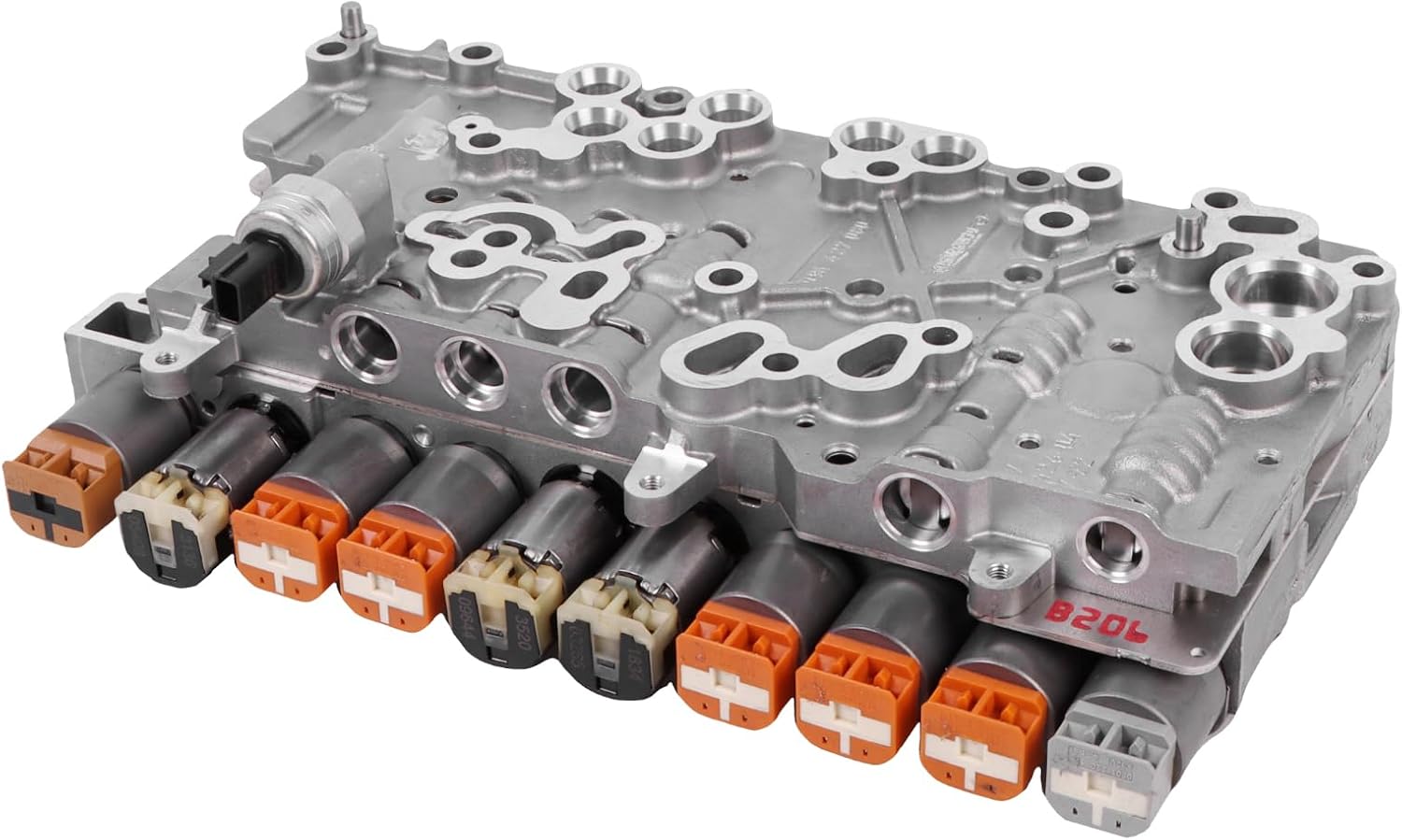
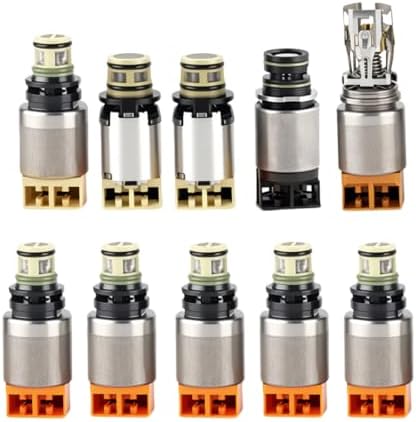
Once the TCM calibration and fluid are confirmed good, we stock a remanufactured 9HP48 valve body with all 10 solenoids installed, a refurbished 10-piece solenoid kit, and the correct filter and pan gasket kit to do the fluid service right — shipped fast from the USA.
Shop 9HP48 parts →FAQ
What is the most common cause of a harsh shifting 9HP48?
On early-production units it is TCM calibration, not a hardware fault. Stellantis released a string of 948TE software bulletins — including TSB 21-034-14 and TSB 21-043-15 — specifically to fix harsh garage shifts (Park to Drive or Reverse), coastdown shift quality, 3-2 downshift delay on inclines, and busy shifting. Checking for an outstanding TCM flash before replacing any part is the documented first step.
Can bad transmission fluid cause a 9HP48 to shift harsh?
Yes. ZF specifies that only ZF LifeguardFluid 9 is approved for the 9HP48 under ZF lubricant list TE-ML 11, and states directly that using a different fluid can cause noticeably degraded shift quality up to transmission failure. ZF's own service guidance calls for a fluid change at 150,000 km, sooner under high heat, heavy load, or unknown service history — all conditions that push the fluid outside the viscosity range (24.9 mm²/s at 40°C) it needs to control shift feel.
What DTCs show up with 948TE harsh shift complaints?
Stellantis TSB 21-043-15 lists P0711 (Transmission Fluid Temperature Sensor A Circuit Range-Performance), P072F (Stuck in Gear 4), P076F (Gear 7 shift incorrect ratio), P0810 (Clutch position control error), P1CC9 (Unable to engage gear), P0734 (Gear 4 shift incorrect ratio), and P061B (Internal control module torque calculation performance) as codes corrected by that software release on affected 2014 Jeep Cherokee units.
Is a harsh shifting 9HP48 always a valve body problem?
No. Sonnax documents that worn pressure regulator valve bores inside the 948TE/ZF9HP48 valve body cross-leak oil to the sump and starve the solenoids of pressure and volume, which does cause harsh upshifts and downshifts — but the same symptom list also matches an open TCM software bulletin and a fluid condition problem. The practical order is TCM calibration first, fluid second, valve body wear third, because the first two cost nothing in parts.
Sources
- Stellantis/FCA US LLC — Technical Service Bulletin 21-034-14, “Flash: 948TE 9 Speed Shift Enhancements And Quick Learn Enable” (November 1, 2014): the TCM calibration update enabling the wiTECH “Transmission Quick Learn” procedure for poor shift quality and improved downshift response time, applicable 2015 Jeep Cherokee (KL) and Chrysler 200 (UF) build windows. static.nhtsa.gov (NHTSA TSB archive)
- Stellantis/FCA US LLC — Technical Service Bulletin 21-043-15, “Flash: Transmission Shift and Diagnostic Enhancements” (June 19, 2015): the full list of DTCs (P0711, P072F, P076F, P0810, P1CC9, P0734, P061B) and shift-quality improvements (garage shifts, coastdown, 3-2 downshift delay, busy shifting) corrected by this release on 2014 Jeep Cherokee 3.2L 948TE units. static.nhtsa.gov (NHTSA TSB archive)
- ZF Friedrichshafen AG — ZF LifeguardFluid 9 Product Data Sheet (July 19, 2021): the exact fluid required for 8HP/9HP ZF automatic transmissions under ZF lubricant list TE-ML 11, its viscosity, density, pour point and flash point specs, the warning against substitute fluids, and the 150,000 km service guidance. aftermarket.zf.com
- Sonnax — Solenoid Pressure Regulator Valve Kit 85740-09K product page: the documented failure mechanism (worn valve/bore cross-leak reducing solenoid oil pressure and volume) and full symptom list for the Chrysler 948TE, Honda/Acura 9-Speed, and ZF9HP48 valve body. sonnax.com
- Gears Magazine (ATRA) — “ZF 9HP48: A Mechanical Marvel” (December 2019): background on the 9HP48's four multiple-disc clutch assemblies and two dog clutch assemblies, and documented early shift-quality issues (harsh upshifts/downshifts, delayed engagements, gear ratio error DTCs) resolved primarily through TCM software updates. gearsmagazine.com
- FCA US LLC — Technical Service Bulletin 21-045-20, “Flash: Transmission Control Module (TCM) Updates” (September 11, 2020): 2019 KL Cherokee 3.2L with 948TE, 2-1 coastdown bump and tip-in clunk symptoms, reflash procedure and battery voltage limits. Hosted by NHTSA. static.nhtsa.gov
- Transmission Digest — “ZF9HP48 FWD Nine Speed, Part 2”: F dog clutch engaged in P, N, R and 1st-4th; A dog clutch applied 1st-7th; dog clutch spline wear. transmissiondigest.com