There is a specific complaint on the ZF 9HP48/948TE that is different from the classic "stuck in 4th, check-engine light on" limp-mode case: the truck or car shifts through 1st, 2nd, all the way up to 8th gear completely normally, and then on the highway, at cruise, it just never makes the last shift into 9th. RPM hangs a few hundred higher than it should at 65-70 mph, fuel economy drops, and the transmission will sit in 8th all day without ever completing the final upshift. No limp mode. Sometimes no code at all.
That narrower symptom points at a narrower part of the transmission than a full solenoid-pack failure does, because of how specific this transmission's top gear actually is. Stellantis's own published clutch chart for the 948TE shows exactly which three clutches build 9th gear, and it is not the same three that build 8th. Understanding that difference is the fastest way to stop guessing and start testing the right circuit.
The short version: Per Stellantis's 948TE Clutch Application Chart (TSB 21-032-14), 9th gear (0.479:1) is built with Clutch B, Clutch D and Clutch E applied, while 8th gear (0.580:1) uses Clutch C, D and E. The 8-to-9 upshift is really a single clutch swap -- C releases, B applies, D and E never let go. A 9HP48 that shifts fine through 8th and then won't complete that one swap is most often a Clutch B apply-circuit fault, a stuck Clutch C, or a line-pressure problem at the valve body, not a dead solenoid pack. The code to watch for is P1D98, defined by Stellantis itself as "Incorrect Gear Ratio Clutch B or D Defective."
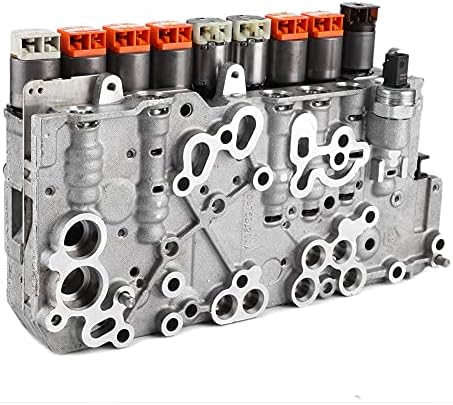
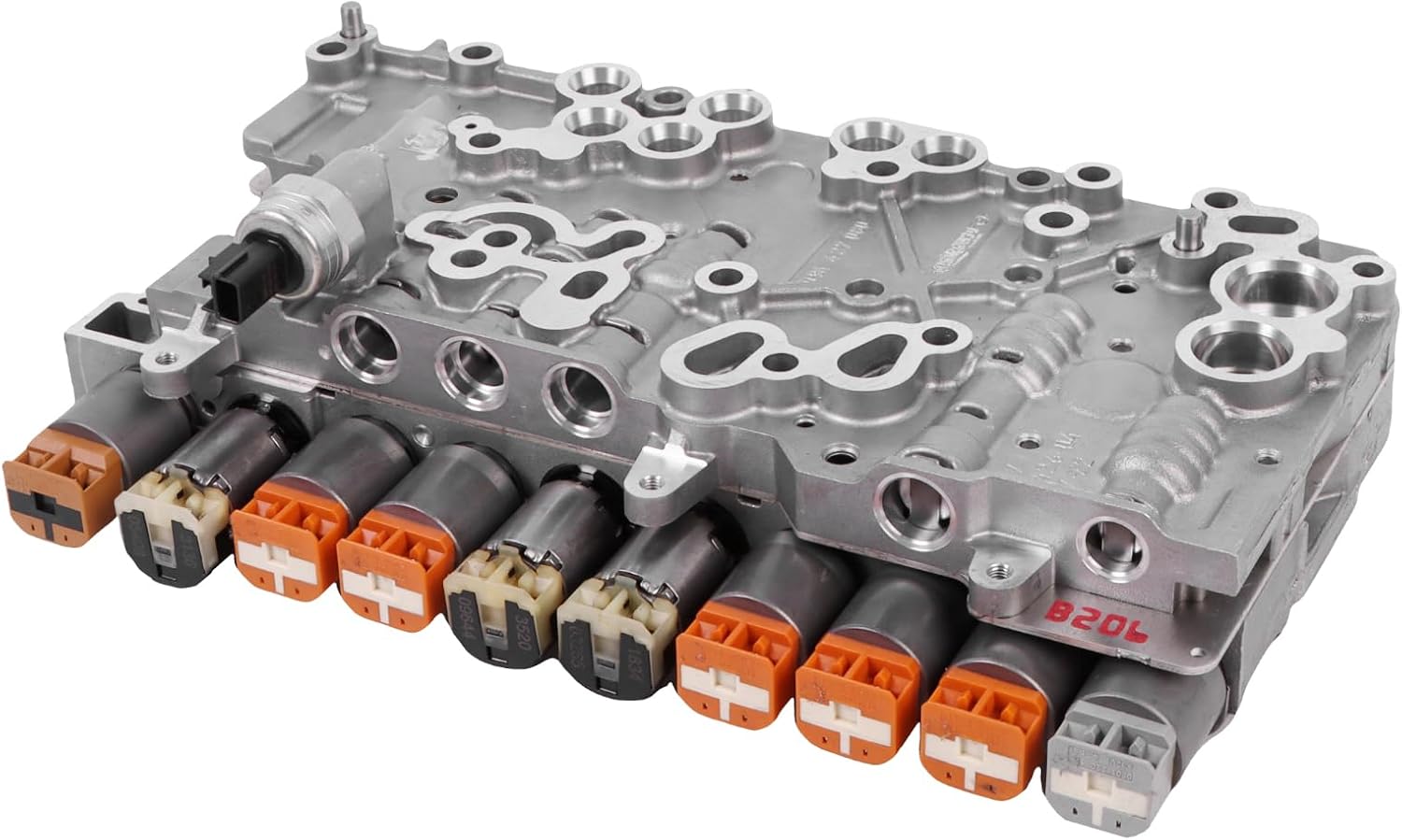

Why 9th Gear Is Different From Every Other Gear on the 9HP48
The 948TE/9HP48 carries six clutch elements -- four conventional multi-disc clutches (B, C, D, E) and two dog clutches (A and F) that work more like non-synchronized manual-transmission sleeves than friction packs. Every forward gear is built by applying exactly three of those six elements. Stellantis published the full chart in TSB 21-032-14, "9 Speed Transmission Shift Enhancements - Adaptation Learn Procedure," and it is worth laying out the gears closest to the one most drivers actually complain about:
| Gear | Clutches applied | Ratio |
|---|---|---|
| Seventh | A (dog), D, E | 0.699 |
| Eighth | C, D, E | 0.580 |
| Ninth (overdrive) | B, D, E | 0.479 |
| Reverse | B, D, F (dog) | 3.805 (approx.) |
Two things fall out of that chart that matter for diagnosis. First, both dog clutches (A and F) are already released by the time the transmission is in 8th gear -- so a dog-clutch problem, which is a well-documented failure point on this unit, cannot by itself be what is keeping the car out of 9th. Second, and more useful: Clutch D and Clutch E are held applied through 7th, 8th and 9th without ever releasing. The only thing that changes going from 8th to 9th is that Clutch C releases and Clutch B applies. That is the entire shift. If the transmission can hold 8th gear cleanly, the TCM, the pump, and the base line pressure are all already proven good -- what is left to suspect is specifically the Clutch B apply path and the Clutch C release path.
The Code That Points Directly at This Shift: P1D98
Stellantis added diagnostic coverage for exactly this failure mode in FCA TSB 21-040-15, "Flash: Transmission Shift And Drivability Enhancements." The bulletin lists P1D98-00, "Incorrect Gear Ratio Clutch B or D Defective," alongside P1CC9-00, "Unable To Engage Gear," P0887 (TCM Power Control Circuit High) and P0711 (Transmission Fluid Temperature Sensor A Circuit Range-Performance). All four are corrected in that bulletin's affected population with a TCM software reprogram -- not a parts swap.
| Code | Definition | Source |
|---|---|---|
| P1D98 | Incorrect Gear Ratio Clutch B or D Defective | FCA TSB 21-040-15 |
| P1CC9 | Unable To Engage Gear | FCA TSB 21-040-15 |
| P0887 | TCM Power Control Circuit High | FCA TSB 21-040-15 |
| P0711 | Transmission Fluid Temperature Sensor A Circuit Range-Performance | FCA TSB 21-040-15 |
P1D98 lines up with the clutch chart almost exactly: Clutch B and Clutch D are two of the three clutches 9th gear needs, and Clutch D is also shared with 7th and 8th. The TCM monitors actual input-to-output speed ratio against a calibrated min/max window for the commanded gear, during steady-state operation, during engagement, and through the shift itself -- so a slipping or non-applying Clutch B, or a Clutch D that is not holding as firmly as the TCM expects once Clutch C lets go, will set this code. If a scan tool pulls P1D98 or P1CC9 on an affected calibration, checking for an available TCM flash before opening the transmission is the first move the manufacturer's own bulletin calls for.
When the Codes Are Clean: Hydraulic Causes at the Valve Body
Plenty of 9HP48/948TE units refuse 9th gear with no stored code at all, which pushes the problem into the hydraulic side of the valve body rather than the electrical side. Sonnax's published diagnostics on this transmission describe a design detail that is easy to miss: the 948TE/ZF9HP48 does not regulate line pressure with a single conventional pressure regulator valve. It adds a second valve, the shift valve-system pressure (SV-SP) valve, which takes EPC signal from the system pressure solenoid and uses it to control line pressure applied to the balance end of the main regulator valve. Wear at the SV-SP valve -- or at the main pressure-regulator bore itself, which Sonnax separately documents as a common wear point on this family -- causes incorrect line pressure control, degraded shift quality, and in advanced cases burnt clutches.
That pressure margin matters most at the top of the gear range. Ninth gear runs the lowest torque multiplication of any forward gear, so the clutch apply pressure the TCM commands for Clutch B has the least room for error before the clutch slips under load instead of locking up. A valve body that is otherwise "good enough" to hold 1st through 8th cleanly can still be too far gone to complete a clean 8-to-9 handoff, especially under load (towing, a loaded vehicle, or climbing a grade) where the transmission is most likely to attempt that shift in the first place.
Diagnostic Order: What to Check Before You Buy a Valve Body
- Confirm the exact symptom. Does the transmission ever show 9th gear on the scan tool's live PID for commanded/actual gear, or does it hang at 8th indefinitely at highway speed? A transmission that briefly flashes into 9th and drops back out is a different fault (a slip under load) than one that never attempts the shift at all.
- Pull codes and separate active from stored. P1D98 or P1CC9, active and repeatable, points straight at the Clutch B/D path described above. No codes at all shifts the investigation toward hydraulics and adaptation.
- Check for an available TCM calibration update before replacing anything. FCA TSB 21-040-15 and the separate shift-quality bulletin covering 2018-model-year 948TE-equipped vehicles both correct shift-related DTCs and upshift quality purely through a TCM reprogram.
- Confirm fluid level and condition. This is a five-minute check and it is non-negotiable on this transmission family -- see the fluid section below.
- If equipped with wiTECH access, watch live Clutch B and Clutch D adaptation data (filling time and filling pressure) while commanding the 8-9 shift. A Clutch B fill time or pressure far outside its learned baseline points at that specific clutch circuit rather than the valve body as a whole.
- If the valve body is replaced or the transmission is overhauled, run the Adaptation Learn procedure (TSB 21-032-14) afterward. Until the adaptation memory cells relearn fill time and fill pressure for each clutch, shift quality -- including the 8-9 shift -- will not meet the original calibration's expectations, even on a correctly repaired unit.
- Only after the above is ruled out, replace the valve body/solenoid assembly as a unit, since the solenoids that control Clutch B and Clutch C apply pressure are integrated into it rather than sold as standalone parts.
A Different No-Go Fault Worth Ruling Out
It's worth separating this from a related but distinct 9HP48 complaint. ATRA's Gears magazine has documented a separate failure where the A-dog clutch wears enough to set P0810 (Clutch Position Control Error) and leave the vehicle stuck in park or unable to move at all -- a "no-go," not a "won't reach top gear" complaint. Since Clutch A is a dog clutch used in 1st through 7th gear and already released by 8th, A-dog clutch wear is not the mechanism behind a 9HP48 that holds 8th fine but won't reach 9th. If a shop sees P0810 or a stuck-in-park complaint on this transmission, that is the separate failure path to chase, not the Clutch B/valve-body path covered here.
Fluid: Still Worth Confirming, Even Here
ZF's own product data sheet for Lifeguard Fluid 9 -- the factory-specified fluid for 8HP and 9HP transmissions -- is blunt about this: "using other transmission fluids can lead to various adverse effects, ranging from significant deterioration in shifting characteristics to transmission failure." The fluid itself is a semi-synthetic formula (not a generic full-synthetic ATF), blue in color, approved under ZF List of Lubricants TE-ML 11, with a viscosity of 24.9 mm²/s at 40°C and 5.6 mm²/s at 100°C per the manufacturer's published characteristics. ZF considers these transmissions lifetime-filled under normal use but recommends a change at 150,000 km, sooner under high heat, heavy load, or unknown prior use -- all conditions that also happen to be exactly when a transmission is working hardest to complete that 8-9 overdrive shift. Wrong fluid, low fluid, or badly degraded fluid can mimic a Clutch B hydraulic fault from the driver's seat without a single code being set. For exact capacity by vehicle badge, see our dedicated 9HP48 fluid type and capacity guide.
9HP48 Valve Bodies and Fluid Service Parts
Once the TCM calibration and fluid are confirmed good, we stock a remanufactured 9HP48 valve body with all 10 solenoids installed, a complete valve body with wire harness, and the correct filter and pan gasket kit to do the fluid service right -- shipped fast from the USA.
Shop 9HP48 parts →FAQ
Which clutches does a 9HP48 use to build 9th gear (overdrive)?
Per Stellantis's own 948TE Clutch Application Chart (TSB 21-032-14), ninth gear is built by applying Clutch B, Clutch D and Clutch E together, with both dog clutches (A and F) released. Eighth gear uses Clutch C, D and E -- so the 8-to-9 upshift is really just one clutch swap: Clutch C releases while Clutch B applies, with D and E staying held the whole time.
What code points directly at a 9HP48 stuck below 9th gear?
P1D98, defined by Stellantis as "Incorrect Gear Ratio Clutch B or D Defective," is the code to watch for. It is documented in FCA TSB 21-040-15 alongside P1CC9 ("Unable To Engage Gear"), both corrected in that bulletin's affected vehicles with a TCM software reprogram rather than a parts replacement. Since Clutch B and D are two of the three clutches that build 9th gear, this code lines up directly with a transmission that won't reach overdrive.
Can a worn valve body cause a 9HP48 to stay out of 9th gear even with good solenoids?
Yes. Sonnax's published diagnostics on the 948TE/ZF9HP48 describe a shift valve-system pressure (SV-SP) valve that regulates line pressure using EPC signal from the system pressure solenoid. Wear at this valve, or in the main pressure regulator bore, causes incorrect line pressure control -- and that pressure margin is thinnest at the top of the gear range, which is exactly where a 9HP48 will hesitate or refuse to complete the shift into 9th even when every solenoid tests electrically fine.
Should I check fluid before replacing the valve body on a 9HP48 that won't go into overdrive?
Yes, every time. ZF's own Lifeguard Fluid 9 datasheet states plainly that using the wrong fluid in a 9HP transmission can cause anything from degraded shift quality to outright transmission failure, and the fluid is a specific semi-synthetic formula approved under ZF List of Lubricants TE-ML 11 -- not a generic ATF. Confirming the correct fluid is in the pan, at the correct level, costs nothing and rules out a cause that looks identical to a bad valve body from the driver's seat.
Is a 9HP48 that won't shift into overdrive the same problem as one stuck in limp mode at 4th gear?
No, and the distinction matters for diagnosis. A transmission stuck in limp-mode 4th has lost the TCM's confidence in the whole solenoid pack and dropped to a dedicated failsafe gear. A transmission that shifts normally through 1st-8th and simply will not complete the 8-to-9 upshift is a narrower fault, isolated to the Clutch B apply circuit, the Clutch C release path, or the line-pressure components that both of those depend on -- not a full pack failure.
Sources
- Stellantis/FCA US LLC — Technical Service Bulletin 21-032-14, “9 Speed Transmission Shift Enhancements - Adaptation Learn Procedure” (October 3, 2014): the full 948TE Clutch Application Chart showing which of Clutches A-F apply in each of the nine forward gears, reverse, and the Default Fourth Gear failsafe, used here to identify that 9th gear applies Clutch B, D and E while 8th applies C, D and E. static.nhtsa.gov (NHTSA TSB archive)
- Stellantis/FCA US LLC — Technical Service Bulletin 21-040-15, “Flash: Transmission Shift And Drivability Enhancements” (June 5, 2015): codes P1D98 (Incorrect Gear Ratio Clutch B or D Defective), P1CC9 (Unable To Engage Gear), P0887 and P0711, corrected via TCM software reprogram on affected 948TE-equipped vehicles. static.nhtsa.gov (NHTSA TSB archive)
- Sonnax — “ZF9HP48/948TE Line Pressure Control Diagnostics” technical resource: the two-stage pressure regulation design using the shift valve-system pressure (SV-SP) valve, how it uses EPC signal from the system pressure solenoid to balance the main pressure regulator valve, and the shift-quality and clutch-burning symptoms tied to wear at that valve. sonnax.com
- Sonnax — Zip Kit 948TE-ZF9-HONDA-ZIP product page: documents pressure loss in the main line, system, solenoid feed and clutch control circuits on the Chrysler 948TE, ZF9HP48 and Honda/Acura 9-speed as a root cause of poor shift quality, delayed engagement and gear-ratio/solenoid codes. sonnax.com
- ZF Friedrichshafen AG — Product Data Sheet, “ZF Lifeguard Fluid 9” (July 19, 2021): official fluid specification for ZF 8HP/9HP automatic transmissions, approval under ZF List of Lubricants TE-ML 11, semi-synthetic base oil, published viscosity (24.9 mm²/s at 40°C, 5.6 mm²/s at 100°C), and the 150,000 km recommended change interval. aftermarket.zf.com
- Keith Clark, ATRA — “ZF9HP48: Worn Parts Create Stuck in Park – Dog Clutch Issues Cause a No-Go,” Gears Magazine (April 1, 2026): the A-dog clutch wear failure mode, code P0810 (Clutch Position Control Error), and why this is a distinct no-go fault separate from a top-gear shift complaint. gearsmagazine.com