When a ZF 9HP48 goes into limp mode — badged 948TE on Chrysler, Jeep, Ram and Fiat products, and shared in close relatives across Acura, Honda, Land Rover and Range Rover — the transmission control module stops trying to shift and locks the unit into a single fixed gear, typically holding road speed to somewhere around 30 to 45 mph. It is a protective fallback, not a random glitch, and the TCM only goes there because it already flagged a fault it does not trust itself to keep shifting through. The trouble is that "a fault" covers a lot of ground on this unit: a documented software bug with its own Stellantis bulletin, a chafed wire that only shorts under load, a worn hydraulic valve most techs have never heard of, and a fluid level that is wrong in a way a normal dipstick check would never catch.
This is what each of those causes actually looks like, the Stellantis and industry documentation behind them, and the order to check them in before parts start coming off the vehicle.
The short version: On a 2017 Jeep Cherokee (KL) with a 948TE built before June 15, 2017, Stellantis TSB 21-006-17 REV. B documents a fixed-gear limp mode tied to codes P0810, P0887, U1424 and P1DCD, fixed with a TCM software reflash, no parts required. Off that bulletin's VIN range, the next two most common real-world causes are a chafed wiring harness between the TCM and case connector — documented in a Transmission Digest field case — and wear at the transmission's SV-SP valve, a 9HP48-specific hydraulic valve Sonnax has written up separately from the usual pressure-regulator wear points. A fluid level that is wrong for the temperature it was checked at, not just low on the stick, is also a documented trigger worth ruling out before any of the above.

What 9HP48 Limp Mode Actually Looks Like
The transmission does not shut off or stall — it keeps driving, just locked into one gear, with the TCM refusing to attempt further shifts until the fault clears or the key is cycled. Drivers typically describe it the same way regardless of what is actually causing it underneath:
- Stuck in a single gear, most often reported as third or fourth, with a hard ceiling on road speed somewhere in the 30 to 45 mph range.
- Flat, sluggish acceleration and an engine that revs noticeably higher than normal for the gear it is stuck in.
- Harsh engagement shifting out of Park into Drive or Reverse, since the TCM is applying clutches without its normal adaptive shift logic active.
- A MIL on the dash with one or more stored codes, though which codes depends entirely on which of the causes below is actually responsible.
Because the symptom looks identical across several unrelated root causes, the diagnostic order below matters more than the symptom description does.
Cause 1: The Documented TCM Software Fault (TSB 21-006-17)
Stellantis Service Bulletin 21-006-17 REV. B, "Flash: Transmission Diagnostic and Shift Enhancements," covers 2017 Jeep Cherokee (KL) models built on or before June 15, 2017, with either the 2.4L engine (sales codes ED6/ED8) or the 3.2L V6 (sales code EHK), paired with the 9-speed 948TE in FWD/AWD (sales code DFH) or 4WD (sales code DFJ) configuration. The bulletin lists the codes directly:
| DTC | Description |
|---|---|
| P0810-00 | Clutch Position Control Error (3.2L V6 / EHK only) |
| P0887-00 | TCM Power Control Circuit High |
| U1424-00 | Implausible Engine Torque Signal Received |
| P1DCD-00 | TCM Monitoring Processor Performance, Multiple Clutches Locked Up |
The listed symptom language is explicit: "During a limp mode condition, the transmission remains in a fixed gear," along with 5-4 downshift hesitation and a longer-than-normal delay shifting from Reverse into Drive. ATRA's own technical writeup on this transmission's P0810 logic explains the mechanism behind that code: the 9HP48/948TE uses two hydraulically actuated dog clutches (A and F) instead of conventional clutch packs for part of the gear train, and a pressure transducer circuit verifies each dog clutch physically reached its commanded position. When the computer cannot confirm that position within its calibrated window, it sets P0810 and will not trust further shifts.
The repair in TSB 21-006-17 is a straight TCM reprogram with the latest wiTECH software, which also bundles calibration updates for the Engine Stop-Start system and coast-down tip-in behavior. A technician checks whether the TCM already has the latest software first; if not, the flash itself runs about five minutes, after which any DTCs the flash process sets are cleared and the PCM is confirmed current as well. No parts are replaced under this bulletin — it is purely corrective software, which is exactly why ruling it in or out with a scan tool should happen before any teardown.
Cause 2: A Chafed Wiring Harness (A Real Field Case)
Not every limp mode condition traces back to a listed bulletin, and intermittent electrical faults are where that becomes obvious. Transmission Digest published a field diagnostic case from a Certified Transmission shop in Bellevue, Nebraska, on a 2014 Jeep Cherokee, 3.2L AWD, 948TE, that had already been to one other shop with no resolution. The technician pulled two codes — P0973 (shift solenoid one control circuit low) and an active P1DB2 (actuator supply voltage circuit A) — and found the transmission stuck in fourth gear with harsh Reverse and Drive engagement on the road test, consistent with failsafe operation.
What made the case difficult is that every individual circuit tested correctly in isolation: supply voltage, all six solenoid supply 1 circuits, all four solenoid supply 2 circuits, ground checks, and the low-side driver circuits at the TCM all came back clean. The fault only reappeared after the technician had physically disturbed the harness during testing and then reconnected everything. Tracing the main harness between the TCM and the case connector by hand, he found a mounting bracket positioned close enough to the harness that the solenoid supply 2 wires had been rubbing against it, wearing through the insulation underneath the split loom. Repairing that section of wire resolved the fault, and the same shop subsequently saw three more same-year, same-model vehicles with the identical bracket starting to chafe the same harness run before it had set any code at all.
The takeaway for diagnosis: a 9HP48/948TE that fails a road test, clears clean on a static electrical check, and comes back into failsafe only once it has been driven and loaded again is a strong candidate for a physical harness inspection — not a second round of solenoid or valve body swaps.
Cause 3: SV-SP Valve Wear and Unstable Line Pressure
The 9HP48/948TE regulates line pressure differently than most transmissions on the road. In addition to a conventional pressure regulator valve, it uses a second valve — the Shift Valve-System Pressure valve, or SV-SP valve — that feeds EPC pressure from the system pressure solenoid to the balance end of the pressure regulator valve, rather than relying on a spool on the regulator valve itself for balance control. Sonnax, which documents this platform through its TASC Force technical staff, describes the SV-SP valve as "highly active" in normal operation and notes that it is commonly overlooked next to the more familiar pressure regulator bore. Wear at the SV-SP valve "will affect line pressure control, shifts, and clutch durability" on its own, independent of regulator-bore wear.
Unstable or low line pressure from either valve does not always announce itself as a clean, repeatable code the way the TSB 21-006-17 faults do. It can show up as borderline shift quality that eventually crosses the TCM's fault threshold under load, heat, or a specific gear change, pushing the unit into limp mode intermittently rather than every time. A valve body that is otherwise code-free on a vehicle with repeat, unexplained limp mode events is worth inspecting for wear at both the pressure regulator bore and the SV-SP valve specifically, since the two wear independently of each other.
Cause 4: Fluid Level Set at the Wrong Temperature
Unlike a conventional dipstick transmission, the 948TE does not have a simple "full" mark. ATRA's published fluid-check procedure for this unit requires reading transmission fluid temperature on a scan tool while probing fluid level with a special dipstick (Mopar tool P/N 10323A, or a shop-made equivalent), because the acceptable fill height changes directly with temperature — at 140°F, the documented acceptable range is roughly 16 to 23mm on the stick, with 20mm as the nominal target. The correct fluid itself is Mopar ZF 8 & 9 Speed ATF, Mopar part number 68157995AB, a pale-green fluid that ATRA specifically warns against dosing with aftermarket leak dye.
A fluid level that was topped off cold, or checked without confirming transmission temperature on a scan tool first, can easily be wrong by enough to matter even though it looked correct on the stick at the time. Both an over-fill and an under-fill produce the same downstream symptom: unstable line pressure and aerated or insufficient fluid delivery to the clutch packs, which is the same failure mode the SV-SP valve and pressure regulator wear above produce mechanically. This is why a fluid level check belongs early in the diagnostic order, not as an afterthought after the valve body is already off the vehicle.
How to Diagnose 9HP48 Limp Mode
- Scan for codes first. If P0810, P0887, U1424, or P1DCD are present on a 2017 Jeep Cherokee within the TSB 21-006-17 build window, check the TCM software version before anything else — this alone resolves the documented bulletin fault.
- Check fluid level and temperature together, using a scan tool to read transmission fluid temperature while probing the dipstick, and compare the reading against the temperature-specific range rather than a single fixed mark.
- If the fault is intermittent and electrical (codes like P0973 or P1DB2, or a TCM/solenoid-circuit code that clears and does not return on a static bench check), physically trace and flex the main harness between the TCM and the case connector, looking specifically for chafe points near mounting brackets.
- Road test after each step and note whether the limp mode condition returns, improves, or is unchanged — this tells you whether you are chasing the right cause before parts come off.
- If codes and fluid level are clean and the harness checks out, pull the valve body and inspect both the pressure regulator valve bore and the SV-SP valve for wear, ideally with the valve body bench-tested rather than just visually inspected.
- Clear codes and confirm PCM software currency after any TCM flash, consistent with Stellantis's own repair procedure, before calling the vehicle fixed.
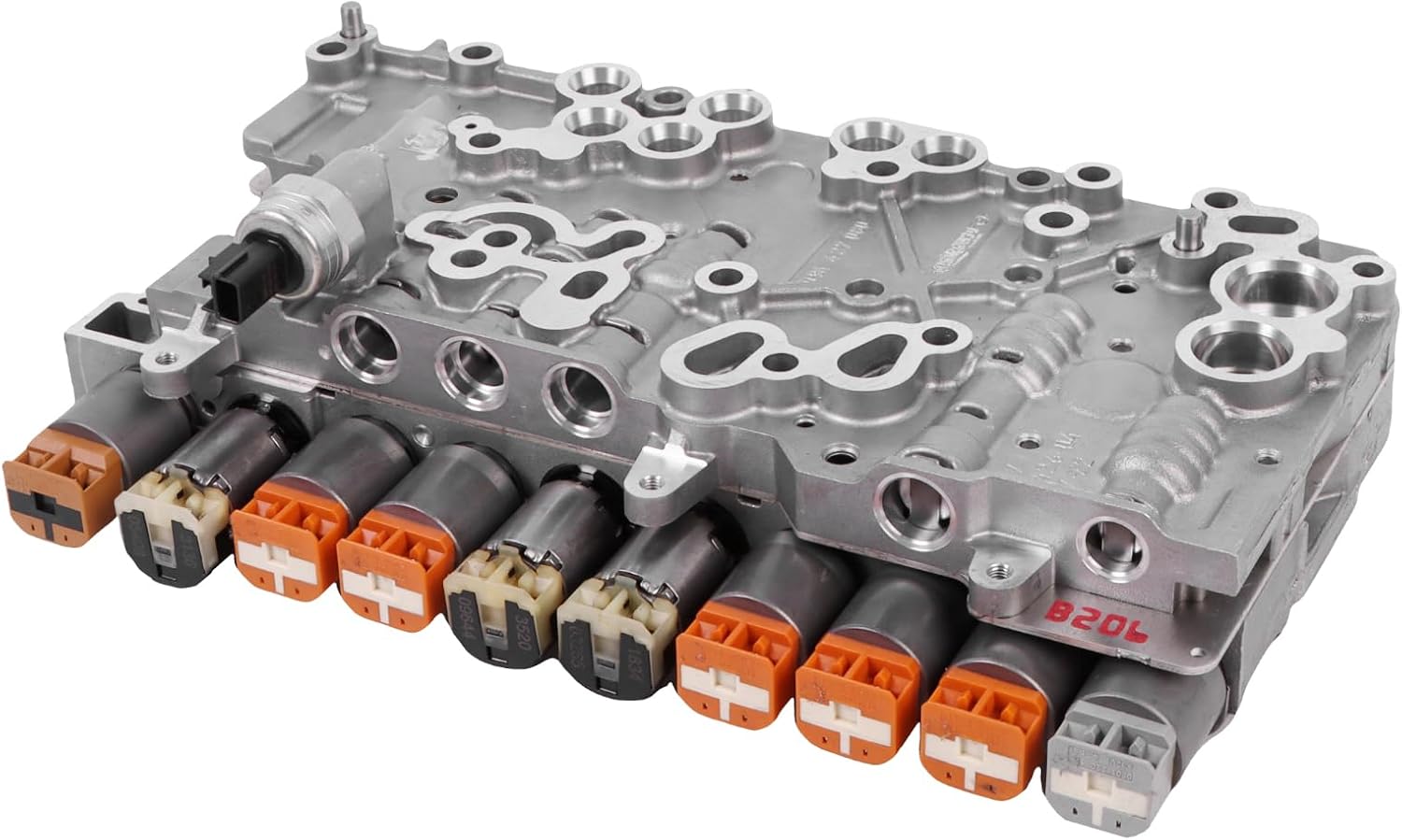
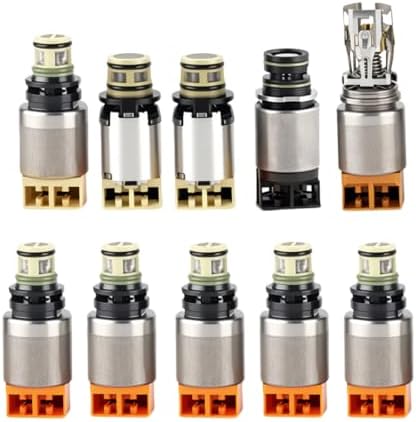
9HP48 Valve Bodies, Solenoid Kits, and Filter Service Parts
We stock remanufactured 9HP48 valve bodies with all 10 solenoids installed, refurbished 10-piece solenoid kits, and the correct filter and pan gasket kit for a proper fluid service — shipped fast from the USA.
Shop 9HP48 parts →FAQ
What does 9HP48/948TE limp mode feel like, and is it safe to drive?
The transmission control module (TCM) locks the transmission into a single fixed gear, usually third or fourth, and the vehicle is restricted to roughly 30 to 45 mph. Acceleration feels flat and the engine may rev higher than normal for the road speed. It is safe to drive a short distance to a shop or home, but it is a protective fallback, not a condition to keep driving on, since it is masking an active fault the TCM is reacting to.
What DTCs trigger 9HP48 limp mode, and does a TCM reflash really fix it?
Stellantis TSB 21-006-17 REV. B documents four codes tied directly to a fixed-gear limp mode condition on 948TE-equipped 2017 Jeep Cherokees: P0810 (Clutch Position Control Error), P0887 (TCM Power Control Circuit High), U1424 (Implausible Engine Torque Signal Received), and P1DCD (TCM Monitoring Processor Performance, Multiple Clutches Locked Up). For vehicles covered by that bulletin, yes: reprogramming the TCM with the latest wiTECH software is the documented repair, along with clearing the codes the flash sets and confirming the PCM is also current. It is a software fix for a software-root symptom, not a parts replacement.
Can a chafed wiring harness really put a 9HP48 into limp mode?
Yes, and it is documented as an intermittent, hard-to-catch cause. A Transmission Digest case study on a 2014 Jeep Cherokee with a 948TE traced a P1DB2 (actuator supply voltage circuit A) failsafe code to the main harness between the TCM and the case connector rubbing against a mounting bracket, where the solenoid supply 2 wires had worn through their insulation. The failure only showed up intermittently because the short needed the harness to be loaded in a specific position, which is why it tested electrically fine until the technician physically moved the harness during diagnosis.
Does low or incorrect transmission fluid level cause 9HP48 limp mode?
Yes, and the 9HP48/948TE makes this easy to get wrong because it has no conventional dipstick reading. ATRA's own fluid-check procedure requires a scan tool to read transmission fluid temperature while probing a special dipstick, because the correct fill height changes with temperature; at 140 degrees F the acceptable range is roughly 16 to 23mm. A technician who tops off cold without accounting for that curve can leave the unit over- or under-filled, and either condition can produce the same low-pressure symptoms that trigger a fixed-gear limp mode.
Sources
- Stellantis/FCA US LLC — Technical Service Bulletin 21-006-17 REV. B, “Flash: Transmission Diagnostic and Shift Enhancements” (July 29, 2017), via NHTSA: the 2017 Jeep Cherokee (KL) 948TE applicability by engine and sales code, the P0810/P0887/U1424/P1DCD code list, the fixed-gear limp mode symptom language, 5-4 downshift hesitation, and the TCM reprogram repair procedure. static.nhtsa.gov (NHTSA TSB archive)
- Gears Magazine (ATRA) — “ZF9HP48: Worn Parts Create Stuck-in-Park: Dog Clutch Issues Cause a No-Go”: the dog clutch A/F design, the pressure-transducer position-verification mechanism behind DTC P0810, and the diagnostic steps for confirming a dog clutch position fault. gearsmagazine.com
- Gears Magazine (ATRA) — “948TE: Checking Fluid Levels” (April 2017): the Mopar ZF 8 & 9 Speed ATF fluid specification (P/N 68157995AB, pale green, no leak dye), the special dipstick tool, and the temperature-dependent fill range, including the 140°F / 16–23mm example reading. gearsmagazine.com
- Transmission Digest — Paul Loch, “Diving into electrical testing and wiring with the 948TE” (June 15, 2023): the field case on a 2014 Jeep Cherokee 948TE with codes P0973 and P1DB2, the full electrical test sequence, and the chafed-harness root cause found at a mounting bracket between the TCM and case connector. transmissiondigest.com
- Transmission Digest — Jason Larochelle (Sonnax TASC Force), “ZF9HP48, 948TE Line Pressure Control and Diagnostics” (August 11, 2021): the SV-SP valve's unique role regulating line pressure via EPC pressure from the system pressure solenoid, its wear effects on line pressure control, shifts, and clutch durability, and the vehicle applications sharing this transmission platform. transmissiondigest.com