A Turbo 350 was never designed as a tow transmission. GM put the TH400 behind the trucks that were expected to pull, and the TH350 behind everything else. But a lot of TH350s end up behind a C10, a Blazer or a hot rod that suddenly has a car trailer or a camper hooked to it. The unit can survive that life, and many have, but only if you deal with the three things that kill it under load: heat, a soft shift that slips the clutches on every upshift, and a short list of weak hard parts. This guide covers the upgrades worth doing, in the order they pay back, with the specs from the people who make the parts.
One ground rule before any of it: none of these upgrades rescue a transmission that is already slipping. B&M says it plainly in its TH350 Shift Improver instructions: on a unit that is slipping or in poor general shape, a shift kit may worsen the condition. If it slips now, it needs a rebuild first. Upgrades go into a healthy unit or into the rebuild itself.

Why Towing Kills a TH350
Almost every towing failure on this unit traces back to heat. The torque converter is where most of it is made. Every time the converter slips under load, pulling away from a stop, climbing a grade at part throttle, or crawling in traffic with 5,000 pounds behind you, it turns engine power into fluid heat. The TH350 has a small sump and the factory cooler in the radiator tank was sized for a car or light truck running empty, so the fluid temperature climbs fast and stays up.
Heat goes after the fluid first. B&M's SuperCooler mounting guide puts numbers on it: fluid kept below 175°F should last as much as 100,000 miles, at 195°F the life drops to about 50,000 miles, and at 240°F fluid life is only about 5,000 miles. Once the fluid oxidizes, the friction material glazes, the seals harden and the shifts get longer, which makes more heat. That spiral is how a towing TH350 goes from fine to burnt in one summer.
The second killer is a long, soft shift. Under a trailer load the clutches have to pick up far more torque, and a stock calibration lets the 1-2 and 2-3 shifts overlap and slide. Every slide is friction material being burned off. The third is a set of known weak parts, mainly the intermediate overrun clutch outer race and a direct clutch pack that is marginal under heavy torque.
Upgrade 1: An Auxiliary Cooler, Sized and Plumbed Right
If you only do one thing, do this. It is the cheapest upgrade on the list and it attacks the root cause.
Sizing
Hayden, which built the industry's first add-on transmission cooler, sizes its add-on coolers by the work the vehicle does. From its oil cooler catalog, for the Rapid-Cool plate-and-fin line:
- Hayden 677 (3/4 x 7-1/2 x 11 inch): up to full-size vehicles, towing up to 2,500 lb, 14,000 GVWR.
- Hayden 678 (3/4 x 9-1/2 x 11 inch): up to Class C motorhomes, towing up to 5,000 lb, 18,000 GVWR.
- Hayden 679 (3/4 x 11-5/8 x 11 inch): up to Class A motorhomes, towing up to 10,000 lb, 22,000 GVWR.
For a TH350 tow rig, the 678 class is the realistic floor. A TH350 pulling much over 5,000 pounds is asking for trouble no matter how big the cooler is. That is TH400 territory. B&M adds one sizing rule worth remembering: if the radiator has no transmission cooler tank, for example on an aftermarket aluminum radiator, you need a bigger auxiliary cooler than you would normally pick, because it is doing all the work alone. B&M names its 70266 or 70272 Universal SuperCooler as the smallest it would use in that case.
Plumbing
B&M's routing recommendation is the standard one: transmission out, through the stock radiator cooler, then through the auxiliary cooler, then back to the transmission. The radiator tank takes the worst of the heat off and keeps the fluid warm in cold weather, and the auxiliary cooler finishes the job. Other mounting rules from the same guide:
- Mount it where it gets real airflow. In front of the radiator (or condenser) is best.
- Fittings on the top or the sides, never pointing down. Down-facing fittings can trap an air pocket and cut efficiency. With side fittings, the lower one is the inlet.
- For coolers with 1/2 NPT ports, B&M recommends -6 lines and fittings for ATF.
On the bench we see one more mistake often enough to mention: undersized rubber line and hose barbs that pinch the flow. The TH350 cooler circuit also feeds the lube circuit on the way back, so a restricted cooler is not just a heat problem, it starves the bushings and planetary. If you are adding a cooler to a high-mileage unit, flush the old cooler and lines first so the debris in them does not end up in the new cooler or back in the transmission. Sonnax's after-overhaul checklist says to flush the cooler in both directions, replace one that keeps clogging, and then prove the flow hot: on 5/16-inch lines you want at least one quart in 20 seconds, and a healthy unit usually does it in about 10. Do not judge flow with the flusher connected; it pushes harder than the pump does.
Measure the temperature
B&M recommends monitoring the fluid as it leaves the cooler and returns to the transmission, and calls 160°F to 200°F at the cooler outlet a good operating range. A cheap inline temperature sender in the return line tells you more about how your setup is working than anything else on this list. If it climbs past 220°F on a grade, back off, downshift to second, and let it cool before you push on.
Upgrade 2: A Deeper Pan
A deep pan does two things: it adds fluid capacity, which gives the heat somewhere to go, and with a cast or finned pan it adds a little surface area. B&M's guide says a cast deep pan increases capacity by at least 2 quarts. On a unit that holds about 5 quarts on a dry fill per B&M's TH350 instructions, two extra quarts is a big percentage. A deep pan does need the matching filter or a pickup extension so the filter stays at the bottom of the sump. Hang a stock-height filter in a deep pan and it can suck air on hard stops and turns, which is worse than the stock pan. Check ground clearance too, especially on a lowered C10.
The pan is not a substitute for the cooler. Extra fluid buys you time before the temperature climbs. The cooler is what brings it down.
Upgrade 3: Recalibrate the Valve Body for Heavy Duty
A good shift kit for towing is not about bark-the-tires shifts. It is about shortening the shift so the clutches spend less time slipping. Both of the big kit makers ship a separate heavy-duty calibration for exactly this use.
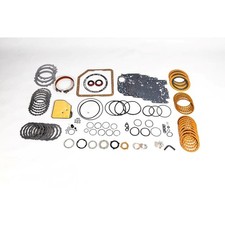
B&M Shift Improver 30262
B&M's 30262 kit for the 1968-1981 TH350 offers two performance levels, and the first one is listed as heavy duty for towing, campers, motorhomes, police and taxi use. The difference is in the check balls and the 1-2 accumulator. Per the instructions, the street level uses one check ball in location 1, while the heavy-duty level uses two check balls, in locations 1 and 2. The heavy-duty level also removes the 1-2 accumulator spring and installs a new O-ring on the accumulator cover, which takes the cushion out of the 1-2 shift so the intermediate clutch applies firmly instead of sliding. Note that this kit does not fit a TH350C. B&M lists Transpak 30235 for the 1980-86 TH350C.
The instructions also give the torque specs you need when the valve body goes back on: support plate and valve body bolts at 100 inch-pounds, pan bolts at 13 foot-pounds. The spacer support plate must be flat; B&M has you dress it on a file and replace it if it is bent.
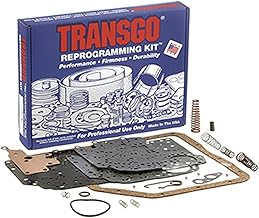
TransGo SK350
TransGo's SK350 (the 350-1&2 Reprogramming Kit) covers the same ground with more tuning range. Its pressure regulator instructions call for the red spring for "street cars and hard working rigs" and the orange spring for competition only. Use the red spring for towing. TransGo also supplies several governor spring combinations, with two yellow springs listed for light trucks, and you tune shift points after a road test from there. The kit's case gasket and plate details exist to stop high clutch (direct) failure, and its separator plate fits all cases, which matters because TransGo's own tech notes warn that 1969 cases and plates are unique and a mismatched combination can exhaust all governor oil and kill upshifts.
Do not just add line pressure and call it done. More pressure without the calibration changes can starve the cooler and lube circuit, which is the opposite of what a tow rig needs. A complete kit addresses pressure, shift timing and feed together.
Upgrade 4: The Hard Parts That Fail Under Load
These go in during a rebuild. If the unit is coming apart anyway, this is the time.
Intermediate overrun clutch outer race
This is the known weak link of the TH350. The intermediate roller clutch holds the sun gear for second gear, and the OE outer race cracks. Sonnax identifies two fracture points: the radial lube holes the rollers ride over, and the sharp inside corners at the base of the outer splines. Under towing torque, that crack lets the roller clutch let go, and you lose second gear. Sonnax's heavy-duty race, part 35723HD-02, replaces OE part 6261021, fits both the TH350 and TH350C, and is rated at double the torque capacity of OE or other aftermarket races. On a towing build, there is no reason to reuse the factory race.
Direct clutch pack
The direct clutch is applied in third and reverse, so it carries the load at highway speed and when backing a trailer up a ramp. A stock V8 TH350 runs four frictions in the direct drum. A long-standing builder upgrade, described in the CarTech TH350 rebuild guide, is to machine the four-clutch apply piston so the drum takes one more friction and steel, five of each. The guide gives the clearance target for the pack as about 0.010 inch per friction, about 0.050 inch for a five-plate stack, with 0.040 to 0.060 inch acceptable. Too tight and the clutches drag. Too loose and the shift gets long and slips, which is what you are trying to cure.
Friction material
Whatever the plate count, use a friction rated for heat. Raybestos lists its GPZ107 forward and direct friction for the 1969-1986 TH350 (0.098 inch thick, 20 teeth, 5.91 inch OD) for heavy-duty vehicles, commercial vehicles and high-stress applications, built to withstand high temperatures and repeated cycling. Hand sand or replace the steels, and soak the new frictions in the ATF you will run before assembly.
Two quiet ones from the TransGo tech notes
- Input shaft breaking away from the drum. TransGo ties a 3-inch-diameter break to the late input ring gear (the type with a snap ring) running out of round, and recommends the early solid ring gear. On a high-load build, check which one you have.
- Converter starving for oil. A whistle in low and reverse, or under boost, can mean the converter is starved. TransGo's fix is to drill the converter feed hole in the plate to 0.106 to 0.110 inch. A starved converter runs hot, which is the last thing a tow rig needs.
Converter, Gearing and How You Drive It
A high-stall converter is the wrong choice for towing. It slips more at cruise, which means more heat. Stay near stock stall for a tow rig and let the axle ratio do the work. A 3.08 axle and a heavy trailer keep the converter slipping on every grade. A deeper ratio lets it couple sooner.
On the road, the TH350 has no overdrive to worry about, but the same rule applies: if it is hunting between second and third on a grade, pull it down into second and hold it. A held gear with the converter coupled makes far less heat than a converter slipping in third. Let the engine idle in neutral for a few minutes after a hard pull so the cooler can bring the temperature down before you shut it off.
Service Interval for a Towing TH350
Towing is severe service, and GM said so in writing. The TH350 section of the 1976 Chevrolet Light Truck Service Overhaul Supplement (ST-330-76) calls for draining the pan and cleaning the strainer every 30,000 miles in normal use, but every 15,000 miles when the vehicle is used for towing, idled for long periods, or worked in hot-weather city traffic. Check the fluid hot after every long tow, but give it time: the same GM manual says that after pulling a trailer an accurate level cannot be read until the fluid has cooled, usually about 30 minutes after parking, and that only one pint separates ADD and FULL on a hot unit. Dark color or a burnt smell means the heat is winning. Our TH350 fluid type and capacity guide covers the fill, and the TH350 filter and pan service walkthrough covers the job itself.
The Upgrade List, in Order of Payback
- Auxiliary cooler, sized for the trailer, plumbed after the radiator tank, fittings up.
- Temperature gauge on the cooler return line.
- Deep pan with the matching filter.
- Heavy-duty valve body calibration (B&M heavy-duty level or TransGo red spring).
- At rebuild: Sonnax 35723HD-02 race, five-plate direct pack, heat-rated frictions.
- Near-stock converter and a sensible axle ratio.
View the Sonnax HD race →
FAQ
Can a TH350 handle towing?
It can handle light to moderate towing if it is kept cool and in good condition. Hayden's cooler chart puts its 678 cooler at towing up to 5,000 lb, which is a realistic ceiling for a TH350. Much heavier than that is TH400 territory. Add an auxiliary cooler and a heavy-duty valve body calibration before you tow anything.
What size transmission cooler do I need for a TH350 that tows?
Size it by the trailer. Hayden rates its 677 for towing up to 2,500 lb, the 678 for up to 5,000 lb and the 679 for up to 10,000 lb. If your radiator has no transmission cooler tank, B&M says to go larger than you normally would because the auxiliary cooler is doing all the work.
Should the auxiliary cooler go before or after the radiator cooler?
After. B&M recommends routing fluid from the transmission through the stock radiator cooler, then through the auxiliary cooler, then back to the transmission. Mount it in front of the radiator with the fittings on the top or sides, never pointing down.
What transmission temperature is too hot for towing?
B&M calls 160 to 200 degrees F at the cooler outlet a good operating range. It says fluid kept below 175 degrees F can last as much as 100,000 miles, while at 240 degrees F fluid life drops to about 5,000 miles. If it climbs past 220 degrees on a grade, downshift and let it cool.
What shift kit is best for a TH350 that tows?
Use a kit with a dedicated heavy-duty calibration. B&M's 30262 Shift Improver has a heavy-duty level for towing that uses two check balls and removes the 1-2 accumulator spring. TransGo's SK350 calls for its red pressure regulator spring for street cars and hard working rigs. B&M's 30262 does not fit the 1980-86 TH350C, so check the year first.
Sources
- B&M (Holley) — SuperCooler Mounting Guidelines. Backs the radiator-then-auxiliary routing, front-of-radiator mounting, fittings up or sideways with the lower side fitting as inlet, the cast deep pan adding at least 2 quarts, the 160-200°F outlet range, fluid life of 100,000 / 50,000 / 5,000 miles at 175 / 195 / 240°F, the larger-cooler rule without a radiator tank, and -6 lines for ATF. static.summitracing.com
- Hayden Automotive — Transmission, Engine and Power Steering Oil Coolers catalog. Backs the Rapid-Cool 677 / 678 / 679 sizes, towing ratings of 2,500 / 5,000 / 10,000 lb and GVWR of 14,000 / 18,000 / 22,000, and the Ultra-Cool as the industry's first transmission cooler. www.haydenauto.com
- B&M — Shift Improver Kit Part No. 30262 Installation Instructions, 1968-1981 TH350. Backs the heavy-duty level for towing, campers and motorhomes, one versus two check balls, removal of the 1-2 accumulator spring, Transpak 30235 for the 1980-86 TH350C, 100 in-lb support plate and valve body bolts, 13 ft-lb pan bolts, the 5-quart fill, and the warning that a kit can worsen a slipping unit. static.speedwaymotors.com
- TransGo — Turbo Hydra-Matic 350 SK350 / 350-1&2 Reprogramming Kit instructions. Backs the red pressure regulator spring for street cars and hard working rigs, orange for competition only, the light-truck governor spring combination, and the gasket detail that stops high clutch failure. res.cloudinary.com
- TransGo — TH-350, 350C, 250 and 250C Tech Notes. Backs the unique 1969 case and plate combination exhausting governor oil, the late snap-ring input ring gear and input shaft breakage, and drilling the converter feed hole to 0.106-0.110 inch for a starved converter. files.transgo.com
- Sonnax — Heavy Duty Intermediate Overrun Clutch Outer Race, Part No. 35723HD-02. Backs the two OE fracture points, OE part 6261021, TH350 and TH350C fitment, and double the torque capacity of OE or other aftermarket races. www.sonnax.com
- Raybestos Powertrain — GPZ107 TH350 Forward/Direct Friction Plate. Backs the 1969-1986 TH350 fitment, 0.098 inch thickness, 20 teeth, 5.91 inch OD, and heavy-duty, high-temperature intended use. www.raybestospowertrain.com
- CarTech / ChevyDIY — GM Turbo 350 Shift Kits and Performance Modifications Guide. Backs the stock four-friction direct pack, machining the apply piston for a five-friction pack, and the 0.010 inch per friction (0.040-0.060 inch) clearance target. www.chevydiy.com
- General Motors — 1976 Chevrolet Light Truck Service Overhaul Supplement, ST-330-76 (Section 0 lubrication, Section 7A Turbo Hydra-Matic 350). Backs the 30,000-mile normal and 15,000-mile towing/severe pan and strainer interval, the 30-minute cool-down before checking level after towing, and the one-pint ADD-to-FULL note. 73-87chevytrucks.com (PDF)
- Sonnax — "Avoiding After-Overhaul Problems." Backs flushing the cooler both ways, replacing a cooler that keeps clogging, and the hot cooler flow target of at least 1 quart in 20 seconds on 5/16-inch lines. sonnax.com