The TH400 has been in everything from Camaros to one-ton trucks since 1964, and every one of those applications quotes a different "correct" fluid capacity depending on what's actually empty: a pan drop, a bare case and pan, or a fully dry unit with the converter off the truck. Guess wrong and you either overfill a transmission that was already full or send a fresh rebuild out the door two quarts short.
This guide works through the fluid type and every capacity number that matters on a Turbo Hydra-Matic 400, using GM's own service literature, the converter and pan makers' published capacity charts, and the fluid makers' spec pages. The full source list is at the bottom.
The Quick Answer
| Question | Number | Where it comes from |
|---|---|---|
| Fluid type | DEXRON (originally DEXRON II); any current licensed DEXRON VI is correct | GM ST-330-76; Valvoline Dexron VI spec page |
| Refill after draining the sump, stock pan | About 7.5 U.S. pints (3.75 quarts) | GM ST-330-76 |
| Transmission with stock pan, converter not included | 6 quarts | TCI fluid capacity chart |
| New, empty converter | 3 qt (10 in.), 3.5 qt (11 in.), 4 qt (12 in.), 5 qt (13 in.) | TCI converter capacity chart |
| Deep pan, initial add after install | A quart or two more than stock; follow the pan maker's instructions and finish by the dipstick | General for aftermarket deep pans |
| Fresh rebuild, dry unit, dry converter, stock pan | Roughly 10 to 11 quarts plus whatever the cooler and lines hold; have 3 gallons on hand | TCI unit + converter figures added together |
The last line is the one people get wrong on a rebuild, so the rest of this article explains where each number comes from and how to finish every fill the same way: by the dipstick, engine running, at the temperature GM specifies.
Fluid Type: What GM Called For and What to Buy Now
GM's 1976 light truck service supplement (ST-330-76) is plain about it: use automatic transmission fluid "identified with the mark DEXRON® II." The same section sets the refill quantities for both three-speed Turbo Hydra-Matics covered in that manual, the 400 and the 350, confirming they share the same fluid spec. The earliest TH400s, which debuted for 1964, predate DEXRON entirely; GM did not introduce the original DEXRON fluid until April 1, 1967, so the first few model years left the factory filled with the earlier Type A Suffix A fluid before service literature moved to DEXRON and then DEXRON II.
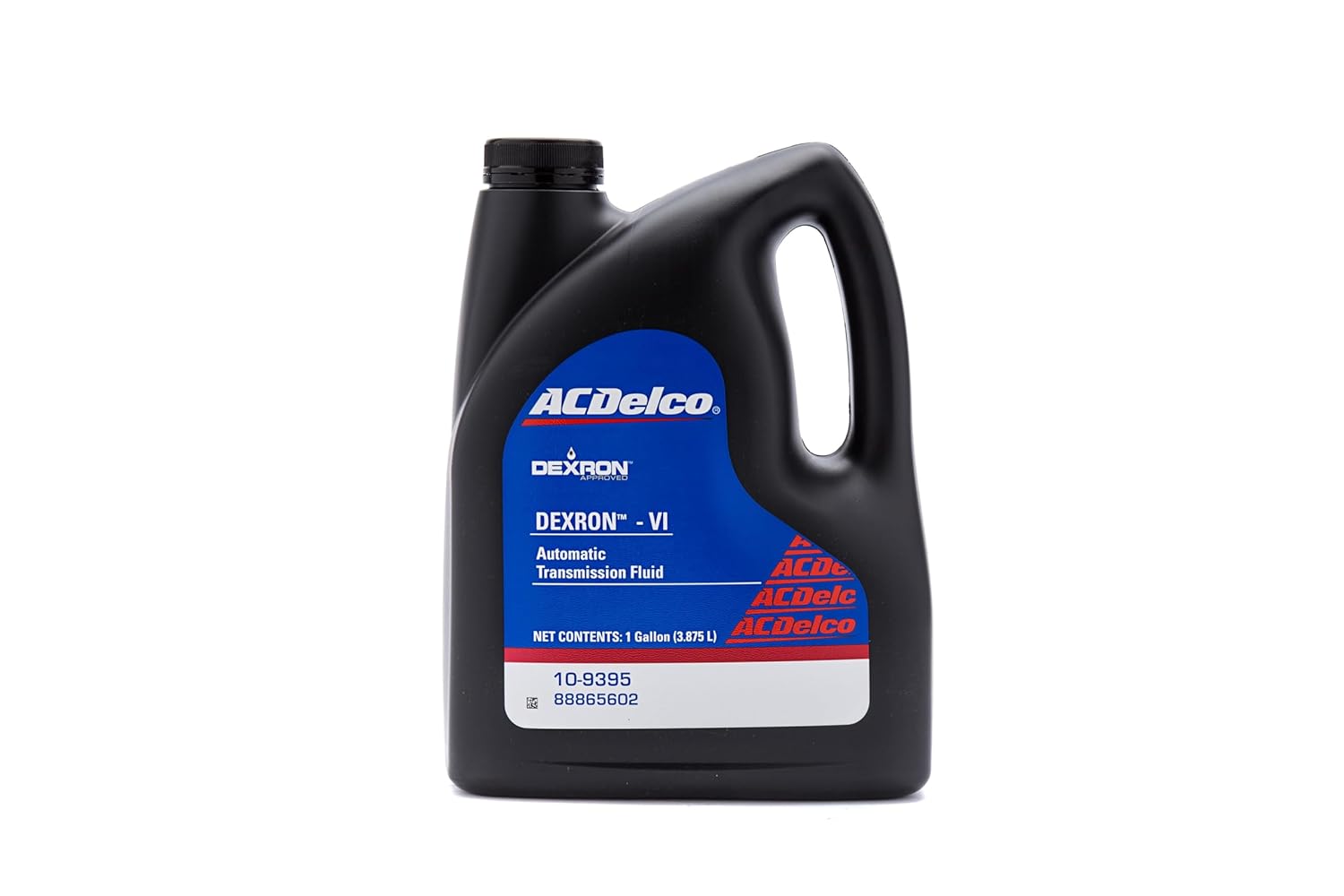
You cannot buy DEXRON II by that name anymore, and you do not need to. The current GM specification, DEXRON VI, covers the old units too. Valvoline's product page for its GM-licensed DEXRON-VI/MERCON LV fluid states that it is "fully back-serviceable, so it can be used wherever Dexron-II and/or Dexron-III are recommended." The ACDelco 10-9395 DEXRON VI that GM sells over its own parts counter is marketed the same way, as the modern replacement for DEXRON III and DEXRON II. On a street or tow-rig TH400 with a sound pump and bushings, licensed DEXRON VI is the correct fill.
Why Type F shows up in TH400 builds anyway
Unlike most GM-only swaps, the TH400 has a long history with Ford's Type F fluid, and it is worth understanding why instead of just banning it outright. Transmission Digest's technical editor Mike Riley explains the real mechanical difference: "Ford Type 'F' ATF is a fluid with very low levels of friction modification," and a fluid with little to no friction modifier produces a harder, more positive engagement than a friction-modified fluid like DEXRON, which is built to slip into engagement smoothly before locking up. That harder edge is exactly what drag racers and bracket-car builders chasing a quick, positive shift have wanted for decades in the TH400 and Powerglide, and it is why the "run Type F in a Turbo 400" advice has stuck around at the track since before most of today's builders were born.
None of that makes Type F a GM specification. GM's own literature calls for DEXRON II, full stop, and Riley's article traces how GM and Ford fluids diverged into separate chemistries specifically because the two automakers controlled shift feel differently: GM and Chrysler calibrate it in the valve body, Ford controls it with friction modifiers in the fluid. Drop Type F into a stock street TH400 built with stock-type frictions and an unmodified valve body and you are fighting that difference, not using it; shifts can go abrupt rather than firm. If you want a firmer street shift, the correct fix is a shift kit that recalibrates the valve body, which our TH400 valve body guide covers, not a fluid swap that was never engineered around your friction materials.
What not to use
- Type F, on a stock street build. Save it for a dedicated race calibration with frictions chosen to match, as discussed above.
- "Multi-vehicle" fluids that do not state DEXRON compatibility. Read the label. If it does not list DEXRON II or III or carry a DEXRON VI license, it is not a TH400 fluid.
- ATF+4 or import-specific fluids. They are formulated around other manufacturers' friction materials and are not GM specs.
- Stop-slip additives as a fix. If a TH400 is slipping on correct fluid at the correct level, it has a mechanical or hydraulic problem. Our TH400 common problems guide covers what to check, and line pressure testing is the fastest way to prove it.
Capacity, Part by Part
1. The pan: what a service actually replaces
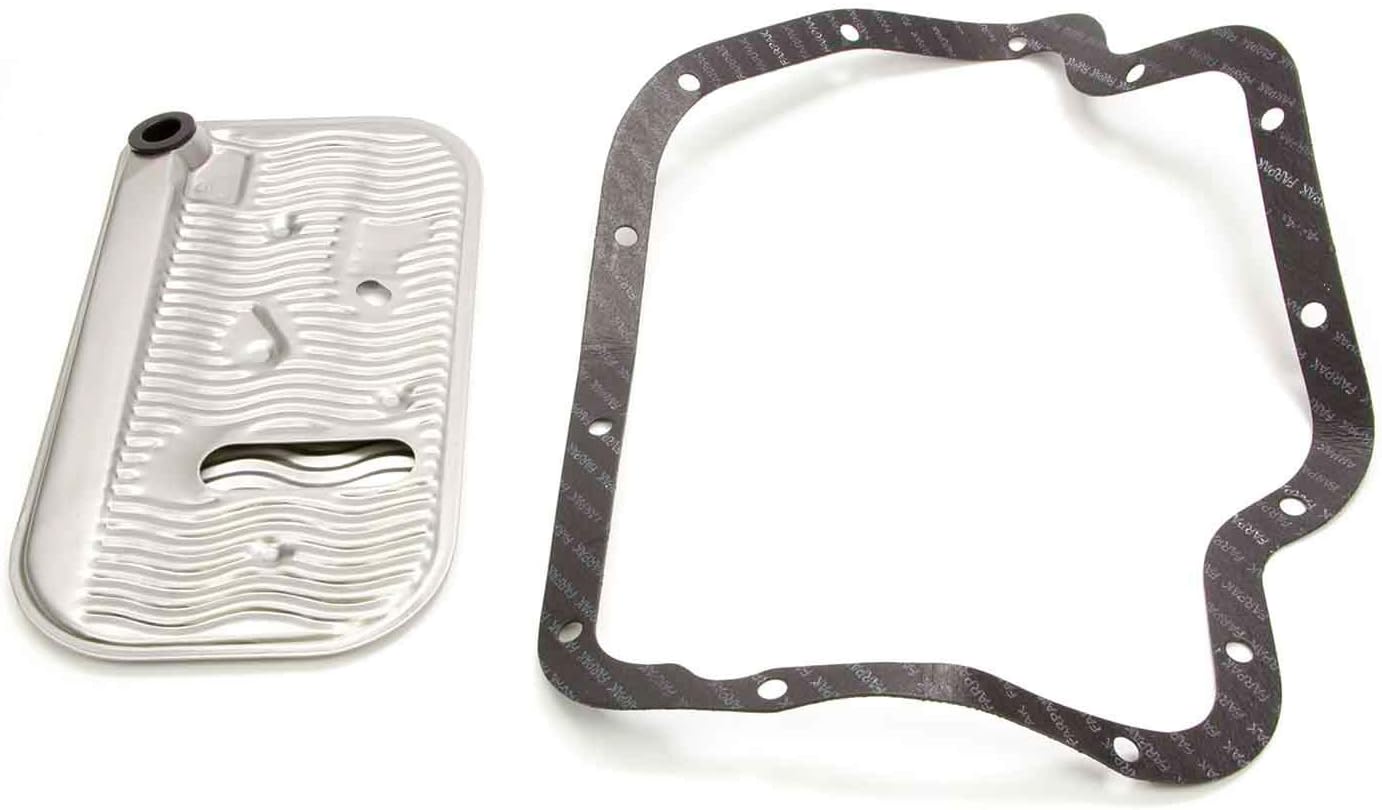
Per GM ST-330-76, after you drain the sump of a TH400 you add approximately 7.5 U.S. pints (6.25 Imperial pints), or 3.75 U.S. quarts, of fresh fluid to return the level to the proper mark on the dipstick. The TH350 takes about 2-1/2 quarts by the same procedure in the same manual. That TH400 figure is for a routine stock-pan service. It is a lot less than the "6 to 12 quarts" numbers that get thrown around online, because most of what the chassis holds stays behind in the drums, valve body and case when you drop the pan.
2. The transmission itself with a stock pan
TCI's published fluid capacity chart lists the TH400 with a stock pan at 6 quarts, compared with 4 for a TH350. That figure covers the transmission side only, without the converter. The gap between TCI's 6 quarts and GM's 3.75-quart pan-drop figure is the fluid that never leaves the case on a pan drop; it is already in there when you refill.
3. The converter
TCI's converter chart is the cleanest reference available: a new, empty converter holds about 5 quarts at 13 inches, 4 at 12 inches, 3.5 at 11 inches, 3 at 10 inches, 2.5 at 9 inches and 2 at 8 or 7 inches. The TH400 was factory-installed in everything from Camaros and Corvettes to three-quarter and one-ton trucks over nearly three decades, so stock converter diameter varies by application; passenger cars commonly ran smaller converters than heavy trucks. Measure what you have, or check the application sheet for your specific vehicle, before you plan a fill around a diameter you are guessing at. TCI adds two notes that matter on the bench: those figures are for a new converter, since a previously run converter retains some fluid, and you should always fill a new converter before installing it.
4. The cooler and lines
Nobody publishes one number here, because it depends on the radiator tank cooler, the line length, and any auxiliary cooler you added. A plate-type auxiliary cooler with several feet of line can add a quart or more on its own. This is why a fresh rebuild that "should" take 10 quarts sometimes takes 11 or 12, and why you never fill by the bottle count alone.
5. Deep pans
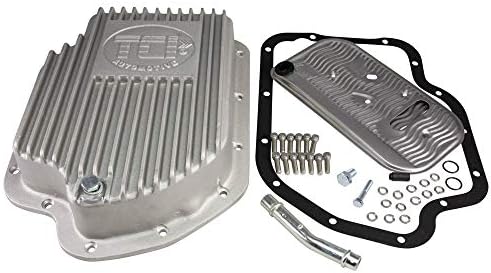
A deep pan changes the math on every future service. TCI's cast-aluminum deep pan for the TH400 (part 228000) adds roughly 2 extra quarts of depth over the stock pan, and most deep pans in this class use a filter extension so the pickup stays submerged in the added sump depth. Follow whatever quantity the specific pan's instructions call for and finish by the dipstick, not by the stated capacity increase alone, since every brand's baffle and extension geometry is slightly different.
Filling a Rebuilt or Dry TH400
This is where the capacity numbers earn their keep. A dry TH400 with a dry 12-inch-class converter and a stock pan needs about 6 quarts for the unit plus about 4 for the converter, roughly 10 quarts before the cooler circuit. Here is how I fill one:
- Pre-fill the converter. Before it goes on the input shaft, pour in 1 to 2 quarts, keeping it tilted so it does not spill during install. This follows TCI's advice to fill a new converter first and gets oil to the pump on the first crank.
- Seat the converter fully. Make sure it is engaged on the pump drive before you bolt the transmission up. A converter that is not fully seated will break the pump when the bellhousing bolts pull it in, a common and expensive mistake on this unit.
- Add about 6 quarts through the dipstick tube with the engine off.
- Start the engine and keep adding at idle, in Park, until the level shows on the stick. Do not rev it.
- Cycle the shifter slowly through every range with your foot on the brake, pausing a few seconds in each, to fill the clutch drums and servo circuits. Return to Park and recheck.
- Bring it up to temperature and set the final level using GM's hot-check procedure below.
Have three gallons on hand for this. You will probably use a little under three, but running dry partway through a first fill is how new converters and pumps get starved.
Checking the Level the GM Way
More TH400s come back overfilled than underfilled, and GM explains why in ST-330-76: "A level change of over 3/4 inch will occur as fluid temperature rises from 60°F to 180°F," so a cold stick reads low and people keep adding. The manual is direct about the consequence: "Overfilling can cause foaming and loss of fluid through the vent. Slippage and transmission failure can result." It is just as blunt about the other side: "Fluid level too low can cause slipping, particularly when the transmission is cold or the car is on a hill."
GM's procedure:
- Engine running, shift lever in Park, vehicle level.
- If the vehicle has been towing, run at high speed, or sat in hot city traffic, wait about 30 minutes for the fluid to cool before you trust the reading.
- Fluid cool (about room temperature, 65 to 85 F): level should be 1/8 to 3/8 inch below the ADD mark. The dipstick has two dimples below ADD to show that range.
- Fluid warm: level close to the ADD mark.
- Fluid hot (too hot to hold comfortably): level between ADD and FULL.
- It takes only one pint to raise the level from ADD to FULL on a hot transmission, so add in small amounts.
How Often to Change It
GM's book interval for the TH400 is fluid and filter every 60,000 miles in normal service, or every 15,000 miles in severe service: heavy city traffic where outside temperatures regularly reach 90 F, very hilly or mountainous driving, frequent trailer pulling, or commercial use such as taxi, police or delivery work. ST-330-76 also calls out the sump filter specifically: "Every 60,000 Miles - the Turbo Hydra-Matic 400 transmission sump filter should be replaced." Most TH400s still on the road today are tow rigs, hot rods and trucks that sit and then work hard, so treat yours as severe service unless you know otherwise.
If you are about to change fluid on a high-mileage unit with an unknown history, GEARS magazine's advice applies: drive it first so you know how it behaves, look at what is in the pan, and lean toward a partial change over a single complete exchange if the fluid is badly degraded. Our TH400 fluid change cost breakdown walks through the pan-drop math, and TH400 rebuild wear points covers what to inspect while the pan is off.
FAQ
What type of transmission fluid does a TH400 take?
GM specified DEXRON II for the Turbo Hydra-Matic 400 in its service literature. Current GM-licensed DEXRON VI is back-serviceable wherever DEXRON II or DEXRON III is recommended, so any licensed DEXRON VI fluid is a correct fill. GM never approved Type F, which is a Ford specification, even though many racers run it in performance-built TH400s.
How many quarts does a TH400 hold?
It depends on what is empty. GM's own service literature lists about 7.5 U.S. pints (3.75 quarts) to refill after draining the stock pan. TCI lists the transmission with a stock pan at 6 quarts without the converter. Add the converter's capacity from TCI's chart for a dry fill, then finish by the dipstick.
How much fluid does a TH400 torque converter hold?
Per TCI's converter chart, a new empty converter holds about 5 quarts at 13 inches, 4 at 12 inches, 3.5 at 11 inches and 3 at 10 inches. The TH400 was used across cars and heavy trucks, so stock converter diameter varies by application. A converter that has been run before will retain some fluid; always pre-fill a new one before installing it.
Can I run Type F fluid in a TH400?
GM never specified Type F for the TH400; it is a Ford fluid. Some drag racers and muscle car builders run it anyway because, per Transmission Digest, Type F carries little to no friction modifier, giving a harder, more positive clutch and band engagement with certain aftermarket friction materials. On a stock street TH400 with stock-type frictions and an unmodified valve body, licensed DEXRON VI is the correct, GM-backed choice.
How do I check the fluid level on a TH400?
With the engine running, the shifter in Park and the vehicle level. Cool fluid (65-85F) should read 1/8 to 3/8 inch below the ADD mark, warm fluid near ADD, and hot fluid between ADD and FULL. It takes only one pint to go from ADD to FULL on a hot transmission, so add in small amounts and avoid overfilling.
Sources
- General Motors / Chevrolet — 1976 Light Truck Service Overhaul Supplement (ST-330-76), Section 0 General Information and Lubrication (PDF). Backs the DEXRON II fluid requirement, the 7.5 U.S. pint (6.25 Imperial pint) TH400 refill after a sump drain versus 2-1/2 quarts for the TH350, the 60,000-mile TH400 sump filter replacement interval, the 15,000/60,000-mile service intervals and severe-service conditions, the 3/4-inch level rise from 60 F to 180 F, the 30-minute cool-down, the cool/warm/hot dipstick readings, the one-pint ADD-to-FULL note, and the overfill/underfill warnings. 73-87chevytrucks.com (PDF)
- TCI Automotive — Fluid Capacity charts. Backs the TH400 6-quart transmission capacity with stock pan (TH350 at 4), the converter capacities by diameter (13 in. 5 qt, 12 in. 4, 11 in. 3.5, 10 in. 3, 9 in. 2.5, 8 and 7 in. 2), and the notes that the figures are for a new converter, a run converter retains fluid, and new converters should be filled before installation. tciauto.com
- Valvoline — DEXRON-VI/MERCON LV Full Synthetic ATF product page. Backs the statement that GM-licensed DEXRON VI is fully back-serviceable wherever DEXRON-II and/or DEXRON-III are recommended. valvolineglobal.com
- Transmission Digest — Mike Riley, "Automatic-Transmission Fluid: What is today's reality?" Backs the friction-modifier difference between Type F and DEXRON, the history of GM and Ford fluid specs diverging because each automaker controls shift feel differently, and Type F's low friction modification. transmissiondigest.com
- SAE International — "Dexron Automatic Transmission Fluid," SAE Technical Paper 680038 (1968). Backs the original 1967 introduction of DEXRON as GM's automatic transmission fluid specification that this unit's service history is built on. saemobilus.sae.org
- GEARS Magazine (ATRA) — Pat Burrow, "Is It Safe to Change Transmission Fluid in High-Mileage Vehicles?" Backs the high-mileage approach: test-drive first, inspect the pan, favor partial changes over a single complete exchange when fluid is badly degraded. gearsmagazine.com