The TH400 has been in production in some form since 1964, and it earned its reputation for being nearly bulletproof honestly: three forward gears, a hydraulic valve body with no computer to fail, and a gear train stout enough that GM reused most of it for the 4L80E three decades later. That does not mean they do not break. It means the ways they break are well understood, because builders and parts makers have been chasing the same handful of failure points for sixty years.
This is the real list, in the order they actually show up on the bench: a pump that goes high and uncontrollable, a reverse that will not hold, a direct drum that lets go at the strip, shift timing that drifts, and an input shaft that twists under added power. Each one has a documented cause and a specific fix, not a guess.
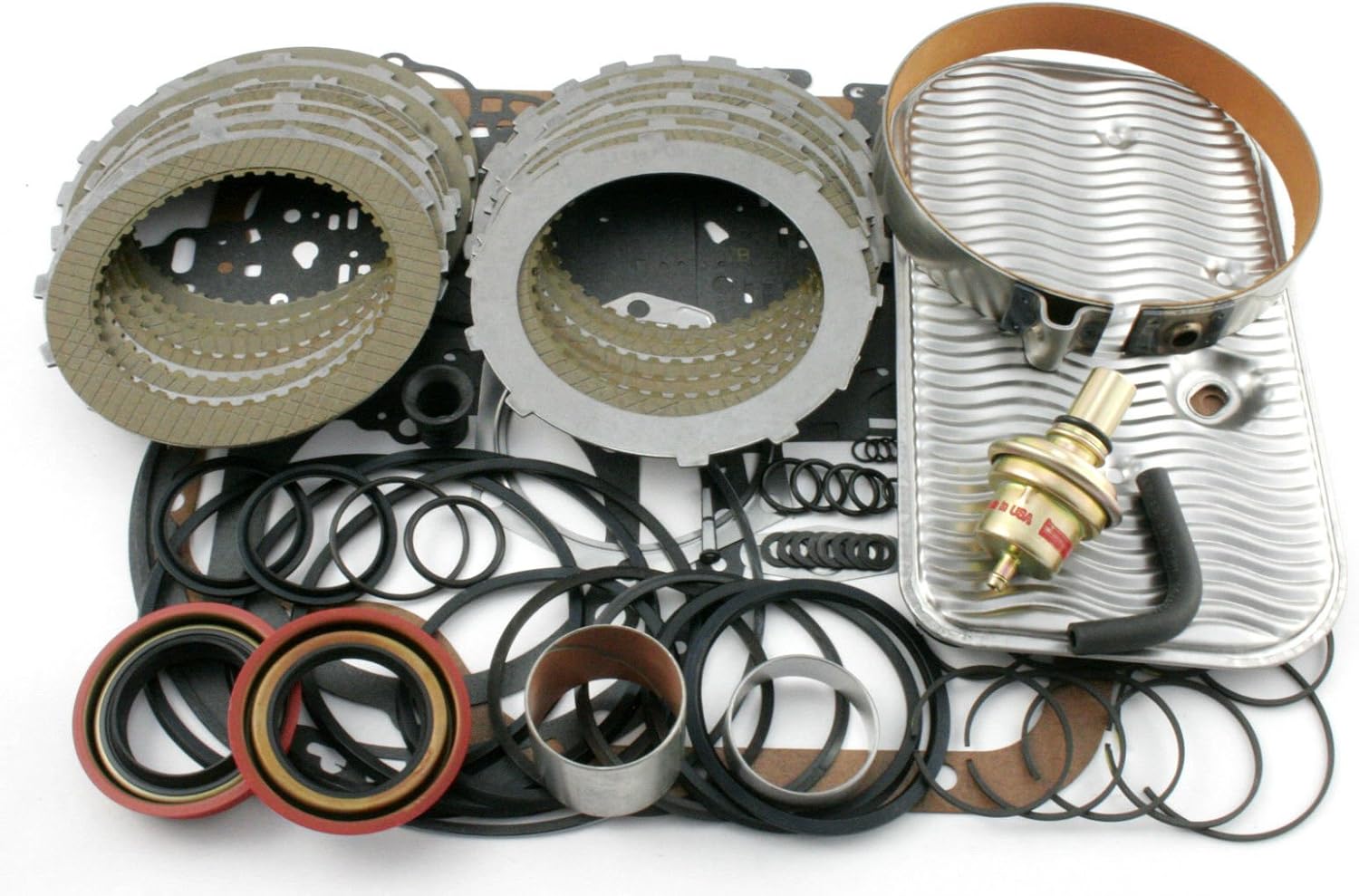

The Short Version
| Symptom | Cause | Fix |
|---|---|---|
| High line pressure, delayed converter charge, poor reverse | Pressure regulator bore wear in the pump | PR valve repair kit or pump replacement |
| Creeps forward in Reverse, no reverse, or harsh reverse | Low/reverse band out of adjustment | Reset servo piston travel to .125 in. |
| Direct drum failure, clutches destroyed at high rpm | Low roller clutch (sprag) rollers popped out of the race | Replace sprag assembly, inspect drum |
| Erratic, early, or late upshifts | Governor valve sticking or worn gear; or lazy vacuum modulator | Test governor pressure, replace modulator or governor gear kit |
| Input shaft twists or snaps under added power | Spline twist from horsepower beyond OE shaft rating | Heavy or extreme duty input shaft |
Pressure Regulator Bore Wear: The No. 1 TH400 Pump Failure
This is the failure that takes out more than just the pump. Inside the TH400 pump body, a hardened steel pressure regulator valve rides in a cast-iron bore and oscillates continuously every time the transmission is under load, for as long as the unit runs. Sonnax's TH400 parts reference lists the pressure regulator valve kit specifically for three symptoms: high and uncontrollable line pressure, delayed converter charge, and poor reverse engagement. Decades of that oscillation wear the bore until balance line pressure starts leaking past the valve and exhausting to the sump, which means the valve can no longer travel to its low-pressure position no matter what the modulator is telling it to do.
Once that happens, line pressure runs high everywhere, cooler pressure climbs with it, and the shifts that should be smooth start slamming. Left alone long enough, that pressure spike has taken out converters, burned friction material, and in bad cases marked up the crankshaft thrust surface. The same TH400 reference also lists a separate boost valve kit for a related but distinct complaint set: low line rise, soft 1-2 and 2-3 shifts, and delayed or shuddering reverse engagement, which is the opposite-sounding problem from the same general area of the pump.
Diagnosis starts with a line pressure gauge, not a parts cannon. If pressure reads high and climbs further with throttle instead of following the modulator curve, pull the pump and inspect the PR bore before you replace anything else.
TH400 Remanufactured Pump Assembly
If the PR bore is worn past a repair sleeve, a remanufactured 6-bolt pump assembly resets the whole front section instead of chasing a bore that is already out of spec.
View the remanufactured pump at CoreTransmissionParts →Need the rest of the rebuild? The full TH400 parts collection covers converters, solenoids, dipsticks, and hardware for the same job.
Low/Reverse Band Out of Adjustment: No Reverse or Creep at the Line
This one has tripped up experienced builders, not just DIYers, which is why Transmission Digest ran a full walkthrough on setting it correctly. The low/reverse servo piston has to travel a specific distance to seat the band against the reaction carrier — about .125 in., per that guide's own measurement procedure. Too little travel and the band drags on the carrier even when it should be released, robbing power and generating heat in every gear. Too much travel and the piston bottoms out against the case bore before the band ever grips the carrier tightly enough, which shows up as a reverse that slips, creeps, or will not hold at all.
The guide's measurement method is simple on the bench: thread a bolt down through a servo cover until it just contacts the piston, zero a caliper from the cover face to the piston (or bolt head to cover), then turn the bolt in until the band seats and confirm the piston moved roughly .125 in. in the process. On a 7/16-20 fine-thread bolt that works out to about 2.5 full turns. Sonnax took the same diagnostic further for racers: its externally adjustable low/reverse servo kit (34914-20K for TH400, 34914-28K for 4L80-E) lets you check that same travel by hand through an external adjuster, without pulling a cover, which matters most at the track where a band that walks out of spec means the car creeps off the line during a transbrake stage instead of leaving clean.
If a rebuilt TH400 goes in and reverse is wrong on the first try, check this adjustment before you blame the clutches or the valve body.
Direct Drum and Low Roller Clutch Failure at High RPM
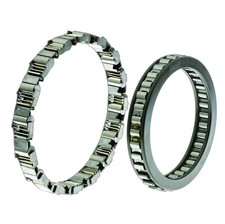
In first gear, the TH400's low roller clutch locks the reaction carrier to the center support so the front gearset can do its job. Sonnax's technical writeup on the heavy duty low roller clutch assembly explains what happens when that clutch loses its grip under high torque: the rollers can pop out of their race with enough force to crush the accordion springs that keep them pressed against the outer race ramps. Once those springs are flattened, they cannot push the rollers back into position, and the clutch simply stops holding.
With the low roller clutch no longer locking the reaction carrier, the direct drum is free to spin, and Sonnax's own description of the failure puts that overspeed at more than 15,000 rpm — enough to destroy the clutch packs riding on it or, in the worst cases, split the drum itself. This is almost exclusively a high-power and racing failure; a stock-power street TH400 rarely generates enough torque to pop the rollers in the first place. Sonnax addresses it with a heavy duty low roller clutch assembly that adds physical stops limiting roller travel, so pop-out cannot happen in the first place, and the matching heavy duty intermediate clutch outer sprag race for builds pushing even further into performance territory.
If you are building a TH400 for anything beyond mild street use, inspect this clutch and its springs every time the unit is apart, not just when something has already let go.
Governor and Shift Timing Concerns
The TH400 times its own upshifts with a see-saw between two hydraulic signals: governor pressure, which rises with output shaft speed, and modulator pressure, which falls as throttle vacuum drops. Sonnax's TH400 parts reference lists the governor assembly and a separate governor gear kit under general shift concerns — a sticking governor valve or a worn drive gear produces upshifts that happen too early, too late, or inconsistently from one run to the next.
The catch in diagnosing this one is that the governor is only half the story. If the transmission shifts normally under steady acceleration but misbehaves specifically under light throttle or at idle-in-gear, suspect the vacuum modulator and its line before condemning the governor; a collapsed rubber vacuum line or a modulator with ATF inside it (check the vacuum hose for fluid) will fool the valve body into reading low throttle even at speed, holding the transmission in a lower gear or delaying the upshift. Confirm governor pressure at the test port against a known-good chart before replacing either part on a guess.
Input Shaft Failure Under Added Horsepower
Sonnax markets this one plainly: input shaft failure is a common problem in performance GM TH400 transmissions running horsepower beyond what the factory shaft was designed to transmit, and neither OE nor many aftermarket shafts hold up once spline twist starts. Transmission Digest's coverage of Sonnax's input shaft line lists a heavy duty shaft (30280-01, 30280-02) for moderately built engines and extreme duty shafts (35280-02, 27280-02) built from 300M high-strength steel with extra processing for fracture resistance, aimed at serious racing applications.
This is not a failure that gives much warning before it happens, which is why it is usually addressed proactively during a performance build rather than diagnosed after the fact. If the engine behind the TH400 has grown well past its original power level, the input shaft belongs on the inspection list even if it has not failed yet.
Fluid Type, Capacity, and Service
The TH400 is a Dexron-family transmission. Valvoline's ATF DX-3 is formulated to meet GM specification 6297M for Dexron III, and GM's Dexron specifications are backward compatible going up the ladder, so a modern Dexron VI fill is the correct service fluid for a stock TH400 today; there is no need to hunt down discontinued Dexron II or III-specific product. Total system capacity, including the torque converter and cooler lines, commonly runs 10 to 12 quarts, though that number moves with pan depth and cooler size — a deep aftermarket pan or an added external cooler both add to it. Always fill to the dipstick mark with the engine running and the transmission at operating temperature rather than trusting a fixed quart count.
Rebuilding one of these this week?
Master kits, sprags, modulators, pumps, and the tools to set the band up right — TH400 parts in one place, shipped from the USA.
Shop TH400 parts →Get the remanufactured pump → Browse all TH400 parts
FAQ
What is the most common TH400 problem?
Pressure regulator bore wear in the pump. Sonnax's own TH400 parts reference lists the pressure regulator valve kit as the fix for high and uncontrollable line pressure, delayed converter charge, and poor reverse engagement, which are the three symptoms that show up most on the bench. The hardened steel valve oscillates inside a cast-iron bore for decades, and once that bore wears, the valve can no longer travel to its low-pressure position.
Why does my TH400 creep forward or fail to hold in Reverse?
Almost always a low/reverse band that is out of adjustment. Transmission Digest's reverse servo setup guide explains that the servo piston needs about .125 in. of travel to seat the band correctly; too little travel and the band drags on the reaction carrier, too much and the piston bottoms in the case bore before the band grips hard enough. Either way you get creep, slip, or no reverse at all, and it has nothing to do with the clutches.
What makes a TH400 direct drum fail at high rpm?
Low roller clutch pop-out. In first gear the low roller clutch locks the reaction carrier to the center support; Sonnax's technical writeup on the part explains that under high torque the rollers can pop out of their race hard enough to crush the accordion springs that hold them energized. Once the springs lose tension the clutch stops holding, the direct drum is free to spin well past 15,000 rpm, and it can take clutches or the drum itself with it.
Can a bad governor cause TH400 shift problems?
Yes, though it is less common than people assume. Sonnax lists the governor assembly and the governor gear kit under general shift concerns in its TH400 parts reference. In practice a sticking governor valve or a worn gear produces late, early, or erratic upshifts; the catch is that the vacuum modulator controls the other half of shift timing, so confirm governor pressure at the test port before replacing the part.
What transmission fluid does a TH400 use and how much?
A Dexron-family ATF. Valvoline's ATF DX-3 is formulated to meet GM specification 6297M for Dexron III, and that same specification is backward compatible with the later Dexron fluids GM sells today, so a modern Dexron VI fill is correct service fluid for a stock TH400. Total system capacity, including the converter and cooler lines, commonly runs 10 to 12 quarts depending on pan depth and cooler size, so always fill to the dipstick mark rather than a fixed quart count.
Sources
- Sonnax — "GM TH400 Transmission" unit and parts reference. Backs the pressure regulator valve kit's symptom list (high/uncontrollable line pressure, delayed converter charge, poor reverse engagement), the boost valve kit's separate symptom list (low line rise, soft 1-2/2-3 shifts, delayed/shuddering reverse), and the governor assembly and governor gear kit being listed under general shift concerns. sonnax.com
- Sonnax — TH400 unit overview, direct drum and low roller clutch failure description. Backs the low roller clutch locking the reaction carrier to the center support in 1st gear, rollers popping out of the race under high torque and crushing the accordion springs, and the resulting direct drum overspeed exceeding 15,000 rpm. sonnax.com
- Transmission Digest — "Easy TH400, 4L80-E reverse servo setup: Craft your own tool." Backs the .125 in. low/reverse servo piston travel specification, the DIY measurement tool and procedure, and the two failure modes from incorrect travel (band drag with no reverse, or piston bottoming before the band seats). transmissiondigest.com
- Gears Magazine (ATRA) — "Sonnax Launches Award-winning TH400, 4L80-E Servos for Quick Low/Reverse Band Checks at the Track." Backs the externally adjustable low/reverse servo kit (34914-20K for TH400, 34914-28K for 4L80-E), the external-adjuster check method, and the staging-creep failure mode when the servo is out of adjustment. gearsmagazine.com
- Transmission Digest — "Sonnax highlights TH400 heavy and extreme duty input shafts." Backs the input shaft failure mode under added horsepower and the part numbers for the heavy duty (30280-01, 30280-02) and extreme duty (35280-02, 27280-02) shafts, including the 300M steel construction of the extreme duty line. transmissiondigest.com
- Valvoline — ATF DX-3 Product Information Sheet. Backs the GM specification 6297M for Dexron III fluid that the TH400 calls for, and the fluid's compatibility across the Dexron family. valvoline.com