A TH400 does not warn you before it overheats. There is no converter lockup to pull torque multiplication out of the equation at cruise, no transmission computer watching fluid temperature and pulling line pressure to protect itself, and no dash light tied to a sensor most of these trucks never had from the factory. The fluid just gets hotter, the additive package breaks down faster than it should, and by the time someone notices a burnt smell at a fluid change, the clutches and the converter have already been living on borrowed time.
The good news is that TH400 overheating is almost never a mystery once you know where to look. It traces back to a short list of mechanical causes, and two of the three are things Sonnax has published actual flow and pressure data on. This is what the data says, not what everyone on a forum assumes it says.

What the Cooler Flow Data Actually Shows
Most people check for overheating by feeling the pan or reading a temp gauge. Sonnax's own diagnostic tool, the SonnaFlow kit, measures something more useful: how much fluid is actually moving through the cooler circuit, in gallons per minute, while the vehicle is being driven.
Sonnax publishes a reference chart for exactly this failure on a TH400. Labeled "Condition: Weak pump or clogged filter," it shows cooler circuit flow holding around 1.8 GPM (250 Hz on the meter's output signal) at a steady 45 mph. That is the easy part of the drive. The telling part comes next: as the vehicle coasts to a stop and engine rpm drops, flow does not taper smoothly, it falls off in a stair-step pattern, dropping toward roughly a third of the highway-speed number within a few seconds and continuing down toward zero by idle. Sonnax's own note on the chart is blunt about why: "Flow drops off dramatically with lower engine rpm." [1]
That rpm dependency is exactly why overheating shows up under load more than it shows up on a test drive around the block. A pump that can still push adequate flow at 2,500 rpm on the highway may be delivering almost nothing at 900 rpm idling in traffic, crawling a grade in low range, or sitting at a stoplight with the converter doing all the work. Low flow at low rpm means the cooler circuit is starving exactly when the transmission is generating the most heat to get rid of.
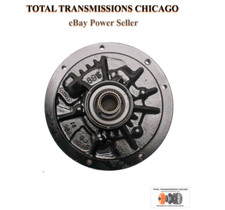
TH400 Remanufactured Pump Assembly
If a flow test points to a tired pump, this is the direct fix: a remanufactured 6-bolt TH400 pump assembly instead of chasing a worn pump on a used unit. Pair it with a new filter and verify flow on the road afterward.
View the remanufactured pump at CoreTransmissionParts →Need the rest of the cooling-circuit parts too? The full TH400 parts collection has converters, pumps and hard parts in stock.
The Pressure Regulator Bore: High Cooler Pressure Isn't the Same as High Cooler Flow
A second, separate failure point lives in the same pump casting: the pressure regulator bore. The hardened steel PR valve oscillates continuously inside the cast-iron pump bore every time the transmission runs, and over time that bore wears. Once it does, per Sonnax, balance line pressure leaks past the valve and exhausts to the sump instead of doing its job, so the valve can no longer travel to its low-pressure position.
The result is uncontrollably high line pressure and high cooler pressure at the same time, plus delayed converter charge and poor reverse engagement. That distinction matters for overheating specifically: high cooler pressure is not the same thing as good cooler flow. A worn PR bore can be forcing fluid through the cooler circuit at pressure levels the cooler, the hoses and the fittings were never sized for, which stresses the circuit rather than cooling it efficiently, and it is frequently what finally takes out the converter, the friction elements, or the crankshaft thrust surface downstream. [3]
The drop-in repair, per Sonnax, is the Pressure Regulator Valve Kit 34910-03K: a solid PTFE seal ring that separates the balance line circuit from pump suction, plus an O-ringed end plug to restore correct back pressure to the valve. It fits 1971-and-later TH400 pumps, with one caveat worth checking before you order: if the OE pump has a through balance hole, the Sonnax valve will not work in that casting. [3]
Converter Charge Oil Is Your Heat Path, Not Just Your Fill Circuit
The third cause is the one builders miss most often, because it does not look like a cooling problem at all. Sonnax's technical writeup on converter charge oil, by Ed Lee, lays out why charge oil matters well beyond simply filling the converter: it also keeps the lockup clutch off the cover during release, and once it has done both of those jobs, it becomes the transmission's lube oil. Restrict that circuit anywhere upstream, and you are not just starving the converter, you are starving everything downstream of it too.
The symptom list for restricted charge flow reads like a general "something's off" complaint rather than an overheating complaint: TCC drag during release mode, a harsher TCC apply with potential shudder, delayed engagements, elevated stall rpm, flat acceleration, worse fuel economy, and altered transmission temperature with reduced converter head pressure. Most of those get diagnosed as a tired converter or a tuning problem long before anyone traces them back to restricted charge flow, and heat is usually the quiet consequence that compounds everything else on the list. [2]
Sonnax's own case study on this is a good illustration of how small a restriction can be and still matter: when a TH400-style impeller hub, with a 1.425 in. inside diameter, was incorrectly substituted for a Ford TF8 hub that specs a larger 1.485 in. inside diameter, it created excessive restriction at the stator support interface. The correct clearance spec is 0.085 in. per side between the hub's inside diameter and the raised area of the stator support. That hub bore also doubles as an orifice that helps keep the pressure regulator valve in its maximum-fill position, so a wrong or worn hub does not just restrict flow mechanically, it changes how the PR valve itself behaves. [2]
The takeaway for a rebuild: if you are chasing heat and the pump and PR bore both check out, do not skip the stator support and impeller hub clearance during teardown. It is an easy place to overlook a restriction that will not show up on a basic visual inspection.
Diagnosing heat on a TH400 this week?
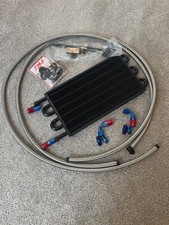
Pumps, boost valve kits, pressure regulator kits, coolers and deep pans — TH400 parts in one place, shipped from the USA.
Shop TH400 parts →What GM's Own TH400 Manual Says to Check
GM's factory TH400 diagnosis adds two heat-related checks that cost nothing. First, the converter stator. If the stator roller clutch stays locked up at all times, GM says acceleration from a stop feels normal but engine rpm and vehicle speed are limited at high speed, engine overheating may be noted, and the converter itself may show a blue color from the heat. With the converter out, GM's bench check is to put a finger in the splined inner race of the roller clutch: it should turn freely clockwise and lock or be very hard to turn counterclockwise. [5]
Second, read the dipstick, not just the level. GM notes that air bubbles in the fluid indicate an air leak on the suction side, which can cause erratic operation and slippage, and slippage is heat. On a TH400 that usually means a hard or cut intake pipe O-ring at the filter. GM also cautions that modern fluid can look darker and smell stronger in normal service, so color and odor alone are not proof of a cooked unit; pair them with the pan debris and a pressure check. GM's leak and diagnosis procedures are run at about 180°F operating temperature, a useful baseline for what "hot" really means on this unit. [5]
Fluid: Not the Cause, But It Changes Your Margin
A TH400 was originally specified for Dexron II or, later, Dexron III fluid, decades before Dexron VI existed. That does not mean it should stay on old-spec fluid today. Modern Dexron VI is fully back-serviceable wherever Dexron II or III is called for, per fluid makers' own published product sheets, and it is built specifically for better resistance to heat-driven breakdown. Valvoline's DEXRON-VI ATF product information lists a flash point of 224°C (435°F) under ASTM D92 and describes the additive package as formulated to "avoid breakdowns at higher operating temperatures." [4]
That is real margin, but it is margin, not a fix. A full synthetic Dexron VI fill will not correct a worn pressure regulator bore or a restricted converter charge circuit; it will just tolerate the heat those problems generate a little better while you track down and correct the actual mechanical cause. Treat a fluid upgrade as the last step after the pump, the PR bore, and the charge circuit have all been checked, not a substitute for checking them.
Get the remanufactured pump → Browse all TH400 parts
A Practical Check Order
If a TH400 is running hotter than it should and you want to find the real cause instead of guessing, work in this order:
- Fluid level and condition first. Low fluid reduces the system's ability to carry heat away regardless of what else is wrong, and it is the fastest thing to rule out.
- Cooler flow under load, not just at idle in the driveway. A flow meter on the return line is the real test; at minimum, pay attention to how the transmission behaves at low rpm under load (towing, a grade, stop-and-go), since that is exactly where a weak pump or clogged filter shows its worst flow numbers.
- Line pressure with a gauge, at idle and at a 2,000-rpm stall. Pressure that is uncontrollably high at both, especially paired with delayed engagement or a soft reverse, points at the pressure regulator bore rather than the pump itself.
- Stall speed and shift feel. Elevated stall rpm, flat acceleration, or TCC shudder on an otherwise healthy pump and PR bore point toward restricted converter charge flow, and that means pulling the stator support and checking impeller hub clearance during the rebuild.
- Fluid spec last. Once the mechanical causes are ruled out or corrected, a modern synthetic fill is cheap insurance, not a diagnosis.
FAQ
What is the first real sign a TH400 is heading toward overheating?
It is usually not a temperature gauge spike, it is a shift pattern change. Sonnax's technical writeup on converter charge oil lists delayed engagements, elevated stall rpm, flat acceleration and worse fuel economy as the early symptoms of restricted charge flow, because that same oil becomes lube oil downstream. By the time the fluid itself feels hot or smells burnt, the restriction has usually been building for a while.
How do I know if my TH400's cooler flow is actually the problem?
The cleanest way is a flow meter on the cooler return line, which is exactly what Sonnax's SonnaFlow kit measures in gallons per minute. Their own reference chart for a TH400 with a weak pump or clogged filter shows flow holding around 1.8 GPM at 45 mph highway speed, then dropping off in stages as engine rpm falls on a coast to a stop, bottoming out near zero by idle. That low-rpm collapse is the signature of a flow problem, not a cooler that is simply too small.
Will a new pump alone fix TH400 overheating?
Only if the pump itself, not the pressure regulator bore in that pump, is the actual wear point. Sonnax treats these as separate repairs: a weak pump or clogged filter is corrected with a new pump plus their Boost Valve Kit 34910-01K and a new filter, while a worn pressure regulator bore in that same pump casting is a different failure that needs the Pressure Regulator Valve Kit 34910-03K. A rebuild that swaps the pump but ignores a worn PR bore can still leave you with high, uncontrollable cooler pressure.
Does a worn pressure regulator bore actually cause overheating, or just shifting problems?
Both, and the overheating risk is the less obvious part. Per Sonnax, once the PR bore wears, balance line pressure leaks past the valve and exhausts to the sump, so the valve cannot reach its low-pressure position. The result is uncontrollably high line pressure and high cooler pressure at the same time, on top of delayed converter charge and poor reverse engagement. High cooler pressure pushes fluid through the circuit at a rate and pressure the cooler was not sized for, which works against the cooler instead of with it.
Does switching to synthetic Dexron VI fix an overheating TH400?
No, but it buys real margin once the mechanical causes are fixed. A TH400 was originally specified for Dexron II or III, and modern Dexron VI is fully back-serviceable in those applications per fluid makers' own product sheets, with a flash point around 224°C (435°F) and additive packages built specifically for breakdown resistance at higher operating temperatures. Fluid upgrades do not fix a worn pressure regulator bore or a restricted converter charge circuit, they just give you a fluid that tolerates the heat better while you diagnose the real cause.
Sources
- Sonnax — "SonnaFlow Chart: TH400 (Poor)." Backs the SonnaFlow kit's role measuring ATF cooler flow in gallons per minute, the TH400 reference reading of roughly 1.8 GPM (250 Hz) at 45 mph on a weak pump or clogged filter, the stair-step flow collapse toward near-zero as engine rpm drops on a coast to a stop, the note that flow drops off dramatically with lower engine rpm, and the fix of a new pump with Sonnax Boost Valve Kit 34910-01K, Pressure Regulator Valve 34910-03K and a new filter. sonnax.com
- Sonnax — "Converter Charge Mysteries: Impeller Hub I.D. Effects on Flow," by Ed Lee. Backs charge oil's three functions (filling the converter, keeping the TCC off the cover in release, becoming lube oil), the symptom list for restricted flow (TCC drag in release, harsher TCC apply and shudder, delayed engagements, elevated stall rpm, flat acceleration, worse fuel economy, altered temperature, reduced converter head pressure), the TH400-style hub's 1.425 in. I.D. versus the TF8 hub's 1.485 in. I.D. causing excessive restriction when swapped, the correct 0.085 in. per-side clearance spec, and the hub I.D.'s role as an orifice affecting pressure regulator valve balance. sonnax.com
- Sonnax — "Pressure Regulator Valve Kit 34910-03K" (TH400, TH425). Backs the pressure regulator bore wear mechanism: the hardened steel valve oscillating continuously in the cast-iron pump bore, balance line pressure leaking past the valve and exhausting to sump, the valve failing to reach its low-pressure position, the resulting uncontrollably high line and cooler pressure, delayed converter charge and poor reverse engagement, the converter, friction element and crankshaft thrust surface damage that follows, the PTFE seal ring and O-ringed end plug repair, the 1971-and-later fitment, and the through-balance-hole pump warning. sonnax.com
- Valvoline — DEXRON-VI ATF Product Information sheet. Backs Dexron VI being fully back-serviceable wherever Dexron II or III is recommended, the flash point of 224°C (435°F) under ASTM D92, the pour point of -54°C, the viscosity index of 151, and the additive package's stated breakdown resistance at higher operating temperatures. valvoline.com.au (PDF)
- General Motors — 1975 Buick Service Manual, Section 7D: Turbo Hydra-Matic 400 Transmission. Backs the locked-stator symptoms (limited high-speed rpm and vehicle speed, possible engine overheating, blue converter from overheating), the stator roller clutch finger check, air bubbles on the dipstick indicating a suction-side air leak that causes erratic operation and slippage, the note that fluid may look darker and smell stronger in normal service, and the roughly 180°F operating temperature used for diagnosis. teambuick.com (GM PDF)