Most TH400 filter changes are a non-event: drop the pan, swap the screen, button it back up, done. What makes this transmission different from a modern paper-filter unit is a 1968 design detail GM's own dealers were warned about at the time, and it changes how you should read what you find when the pan comes off. Get the interval, the strainer's quirks and the reassembly right, and a TH400 pan service is fifteen minutes of real work. Get them wrong and you either starve a pump on a transmission that looked fine, or you miss the early sign of a failure that is about to get expensive.
This guide works from GM's own 1976 service literature, a 1968 Pontiac dealer bulletin written specifically about this strainer's design, and the fluid makers' current spec pages. Full source list at the bottom.

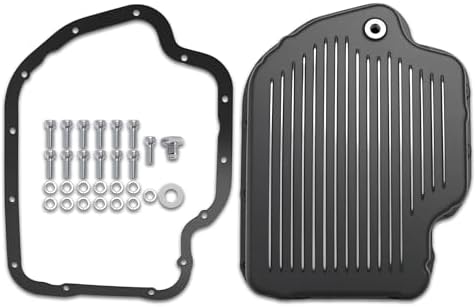
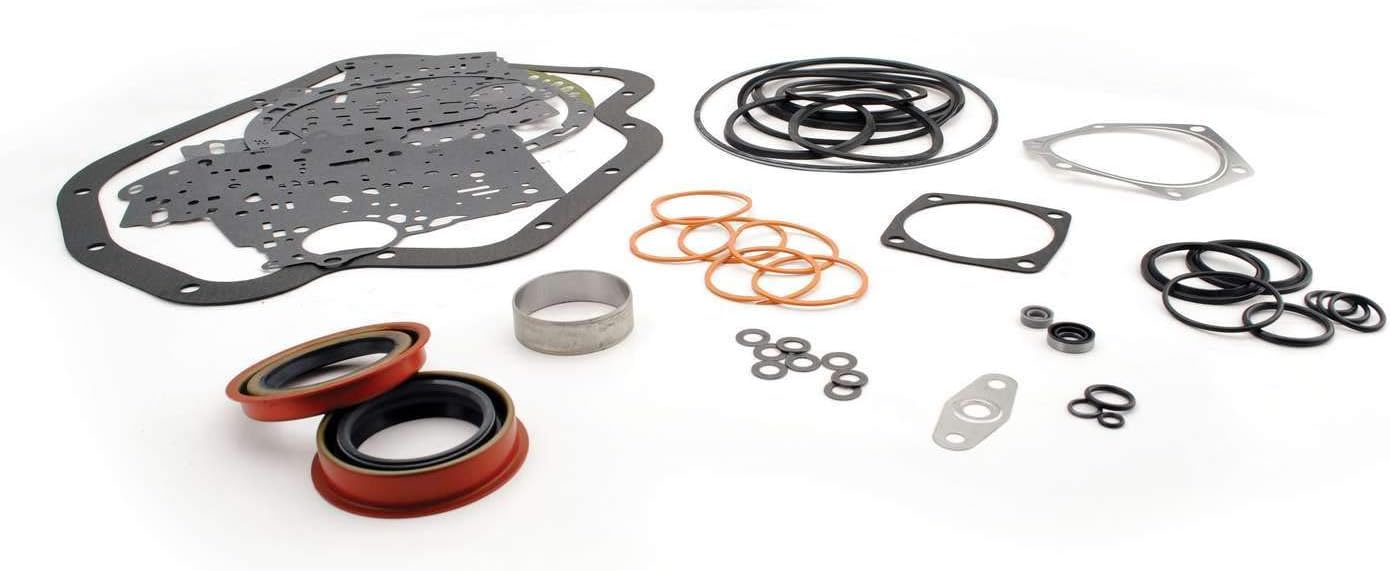
What's Actually Down There
Open a TH400 pan for the first time and the "filter" is not what most techs expect from a later paper-element transmission. The factory part is a strainer: a flat screen assembly that sits under the pickup tube, designed to stop the big stuff — clutch material, metal particles, broken bits of whatever is wearing out — before it reaches the pump inlet. It is not a fine-micron media filter chasing varnish and fine wear particles the way a modern unit's filter does.
The detail GM warned dealers about in 1968
Pontiac's dealer service bulletin 68-I-60, issued April 18, 1968, calls out something specific to this strainer's 1968-and-late-1967 design: it is a full-flow part with no bypass valve. On a filter with a bypass, contamination that clogs the media eventually forces the bypass open and the transmission keeps pumping fluid, dirty but flowing. The TH400's early strainer has no such relief path. GM's bulletin states it plainly: when the strainer, part number 6437741, becomes contaminated, "it will restrict the oil intake to the transmission pump," and that restriction shows up as one or more of pump cavitation noise, slipping, or loss of drive and intermittent drive.
That is the whole reason this is a maintenance item and not a lifetime part. A strainer that is slowly loading up with fine debris does not announce itself the way a bypassing filter might; it just progressively starves the pump until the symptoms above show up, often intermittently at first. Later production runs and rebuild kits use a similar flat strainer design in the same role, which is why TCI, Sonnax and the other rebuild suppliers still sell it as a routine wear item in every overhaul and filter kit for this unit.
Sonnax's own flow-testing data backs up how bad that starvation gets in practice. Their SonnaFlow reference chart for a TH400 with a weak pump or clogged filter shows cooler circuit flow holding around 1.8 GPM at a steady 45 mph, then collapsing in a stair-step pattern as engine rpm drops on a coast to a stop, bottoming out near zero by idle. Their own note on the chart: flow drops off dramatically with lower engine rpm. That is the 1968 bulletin's cavitation warning showing up on a modern flow meter — and it is also why a clogged strainer hurts worst in exactly the low-rpm, high-load situations a pan service is meant to prevent, not on a steady highway cruise where the symptom is easiest to miss.
The Real Service Interval
GM's 1976 light truck service literature (ST-330-76) gives the TH400 a specific interval, separate from the TH350 sharing the same manual: change the fluid and filter every 15,000 miles if the vehicle is driven under severe transmission service, or every 60,000 miles if it is not. GM defines severe service as one or more of:
- Heavy city traffic where outside temperature regularly reaches 90°F
- Very hilly or mountainous driving
- Frequent trailer towing
- Commercial use such as taxi, police or delivery service
Think honestly about what still runs a TH400 in 2026: three-quarter and one-ton trucks, tow rigs, hot rods that see the track, and daily-driven classics in stop-and-go traffic. Almost none of that is "normal" by GM's own 1976 definition. Unless you know a specific unit's full history was light highway duty, service it on the 15,000-mile interval, not the 60,000-mile one.
Pulling the Pan
- Drain it hot, or at least warm. Fluid flows and carries suspended debris out far better warm than cold. Run the vehicle a few minutes first if it has been sitting.
- Remove the pan bolts in stages. Loosen all of them first, then pull all but two opposite corner bolts, letting the pan drop and tilt at the back to drain into a catch pan before you fully remove it. This keeps fluid from dumping everywhere at once.
- Scrape, don't gouge. Clean the old gasket material off both the pan rail and the case mating surface with a plastic or brass scraper. The case is aluminum; a steel scraper will gouge the sealing surface and create a leak path no gasket can fix.
- Pull the strainer and inspect the pickup tube O-ring. The O-ring hardens over time and is cheap insurance to replace on every service — a hardened or flattened one will pull air into the pump and cause the same symptoms as a clogged strainer.
- Inspect before you install the new strainer — see the next section before you put anything back together.
Gasket or RTV?
Use the gasket. On a TH400 pan with flat, undamaged mating surfaces, a proper fiber or rubber-coated steel-core gasket seals correctly under the bolts' clamping force with no cure time and no risk of migrating anywhere it shouldn't. RTV silicone has a real failure mode here that gasket makers and rebuilders both warn about: fluid can wick under uncured RTV before it sets, and anything that squeezes out on the inside of the pan can break off later and lodge in the strainer screen or a valve body orifice, trading a pan leak for an internal blockage. If a case or pan is warped enough that a gasket won't seal, that is a flatness problem to fix, not a reason to reach for the sealant tube.
Torque, in a Pattern, Not by Feel
Snug every bolt first, then torque in a crisscross pattern — opposite corners, working toward the center — in two passes rather than running each bolt home in sequence. The TH400 case is aluminum and the pan bolt holes strip out easily; use a torque wrench, not feel. GM's 1975 Buick service manual (Section 7D) lists the TH400's 5/16-18 oil pan to case bolts at 12 lb-ft (144 in-lb) and the 1/4-20 filter retainer bolt at 10 lb-ft, and the 1976 Chevrolet truck supplement gives the same two numbers. Set a 1/4-drive inch-pound wrench to 144 rather than working at the bottom of a 3/8 click wrench, follow an aftermarket pan or gasket kit's own figure if it gives one, and never chase a leak by cranking bolts tighter — an overtightened aluminum pan rail warps, and a warped rail leaks worse than before.
What the Debris in the Pan Is Telling You
This is the diagnostic value in a routine service that is easy to skip past. Before you clean the pan out, look at what's actually in it.
- Fine gray-black dust, evenly spread. Normal clutch and band friction wear. Nothing to act on beyond the service itself.
- Fibrous chunks of friction material. A clutch or band is breaking down faster than normal wear. Worth a line pressure check and a look at what's commanding that clutch before you just put it back together and hope.
- Shiny metal flakes or chunks. Something harder than friction material is wearing — a bushing, a thrust washer, a gear, a sprag. This is the exact scenario GM's own bulletin addresses directly: "When a transmission is overhauled for any major failure where clutch plate materials or excessive metal particles are found in the oil pan, the oil strainer assembly should be replaced." GM's language assumes you are already mid-overhaul when you see this, which is the point — metal in the pan on what was supposed to be a routine filter change is a sign the unit needs to come apart, not just a reason to buy a second filter.
Either way, the strainer itself gets replaced at every service regardless of what the pan shows; it costs a few dollars and there's no scenario where reusing the old one is the right call. Our TH400 common problems guide covers what each failure mode upstream of the pan actually looks like driving the vehicle, and TH400 line pressure testing is the fastest way to confirm a suspicion before you commit to teardown.
Refilling and Checking the Level
Use a GM-licensed DEXRON VI fluid for the refill. Current DEXRON VI is back-serviceable wherever GM's older DEXRON II or DEXRON III was specified, so it is the correct fill for this transmission regardless of model year. Add fluid through the dipstick tube with the engine off, then start the engine in Park and bring the level up while checking the stick, cycling the shifter briefly through each range to fill the clutch circuits before you set the final level. Our TH400 fluid type and capacity guide has the full refill-quantity breakdown for a pan-only service versus a dry fill, and the GM hot/warm/cool dipstick procedure in detail.
Debris that doesn't look like normal wear?
If the pan told you this is bigger than a filter change, the overhaul kits, drums, pumps and valve bodies to fix it right are in stock and ship fast.
Shop TH400 parts →FAQ
How often should a TH400 filter and pan be serviced?
GM's own 1976 service literature calls for fluid and filter replacement every 60,000 miles under normal driving, or every 15,000 miles under severe service: heavy city traffic in hot weather, hilly or mountainous driving, frequent trailer towing, or commercial use such as police, taxi or delivery work. Most TH400s on the road today are tow rigs, hot rods or trucks that qualify as severe service, so treat yours that way unless you know its full history.
Does the TH400 filter have a bypass valve?
No. Pontiac's 1968 dealer bulletin 68-I-60 is explicit that the Turbo Hydra-Matic full-flow oil strainer, part number 6437741, has no bypass valve. When it loads up with debris it simply restricts oil to the pump rather than opening a secondary path, which is why a contaminated strainer on this transmission causes pump cavitation noise, slipping or loss of drive instead of just running a little dirtier.
Should I use a gasket or RTV sealant on a TH400 pan?
Use a proper pan gasket, not RTV silicone, whenever the mating surfaces are flat and undamaged. A quality gasket seals under the bolts' clamping force with no cure time and nothing to squeeze into a fluid passage. RTV that gets pushed into the pan before it cures can break off and plug the filter or a valve body orifice, and it takes time to set that a gasket does not need.
What does metal or clutch material in the TH400 pan mean?
It means the strainer needs to come out, not just the pan. Per GM's dealer bulletin, when a transmission is overhauled for any major failure where clutch plate material or excessive metal particles are found in the oil pan, the oil strainer assembly should be replaced along with addressing whatever is shedding that material. A fine gray dust is normal clutch wear; fibrous chunks or shiny metal flakes are not, and point to a mechanical problem the filter alone will not fix.
How tight should TH400 pan bolts be torqued?
12 lb-ft (144 in-lb), per GM: the 1975 Buick service manual's TH400 torque table lists the 5/16-18 oil pan to case bolts at 12 lb-ft, and the 1976 Chevrolet light truck supplement lists the bottom pan attaching screws at the same 12 lb-ft. The filter retainer bolt is 10 lb-ft. Snug them first, then torque in a crisscross pattern in two passes; if an aftermarket pan or gasket kit gives its own figure, follow that kit's instructions.
Sources
- Pontiac Motor Division — Dealer Service Information Bulletin 68-I-60, Section 7E, "Turbo Hydra-Matic Oil Strainer Replacement," April 18, 1968. Backs the full-flow, no-bypass-valve design of the 1968/late-1967 strainer (part no. 6437741), the pump cavitation/slipping/loss-of-drive symptoms of a contaminated strainer, and the overhaul criterion of replacing the strainer when clutch material or excessive metal particles are found in the pan. firstgenfirebird.org (bulletin transcription + original scan)
- General Motors / Chevrolet — 1976 Light Truck Service Overhaul Supplement (ST-330-76), Section 0 General Information and Lubrication (PDF). Backs the 60,000-mile normal / 15,000-mile severe-service fluid-and-filter interval and the listed severe-service conditions for the Turbo Hydra-Matic 400. 73-87chevytrucks.com (PDF)
- SAE International — "Dexron Automatic Transmission Fluid," SAE Technical Paper 680038 (1968). Backs the 1967 introduction of DEXRON as GM's automatic transmission fluid specification, establishing the fluid lineage this unit's service history and current DEXRON VI back-serviceability are built on. saemobilus.sae.org
- Valvoline — DEXRON-VI/MERCON LV Full Synthetic ATF product page. Backs the statement that GM-licensed DEXRON VI is fully back-serviceable wherever DEXRON-II and/or DEXRON-III are recommended, making it the correct refill fluid after this service. valvolineglobal.com
- Sonnax — "SonnaFlow Chart: TH400 (Poor)." Backs the quantified cooler-flow consequence of a clogged strainer or weak pump: roughly 1.8 GPM at 45 mph holding steady, then collapsing in a stair-step pattern as engine rpm drops on a coast to a stop, bottoming out near zero by idle, with Sonnax's own note that flow drops off dramatically with lower engine rpm. sonnax.com
- Buick Motor Division — 1975 Buick Chassis Service Manual, Section 7D, Turbo Hydra-matic 400 (PDF). Backs the TH400 bolt torque table (oil pan to case 5/16-18 at 12 lb-ft, oil filter to valve body 1/4-20 at 10 lb-ft) and the filter and pan installation steps. teambuick.com (PDF)