The U660E is the six-speed transaxle Toyota and Aisin put behind the 2GR-FE V6 — Camry, Avalon, Highlander, Sienna, Venza, RAV4, and the Lexus ES 350 and RX 350. It has no dipstick. It has a refill plug on the side of the case and an overflow plug in the pan, and the level is set by fluid temperature, not by a mark on a stick.
That one design decision is why the fluid numbers for this unit get quoted wrong so consistently. A dipstick is forgiving. A thermally referenced overflow is not: check it at the wrong temperature and you will confidently leave a transaxle a half quart low, then see it back in six months with a lockup shudder. Everything below is traced to a Toyota bulletin, a Toyota maintenance guide, or an ATSG technical publication.
The Fluid: Toyota Genuine ATF WS, Part Number 00289-ATFWS
ATSG lists the fluid type for the U660E as Toyota Genuine ATF WS, flat, with no alternate. Toyota's own bulletin covering these transaxles — T-SB-0036-13 Rev2, "WS ATF Level Adjustment for U660E/F & U760E/F Transmissions" — has exactly one line in its Parts Information table: part number 00289-ATFWS, part name ATF WS, quantity As Needed. Every fill and top-off instruction in that bulletin says "Toyota genuine WS transmission fluid."
WS stands for World Standard. It is not a viscosity grade and it is not a marketing tier. It is a Toyota fluid specification with a defined friction profile, and the U660E depends on that profile in a specific place: the converter clutch. These units run the TCC in controlled slip across a wide speed band, and slip means the friction coefficient has to stay stable as the fluid heats. A fluid that shears down or loses its friction modifier does not fail all at once — it starts as a faint 25 to 45 mph shudder that the customer describes as driving over rumble strips.
What a substitute has to actually say
There are legitimate non-Toyota WS fluids. Idemitsu — which supplies OEM fluid to Japanese manufacturers — lists ATF Type TLS-LV as "Engineered for and meets requirements of Toyota/Lexus/Scion Automatic Transmission with WS specifications" on its own ATF product page. That is the kind of statement you want on a label.
What you do not want is a multi-vehicle jug that says it is "recommended for use where Toyota WS is specified." That is a blender's recommendation, not a claim of meeting the spec, and on a unit whose most common complaint is TCC shudder it is not a gamble worth taking.
Genuine WS by the case
A correct level-set on a U660E means running fluid out of the overflow on purpose, so you always use more than the drain gave back. Buying it a quart at a time is how a 90-minute service turns into a parts run with the car on the lift and the pan off.
Genuine Toyota WS ATF, 6-quart case →Capacity: 6.57 Liters, and That Includes the Differential
ATSG's U660E technical publication gives the figure directly: 6.57 liters (6.94 US quarts, 5.78 Imperial quarts), including the differential. That last clause matters. The U660E is a transaxle — the final drive and differential share the sump with the gear train, so there is no separate diff oil to service and no separate fill to forget. ATSG also lists the unit's weight as 94.4 kg (208.1 lb) with fluid filled to maximum level, which is a number worth knowing before you plan a solo R&R.
| Item | Specification | Source |
|---|---|---|
| Fluid type | Toyota Genuine ATF WS | ATSG; Toyota T-SB-0036-13 |
| Fluid part number | 00289-ATFWS | Toyota T-SB-0036-13, Parts Information |
| Total fill (incl. differential) | 6.57 L / 6.94 US qt / 5.78 Imp qt | ATSG U660E publication |
| Level-check fluid temperature | 185–194°F (85–90°C) | Toyota T-SB-0036-13; Lexus L-SB-0011-13 |
| Gauge setting, idle 600–700 rpm | 75.5 mm | Toyota T-SB-0036-13, step 23 |
| Gauge setting, idle 700–800 rpm | 72.0 mm | Toyota T-SB-0036-13, step 23 |
| Overflow/drain plug torque | 40 N·m (408 kgf·cm, 30 ft-lb) | Toyota T-SB-0036-13, step 29 |
| Refill plug torque | 49 N·m (500 kgf·cm, 36 ft-lb) | Toyota T-SB-0036-13, step 36 |
| Overflow plug tool | 6 mm hex socket | Toyota T-SB-0036-13, step 21 |
Why "dry fill" numbers float around and why you should ignore them
You will see 11 or 11.5 quarts quoted as U660E dry fill. That figure is for a bench-dry unit with an empty converter, cooler and lines — a rebuild fill, not a service fill, and it is the number that gets people to buy three cases when they need one.
Do not chase a published drain volume either. What comes out of a U660E pan depends on how long it sat, how level the car is, and whether the pan came off or just the plug. Measure what drains, put that much back, then set the level by the procedure. The overflow is the spec; the jug count is bookkeeping.
The exchange math
Against a 6.57 L total, a drain that gives back three liters replaces roughly 46 percent of the charge. Do that once and 54 percent of the old fluid is still in the converter and cooler circuit. Do it three times, driving the car between fills so the converter contents mix, and you are down to about 16 percent old fluid — better than most machine exchanges, with no pressure applied to a cooler circuit you did not build. On a high-mileage unit with dark fluid, spacing three services a few hundred miles apart is the low-risk way to get there.
The Level Procedure: Two Different Right Answers
This is where techs get into arguments online, and both sides are half right. Toyota published a bulletin-level procedure for these transaxles that supersedes the generic overflow method, and it does not use the same temperature.
Per T-SB-0036-13 Rev2, the level is inspected at normal operating temperature: 185°F to 194°F (85°C to 90°C), read on the Techstream Data List PID A/T Oil Temperature 1, with Engine Speed on the list at the same time. The bulletin also has you switch off the A/C, lights, cooling fan, and audio to keep idle load off the reading, and it requires the vehicle to sit level on the lift within one degree front-to-rear and side-to-side.
It is not a plain overflow check. Toyota's method uses the WS ATF Level Gauge kit (SST 10002-00101), a sliding-tube gauge that threads into the overflow port through a 12 mm adapter and is set to a specified projection before you open the port. Vacuum — 2 to 5 in. Hg (10 to 20 kPa) from the Fluid Extraction Tank on the fill port — holds the fluid in while the plug is out.
The two gauge settings, and why idle speed changes the number
Step 23 of the bulletin gives a table, and it is the part most people never see. For U660E/U660F behind the 2GR-FE — Avalon GSX30, Camry GSV40, Highlander GSV50, Sienna GSU50, Venza GSU55 — the gauge is set to 75.5 mm if idle is 600–700 rpm, and 72.0 mm if idle is 700–800 rpm. The Lexus version of the same bulletin, L-SB-0011-13, gives identical figures for the ES 350 and RX 350.
The mechanism is simple once you see it: the pump moves more fluid at higher idle, so more of the charge is up in the circuit and converter and less is standing in the pan. Higher idle, lower pan level, shorter gauge setting. If you read idle speed wrong you set the level wrong by 3.5 mm of pan depth, and you will never see it on a scan tool.
Condensed sequence
- Warm the vehicle, stop the engine, connect Techstream with the key off, then key on.
- Powertrain / ECT / Data List. Select A/T Oil Temperature 1 and Engine Speed. Confirm 185–194°F (85–90°C) before you start.
- Brake held, start the engine, move the selector slowly P to D and back to P.
- Lift the vehicle level. Remove the LH fender apron seal (2 bolts and a clip) to reach the refill plug.
- Refill plug and gasket out. Install the fill adapter, vacuum regulator manifold, and extraction tank. Shop air to the tank — do not exceed 100 psi.
- Open both tank valves to draw 2–5 in. Hg on the transaxle. Remove the overflow/drain plug with a 6 mm hex socket. Expect a little hot fluid; have a pan under it.
- Install the level gauge, set to 75.5 mm or 72.0 mm per the observed idle, and lock the thumbscrew.
- Close the upper tank valve to drop vacuum to zero and watch the gauge hose. A slow drip is correct. A steady stream means overfull — let it settle to a drip. Nothing at all means low; add WS through the fill system until it drips.
- Re-apply vacuum, pull the gauge, and install the overflow plug with a new gasket at 40 N·m (30 ft-lb). Refill plug, new gasket, 49 N·m (36 ft-lb).
Two things to burn in. First, new gaskets, both plugs, every time — the bulletin says it twice and a weeping crush washer on an overflow plug reads as a pan gasket leak to the next shop. Second, if you do not have the SST, you are not performing this procedure; you are performing a different one, and you should say so on the repair order rather than pretending the two are equivalent.
The temperature trap
ATF expands measurably with heat. Set the level cold and it will be low hot, which is exactly the wrong direction: a hot, working U660E on a Highlander in traffic is when the pump most needs a full pan. The most common self-inflicted comeback on these is a unit "topped off" at ambient that came back with a lockup complaint a correct hot re-level cured. Toyota's caution about hot fluid is also worth taking seriously — 190°F is scalding temperature coming out of a port above your face.
Service Interval: What Toyota Schedules, and What Actually Keeps Them Alive
Toyota's position is on paper and it is narrower than most people assume. In the 2013 Camry Warranty & Maintenance Guide — a U660E-era V6 application — automatic transmission fluid appears under Inspect at 60,000 miles or 72 months, alongside a general "inspect and adjust all fluid levels." Replacement is listed only under Additional Maintenance Items for Special Operating Conditions, for driving while towing, using a car-top carrier, or heavy vehicle loading.
So: no scheduled fluid replacement for a normally driven car, and a 60,000-mile replacement for one that works. That is the OEM answer and it is defensible on paper.
It is not what I do to a customer's car, and here is the reason, which is mechanical rather than philosophical. Sonnax's vacuum test guide for the U660E/U660F maps the valve bores that wear in these bodies, and the list reads like a fluid-condition report: the lockup control valve (TCC slip codes, rpm fluctuation, apply and release concerns, harsh downshifts), the lockup control boost assembly (burnt converter, overheated fluid), the lockup relay valve (overheated transmission), the converter and lube relief valve (overheating, repeated converter failure), and the secondary pressure regulator valve (TCC shudder, lube failures, bearing and bushing failure). Sonnax's fixes are drop-in Zip Valve and valve kits — 47740-30K, 47740-06K, 47740-26K, 47740-60K among them — but the wear itself is aluminum bore erosion accelerated by hot, oxidized, debris-loaded fluid.
Read that chain the right way round. Degraded fluid raises converter slip heat, heat cooks the fluid faster, oxidized fluid and clutch debris wear the bores that control the converter, and worn bores make the converter slip more. Once a bore is oval, no amount of new fluid fixes it and you are into a valve body.
What I run: drain-and-fill every 40,000–50,000 miles on a normally driven car; every 30,000 on anything that tows, lives in stop-and-go heat, or is a Sienna or Highlander hauling weight. Pull a sample every time and look at it in a clean jar against white paper. Translucent red to amber is fine. Dark but still translucent is heat, not yet failure. Opaque, gray, or scorched-smelling means clutch material is in suspension — at that point a fluid change is a bandage and you should be quoting a teardown, not a service.
One thing not to do
Do not run a chemical flush through one of these to "clean it up." A U660E that has gone 150,000 miles on original fluid has varnish holding marginal seals and clearances where they are. The fix is repeated gentle drain-and-fills with WS, on a level lift, set to temperature — not a solvent and a machine.
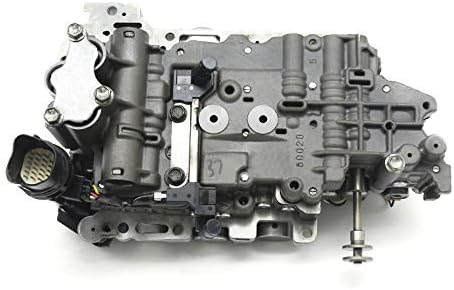
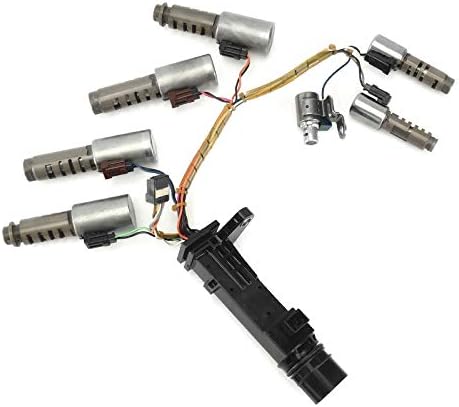
U660E filters and pan gasket kits, genuine WS ATF, drain and overflow plug gaskets, valve body parts, and overhaul kits for the Camry, Avalon, Highlander, Sienna, Venza and Lexus ES/RX 3.5L — shipped fast from the USA.
Shop U660E parts →Sources
- Toyota Motor Sales USA — Technical Service Bulletin T-SB-0036-13 Rev2, "WS ATF Level Adjustment for U660E/F & U760E/F Transmissions," February 25, 2013 (Rev2 April 13, 2016). Fluid part number 00289-ATFWS; the 185–194°F (85–90°C) inspection temperature; Techstream path Powertrain / ECT / Data List with the A/T Oil Temperature 1 and Engine Speed PIDs; the step 23 gauge table giving 75.5 mm at 600–700 rpm idle and 72.0 mm at 700–800 rpm idle for U660E/F with the 2GR-FE; SST kit 10002-00101; the 2–5 in. Hg (10–20 kPa) vacuum window and 100 psi shop-air limit; the 6 mm hex overflow plug; overflow/drain plug torque 40 N·m (30 ft-lb) and refill plug torque 49 N·m (36 ft-lb); the level-within-one-degree lift requirement; and the slow-drip pass criterion. Hosted by NHTSA. static.nhtsa.gov
- Lexus, a division of Toyota Motor Sales USA — Technical Service Bulletin L-SB-0011-13, "WS ATF Level Adjustment for U660E/F Transmissions," February 26, 2013. The same 185–194°F (85–90°C) window and the identical 75.5 mm / 72.0 mm gauge settings applied to the 2007–2013 ES 350 and 2010–2013 RX 350, confirming the U660E specification is common across the Toyota and Lexus applications. Hosted by NHTSA. static.nhtsa.gov
- ATSG (Automatic Transmission Service Group) — Toyota U660E technical service information, 2012. Fluid type Toyota Genuine ATF WS; fluid capacity 6.57 L (6.94 US qt, 5.78 Imp qt) including the differential; unit weight 94.4 kg / 208.1 lb filled to maximum level; the model application list covering Avalon, Camry, Highlander, Sienna, Venza, RAV4, Lexus ES 350 and RX 350; and the pressure-tap identification showing the WS fill port and the fluid level check (overflow) pipe plug. atsg.biz
- Sonnax — "Toyota/Lexus U660E, U660F Vacuum Test Guide," December 30, 2013. The critical wear areas and their symptoms cited above: lockup control valve (TCC slip codes, rpm fluctuation, apply/release concerns, harsh downshifts), lockup control boost assembly (burnt converter, overheated fluid), lockup relay valve (overheated transmission), converter and lube relief valve (overheating, repeated converter failure), and secondary pressure regulator valve (TCC shudder, lube failures, bearing/bushing failure), with Sonnax part numbers 47740-30K, 47740-06K, 47740-26K and 47740-60K. sonnax.com
- Toyota Motor Sales USA — 2013 Camry Warranty & Maintenance Guide. The 60,000 mile / 72 month maintenance log entry listing automatic transmission fluid under Inspect together with "inspect and adjust all fluid levels," and the Additional Maintenance Items for Special Operating Conditions entry that calls for "Replace automatic transmission fluid" when driving while towing, using a car-top carrier, or under heavy vehicle loading; plus the maintenance-item description instructing inspection or replacement at specified intervals and a check of each component for leakage. assets.sia.toyota.com
- Toyota Parts Center Online — Toyota Genuine Automatic Transmission Fluid WS, part number 00289-ATFWS. The OEM listing for the World Standard ATF specified for this transaxle, confirming the part number used throughout the bulletin. autoparts.toyota.com
- Idemitsu Lubricants America — Automatic Transmission Fluids product page. The manufacturer statement that ATF Type TLS-LV is "Engineered for and meets requirements of Toyota/Lexus/Scion Automatic Transmission with WS specifications," used above as the example of language a legitimate WS-spec substitute carries. idemitsulubricants.com