Towing does not break a ZF6HP the way an impact or a bad shift solenoid does. It breaks it slowly, through heat, and the transmission usually gives you warning signs for weeks before it actually strands you. The problem is that most of those warning signs, a little shudder here, a slightly firmer shift there, look like nothing until the day they are not.
Here is what towing load actually does inside this transmission, which variant can take it, whether a bigger cooler is the fix or just a band-aid, and what the real repair looks like when the valve body is the actual problem.
Which variant can actually take a trailer
Not every ZF6HP is built the same, and the gear count on the window sticker tells you nothing about towing capacity. Per Transmission Digest's Niel Speetjens, writing for ATSG, the Gen 1 family splits out by torque rating:
| Variant | Approx. torque rating | Typical applications |
|---|---|---|
| 6HP19 | 400 Nm (295 lb-ft) | BMW 3, 5, 6, 7 Series; X3, Z4 |
| 6HP26 | 600 Nm (444 lb-ft) | BMW 7 Series; Jaguar XK/XKR; Aston Martin; Bentley; Lincoln Navigator; Land Rover LR3/LR4 and Range Rover Sport (badged 6HP26X) |
| 6HP32 | 750 Nm (555 lb-ft) | BMW 745d; Audi Q7 6.0 TDI (badged 6HP32A) |
A 6HP32 behind a torquey diesel Q7 was engineered around exactly the kind of sustained load towing produces. A 6HP19 in a 3 Series was not, and bolting a hitch to one and hauling a loaded trailer is asking a 400 Nm-rated unit to live well outside its design envelope indefinitely. Know your variant before you make any towing decision, and if you are not sure which one you have, the separator plate stamp on the valve body is the way to confirm it, not the badge on the trunk.
Why towing fails this transmission through heat, not torque
A single hard pull does not usually hurt a correctly-rated ZF6HP. What hurts it is hours of sustained load: the torque converter clutch cycling in and out of lockup on grades, cruise-control hunting between gears on rolling terrain, and transmission fluid sitting at an elevated temperature for the whole trip instead of the brief spikes of normal driving. Heat is cumulative. ATF that spends an afternoon running hot on a tow breaks down faster than fluid that sees the same peak temperature for thirty seconds in city traffic, and a transmission that is marginal on a cold start can still overheat on an unloaded grade once the fluid is already warm from the drive to the trailer.
That sustained heat and TCC cycling land directly on two small valve bores inside the Gen 1 valve body, and those bores are the actual towing failure point in this transmission, more often than the clutches or the gears themselves.
The bypass clutch control valve: the TCC shudder and overheat point
Per Sonnax, the bypass clutch control valve regulates torque converter clutch apply and release pressure. As its bore wears from normal use, apply rate slows and release pressure will not fully vent. On a daily-driven car that shows up as an occasional firm shift or a faint shudder. Under a tow, where the TCC is working harder and longer to manage load without letting the engine run away in RPM, that same worn bore produces torque converter clutch slip, firmer shifts than normal, and an overheating torque converter, because a slipping TCC generates heat instead of a clean mechanical lockup.
Sonnax's oversized bypass clutch control valve kit (95740-13K) is built specifically to correct this: a hardcoat anodized valve with a tighter fit to the worn bore restores factory apply and release rates. It fits Gen 1 units only, 6HP19, 6HP26 and 6HP32, along with the Ford-designed 6R60, 6R75, 6R80 and 6R100 that share the same valve body architecture. It does not fit the Gen 2 family (6HP21, 6HP28, 6HP34), which uses different bore geometry entirely.
The lubrication control valve: the one that actually starves the cooler
This is the part most people miss when they assume a bigger external cooler will solve an overheating problem. Per Sonnax, the lubrication control valve bore on the same Gen 1 valve body also wears over time, and that wear "allows loss of converter pressure, cooler flow and critical lube feed," which Sonnax states results directly in "overheating and failure of bushings, bearings and planets." In plain terms: the internal circuit that is supposed to push fluid out to the cooler and back to lubricate the rotating assembly leaks pressure past the worn bore before it ever gets there. A pristine, oversized aftermarket cooler bolted to the outside of the car cannot move more fluid through a circuit that is already losing pressure on the inside.
The same wear also produces shift timing problems, specifically bump shifts and flare shifts, and a rough idle in reverse, because the valve additionally supplies the balance pistons with oil. If a ZF6HP is overheating on tow and also shifting a little rough or lumpy in reverse at idle, that combination points at this valve, not just the cooling system. Sonnax's oversized lubrication control valve kit (95740-11K) is the direct fix, same Gen 1-only fitment as the bypass clutch valve kit, and it requires reaming the bore with the correct tool kit before the oversized valve will seat and seal correctly; this is not a part you drop in without the proper reamer.
Does an auxiliary cooler actually help?
Yes, but only as a second step, not a first one. A larger external cooler, or adding one where the vehicle did not come with one, lowers the baseline fluid temperature the whole system is working from, which gives a healthy transmission more thermal margin under tow and buys a marginal one a little more time before it overheats. What it does not do is restore pressure and flow inside a valve body that has already worn past spec. Install a bigger cooler on a transmission with a worn lubrication control valve bore and you have added capacity to a pipe that is leaking before the fluid even reaches it.
The order that actually works: confirm the fluid is correct and reasonably fresh, check for the TCC shudder and shift-quality symptoms described above, inspect or test the valve body bores if those symptoms are present, and only then add or upsize the external cooler as the finishing step once the internal circuit is confirmed to be moving fluid correctly. Owners who skip straight to a bigger cooler because that is the visible, easy upgrade are the ones who come back a year later asking why the "new cooler" didn't stop the overheating.
ZF6HP26 Sonnax Oversized Lubrication Control Valve Kit, 95740-11K
The direct fix for the valve bore that starves cooler flow and lube feed under sustained towing load. Confirm Gen 1 fitment before ordering.
See the 6HP26 overhaul kit →Fluid: get this right before anything else
Towing does not change the fluid specification, but it raises the cost of getting it wrong. ZF LifeguardFluid 6 is the semisynthetic ATF developed specifically for the 6HP family, per Gears magazine's history of ZF fluid development, and it is what the large majority of 6HP19, 6HP26 and 6HP32 applications are built around. A short list of specific applications, including the Audi A8's 6HP19A and the Audi Q7's 6HP19X, instead call for LifeguardFluid 8, so confirm your exact application rather than assuming by variant alone. ZF's own oil and oil-change-kit documentation lists the service fill at 7 one-liter bottles of LifeguardFluid 6 (or 8, depending on application), and the family's total dry-fill specification runs roughly 9.4 liters (10 quarts) including the cooling circuit.
Running the wrong fluid, or badly degraded fluid, removes margin you need under tow before the transmission even gets loaded. Fluid that has already oxidized from heat and miles has less capacity left to absorb more heat before friction characteristics and converter clutch behavior start to suffer, which is exactly the load profile a trailer creates.
Real-world towing failures: it is a documented pattern, not a fluke
This is not a theoretical concern. Land Rover LR3 and LR4 owners, who tow more than most ZF6HP26X applications because the vehicles are marketed and equipped for it, report exactly this failure pattern on forums: the gearbox runs fine unloaded, then overheats specifically under sustained towing load, triggers a protective mode that restricts gear selection or limits performance, and in more serious cases shows damage to clutch packs, the valve body, or seals afterward. That real-world pattern lines up directly with the bypass clutch and lubrication control valve wear mechanisms described above, which is the actual reason towing-heavy applications see this transmission fail more often than daily-driver-only examples of the same unit.
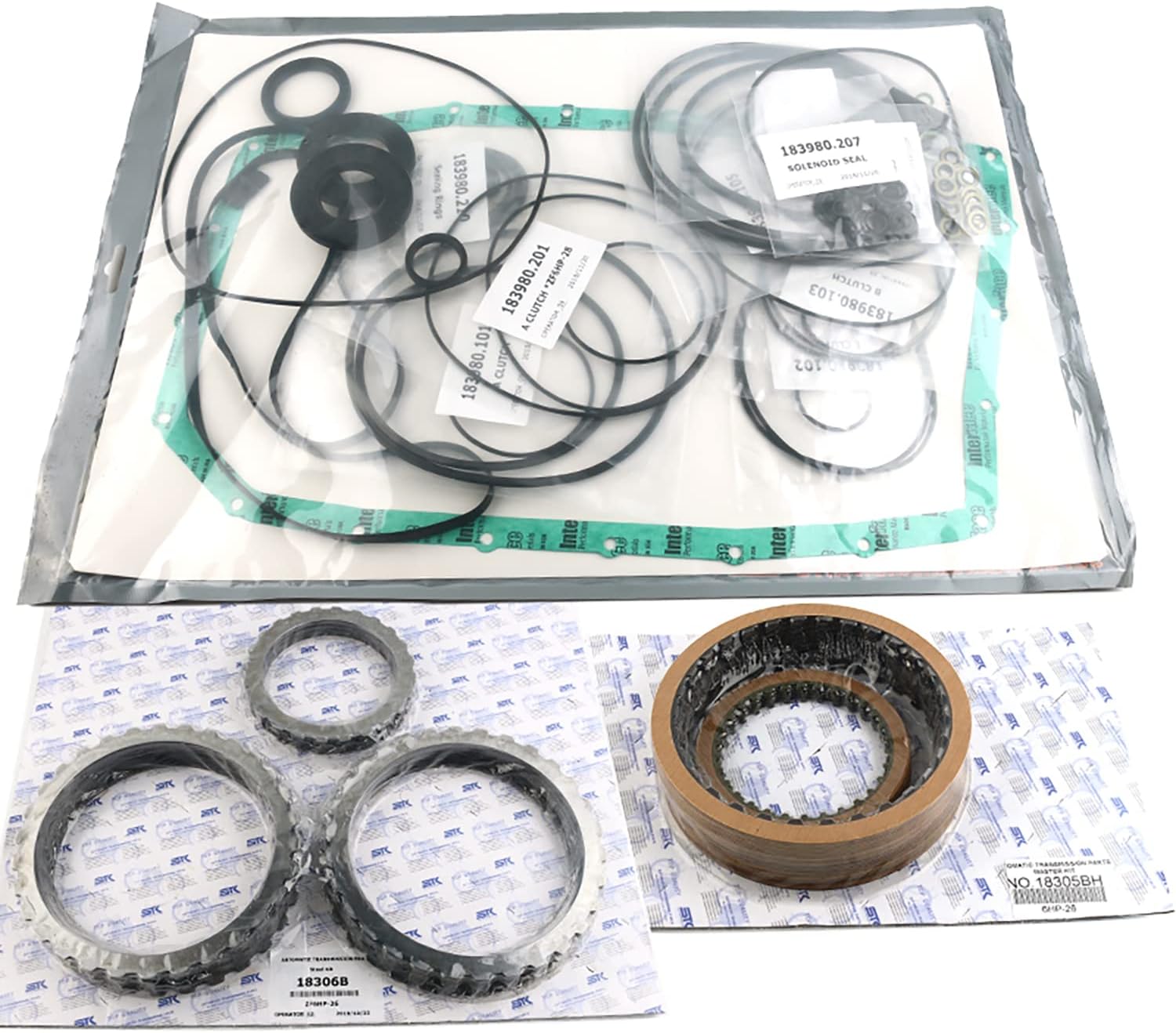
Valve bodies, shift kits, master rebuild kits, overhaul gasket sets and LifeGuardFluid for the ZF6HP19, 6HP26 and 6HP32 family, shipped fast from the USA.
Shop ZF6HP parts →What a real towing-upgrade plan looks like
- Confirm the variant and generation (6HP19/26/32 Gen 1, versus 6HP21/28/34 Gen 2) off the separator plate code, since the correct fix depends on it
- Service the fluid with the correct LifeguardFluid 6 or 8 per application, and do not stretch the interval just because the car "doesn't need it yet"
- Watch for TCC shudder, firmer-than-normal shifts, or a rough reverse idle, especially after towing, and treat them as valve body wear symptoms, not noise
- If those symptoms show up, address the bypass clutch control valve and lubrication control valve bores (oversized Sonnax valve kits, properly reamed) rather than just living with it
- Add or upsize the external cooler last, as additional thermal margin on top of a valve body that is already sealing correctly, not as a substitute for fixing it
- Match the vehicle's actual tow rating to the transmission's torque class; a 6HP19 is not a 6HP32 no matter what the hitch receiver is rated for
6HP26 overhaul kit → 6HP26 shift solenoid kit →
FAQ
Can a ZF6HP actually handle regular towing?
It depends on which variant you have and what shape the valve body is in. Per Transmission Digest, the Gen 1 family splits by torque rating: 6HP19 at roughly 400 Nm (295 lb-ft), 6HP26 at roughly 600 Nm (444 lb-ft), and 6HP32 at roughly 750 Nm (555 lb-ft). A 6HP32 behind an Audi Q7 6.0 TDI is built for real load; a 6HP19 in a 3 Series was not. Torque rating is only half the story, though, because towing fails these units through sustained heat and converter-clutch cycling, not a single overload event, so a correctly-rated transmission with worn valve body bores can still overheat on a grade a healthy one would shrug off.
What transmission fluid does a ZF6HP need for towing?
The same fluid it needs for any other driving: ZF LifeguardFluid 6, a semisynthetic ATF developed specifically for the 6HP family, per Gears magazine (ATRA). A handful of applications, including the Audi A8's 6HP19A and the Audi Q7's 6HP19X, instead call for LifeguardFluid 8, so confirm the application before buying. ZF's own oil-and-kit documentation lists the full service fill at 7 one-liter bottles, and the family's total dry-fill specification runs about 9.4 liters (10 quarts) including the cooling circuit. Towing does not change the fluid spec, but it does make running the correct fluid and a shorter change interval matter more, since heat is what breaks ATF down.
Will bolting on an auxiliary cooler fix ZF6HP overheating?
It helps, but it does not fix a transmission that is already overheating because of worn valve body bores. Per Sonnax, the lubrication control valve bore wears over time on Gen 1 units (6HP19/26/32) and that wear directly reduces cooler flow and lube feed, independent of how good the external cooler is. Adding a bigger radiator for a system that is already leaking pressure internally buys you less margin than fixing the valve. The right order of operations is fluid and filter service first, a bore and valve inspection second, and an auxiliary cooler as the finishing upgrade once the internal circuit is confirmed healthy.
What are the first signs a ZF6HP is overheating under tow?
Torque converter clutch shudder under light throttle, firmer or harsher shifts than normal as the transmission compensates, and a rising transmission temperature reading if the vehicle displays one are the earliest tells. Per Sonnax, these same symptoms, along with rough idle in reverse and shift bumps or flares, are exactly what a worn bypass clutch control valve or lubrication control valve bore produces, which is why a transmission that runs fine around town can still show these symptoms specifically when it is loaded and hot on a long tow.
Do the Sonnax ZF6HP valve kits fit every 6HP transmission?
No. Per Sonnax, the oversized bypass clutch control valve kit (95740-13K) and the oversized lubrication control valve kit (95740-11K) are built for Gen 1 units only: 6HP19, 6HP26 and 6HP32, plus the Ford-designed 6R60, 6R75, 6R80 and 6R100. Neither kit fits the Gen 2 family (6HP21, 6HP28, 6HP34). Confirm your generation, ideally by the valve body separator plate code, before ordering either kit, since the Gen 2 bore and valve geometry is different hardware entirely.
Related guides
- ZF6HP TCC Shudder Diagnosis
- ZF6HP Limp Mode Causes
- ZF6HP Fluid Type and Capacity
- ZF6HP Filter and Pan Service
- ZF6HP Identification Guide
Sources
- Transmission Digest — Niel Speetjens (ATSG Technical Field Adviser), "To 6HP or not to 6HP – Is That a Question?", March 1, 2007. Backs the torque ratings for 6HP19 (400 Nm/295 lb-ft), 6HP26 (600 Nm/444 lb-ft) and 6HP32 (750 Nm/555 lb-ft), and the applications each variant was built for. transmissiondigest.com
- Sonnax — "Oversized Bypass Clutch Control Valve Kit," product and technical reference, part 95740-13K. Backs the bypass clutch control valve's role in TCC apply/release pressure, the wear mechanism causing TCC slip, firm shifts and converter overheating, and Gen 1-only fitment (6HP19/26/32 plus Ford 6R60/6R75/6R80/6R100). sonnax.com
- Sonnax — "Oversized Lubrication Control Valve Kit," product and technical reference, part 95740-11K. Backs the lubrication control valve bore wear mechanism, the resulting loss of converter pressure, cooler flow and lube feed, the consequence of overheating and bushing/bearing/planet failure, the shift bump/flare and rough-reverse-idle symptoms, and Gen 1-only fitment. sonnax.com
- ZF Aftermarket — Passenger Cars, Oil & Oil Change Kits product portal. Backs ZF LifeguardFluid 6 as the fluid tied to 6HP transmission oil-change kits, the 7 x 1-liter bottle service fill quantity, and LifeguardFluid 8 as the alternate specification listed for certain 6HP kits. aftermarket.zf.com
- Gears Magazine (ATRA) — "ZF ATF: What Color Is Your ATF?", August/September 2025. Backs the development of LifeGuardFluid 6 as an amber semisynthetic ATF specifically for ZF's 6-speed family, and the application-specific exceptions calling for LifeGuardFluid 8 (6HP19A, 6HP19X, 6HP26A61, 6HP28AF). gearsmagazine.com
- Land Rover World forum — owner discussion thread, "Transmission doesn't like towing." Real-world owner reports of ZF6HP26X overheating specifically under sustained towing load on LR3/LR4 platforms, mentioned here as a field data point consistent with the valve wear mechanisms documented by Sonnax above; not used as a technical specification source. landroverworld.org