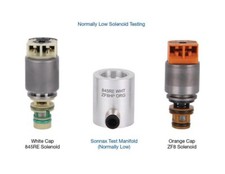
The ZF8HP shows up behind more badges than almost any transmission on the road: BMW, Jeep, Ram, Chrysler, Dodge, Jaguar and Land Rover all ran versions of it, under the names 8HP45, 8HP55, 8HP70, 8HP90 and the Chrysler-built 845RE. That spread is also why its problems get reported inconsistently. A BMW tech calls a complaint "harsh TCC apply," a Mopar tech calls the same bore "bump shift," and a forum thread calls it "transmission is junk." Underneath, it is the same unit with the same handful of failure points.
This is a rundown of what actually breaks, ranked by how often it shows up on a bench or a scan tool, with the manufacturer or component-maker documentation behind each one and the fix that is actually published, not guessed at.
Problem 1: The Harsh 2-1 Downshift Bump
On 2013 Charger (LD) and 300 (LX) models built with the 3.6L V6 (sales code ERB) and the 845RE 8-speed (sales code DFL), a small number of owners feel a distinct bump during the 2-1 downshift. Per FCA bulletin 21-041-14, dated December 10, 2014, the condition shows up at any transmission temperature and is most noticeable under light braking or while coasting to a stop, and critically, no Diagnostic Trouble Codes are set. That last point is why this complaint gets missed: a tech pulls codes, finds nothing, and sends the customer away.
The bulletin's diagnostic step is a simple road test: drive to at least 25 mph so the transmission shifts past second gear, then apply light braking down to a stop. If the bump is felt, the repair is a valve body swap using kit RL259301AA plus a quart of the correct automatic transmission fluid, followed by the 8-speed transmission shift adaptation drive learn procedure. FCA's published labor time is 1.7 hours, including the TCM flash. Skipping the drive learn after the valve body goes in is a common mistake, and it hands back a shift complaint that feels almost identical to the one that was supposedly fixed.
Problem 2: Bump Shifts, Burnt Clutches, and Gear Ratio Codes From Bore Wear
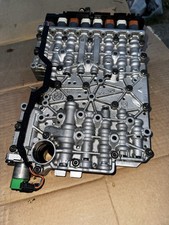
This is the complaint that gets a transmission condemned when a $150 valve kit would have fixed it. Sonnax's oversized clutch holding valve kit, part number 35740-20K, documents that wear at the clutch holding valve bores on the 845RE, ZF8HP45, ZF8HP55 and ZF8HP70 lets solenoid feedback pressure escape the circuit. The holding valves pass that feedback pressure to the control valves that actually apply the clutches, so once the bore is worn, the control valve no longer gets an accurate signal.
The resulting symptom list reads like a list of unrelated complaints, but it is one root cause: bump shifts, burnt clutches, flare shifts, gear loss, and gear ratio or solenoid performance codes. Sonnax's fix is not a new valve body. It is reconditioning the worn bore and installing a hardcoat-anodized oversized valve with annular wear-resistant grooves, a new spring, end plug and O-rings, across the five holding valve positions inside the casting (HV-A, HV-B1, HV-C, HV-D and HV-E, with end plugs required at HV-C and HV-E). That is a bench repair measured in an afternoon, not a core exchange.
The Wider Repair Kit Covers the Same Ground
ATRA's Gears Magazine covers a broader version of the same fix: the SK®8HP SHIFT KIT valve body repair kit, built for GEN1 ZF8HP45, ZF8HP55, ZF8HP70, ZF8HP90 and the Chrysler 845RE (it explicitly does not fit the GEN2 ZF8HP50, ZF8HP75, ZF8HP95 or 850RE). The kit's stated targets are TCC codes and TCC lining failures, harsh/soft/erratic shifts, and gear ratio and solenoid performance codes — the same symptom family as the holding valve wear above, addressed with a redesigned pressure regulator valve and calibrated spring and bushing, a drop-in TCC regulator valve and spring, an oversized pressure reducing (AFL) valve and spring, two end plug retainers, and seven solenoid damper rubber inserts. If a unit has been slipping and burning clutches for a while, this is the kit that covers the whole lower valve body in one pass instead of chasing one bore at a time.
Problem 3: Converter Shudder and TCC Codes
A steady vibration at light throttle right around lockup speed, paired with a TCC-related code, points at the same family of bore wear, specifically at the torque converter clutch circuit. Sonnax's documentation for the ZF8HP45, ZF8HP55 and ZF8HP70 states plainly that converter shudder, TCC slip, converter overheating, and damaged TCC linings trace back to wear at the torque converter clutch valve bore, which lets critical control fluid escape the circuit before it can apply the converter clutch cleanly. The repair path is the same as the holding valve fix: recondition the bore and install the oversized valve rather than replacing a converter that was never the actual problem. A full breakdown of this specific diagnosis, including which bore to test first and how to confirm it on the bench, is in our ZF8HP TCC shudder diagnosis guide.
Problem 4: Using the Wrong Fluid, or Changing It on the Wrong Schedule
ZF is unusually strict about this one. Per the ZF LifeguardFluid 8 product data sheet, this ATF was developed specifically for the 8HP family, and only ZF LifeguardFluid 8 or LifeguardFluid 9 may be used — no additives of any kind, because they alter the chemical makeup of a fluid whose friction behavior is precisely tuned for this transmission's clutches. ZF's own language is blunt: using the wrong oil "can lead to various adverse effects, ranging from significant deterioration in shifting characteristics to transmission failure."
On the schedule side, ZF ships these units as fill-for-life but qualifies that in writing: the factory recommends an oil change at 150,000 km, roughly 93,000 miles, and shorter intervals under high heat, heavy load, or when a vehicle's prior use is unknown. A trade-in with no service history and 90,000 miles on the odometer is exactly the case ZF is describing. The full fluid type, capacity and fill procedure, including the temperature-gated level check, is covered step by step in our ZF8HP fluid type and capacity guide.
Problem 5: The Transmission That Was Never Actually Broken
This is the problem that costs the most money, because it is not a parts failure at all. BMW's technical bulletin SI B24 02 13, "8-Speed ZF Automatic Transmission Diagnosis and Troubleshooting Hints," lays out an enhanced diagnostic process specifically because 8-speed ZF transmission complaints were expensive enough, and inconsistent enough, that BMW built a mandatory checklist before a case can even be opened for a transmission or mechatronic replacement.
Two steps in that bulletin matter more than the rest. First: check the fluid level for every transmission concern, even with no sign of external leakage, using the correct test plan, because an incorrect level alone produces shift quality complaints that look exactly like a hard part failure. Second, and easy to get backward under time pressure: do not reset the EGS adaptation values before the complaint has been verified. Clearing adaptations on a transmission that just needs a level correction erases the data that would have pointed at the real cause, and can make a simple fix look like a bigger one. The bulletin also flags a mundane but common contributor: if a shift complaint shows up right after an oil leak repair, check the fluid level before assuming the transmission got worse on its own.
The practical takeaway for anyone fielding a ZF8HP complaint: confirm the fluid level first, using the manufacturer's procedure, before any valve body comes off or any part gets ordered. It is the cheapest and fastest step in this entire article, and it is the one most often skipped.
The Order That Actually Works
- Confirm fluid level and condition first, per the manufacturer's test plan, before clearing codes or resetting adaptations.
- Road test for the specific complaint. A clean 2-1 downshift bump with no DTCs points straight at FCA bulletin 21-041-14 on eligible 2013 Charger/300 units.
- If the complaint is bump shifts, burnt clutches, flare shifts, gear loss, or gear ratio/solenoid codes, suspect clutch holding valve bore wear before condemning the unit.
- If the complaint is converter shudder or a TCC code specifically, test the TCC valve bore before replacing the torque converter.
- Confirm the correct fluid is in the pan. Wrong fluid or an overdue change can produce several of the symptoms above on its own.
- After any valve body or hard part work, run the transmission shift adaptation drive learn. Skipping it reproduces the original complaint.
Almost everything in this list is published, documented, and fixable with a bore repair or a fluid correction rather than a full unit swap. The expensive outcomes on a ZF8HP almost always come from skipping the cheap diagnostic steps, not from the transmission itself being unusually fragile.
FAQ
What is the most common ZF8HP complaint that turns out not to be a transmission problem at all?
A low or incorrect fluid level. BMW's own technical bulletin SI B24 02 13 tells technicians to check fluid level for every transmission concern, even with no sign of external leakage, and warns against resetting the adaptation values before that check is done. The level can only be confirmed with the correct test plan and fluid temperature, and if a shift complaint clears up after the level is corrected, there was never a hard part failure to chase.
Does a ZF8HP harsh 2-1 downshift always mean a bad valve body?
On certain 2013 Charger and 300 models, no diagnosis beyond a road test is needed, but yes, the fix is the valve body. FCA bulletin 21-041-14 covers a bump felt on the 2-1 downshift, confirmed by driving past 25 mph then braking lightly to a stop, with no DTCs set. The remedy is valve body replacement kit RL259301AA followed by the transmission shift adaptation drive learn, at 1.7 hours labor including the TCM flash.
What causes TCC codes, burnt clutches, and flare shifts on a ZF8HP that otherwise still drives?
Bore wear inside the valve body, most often at the clutch holding valve positions. Sonnax documents that worn holding valve bores let solenoid feedback pressure escape the circuit, producing bump shifts, burnt clutches, flare shifts, gear loss, and gear ratio or solenoid performance codes, on the 845RE, ZF8HP45, ZF8HP55 and ZF8HP70. The fix is reconditioning the bore and installing an oversized valve kit rather than replacing good hard parts.
What fluid does the ZF8HP use and how often does it need to be changed?
ZF LifeguardFluid 8, and nothing else. Per ZF's own product data sheet, only LifeguardFluid 8 or LifeguardFluid 9 is approved, other oils can cause anything from poor shift quality to outright transmission failure, and ZF recommends a change at 150,000 km (about 93,000 miles), sooner under high heat, heavy load, or unknown vehicle history.
Are the ZF8HP45, 8HP55, 8HP70 and Chrysler 845RE all the same transmission for parts purposes?
For valve body repair, yes, they are one family. Sonnax's repair kits and bulletins group the 845RE with the ZF8HP45, 8HP55 and 8HP70 as first-generation units sharing valve body architecture. The second-generation ZF8HP50, 8HP75 and Chrysler 850RE are a separate group with different bore layouts, and the two generations are not interchangeable.
Related guides
- ZF8HP Slipping: Causes and Fix
- ZF8HP Valve Body Wear: Symptoms and the Bench Fix
- ZF8HP Torque Converter Shudder: Diagnosis and Fix
- ZF8HP Fluid Type, Capacity and Service Interval
- ZF 8HP Transmission Guide: BMW, Chrysler, Jeep, Ram
- ZF6HP vs ZF8HP: Differences, Interchange and Which Is Stronger
Sources
- Chrysler Group LLC / NHTSA — Technical Service Bulletin 21-041-14, "845RE Harsh 2-1 Downshift," December 10, 2014. Backs the 2013 Charger (LD) and 300 (LX) application with the 3.6L (sales code ERB) and 845RE (sales code DFL), the bump-on-2-1-downshift symptom occurring at any transmission temperature and most noticeable during light braking or coasting to a stop, the statement that no DTCs are set by the condition, the 25 mph road test diagnostic, valve body replacement kit RL259301AA, the required 8-speed transmission shift adaptation drive learn, and the 1.7-hour labor allowance including TCM flash. static.nhtsa.gov (PDF)
- BMW of North America / NHTSA — Service Information Bulletin SI B24 02 13, "8-Speed ZF Automatic Transmission Diagnosis and Troubleshooting Hints," May 2013. Backs the Enhanced Technical Support diagnostic process for ZF 8HP complaints, the requirement to check transmission fluid level for every concern even without visible external leakage, the warning against resetting EGS adaptation values before the complaint is verified, the specified fluid level test plan and procedure, and the note that a shift complaint after an oil leak repair is often caused by an incorrect fluid level rather than a new failure. static.nhtsa.gov (PDF)
- Sonnax — "Oversized Clutch Holding Valve Kit" product and instruction page, part 35740-20K. Backs the 845RE, ZF8HP45, ZF8HP55 and ZF8HP70 application; the root cause of bore wear at the clutch holding valve positions allowing solenoid feedback pressure to escape the circuit; the symptom list of bump shifts, burnt clutches, flare shifts, gear loss, and gear ratio and solenoid performance codes; the five valve body locations (HV-A, HV-B1, HV-C, HV-D, HV-E) with end plugs required at HV-C and HV-E; and the hardcoat-anodized oversized valve repair with annular wear-resistant grooves. sonnax.com
- ATRA — Gears Magazine, "ZF8HP/845RE SHIFT KIT® Valve Body Repair Kit," May 2025. Backs the SK®8HP kit's fitment to GEN1 ZF8HP45, ZF8HP55, ZF8HP70, ZF8HP90 and Chrysler 845RE (not GEN2 ZF8HP50/75/95 or 850RE), the required ZF8-AFL-TK toolkit, the symptoms corrected (TCC codes and lining failures, harsh/soft/erratic shifts, gear ratio and solenoid performance codes), and the kit contents: redesigned pressure regulator valve with calibrated spring and bushing, drop-in TCC regulator valve and spring, oversized pressure reducing (AFL) valve and spring, two end plug retainers, and seven solenoid damper rubber inserts. gearsmagazine.com
- ZF Friedrichshafen AG — Product Data Sheet, ZF LifeguardFluid 8, July 19, 2021. Backs the fluid's development specifically for 8HP automatic passenger car transmissions, the requirement that only ZF LifeguardFluid 8 or 9 be used with no additives, the warning that other oils can cause anything from deteriorated shift quality to transmission failure, the fill-for-life position with a 150,000 km (roughly 93,000 mile) recommended change interval, and shorter intervals under high temperature, heavy load, or unknown vehicle history. aftermarket.zf.com (PDF)