Delayed engagement is one of those complaints that sounds like a software problem and gets diagnosed like a hardware problem, which is exactly backward and exactly why so many good valve bodies get pulled for nothing. The driver puts the shifter in Drive or Reverse, lets off the brake, and the truck just sits there for a beat too long before it takes off. On a ZF8HP or Chrysler 845RE there are two completely separate systems that can produce that same symptom, and the cheap one should always be checked first.
This article works the complaint in the order that actually saves comebacks: rule out a stale clutch adaptation before you touch a wrench, then go straight to the three valve-body bores that FCA and Sonnax both document as producing this exact symptom, with the part numbers and the fluid and torque specs to close it back up correctly.
Rule Out the Software Cause First
FCA service bulletin 21-030-14, issued September 26, 2014, covers the 845RE Transmission Quick Learn procedure on 2014-2015 Ram 1500, Charger, 300C, Durango and Grand Cherokee and the 2015 Challenger. The bulletin's own symptom description is "transmission shift quality does not meet customer expectations," and delayed engagement is one of the ways that shows up in the real world, because the 845RE's shift algorithm leans on learned data to time clutch fill correctly.
Every clutch in the unit, A through E, keeps four learned values in what FCA calls adaptation memory cells: a Fast Filling Counter, a Filling Time offset in milliseconds, a Filling Counter, and a Filling Pressure offset. Those cells zero out whenever a transmission or TCM is replaced, or whenever a tech clears them deliberately with wiTECH. Until they repopulate, the bulletin states shift quality, including how promptly a clutch takes hold, will not meet expectations. FCA's own benchmark for a fully learned clutch is a Filling Counter of at least 12 and a Fast Filling Counter of at least 4; each additional count after that keeps refining shift feel.
The repair itself is straightforward with wiTECH: confirm no active TCM DTCs, update 2014-model-year TCM software if it is behind, warm the transmission to at least 55°C (131°F) by cycling Park to Reverse to Drive and driving to at least 45 mph, then run Reset Adaptive Values followed by Quick Learn, a 2-5 minute scan tool procedure. If a customer still complains of poor shift quality afterward, FCA directs techs to bulletin 21-012-14, the Transmission Adaptation Drive Learn Procedure, as the next step. None of this requires opening the pan, and it is free to try before a single part is ordered.
When It Is Not Software: Three Valve-Body Bores
If adaptation is current, DTCs are clear, and the hesitation is still there, Sonnax's installation and testing booklet for the ZF8-ZIP kit, covering the Chrysler 845RE and ZF8HP45, ZF8HP55 and ZF8HP70, names delayed engagement as a symptom at exactly three wear locations. This is not a guess from a forum thread; it is the same chart Sonnax publishes to its own rebuilder network.
Priming Valve (ZF: DR-RED-V, Chrysler: PR-V)
Wear here produces delayed engagement and wrong gear starts, plus gear loss and flare, harsh or neutral shifts, along with gear ratio and solenoid codes. Sonnax lists two repair paths: part 35740-37K, a priming valve and seal kit, or 35740-21K, an oversized priming valve. The booklet includes a caution worth remembering before you fail a good repair: the two vacuum test locations shown for this bore are valid for checking the OE valve and the 35740-21K oversized valve only. They are explicitly not a valid location to vacuum-check the 35740-37K seal kit.
B2 Clutch / Neutral Idle Control Valve (ZF: KV-B2, Chrysler: CV-B2)
Wear at this bore produces delayed engagement, no Forward, no Reverse, neutral idle control complaints, gear ratio and solenoid codes, a burned B clutch, and flare or harsh shifts. Sonnax's replacement is part 35740-22, which requires tooling F-35740-TL22 and VB-FIX. The neutral-idle-control function matters on anything with engine stop-start: if this bore is leaking, a customer may describe a launch shudder or hesitation right off idle-stop that has nothing to do with the engine restarting and everything to do with this valve.
Position and Default Position Valves (ZF: Pos-V, PosD-V)
These two valves, tested together, are tied to delayed Forward and Reverse engagement specifically, along with bump and flare shifts and gear loss when grouped with the adjacent holding valves A and D on Sonnax's wear chart. Unlike the priming valve and the B2/NIC valve, the ZF8-ZIP booklet does not list a dedicated drop-in replacement part for this pair; they are a vacuum-test location, and a failing reading points to bore reconditioning rather than a bolt-in valve.
Do Not Skip the Solenoid Itself
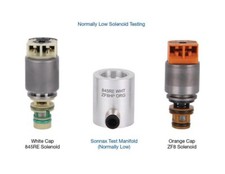
A valve can test fine and the delay can still be electrical. Sonnax's own cautions for this unit specify checking solenoid resistance at 5.0 ohms at 20°C (68°F) with the circuit board removed, and never using an ohm meter rated above 0.6 volts, which can damage the coil. If original solenoids are reused after any service, they need to go back in their original bore location, because the TCM learns a flow rate per position and mixing them up reintroduces the exact shift-quality complaint you were hired to fix.
ZF8HP Solenoid Kit
Covers the eight-position solenoid set used across the 845RE and ZF8HP45/55/70 family. If a Quick Learn and a clean valve body vacuum test both come back clean and the delay persists, a tired or sticking solenoid is the next suspect, not another teardown.
View the ZF8HP solenoid kit →The Fix: Zip Kit, Oversized Valves, or Full Valve Body
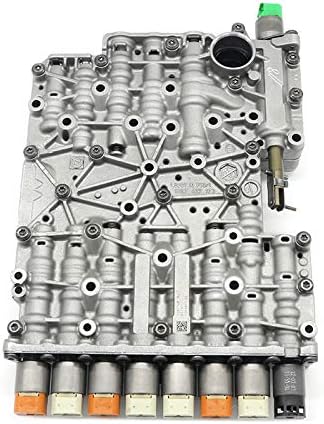
Confirm which family is on the bench before ordering anything. The ZF8-ZIP kit covers the first-generation group only: Chrysler 845RE and ZF8HP45, ZF8HP55 and ZF8HP70. The second-generation 850RE and ZF8HP50/75 use a different kit, and Sonnax is explicit that the two are not interchangeable. The full kit seals pressure losses across the main line, solenoid regulator, reverse, clutch control and solenoid apply circuits and includes the priming valve and seal, a pressure regulator sleeve, eight internal end plugs, three O-ringed end plugs, an accumulator piston kit and 24 solenoid O-rings in one box, which covers the priming valve directly and the surrounding wear that tends to accompany it.
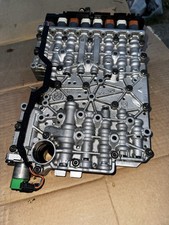
Removing the valve body itself is 14 bolts to drop it from the case, with the mechanism connector released from the TCM by lifting a separate retaining bracket; the booklet flags the B-clutch release feed tube sitting loose in the case as something to note before it drops out of position during removal. Reassembly torque is specific: the mechatronic-to-case bolts and the valve body half-to-half bolts go to 10 Nm (89 in-lb), the complete valve body-to-case bolts go to 14 Nm (10 ft-lb), and the plastic oil pan bolts go to 10 Nm (89 in-lb). After reassembly, warm the fluid to 122°F and run 6-10 light throttle-up and coast-down shift cycles for a partial relearn, or use the wiTECH Quick Learn procedure above if the shop has the tool.
Fluid and Fill Before You Call It Fixed
ZF approves only ZF LifeguardFluid 8 or LifeguardFluid 9 for the 8HP family. Per ZF's own product data sheet, this is a green, semi-synthetic fluid with a viscosity of 26 mm²/s at 40°C and 5.6 mm²/s at 100°C, a pour point of -42°C, and a flash point of 206°C. ZF states plainly that using a different fluid can range from a noticeable deterioration in shift characteristics to outright transmission failure, which includes a hesitation that looks exactly like a worn priming valve. The Mopar equivalent on the parts shelf is 6815795AA, also green. ZF's transmissions are fill-for-life by design, but the data sheet recommends a change at 150,000 km (about 93,000 miles), sooner under heavy load, high heat, or when the vehicle's service history is unknown.
| Spec | Value |
|---|---|
| Dry fill (bench, Sonnax reference) | Approx. 8.5 qt / 8.0 L |
| Complete fill required | 9.5 qt / 8 L |
| Service (pan-drop) fill | Approx. 4.2 qt / 4 L |
| Level-check fluid temperature | 122°F (50°C) |
| Mechatronic-to-case / valve body half bolts | 10 Nm / 89 in-lb |
| Complete valve body-to-case bolts | 14 Nm / 10 ft-lb |
| Plastic oil pan-to-case bolts | 10 Nm / 89 in-lb |
The red tag on the oil pan identifies the correct fluid and states the check must be done at 122°F. A level set cold, or with the wrong fluid, can hand you a comeback that reads exactly like the valve wear covered above.
The Diagnostic Order That Avoids a Comeback
- Scan for active TCM DTCs. Repair any codes before evaluating shift feel; do not run an adaptation procedure over an unresolved fault.
- Confirm the fluid is ZF LifeguardFluid 8 or 9 (Mopar 6815795AA) and the level is correct, checked at 122°F on a level surface.
- If the transmission, TCM, or valve body was recently replaced, or adaptive values were cleared, run Quick Learn (wiTECH) or the shop-level 6-10 cycle drive relearn before suspecting hardware.
- If the delay persists with current adaptation and no codes, vacuum test the priming valve, the B2/NIC valve, and the position and default position valves on the bench.
- Replace with 35740-37K or 35740-21K for the priming valve and 35740-22 for the B2/NIC valve where the vacuum reading fails; recondition the position/default bores where indicated.
- Check solenoid resistance at 5.0 ohms (20°C/68°F) and return any reused solenoid to its original bore position.
- Reassemble to spec: 10 Nm on mechatronic and half-to-half bolts, 14 Nm on the complete valve body-to-case, 10 Nm on the plastic pan.
- Run the relearn procedure again after any valve body service, every time, before the vehicle leaves.
Most of the comebacks on this complaint are not failed repairs. They are a correct repair followed by a skipped relearn, or a valve replaced before anyone confirmed the adaptation was actually current. Work the order above and the delay either clears for free in the first step or gets fixed once, on the bench, with a number instead of a guess.
FAQ
Is a short hesitation when I first shift into Drive normal on a ZF8HP?
Some low-level engagement time is normal, especially right after a battery disconnect, a valve body or TCM replacement, or on a vehicle that has not relearned its clutch adaptation yet. FCA's service procedure for the 845RE explains that adaptation memory cells are zeroed out any time the TCM is replaced or reset, and shift feel, including engagement, will not be fully dialed in until the transmission has logged enough fill-time and fill-pressure learning events, with Chrysler targeting at least 12 filling-counter events and 4 fast-filling-counter events per clutch. A real complaint is a delay that persists well after normal driving, not one that fades over the first day or two.
Does delayed engagement always mean the valve body has to come out?
No. The first and cheapest step is confirming the transmission control module has actually learned current clutch fill data, which on the 845RE is done with a wiTECH-based Quick Learn procedure rather than a teardown. If adaptation is current, DTCs are clear, and the delay is still there, the next suspects are specific valve body bores, most consistently the priming valve, the B2 clutch neutral idle control valve, and the position and default position valves, which is a valve body R&R, not a full rebuild.
What specifically inside the valve body causes delayed engagement on a ZF8HP or 845RE?
Sonnax's own wear chart for the 845RE, ZF8HP45, ZF8HP55 and ZF8HP70 valve body ties delayed engagement to wear at three locations: the priming valve, which also produces wrong gear starts and flare or harsh neutral shifts; the B2 clutch and neutral idle control valve, which also produces no-Forward, no-Reverse and neutral idle control complaints; and the position and default position valves, which also produce delayed forward and reverse engagement together. Each is a separate bore with its own wear pattern, which is why a vacuum test on the bench, not a visual check, is how you confirm which one is actually leaking.
Can a fluid change fix delayed engagement by itself?
Rarely, but it is still worth ruling out, because ZF is explicit that only ZF LifeguardFluid 8 or LifeguardFluid 9 are approved for the 8HP and that using the wrong fluid can measurably hurt shift characteristics. If the transmission was serviced with the wrong fluid or is low from a pan gasket or filter O-ring leak, correcting the fluid type and level is a legitimate first step before condemning a valve. It will not fix a worn priming valve or B2/NIC valve bore.
After the valve body is repaired, does the transmission need anything else before it's done?
Yes. Any valve body service on this family needs a clutch adaptation relearn afterward, or the car will come back with a shift feel complaint that looks just like the one that was repaired. Chrysler's dealer level procedure uses wiTECH to reset adaptive values and run Quick Learn; Sonnax's shop level alternative, usable without a factory scan tool, is a drive cycle of 6 to 10 light throttle up and coast down shifts with fluid temperature verified at 122 degrees F.
Sources
- Chrysler Group LLC / NHTSA — Service Bulletin 21-030-14, "845RE Transmission Quick Learn Procedure," September 26, 2014. Backs the 2014-2015 Ram 1500, Charger, 300C, Durango and Grand Cherokee and 2015 Challenger application (845RE, sales code DFL), the adaptation memory cell structure (Fast Filling Counter, Filling Time, Filling Counter, Filling Pressure) per clutch A through E, the target of at least 12 filling-counter and 4 fast-filling-counter events for full adaptation, the 55°C/131°F warm-up and drive sequence, the wiTECH Reset Adaptive Values and Quick Learn steps, the 2-5 minute procedure time, and the reference to follow-up bulletin 21-012-14 if poor shift quality persists. static.nhtsa.gov (PDF)
- Sonnax — "Chrysler 845RE; ZF8HP45, ZF8HP55, ZF8HP70 Zip Kit®," Installation & Testing Booklet, part number ZF8-ZIP, October 12, 2020. Backs the priming valve symptom list and part numbers 35740-37K and 35740-21K with the vacuum-test-location caution, the B2 clutch/NIC valve symptom list and part 35740-22, the position and default position valve symptom pairing with holding valves A and D, the solenoid resistance spec (5.0 ohms at 20°C/68°F) and the 0.6-volt ohm meter caution, the valve body removal steps and bolt counts, the torque specifications (10 Nm mechatronic/half-to-half, 14 Nm complete valve body-to-case, 10 Nm plastic pan), the fluid fill figures (8.5 qt dry, 9.5 qt complete, 4.2 qt service) and the 122°F fluid check temperature, and the 6-10 cycle drive relearn procedure. cdn.transend.us (PDF)
- Sonnax — "Zip Kit ZF8-ZIP" product page. Backs the kit's scope (845RE, ZF8HP45, ZF8HP55, ZF8HP70 only, not interchangeable with the Gen. 2 kit), the circuits it seals (main line, solenoid regulator, reverse, clutch control and solenoid apply), and the kit contents (pressure regulator sleeve, priming valve and seal, internal and O-ringed end plugs, accumulator piston kit, 24 solenoid O-rings). sonnax.com
- Transmission Digest / Sonnax TASC Force — "Chrysler ZF8 Generations 1 & 2 Identification Guide," Jim Dial, April 3, 2023. Backs the Generation 1 (8HP45, 8HP70, 8HP90) versus Generation 2 (8HP50, 8HP75, 8HP95) classification, the elimination of the B2 release circuit in Gen. 2, and the solenoid position changes between the two generations that make parts non-interchangeable. transmissiondigest.com
- ZF Friedrichshafen AG — Product Data Sheet, ZF LifeguardFluid 8, July 19, 2021. Backs the approval of only LifeguardFluid 8 or 9 for the 8HP family, the warning that other oils can cause anything from deteriorated shift quality to transmission failure, the fluid properties (green color, 26 mm²/s viscosity at 40°C, 5.6 mm²/s at 100°C, -42°C pour point, 206°C flash point), and the 150,000 km recommended change interval. aftermarket.zf.com (PDF)