"Harsh shift" is a narrower complaint than slip or shudder: a bump, clunk, or jolt as the transmission finishes a shift, most commonly on a 2-1 downshift coming to a stop or on a 1-2 or 2-3 upshift under light acceleration. On a ZF8HP it's usually a valve body or fluid issue, not a clutch or planetary failure, and the fix is almost always cheaper than a rebuild — if you work it in the right order and don't skip the step that resets what the transmission control module has already learned about the hardware.
The 8HP family spans BMW, Audi, Jeep, Ram, Land Rover and Maserati applications, split across two hardware generations that wear at different points inside the valve body. Chrysler/Stellantis has an actual factory bulletin on one specific version of this complaint, and ZF's own fluid documentation plus Sonnax's published wear-point data explain the rest.
Cause 1: First-Gen Valve Body Wear (8HP45/55/70/90, 845RE)
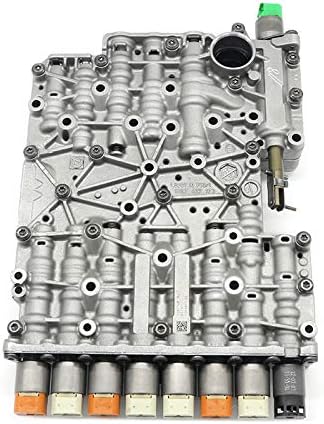
This is the only cause on this list with an actual OEM factory bulletin behind it. Chrysler Group TSB 21-041-14, "845RE Harsh 2-1 Downshift," issued December 10, 2014, covers 2013 Dodge Charger and Chrysler 300 models built with the 3.6L V6 (sales code ERB) and the 845RE 8-speed transmission (sales code DFL). The documented symptom is a bump sensation during a 2-1 downshift, present at any transmission temperature and most noticeable during light braking or while coasting to a stop, with no diagnostic trouble codes set as a result.
The bulletin's diagnostic test is specific: drive the vehicle to at least 25 mph to let the transmission shift past second gear, then use light braking to bring it to a stop. If the bump is felt on that 2-1 downshift, the repair is a complete valve body replacement (part RL259301AA) with a quart of transmission fluid (part 68218925AA), at 1.7 hours of labor plus 0.2 hours on AWD-equipped vehicles, and it includes a TCM flash. The bulletin then requires a third step most shops are tempted to skip: performing the 8-Speed Transmission Shift Adaptation Drive Learn Procedure before calling the repair complete.
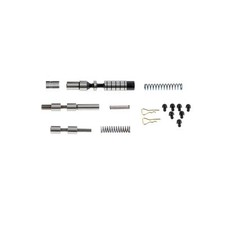
This is a narrow bulletin for one specific symptom, but the underlying wear isn't narrow at all. TransGo's SK8HP shift kit and the matching coverage in Gears magazine, ATRA's publication, document the same first-generation wear points causing harsh, soft and erratic shifts more broadly across 8HP45, 8HP55, 8HP70 and 8HP90 units: the pressure regulator valve, the TCC regulator valve, and the pressure reducing (AFL) valve all wear in their bores over time, and the shift kit's parts, a redesigned pressure regulator valve with calibrated spring and bushing, a drop-in TCC regulator valve and spring, and an oversized AFL valve, correct the same circuits the factory bulletin is patching with a full valve body swap. Gears magazine's coverage is explicit that this kit does not fit the second-generation units, which wear somewhere else entirely.
Cause 2: Second-Gen Line Pressure Instability (8HP50/75, 850RE)
If the transmission is a second-generation ZF8HP50, ZF8HP75, or Chrysler 850RE, the first-gen wear points above don't apply, and ordering the wrong kit wastes money without fixing anything. Sonnax's documentation for its Oversized Pressure Regulator Valve Kit (part 35740-40K) identifies two separate wear paths on these units. Wear between the reducing valve and its sleeve lets line pressure, which is acting as cutback pressure in that circuit, exhaust to the sump instead of doing its job. Separately, wear between the pressure regulator valve and its bore lets line pressure escape the same way, and Sonnax's own description of the result is "high/low and erratic line pressure."
Erratic line pressure is a direct harsh-shift mechanism, not just a slip cause: when commanded line pressure overshoots because the regulating circuit can't hold a steady value, the clutch for the next gear gets slammed on instead of applied smoothly, which is exactly what a harsh shift feels like from the driver's seat. Sonnax lists the broader symptom set as poor line pressure control, low line rise in Drive, soft shifts, and burnt or prematurely failed clutches, which is why this wear pattern eventually produces a mix of harsh, soft, and inconsistent shifts depending on load and temperature rather than one clean, repeatable bump. The kit's billet aluminum sleeve and o-ringed design seal both failure points without reaming the original bore, but it requires Sonnax's dedicated install tool, part F-35740-TL.
Cause 3: Degraded or Incorrect ATF
Every valve body repair above assumes the fluid in the pan is correct and in good condition, which is worth confirming before any parts come off. ZF's own product data sheet for LifeguardFluid 8 describes the fluid's friction behavior as "optimally adapted" to the 8HP's clutch material and states that this match "is a prerequisite for perfect shifting characteristics and vibration-free operation." That's not marketing language without numbers behind it: ZF specs the fluid at a kinematic viscosity of 26 mm²/s at 40°C and 5.6 mm²/s at 100°C, a Brookfield viscosity of 8,850 mPa·s at -40°C, and a pour point of -42°C, deliberately engineered with a flat viscosity-temperature curve so shift feel stays consistent in both cold and hot climates.
ZF treats the 8HP as a lifetime-fill transmission under normal use, but its own data sheet recommends a fluid change after 150,000 km, and sooner under high heat, heavy load, or when the vehicle's prior service history is unknown. A wrong aftermarket fluid, or correct LifeguardFluid 8 that's sheared and oxidized past that interval, changes clutch apply timing enough on its own to produce a bump that feels identical to valve body wear, even with every hard part in the transmission fully serviceable. This is the cheapest cause on this list to rule out and the one most often skipped in favor of pulling the valve body first.
Cause 4: Stale TCM Adaptation Data After a Repair
This cause doesn't show up in any parts catalog, and it's the reason the Chrysler bulletin above isn't finished when the new valve body is bolted in. The TCM's stored adaptive pressure and volume values are calibrated to the specific hardware it was learning against, and TSB 21-041-14 makes the drive learn step mandatory immediately after the valve body swap and TCM flash, not optional. Skip it, and the control module keeps commanding shift pressure and timing based on the worn parts that were just replaced, which reproduces a bump that feels exactly like the original complaint on a transmission that is now mechanically correct.
The same logic applies outside of a valve body repair. A battery disconnect, a TCM software flash for an unrelated recall or update, or any repair elsewhere in the drivetrain that triggers an adaptation reset can leave the TCM referencing stale values against the current hardware state. If a harsh shift complaint appears shortly after any of those events and no transmission parts were touched, drive learn is the first thing to check, not the last.
BMW draws the same line in its own 8HP bulletin, SIB 24 02 13: never program the vehicle or reset the EGS adaptations until the complaint has been verified on a road test and the module data saved, and on any shift complaint correct the fluid level first, then clear the adaptations and drive the fully warmed vehicle at various speeds for at least five miles before judging the result. Resetting first throws away the evidence; resetting on a low unit just teaches the TCM the wrong values.
The Order I Work It
- Confirm the generation first, 8HP45/55/70/90/845RE versus 8HP50/75/850RE, from the transmission tag or VIN before ordering any part. The wear points and repair kits are different and not interchangeable.
- Road test and pin down exactly which shift is harsh, which gear transition, what throttle and temperature, and whether any DTCs are stored. The 845RE's documented bulletin is specifically a 2-1 downshift with no codes set.
- Check fluid level and condition and confirm it's a correct, undegraded fill of LifeguardFluid 8 before anything else comes apart. BMW's SIB 24 02 13 requires a level check on every 8HP complaint, even with no visible leak, and asks that the amount added be recorded. It's the cheapest cause to rule out.
- Run the Shift Adaptation Drive Learn procedure, especially if there was any recent repair, battery disconnect, or TCM flash. Many "new" harsh shift complaints are stale adaptive data, not a new failure.
- If the complaint persists, pull the valve body and address the generation-correct wear points: pressure regulator, TCC regulator, and AFL valve on first-gen units, or the reducing valve and pressure regulator valve and sleeve on second-gen units.
- Replace the fluid at service and run the drive learn again after any hard part swap. Skipping it after the repair reproduces the same bump you just fixed.
Worked in that order, a ZF8HP harsh shift rarely needs more than a fluid service, a drive learn, or a generation-correct valve body repair. Pulling the transmission or condemning the mechatronic unit should be the last step, not the first guess.
FAQ
Is a harsh shift on a ZF8HP always a valve body problem?
No. Stellantis's own TSB 21-041-14 for the 845RE pairs a valve body replacement with a mandatory Shift Adaptation Drive Learn procedure, and stale adaptive values alone, left over after a battery disconnect, a TCM flash, or an unrelated repair, can reproduce the same bump without any part being worn. Check fluid condition and run the drive learn before condemning the valve body.
What's different about harsh shift causes between first- and second-generation ZF8HP units?
First-generation 8HP45, 8HP55, 8HP70, 8HP90 and 845RE units wear at the pressure regulator, TCC regulator and pressure reducing (AFL) valves, documented in TransGo's and Gears magazine's coverage of the SK8HP shift kit. Second-generation 8HP50, 8HP75 and 850RE units wear at a different bore, the reducing valve and pressure regulator valve and sleeve, which Sonnax's 35740-40K kit documents as the source of erratic, high or low line pressure that drives harsh shifts on those units. Confirm which generation is in the vehicle before ordering either kit.
Can the wrong or old ATF alone cause a harsh shift?
Yes. ZF's own product data sheet describes LifeguardFluid 8's friction modifiers as calibrated specifically to the 8HP's clutch material to produce what ZF calls perfect shifting characteristics, with a flat viscosity curve engineered for that purpose. A wrong aftermarket fluid, or a correct fluid sheared past ZF's recommended 150,000 km change interval, changes clutch apply timing enough to feel like a bump with every hard part in the unit still good.
Why would a ZF8HP shift harsh right after a repair when no transmission parts were touched?
The TCM's stored adaptive pressure and volume values are specific to the previous hardware state, and Stellantis's TSB 21-041-14 requires a Shift Adaptation Drive Learn after any valve body replacement for exactly this reason. The same applies after a battery disconnect or a TCM software flash; the control module needs to relearn shift timing on the current hardware before the harsh feel goes away.
What's the documented fix for the 845RE's 2-1 downshift bump?
Chrysler Group TSB 21-041-14, issued December 10, 2014, covers 2013 Dodge Charger and Chrysler 300 models with the 3.6L V6 and 845RE transmission. If a technician confirms the bump during a test drive above 25 mph with light braking to a stop and no DTCs are present, the fix is a complete valve body replacement, part RL259301AA, with a quart of ATF, a TCM flash, and the required drive learn procedure, 1.7 hours of labor plus 0.2 hours on AWD-equipped vehicles.
Related guides
- ZF8HP Valve Body Wear: Symptoms and the Bench Fix
- ZF8HP Shift Solenoid Symptoms
- ZF8HP Slipping: Causes and Fix
- ZF8HP Fluid Type, Capacity and Service Interval
- ZF8HP Common Problems and Fixes
Sources
- Chrysler Group LLC / NHTSA — Technical Service Bulletin 21-041-14, "845RE Harsh 2-1 Downshift," December 10, 2014. Backs the 2013 Dodge Charger and Chrysler 300 application with the 3.6L V6 (sales code ERB) and 845RE 8-speed transmission (sales code DFL), the symptom of a bump during a 2-1 downshift with no DTCs set, the 25 mph light-braking diagnostic test, the valve body replacement kit (part RL259301AA) and fluid (part 68218925AA), the included TCM flash, the mandatory Shift Adaptation Drive Learn procedure, and the 1.7-hour labor allowance plus 0.2 hours on AWD-equipped vehicles. static.nhtsa.gov (PDF)
- ZF Friedrichshafen AG / ZF Aftermarket — Product Data Sheet, ZF LifeguardFluid 8 Automatic Transmission Fluid, revision 2021-07-19. Backs the fluid's friction modifiers being optimally adapted to the 8HP clutch material, the "perfect shifting characteristics and vibration-free operation" standard, the kinematic viscosity of 26 mm²/s at 40°C and 5.6 mm²/s at 100°C, the Brookfield viscosity of 8,850 mPa·s at -40°C, the -42°C pour point, the lifetime-fill design intent, and the 150,000 km recommended change interval. aftermarket.zf.com (PDF)
- Sonnax — Oversized Pressure Regulator Valve Kit product page, part 35740-40K. Backs the ZF8HP50, ZF8HP75 and Chrysler 850RE application, the wear between the reducing valve and sleeve that exhausts cutback pressure to sump, the wear between the pressure regulator valve and bore that causes high/low and erratic line pressure, the symptom list of poor line pressure control, low line rise in Drive, soft shifts and burnt clutches, and the required install tool, part F-35740-TL. sonnax.com
- Gears Magazine (ATRA) — "ZF8HP/845RE SHIFT KIT® Valve Body Repair Kit," May 2025. Backs the GEN1 ZF8HP45, 8HP55, 8HP70, 8HP90 and Chrysler 845RE application, the kit correcting TCC codes and lining failures, harsh, soft and erratic shifts, and gear ratio and solenoid performance codes, the pressure regulator valve, TCC regulator valve and pressure reducing (AFL) valve components included, and the explicit note that this kit does not fit GEN2 ZF8HP50, 8HP75, 8HP95 or Chrysler 850RE units. gearsmagazine.com
- TransGo — SK8HP Shift Kit product page. Backs the same GEN1 valve body wear points and components, the redesigned pressure regulator valve with calibrated spring and bushing, the drop-in TCC regulator valve and spring, and the oversized pressure reducing (AFL) valve requiring dedicated tooling. transgo.com
- BMW of North America / NHTSA — SIB 24 02 13, "8-Speed ZF Automatic Transmission Diagnosis and Troubleshooting Hints," May 2013. Backs verifying the complaint and saving module data before any programming or adaptation reset, the fluid level check on every complaint with the amount added recorded, and clearing the EGS adaptations after correcting the level followed by a warmed-up test drive of at least five miles. static.nhtsa.gov (PDF)