A ZF8HP that will not move in Drive or Reverse looks like a dead transmission, and plenty of them get sold as one. In practice, a no-movement 8HP comes back to one of four places: not enough fluid to make line pressure, a park system that never released, a pressure loss inside the pump or valve body, or a mechanical break downstream of the transmission. The first two cost little to rule out. The last two get expensive fast. This is the order we work them in, using ZF's own oil filling specification, the BMW and Chrysler bulletins written for this unit, and Sonnax and Transmission Digest technical material, so you are not pulling a mechatronic before you have proved it is the problem.

Start With What "No Movement" Actually Means
"Won't move" covers three different conditions, and each points somewhere different:
- Selector will not leave Park. The gear display stays on P, or the P light flashes. This is a shifter, park-by-wire or brake-interlock problem until proven otherwise, not a hydraulic one.
- Display shows D or R, engine revs freely, vehicle does not move. Nothing is applying. That is fluid, pressure or a failed shift element.
- Display shows D or R, engine loads up or stalls, vehicle does not move. Elements are applying and the input is held, but the output is not turning. That is a park pawl still engaged, a locked brake, or a driveline problem.
The scan tool tells you which of the last two you have in under a minute. Pull up transmission input (turbine) speed and output speed with the engine idling and your foot on the brake. Shift to Drive. If turbine speed stays close to engine speed, the converter is not being loaded, so no clutch pack is applying. If turbine speed drops toward zero, the elements applied and the gear train is locked to the output. With the vehicle still not moving, that points at the park pawl or something past the tail housing.
Why Drive and Reverse Fail Together
The 8HP uses two brakes (A and B) and three clutches (C, D and E) across four planetary gearsets. Sonnax's breakdown of the design gives the apply chart: 1st gear applies A, B and C; 2nd applies A, B and E; Reverse applies A, B and D. In other words, brakes A and B are on in first, second and reverse. A launch in Drive and a launch in Reverse share two of their three shift elements.
If only Reverse is gone, you are looking at the D clutch circuit. We cover that separately in our ZF8HP no reverse guide. If both directions are dead, the shared parts are the suspects: the A and B brake circuits, and everything that feeds them. That means fluid supply, the pump, the main pressure regulator and the valve body. A total loss of movement usually means pressure, not one burned pack.
Step 1: Check the Fluid Level the Way ZF Actually Specifies
Low fluid is the cheapest cause and the most common one. It is also the one most often checked wrong. The 8HP has no dipstick. The level is set at the fill plug, and it is only valid inside a narrow temperature window. ZF's Oil Filling Specification 8HP | 8P (document 1087.754.107c, February 2026 revision) says a temperature outside the specified range "leads to incorrect filling, malfunction and possible failure of the transmission." The window it gives:
| Application | Oil temperature for level check |
|---|---|
| General 8HP, RWD and X all-wheel drive | 30 to 50 °C (86 to 122 °F) |
| BMW | 40 to 50 °C |
| Hybrid 8P70H / 8P75PH | 40 to 50 °C |
| Jaguar Land Rover AJ20 (P6/D6), 8HP76X | 55 to 60 °C |
| Maserati 8HP70 | 50 to 60 °C |
ZF's preconditions matter on a no-move car. The vehicle must not be in an active limp-home mode, it has to be level on the lift within 0.2 degrees, and you need a scan tool reading transmission temperature. ZF's level check sequence is: start the engine, hold 2,000 rpm in Park for 30 seconds to fill the converter, return to idle, then select P, R, D, manual 1 and manual 2, waiting at least 10 seconds in each before going back to Park. Then confirm temperature, open the fill plug, and add fluid until it runs out, or let it drain until it stops.
On a car that is already empty, use ZF's refill sequence instead. Fill until fluid runs out of the fill hole. If the unit has an integrated electric oil pump (IEP), run it for at least 10 seconds. Then start the engine and fill again until it runs out. If the vehicle has an extra oil cooler, ZF says to bring the transmission above 75 °C so the thermostat opens and the cooler fills, then cool back into the window and recheck. Skip that step and you will set the level low while thinking it is full.
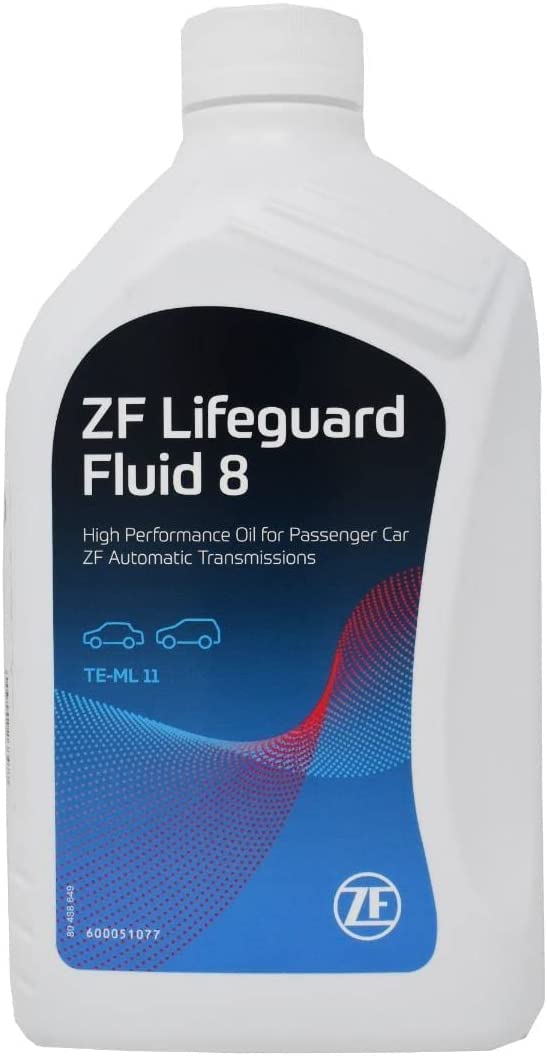
Put the fill plug back at ZF's spec: 35 Nm ±3.5 Nm (8 mm internal hex). The plastic-pan drain plug is only 8 Nm +1 Nm on most pans. Over-torquing it is a good way to make a new leak. Fluid is ZF LifeguardFluid 8 or a fluid on the current ZF List of Lubricants. ZF warns that a non-approved lubricant can cause damage.
If the unit took several liters to fill, the fluid went somewhere. On BMW, SI B24 02 13 has the tech record exactly how much fluid was added. Find the leak before the car leaves. The mechatronic connector sleeve is a known weep point; see our 8HP mechatronic sleeve leak guide.
If the level was low, correct it and retest. A unit that now pulls against the brakes in both directions was simply starved of fluid.
Step 2: Prove the Park System Released
Every 8HP behind a shift-by-wire selector uses an electrically controlled park system, and it fails in its own ways. Transmission Digest documented a Chrysler 845RE that would not engage Park correctly. It set P07B9 (Park Switch 2 Circuit Low) and P1B13 (Park-By-Wire Unintended Out of Park Position). The theory of operation it quotes explains how the system works. A preloaded barrel spring on the park rod pushes it into Park, and solenoids pull it out of Park and hold it there. A magnet on the linkage passes a sensor built into the TCM lead frame, which tells the TCM where the park rod is. That park pawl sensor is serviced by replacing the TCM. In that case, the internal park system was mechanically fine, and a TCM replacement fixed it.
That design explains a no-move with a P-related code. If the TCM cannot confirm the rod left Park, or the rod cannot pull out because it is binding, the transmission may apply its elements against a locked output. On the scan tool, you see turbine speed drop in Drive and nothing else happen. The same Chrysler material also notes that a binding or obstructed Manual Park Release (MPR) can set P1B13.
Chrysler covered the shifter side too. TSB 08-072-14 (included in NHTSA investigation PE15-030) covers 2013-2014 Ram 1500 and 2014 Durango with the 8HP70 (sales code DFD) or 845RE (sales code DFL) that intermittently will not shift out of Park. The fix applies only when both P0607-00 (ECU Internal Performance) and P0928-00 (BTSI Control) are present. In that case the fix is replacing the electronic shifter. If only one code is present, the bulletin says to do normal diagnosis instead.
Two quick physical checks before you condemn anything:
- Manual Park Release. On Ram trucks, Mopar's owner's manual puts the MPR lever behind an access cover below and left of the steering column. Pull the tether until the lever locks rearward. The manual is clear that the parking brake must be set first, because the vehicle can roll. If the vehicle rolls freely with the MPR pulled but not with the selector in Neutral, the electronic park system is your fault, not the gear train.
- Emergency release hardware. BMW's SI B24 02 13 specifically has techs inspect the emergency release screw or cable, plus the bracket and lever, for damage on every 8HP complaint. A cable that was used and never reset, or a bent bracket, will hold the pawl in.
Step 3: Rule Out the Driveline
This gets missed on 4x4 trucks and xDrive cars. If the scan data shows turbine speed dropping and output speed reading but the wheels are not turning, the transmission is doing its job. Check for a transfer case left in neutral, a broken driveshaft or U-joint, a failed front or rear axle shaft, or a slipped flex disc. An output speed signal that tracks the commanded gear while the vehicle sits still puts the fault downstream of the tail housing.
Step 4: Pressure Loss in the Pump or Valve Body
If fluid is correct, park released, and turbine speed still runs at engine speed in both D and R, you have no apply pressure reaching A and B.
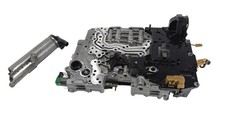
Sonnax identifies the wear points in the 8HP hydraulic system. The valve body upper and lower castings share their basic layout with the ZF 6-speed units. The main pressure regulator valve is similar in design and function to the ZF 6-speed valve that commonly wears. The TC pressure valve is the most heavily worn valve Sonnax has seen on this unit, because it is under constant EPC control. The rubber-tipped solenoid accumulators for the TCC, EPC and individual clutch circuits are also listed as trouble spots. A worn regulator bore can bleed off main line, and a leaking clutch or brake circuit shows up when you vacuum test it on the bench.
One thing to watch for here:
- Pump damage from running dry. If the fluid was found very low and the owner kept driving, assume the pump has seen abuse. Debris in the pan or filter means the pump and valve body both need attention, not just a top-off.
Before you order a mechatronic, follow the BMW bulletin's order of operations, which works on any 8HP: verify the complaint, save fault memory before programming or clearing anything, check level with the correct test plan, inspect the pan for impact damage, and check for aftermarket software. BMW rejects warranty cases that skip those steps as "unjustified."
Codes Worth Noting on a No-Move 8HP
- P1B13 — Park-By-Wire Unintended Out of Park Position (Chrysler). Check the MPR for binding.
- P07B9 — Park Switch 2 Circuit Low (Chrysler). The park pawl sensor is part of the TCM.
- P0607 + P0928 together on 2013-2014 Ram 1500 / 2014 Durango — TSB 08-072-14, electronic shifter.
If the unit is sitting in failsafe rather than refusing to move at all, our ZF8HP limp mode guide covers that path.
Preventing It
Most no-movement 8HPs we see come from one of two histories: a slow leak nobody chased, or a fluid service done cold, on an unlevel lift, with no scan tool, that left the unit a liter or more low. Follow ZF's temperature window, fill the cooler circuit, use the right fluid, and torque the plugs to spec. Reset any park release hardware fully after use.
FAQ
Why won't my ZF 8-speed move in Drive or Reverse?
The most common causes are low fluid, a park system that did not release, internal pressure loss in the pump or valve body, or a driveline failure past the transmission. Drive and Reverse both use brakes A and B on the 8HP. When both directions fail, look first at fluid supply and line pressure rather than a single clutch pack.
How do you check fluid level on a ZF 8HP?
There is no dipstick. ZF specifies a level vehicle, no active limp mode, and an oil temperature of 30 to 50 °C on most applications (40 to 50 °C on BMW). Run 2,000 rpm in Park for 30 seconds, cycle through P, R, D, 1 and 2 for at least 10 seconds each, then open the fill plug and fill until fluid runs out. Torque the plug to 35 Nm.
Can a bad TCM cause a ZF 8HP not to move?
Yes, on park-by-wire applications. On the Chrysler 845RE, the park pawl sensor is built into the TCM lead frame. If it cannot read the park rod position, the TCM sets codes such as P07B9 or P1B13 and the park system misbehaves. The sensor is serviced by replacing the TCM.
Where is the manual park release on a Ram with the 8-speed?
Mopar's owner's manual places it behind a small access cover below and to the left of the steering column, near the parking brake release. Set the parking brake first. Then push the locking tab, pull the tether strap until the lever locks rearward, and reset it fully after use.
Is a no-movement ZF 8HP always a rebuild?
No. Correct the fluid level at the right temperature and confirm the park system released before deciding. A unit that pulls against the brakes in both directions after a proper fill only needed fluid and a leak repair. If turbine speed still matches engine speed in D and R with correct fluid, the pump, regulator or A/B brake circuits need to come apart.
Related ZF8HP guides
Sources
- ZF Friedrichshafen AG — ZF Aftermarket Service Information, “Oil Filling Specification 8HP | 8P,” document 1087.754.107c (05.02.2026). Backs the oil level check temperature windows by application (30-50 °C general, 40-50 °C BMW, 55-60 °C JLR AJ20, 50-60 °C Maserati), the no-limp-mode and ±0.2° level-vehicle preconditions, the 2,000 rpm / 30 second converter fill and P-R-D-1-2 sequence, the IEP and above-75 °C cooler fill steps, and the 35 Nm fill plug and 8 Nm drain plug torques. aftermarket.zf.com (PDF)
- BMW Service Information Bulletin SI B24 02 13, “8-Speed ZF Automatic Transmission Diagnosis and Troubleshooting Hints,” May 2013 (NHTSA file copy). Backs the diagnostic order of operations, fluid level test plan ABL-DIT-AS2460_GSOEA_8HP, recording fluid added, and inspection of the emergency release screw or cable, bracket and lever. static.nhtsa.gov (PDF)
- Chrysler Group LLC Technical Service Bulletin 08-072-14, “Intermittently The Vehicle Will Not Shift Out Of Park,” September 18, 2014, NHTSA investigation PE15-030 enclosure. Backs the 2013-2014 Ram 1500 / 2014 Durango 8HP70 (DFD) and 845RE (DFL) application, the P0607-00 plus P0928-00 condition, and the electronic shifter replacement. static.nhtsa.gov (PDF)
- Sonnax — “A New Path for ZF,” tech resource 263. Backs the shift element apply chart (1st A-B-C, 2nd A-B-E, Reverse A-B-D), the valve body casting lineage, and the wear points: pressure regulator valve, TC pressure valve and rubber-tipped solenoid accumulators. sonnax.com
- Transmission Digest — Wayne Colonna, “845RE Park-By-Wire Malfunction,” August 19, 2024. Backs the P07B9 and P1B13 definitions, the barrel-spring park rod and solenoid-hold design, the TCM-integrated park pawl sensor, and the binding Manual Park Release note. transmissiondigest.com
- Mopar — Ram 2500/3500 Owner's Manual (2022), Manual Park Release. Backs the MPR lever location, the parking-brake-first warning, and the release and reset steps. vehicleinfo.mopar.com