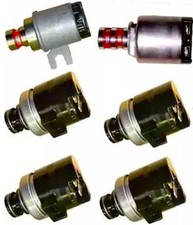
If your mid-1990s 4.0L Ford or Mazda truck with the four-speed 4R55E is banging into gear, flaring on the 1-2 or 2-3, refusing to lock the converter, or throwing a converter slip code, this is the complete electrical side of the valve body in one box. The set pictured is six remanufactured solenoids: four square-body shift solenoids and the two cylindrical units with the mounting tabs that run electronic pressure control (EPC) and converter clutch (TCC). Replacing all six at once takes the solenoids off the suspect list for good, which matters on a transmission where the hydraulics behind them are just as likely to be the problem.
What the solenoid kit does in a 4R55E
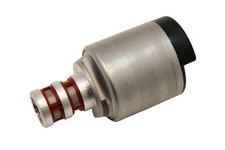
The 4R55E is the beefed-up 4.0L version of the 4R44E. Sonnax dates its release to 1996, and for 1997 Ford reworked the same case into the five-speed 5R55E by using the front servo for an overdriven first. The four on-off shift solenoids (SSA, SSB, SSC and SSD, which also handles the coast clutch) set the position of the shift valves. The EPC solenoid controls line rise: as its output climbs, an engagement control valve opens to line pressure and boosts it further. The TCC solenoid ramps its duty cycle to stroke the TCC modulator valve, which switches converter feed from the pressure regulator to the TCC regulator. Because that regulator is itself fed by line pressure, a weak EPC solenoid can show up as converter slip, not just soft shifts.
Symptoms that point to this kit
- Delayed reverse, or a 1-2 or 2-3 flare, from low EPC line rise
- Soft shifts and slip in 3rd with low maximum EPC pressure
- Converter clutch that will not apply, or stalls the engine on forward engagement when the TCC solenoid sticks
- Converter slip code 741 (P0741 on OBD-II trucks) with high slip at a high commanded TCC percentage
- Harsh shifts and early lockup when the TCC solenoid is restricted or grounded
- Shift solenoid circuit codes after a connector or harness check comes back clean
How to confirm before you buy
Be honest with yourself about the hydraulics. Sonnax notes that true shift solenoid failures are rare on this family; loss of solenoid oil from loose valve body end plugs is far more common, and the EPC and TCC bores wear with use. Ohm each solenoid at the case connector (our multimeter solenoid test guide walks through it), then put a gauge on the case. Good maximum EPC is roughly 125-130 psi in overdrive and up to 144 psi in reverse, and it should not drop more than 15 psi when the converter applies. If pressure is low with a good EPC solenoid, see our line pressure checking guide and plan on valve body work as well.
Fitment
This is the general 4R55E listing, without a year range in the title. The 4R44E, 4R55E, 5R44E and 5R55E share a solenoid layout, but Ford changed valve bodies, separator plates and solenoids several times after 1995, so compare connector style, mounting tabs and the part numbers stamped on your originals before ordering. If you would rather we check it, send your year and VIN. Owners of an early truck can also compare this set against our year-specific 1995 4R55E solenoid kit.
Install notes
- Drop the pan and remove the solenoids with the valve body in place where possible; keep track of which bracket holds which unit.
- Make sure the SSC solenoid bracket holds it fully flush; a loose SSC can leave the 3-4 shift valve out of position.
- Lube new O-rings with clean ATF and do not force a solenoid into a bore.
- Inspect the harness pins and the case connector for burnt or pushed-back terminals.
- Refill with MERCON-family ATF; Ford's current service fluid for these units is MERCON V.
- Clear codes and drive the truck through a full warm-up so the PCM relearns shift pressure.
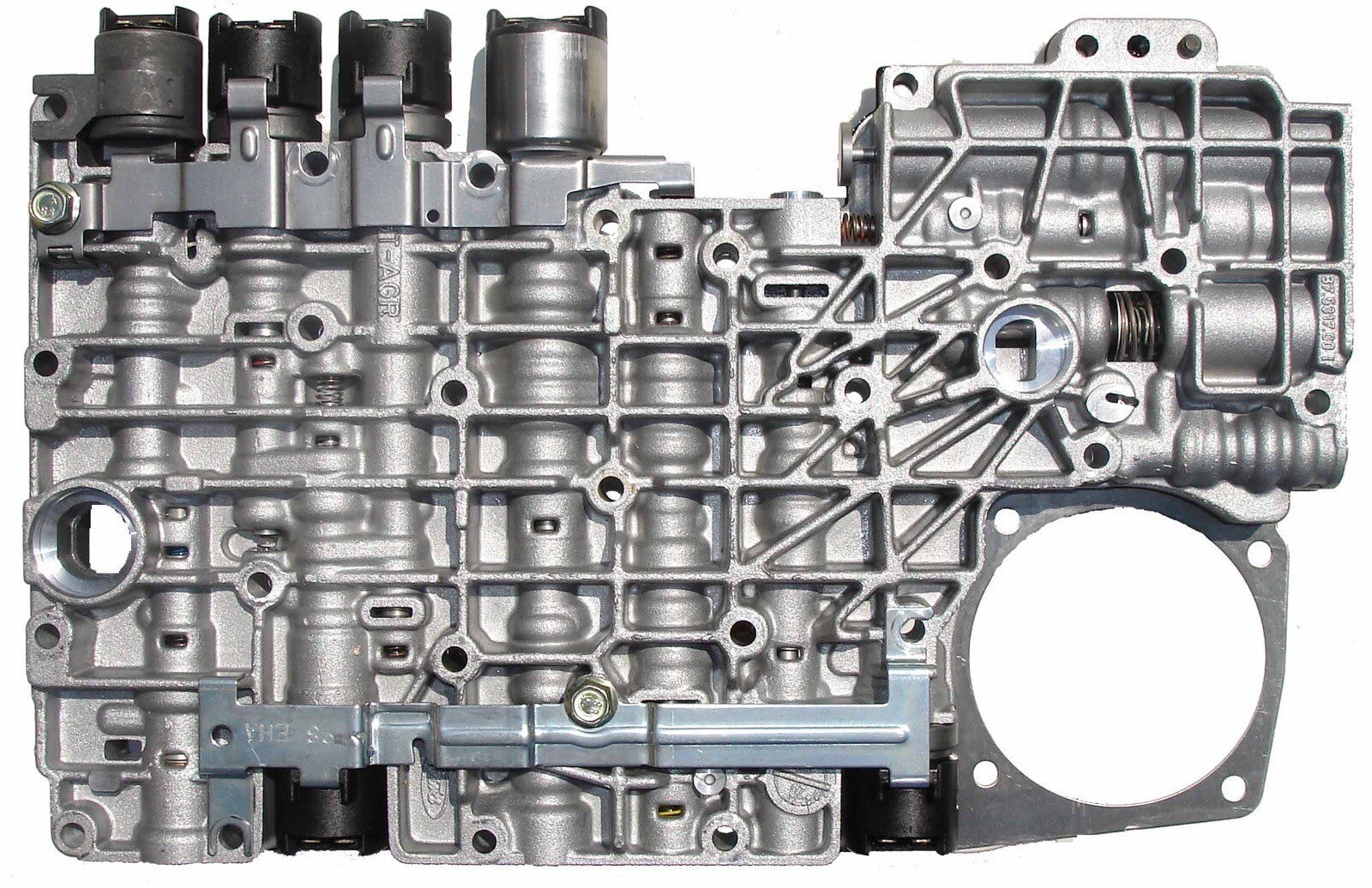
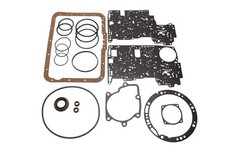
If the EPC circuit fails an air test, a Sonnax 4R44E/5R55E Zip Kit addresses the worn bores, or you can step up to a remanufactured 4R55E valve body that arrives with the circuits already corrected. Either way, a new pan gasket and filter from an overhaul kit is cheap insurance while the pan is off.