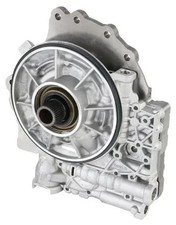
Second-generation 6F35 owners need a pump that matches the 2013-and-later hardware, and this is that part: an original Ford Gen 2 style front oil pump assembly, remanufactured, cleaned, inspected and tested. It suits the 2013-2019 Escape, Fusion and Lincoln MKZ and other Gen 2 6F35 applications. Buyers usually land here with a transmission that drops into gear late when warm, slips across all six gears, makes an RPM-linked whine, or has lockup codes that came back after a solenoid replacement.
How the pump works in a Gen 2 6F35
In 2013 Ford moved the 6F35 to a second generation. Sonnax documents the main changes in the valve body: new solenoid dampers for the shift and pressure control circuits, a revised solenoid regulator valve and a CV6P-7A100 casting in place of the earlier 9L8P and BL8P parts. Those dampers and solenoids are only as good as the oil supply behind them, and the supply is this pump. Driven by the converter hub at engine speed, it feeds line pressure to the valve body, charge oil to the converter and lube to the gear train. When its clearances open up, pressure sags at hot idle first, and the computer's pressure control strategy can no longer hide it.
The assembly includes the stator support. Sonnax lists its improved stator support bushing for Gen 1, Gen 2 and Gen 3 6F35s because the factory bushing wears early across all of them. A worn bushing bleeds converter clutch oil and produces lockup slip codes.
Symptoms of a failing pump
- Late or harsh engagement into Drive and Reverse after the fluid is hot
- General slipping or soft shifts in every gear rather than one
- Pump whine that tracks engine RPM in Park and Neutral
- Converter clutch slip codes P0741 or P1744 caused by stator bushing wear
- Leakage at the converter seal or a scored converter hub found on teardown
Diagnose before you buy
Confirm fluid level and condition, then check line pressure against commanded pressure hot. Low pressure everywhere points to the pump; trouble in one gear points to a clutch or valve. On 2015-2019 MKC and 2016-2019 Explorer 2.3L models, a vibration or shudder complaint may be covered by Ford program 20N07, which addresses the torque converter, so check that before blaming the pump. Our 6F35 problems guide lays out the failure patterns on these units.
Fitment
The listing covers 2013-2019 Gen 2 applications and lists reference numbers 9L8Z-7A103-J, -B, -D, -G and -H. Because Gen 2 production started partway through 2013, a 2013 model can have either generation. Compare the pump casting, stator design, bolt pattern and gear configuration with your original, or send us your year, VIN, transmission tag or a photo of your old pump and we will check it. Earlier units should look at the 2009-up 6F35 pump, and you can see the rest of the 6F35 range here.
Install notes
- Remove the transmission and converter, then clean the case bore and mating face.
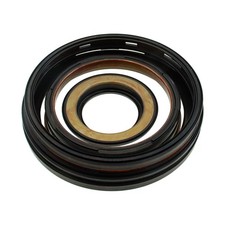
- Install a new front seal and pump seals, and inspect the bushing, converter hub and pump gears before assembly.
- Seat the pump squarely and torque the bolts in steps; correct alignment and lubrication are critical.
- Prime with fluid and make sure the converter fully engages the pump drive before installation.
- Fill with Mercon LV. The pump needs no programming, but resetting adaptive values helps the Gen 2 solenoids relearn.
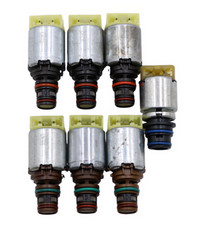
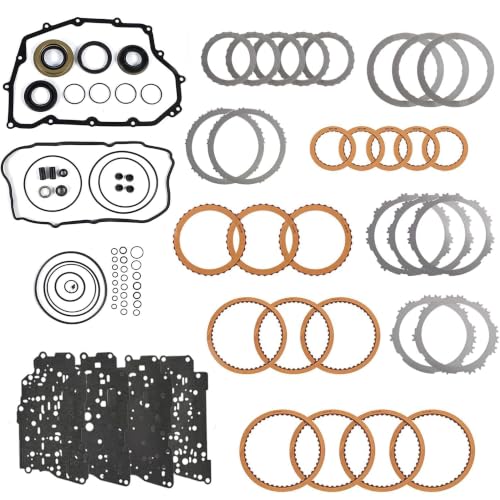
Fresh pump pressure exposes tired solenoids, so a 2015-2019 6F35 solenoid kit is a sensible add if yours are original. If clutches burned while pressure was low, the 6F35 rebuild kit with frictions and steels covers the overhaul.