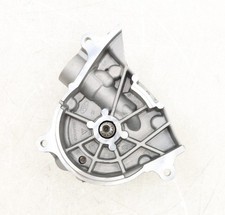
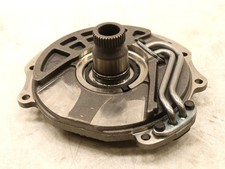
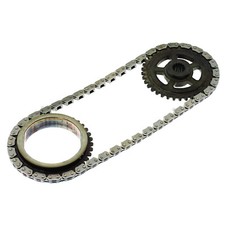
This is a new, genuine Ford oil pump assembly for the 6F50 six-speed transaxle, Ford service number DT4Z-7A103-A, listed for 2013 through 2019 vehicles. If your V6 Edge, Explorer, Flex, Taurus or Lincoln crossover is slow to pick up Drive or Reverse when hot, slips in every gear instead of just one, or you found a scored rotor or chewed vanes during a teardown, this is the complete pump you replace it with. It is a whole pump assembly, not a bare housing or a front support.
What the oil pump does in a 6F50
Ford co-developed the 6F50 with GM's 6T70, and Sonnax describes both as using a remote-mounted, off-axis, chain-driven vane pump. Instead of riding directly on the converter hub at the front of the case like an older Ford pump, the 6F50 pump sits off to the side and is spun by a drive chain from the converter. Every pound of oil pressure in the unit starts here: the pump feeds the pressure regulator, which sets line pressure for the forward, direct, overdrive, intermediate and low/reverse clutches, keeps the converter charged and supplies the lube circuit. A vane pump loses output as the vanes, rotor and slide wear, and the loss shows up first when the fluid is hot and thin, at idle, when pump speed is lowest.
Symptoms of a worn 6F50 pump
- Delayed or soft engagement into Drive and Reverse, worst after a long drive
- Slipping or flare in all gears, not just one shift, because every clutch shares the same line pressure
- A whine that rises and falls with engine speed in every range, including Park
- Low line pressure on a gauge at the tap, with the reading dropping further as the fluid heats
- Overheated, dark fluid and burnt clutches from low converter and lube flow
Several of those match what Sonnax lists for a worn 6F50/6T70 pressure regulator bore: erratic line pressure, burnt clutches, low converter and lube flow, and TCC concerns. That overlap is why a new pump alone does not always cure a pressure complaint.
How to confirm the pump before you buy
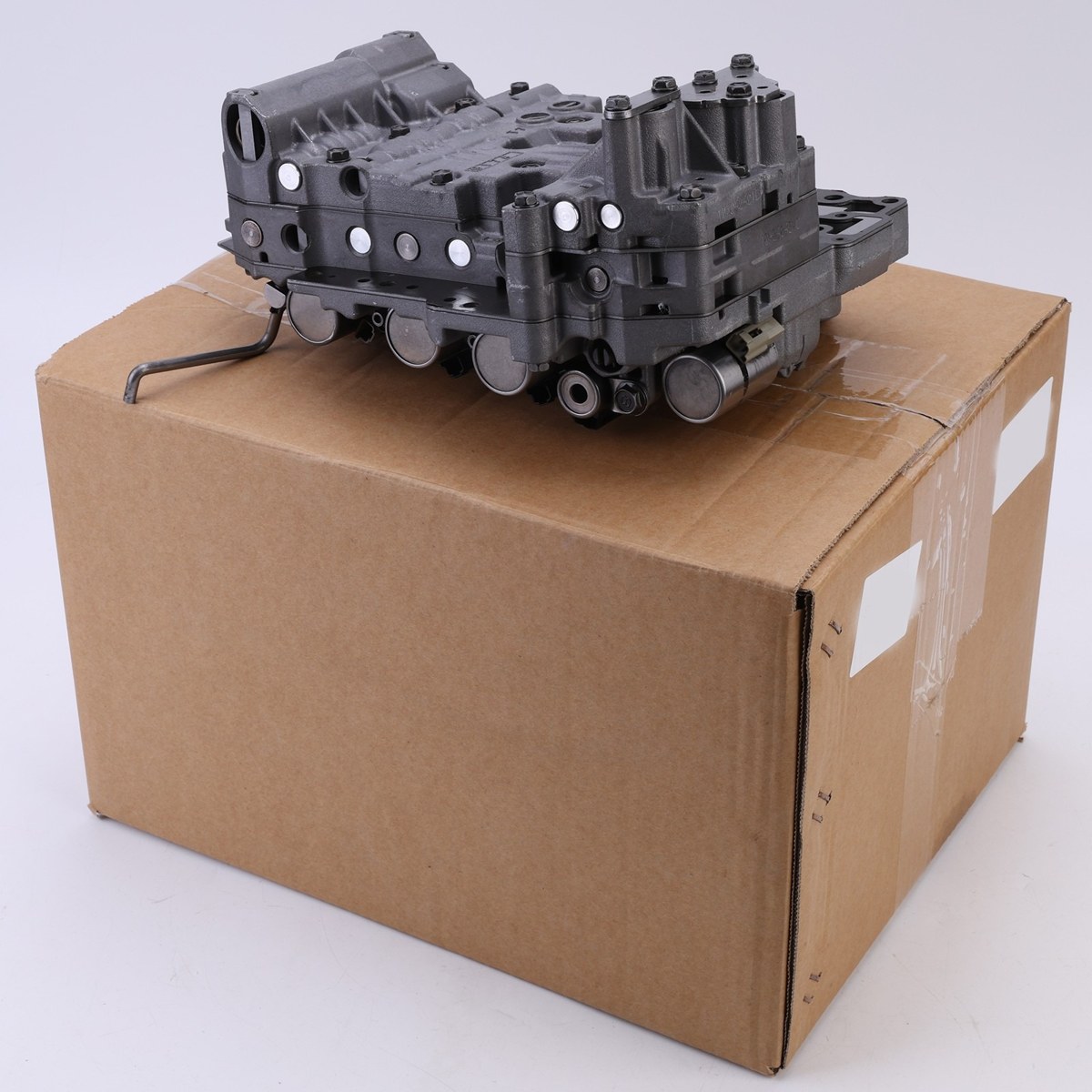
Put a gauge on the line pressure tap and compare idle and stall readings, hot and cold, against the factory spec. Low pressure in every range with a correct fluid level points at supply: the pump, its drive chain, or the pressure regulator. If pressure is erratic rather than just low, vacuum-test the valve body first, because bore wear in these six-speeds is common. Our Ford six-speed transmission problems guide covers the valve body and solenoid faults that copy pump symptoms. Once the pump is out, look for scoring on the rotor, slide and pocket faces, broken or stuck vanes, and a stretched chain or worn sprocket teeth.
Fitment
Ford catalogs DT4Z-7A103-A as the pump assembly, oil, and this listing covers 2013-2019. The 6F50 was introduced for 2007 and the heavier 6F55 followed in 2009, used in the Edge, Explorer, Flex, Taurus and Lincoln MKX, MKS and MKT. Many of those models also ran the smaller 6F35 depending on engine and year, and the 6F35 pump is a different part. Check position 8 of the transmission code on the driver door certification label: J means 6F50, C means 6F55, 6 means 6F35. Earlier 2007-2012 units may use a different pump revision, so match the part number cast or tagged on your old pump, or send us the year and VIN. See every 6F50 and 6F35 part on the Ford six-speed collection page.
Install notes
- Inspect the drive chain and both sprockets while the pump is out. A new pump on a stretched chain will not restore output.
- If the front support behind the converter is scored or its stator splines are worn, replace it at the same time with the 6F50 front pump support.
- Fill the pump with clean fluid during assembly so it primes on the first start, and run the bolts down evenly to the factory torque.
- Refill with Mercon LV, the fluid Ford lists for the 6F50 and 6F55, then check the level hot at the check plug.
- If the pump failed from debris, flush the cooler and lines, and service a worn 6F50 valve body rather than bolting it back on.
- Clear the transmission adaptive tables and complete a relearn drive so shift timing matches the restored pressure.
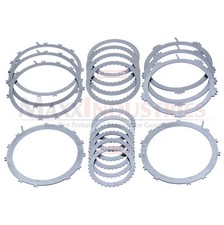
Pump wear rarely happens alone. If the clutches are already burnt, plan on clutch work too, such as a 6F50 clutch module.