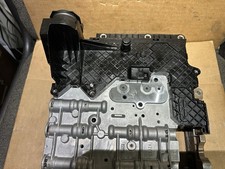
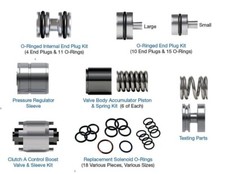
A Ford Super Duty with a 6R100 transmission that shifts harsh, flares between gears, shudders on torque converter lockup, or drops into limp mode with a stored pressure or solenoid code is pointing at the valve body. This listing is a remanufactured, bench-ready 6R100 valve body built to go in as a known-good unit rather than you rebuilding individual bores and solenoids on the old one.
What the valve body does in a 6R100
The valve body is the hydraulic brain of the 6R100. It routes pump pressure through precision bores and spool valves to apply each clutch pack and band in the correct sequence, and on this electronically controlled unit it also carries the shift and torque-converter-clutch (TCC) solenoids that Ford's transmission control module fires to time every shift. A worn bore, a warped separator plate, or a sticking solenoid in this one assembly is enough to throw off shift quality across every gear.
Symptoms of a worn 6R100 valve body
- Harsh, late, or flared shifts
- Slipping between gears, or no upshift at all
- Torque converter clutch slip or shudder, especially under light steady-throttle cruising
- Limp mode (stuck in one gear) with a stored pressure-control-solenoid or ratio code
Ford issued a technical service bulletin in 2017 covering shift-quality concerns tied to the control valve body on the 6R80, 6R100, and 6R140 family, which confirms this is a documented wear point across these related six-speed units rather than an isolated complaint on one truck.
How to confirm it's the valve body before you order
Scan for stored codes and watch shift-solenoid and TCC-solenoid duty cycle on a live-data stream while driving before you buy, since a solenoid that never actuates points at the valve body or its wiring rather than a clutch or band problem. Our guide to reading transmission live data covers which parameters to watch. If the main complaint is a shudder on lockup rather than a hard fault code, our torque converter clutch shudder diagnosis guide walks through ruling out fluid condition and converter wear first.
Fitment
This valve body is built for the Ford 6R100, part of the same 6R family of six-speed automatics as the 6R80 and 6R140, used in later Super Duty trucks. Ford has not published as wide a public parts and vehicle list for the 6R100 as it has for its 6R140 and 6R80 relatives, and current parts listings for those two codes explicitly warn that their components do not interchange with the 6R100 despite the shared family layout. Match this valve body against the casting and the ID tag on your transmission pan or case before installing, or send us your year, make, model, and VIN so we can confirm fitment rather than going by model year alone.
Install notes
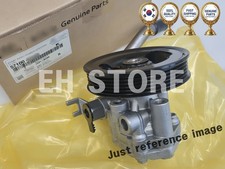
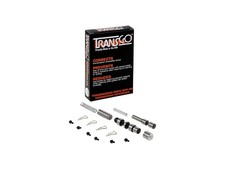
Change the fluid and filter at the same time you install this valve body so debris from the old failure doesn't circulate through the new one. Torque the valve body bolts down in the correct sequence and to spec, since an uneven bolt pattern can warp the separator plate and bring the same shift problems back. Because this is an electronically controlled unit, run the transmission control module's adaptive relearn after the install — see our adaptive relearn guide for the steps. If the pump or shift-feel components are original-mileage, pair this valve body with our 6R100 Pump or 6R100 Shift Kit rather than bolting a new valve body onto a worn pump.