The ACT TC2-SPSS is the entry-level performance clutch in ACT's lineup for the small Toyota-engined manual cars: the Geo Prizm, Corolla, Celica, Matrix, Pontiac Vibe and MR2 Spyder. Our listing title only names the 1991 Prizm, but ACT catalogs this one kit from 1991 through 2013. Buyers usually land here because the original clutch has started slipping in the higher gears, shudders when pulling away, or the release bearing has begun to howl, and they want a replacement that holds a little more than stock without turning a commuter into a chore to drive.
What the Sport clutch does in these 1.6L and 1.8L cars
In a front-drive Corolla, Prizm or Celica, and in the mid-engine MR2 Spyder, the clutch sits between the flywheel and the manual transaxle. The pressure plate's diaphragm spring clamps the disc against the flywheel; pressing the pedal pushes the release bearing into the diaphragm fingers and lifts that clamp so you can change gears. How hard the plate clamps decides how much torque the disc can carry before it slips.
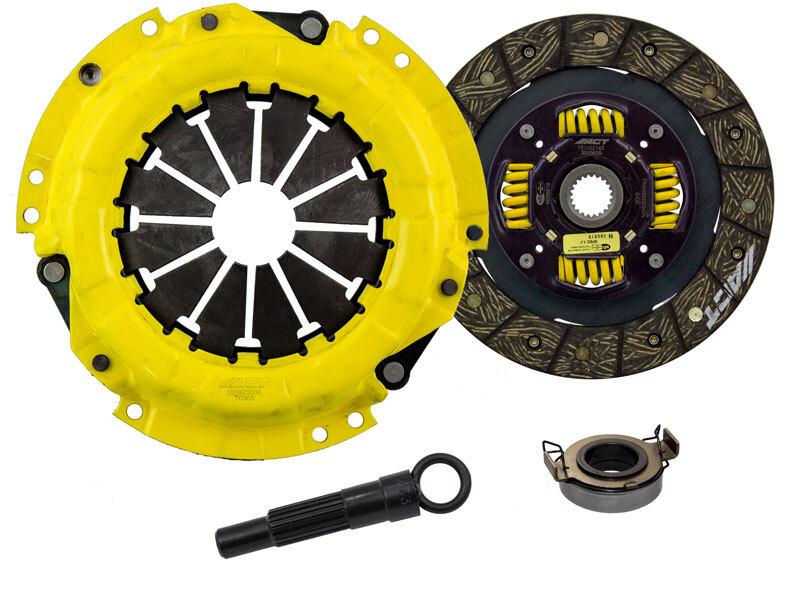
TC2-SPSS pairs ACT's T030S Sport pressure plate with the 3000609 Performance Street sprung disc. ACT rates the package at 225 ft-lb at the crank, 24 percent more than the factory clutch, and describes the feel as light to moderate pedal effort with smooth engagement. The disc is 212 mm (8.3 in) across with a 0.9375 in input spline and an organic, high-copper facing on a steel backing, and the sprung hub soaks up driveline shock on a street car. For a stock engine or light bolt-ons, that margin is the point: it fixes the slipping without the firmer pedal of the heavier plates. If the car makes real power, step up to the TC2-HDSS Heavy Duty kit instead, which uses the same disc with a stronger plate.
Symptoms of a worn clutch in these cars
- Revs flare in fourth or fifth on a hill or during a pass while road speed barely changes
- The clutch grabs only near the top of the pedal stroke
- Shudder when easing away from a stop, worse with passengers or on an incline
- A burnt smell after a steep driveway or stop-and-go traffic
- Whirring or chirping that changes when the pedal is pressed, which usually points at the release bearing
None of this sets a check engine light, so the diagnosis is done by feel and inspection, not with a scan tool.
How to confirm before you buy
First rule out the release side. On cars with hydraulic clutch control, check the reservoir level and look for wetness at the slave cylinder; a cable-operated car needs the cable and free play checked. Then do a load test: in fourth gear at roughly 2,000 rpm, go to full throttle and watch the tachometer. If the needle jumps ahead of the speedometer, the disc is slipping. Our clutch slipping guide explains the test in detail, and the slipping diagnosis guide helps separate a clutch fault from other drivetrain problems. Oil on the bellhousing seam is worth a look too, because a leaking rear main seal will contaminate any new disc.
Fitment
ACT's application chart for TC2-SPSS covers manual-transmission versions of these cars:
- Geo Prizm 1991-1992 GSi 1.6L and 1993-1997 Base and LSi (1.6L and 1.8L)
- Toyota Corolla 1992-2013 with the 1.6L or 1.8L, including the 2005-2006 XRS
- Toyota Celica ST 1991-1997, and Celica GT and GTS 2000-2005
- Toyota MR2 Spyder 2000-2005
- Toyota Matrix 2003-2013, including the XRS
- Pontiac Vibe 2003-2008 Base and 2003-2006 GT
That list spans several engine families, from the 1.6L Prizm GSi to the 1.8L engines in the later Corolla and Matrix. Engine and transmission swaps are common on these cars, so match the clutch to what is actually bolted in: compare the old disc's diameter and spline with the 212 mm and 0.9375 in figures above before you install. If you want us to check it, send the year and VIN with your order. Other clutch parts are in our rebuild kits and clutch section.
Install notes
- What is in the box per ACT: T030S Sport pressure plate, 3000609 sprung disc, RB840 release bearing and ATK73 alignment tool. The flywheel is not included.
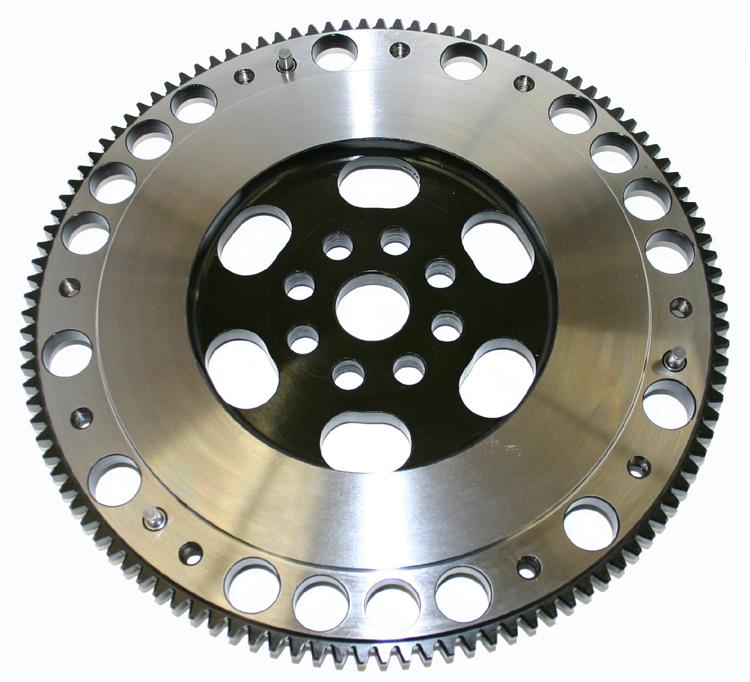
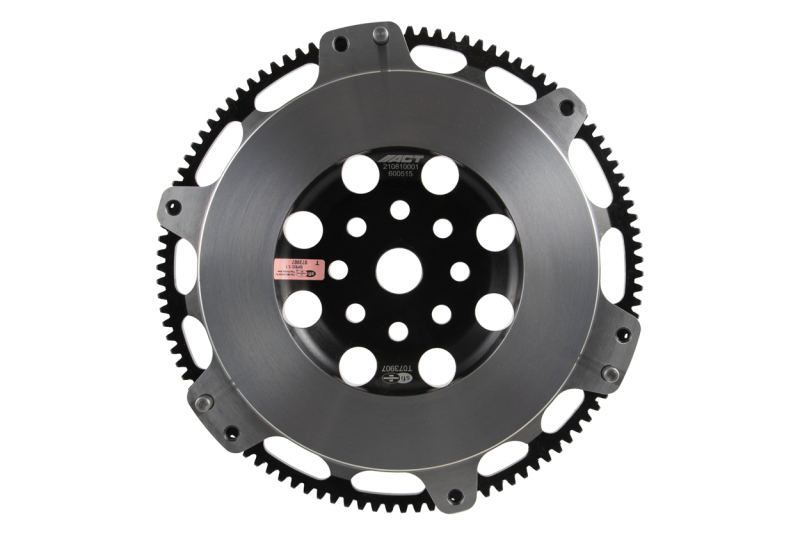
- Have the flywheel resurfaced, or replace it. The Competition Clutch 10 lb steel flywheel is listed for 1993-2002 Prizm applications, and ACT offers its 600515 XACT Prolite flywheel alongside this kit; confirm either one against your engine.
- Clean and lightly grease the input shaft splines and the release fork contact points, keeping grease off the friction faces.
- Center the disc with the ATK73 tool and draw the pressure plate down evenly in a star pattern to the factory torque spec.
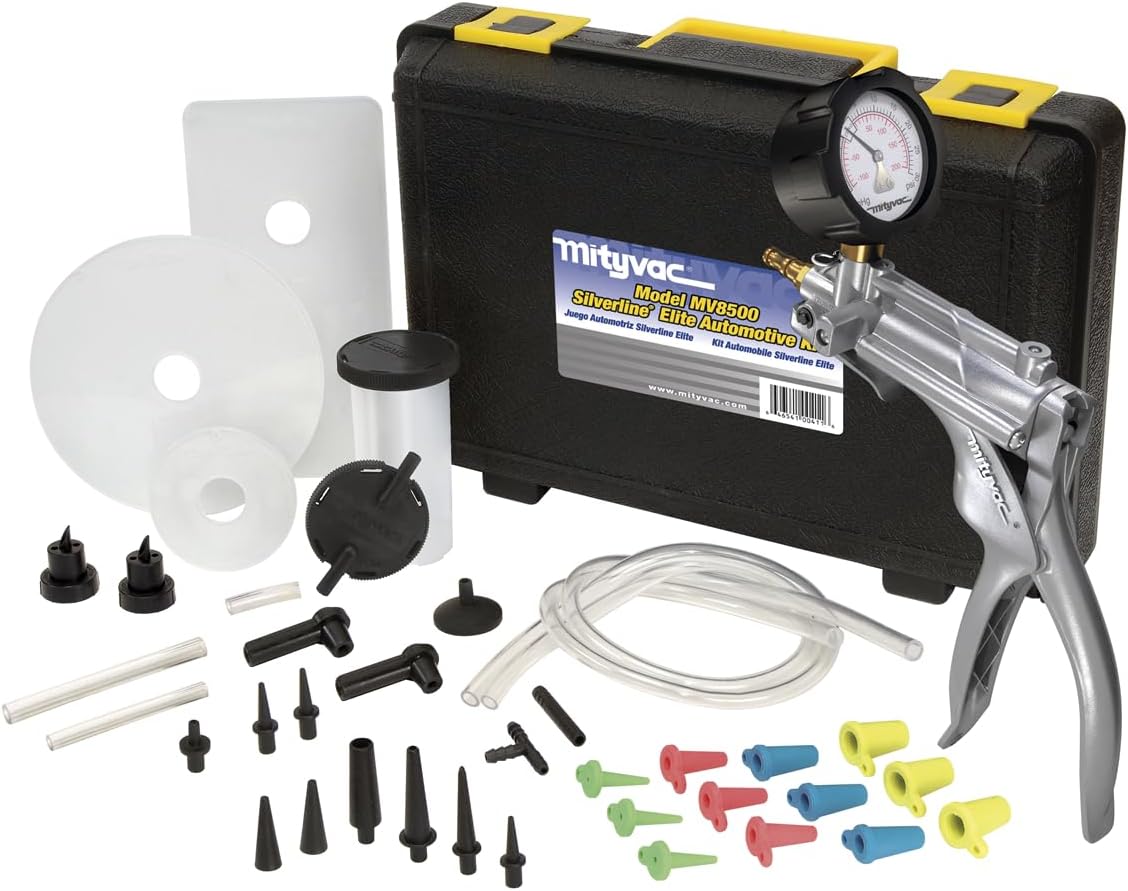
- On hydraulic models, bleed the system after installation. A hand vacuum bleeder such as the Mityvac MV8500 kit makes it a one-person job.
- ACT calls for 300 to 500 miles of gentle driving before hard launches; our clutch break-in guide covers how to do it.