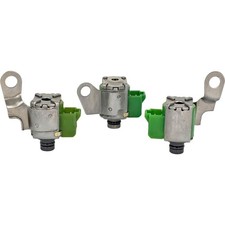
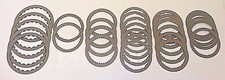
A 1987-2001 Jeep Cherokee XJ, Comanche or Wagoneer running the AW4 four-speed that hesitates before it drops into gear, won't hold torque converter lockup once the engine is warm, or throws an intermittent shift complaint that clears itself after a restart is pointing at the valve body long before it's pointing at a worn clutch pack. This is a new AW4 valve body built for the full 1987-2001 span this transmission ran in Jeep's XJ platform, cross-referenced to the related Toyota/Aisin A340 family.
What the valve body does in the AW4
The AW4 is a four-speed automatic co-developed by AMC and Borg-Warner and built by Aisin, which is why parts houses list an A340 reference alongside AW4-specific numbers - the two families share a lot of internal lineage even though the valve bodies are not interchangeable between them. Inside the transmission, the valve body routes pump pressure through its bores and spool valves to apply each clutch and band, and it also carries the shift and torque-converter-clutch solenoids the computer fires to time every gear change and every lockup event. When a bore wears or a solenoid seat loses its seal, the symptom usually shows up as inconsistent behavior rather than a flat failure - fine one trip, flared the next - because the pressure it's supposed to hold is no longer steady.
Symptoms worth checking against this part
- Delayed or hesitant engagement into gear from Park or Neutral
- Torque converter clutch that won't hold lockup, especially once the transmission is hot
- Intermittent shift complaints - harsh one trip, fine the next, often clearing after a restart
- A stored shift-solenoid or TCC code and limp mode
Confirm it's the valve body before you order
Intermittent, "comes and goes" symptoms on these Jeeps are frequently electrical rather than mechanical, so scan for codes and rule out a worn neutral safety switch or corroded solenoid wiring before committing to a valve body - both are common, cheaper causes of nearly identical shift complaints on 1996-2001 Cherokees. If the fault is steady instead of intermittent, or a scan tool points straight at a shift-solenoid or pressure circuit, the valve body is the more likely repair.
Fitment
The AW4 ran in the Cherokee XJ, Comanche and related Wagoneer models across 1987-2001, but Jeep changed the sensor setup partway through that run - a front input speed sensor was added and the rear sensor changed around 1996, which affects which wiring harness and computer a given valve body pairs with on a swap. If you're installing this in the same vehicle it came out of, that's not a concern; if you're swapping a transmission between model years, confirm the sensor count and connector style on both ends first. If you're outside the 1987-2001 window or want a lower-cost option, the general AW4 valve body listing and the 1998-2001 version cover the rest of the range.
Install notes
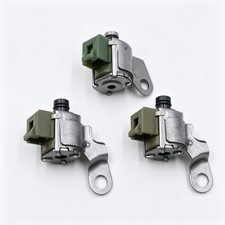
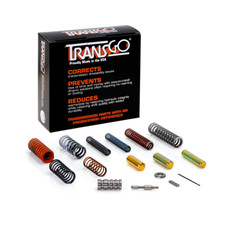
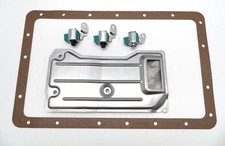
Drop the pan and change the filter at the same time as the valve body, refill with Dexron or Mercon ATF, and torque the valve body bolts evenly to spec rather than snugging them down by feel. Clear the stored codes and road-test through several drive cycles to confirm lockup returns and the shift complaint doesn't resurface. If a single solenoid tested bad on the scan rather than the whole valve body, a solenoid kit is the cheaper fix; if you're already in the pan for a shift-quality complaint, a shift kit firms up the shifts on the way back together, and a clutch module is worth checking if the hesitation turns out to be clutch wear instead of the valve body alone.