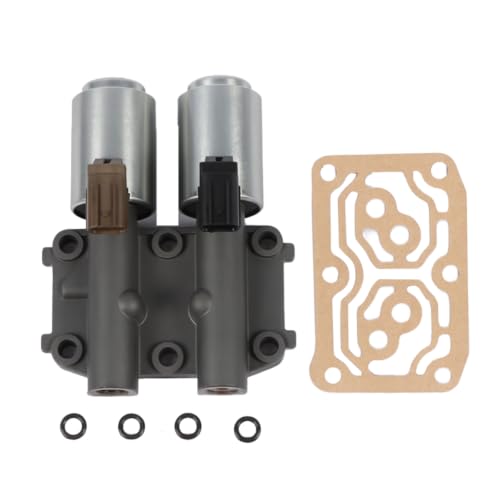
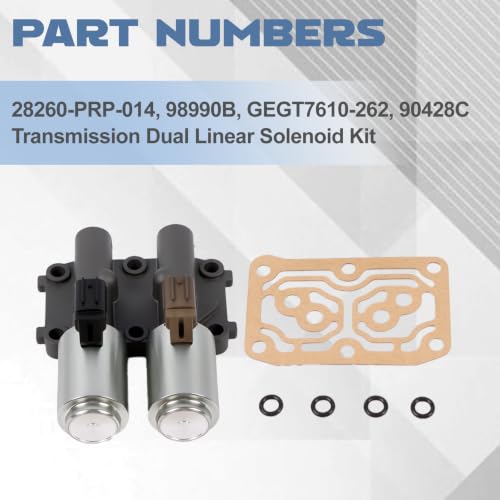
A 2003-2007 Accord four-cylinder that bangs into second, a CR-V that flares between gears on the highway, or an Element or TSX throwing a pressure control code usually leads owners to the same part: the dual linear solenoid assembly bolted to the outside of the transmission case. This replacement for Honda 28260-PRP-014 comes with the mounting gasket and lets you fix the problem from under the hood in under an hour, without pulling the transmission.
What the dual linear solenoid does in these Honda automatics
Honda calls this part Solenoid Assembly B, Linear. It is two linear solenoids sharing one aluminum body, each with its own connector (brown and black on this unit). Unlike a simple on/off shift solenoid, a linear solenoid meters hydraulic pressure in proportion to the current the computer sends it. On the K-series 2.0L and 2.4L automatics these two valves control how hard each clutch is applied during a shift and how pressure is held once the gear is engaged. When a valve sticks or the fine screen in its feed port packs with clutch material, the computer still commands the right pressure but the clutch gets too much or too little, and the shift feel goes bad.
Symptoms of a failing linear solenoid
- Harsh or banging upshifts, often worst on the 1-2 or 2-3
- Flare, where engine speed climbs between gears before the next gear catches
- Slipping that feels like a worn clutch pack but comes and goes
- Check engine light with pressure control solenoid codes such as P0748 or P0778, or other solenoid codes depending on the model
- Delayed engagement into Drive after the car has warmed up
Flare and slip can feel alike, so read shift flare vs. slip before deciding what you are dealing with.
How to confirm before you buy
Start with the fluid. Dark, burnt-smelling ATF full of fine material means the screens have been catching debris, and our ATF color and smell chart helps you judge how far it has gone. Next, read the stored codes with a scan tool that talks to the Honda transmission module. Unplug each connector and check the pins for corrosion, then measure the solenoid coils as shown in how to test a transmission solenoid with a multimeter. A coil can measure correctly and the valve can still stick, which is why a code plus a bad shift feel on a high-mileage unit usually justifies the new assembly.
Fitment
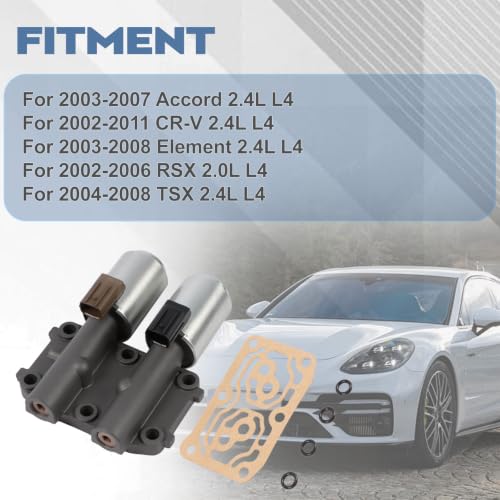
Honda's catalog lists 28260-PRP-014, which replaces the earlier 28260-PRP-004, for the 2003-2007 Honda Accord, 2002-2011 Honda CR-V and 2003-2008 Honda Element, and Acura lists it for the 2002-2006 RSX and 2004-2008 TSX, all automatic. On the Accord it is the four-cylinder car only; the V6 Accord uses a different solenoid layout. Read the part number cast or stamped on your old assembly and match it before ordering, or send us your year and VIN and we will confirm it. Manual transmission cars do not use this part.
Install notes
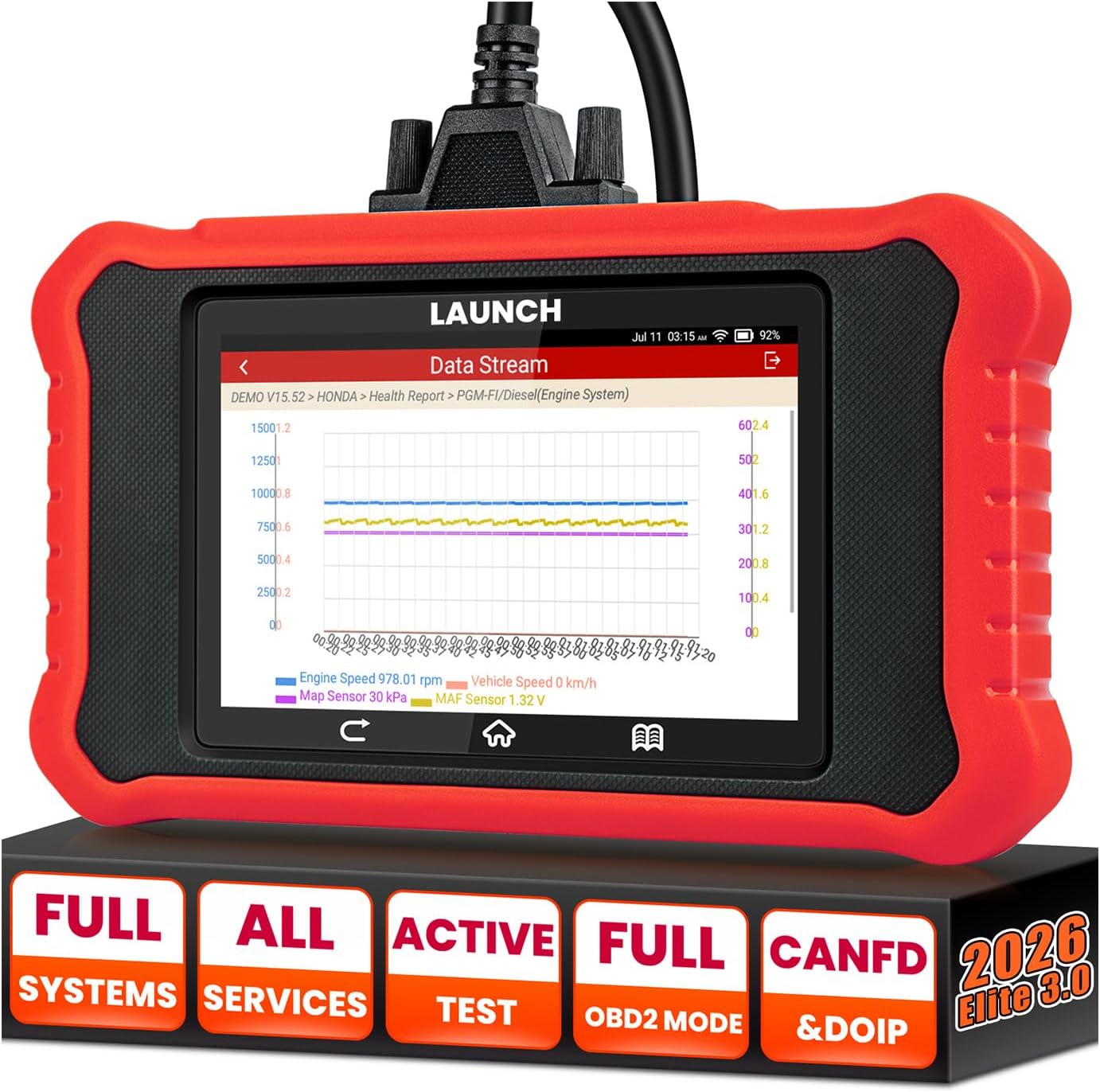
Disconnect the battery, unplug both connectors, remove the mounting bolts and lift the assembly off the case. Scrape the old gasket off completely and look into the case ports; Honda's diagram for this spot shows two linear solenoid gaskets (28252-PRP-000 and 28262-PRP-000), so compare what came off with what is supplied. Fit the new gasket dry, tighten the bolts evenly in a cross pattern, and reconnect. Top up with Honda ATF DW-1, such as our DW-1 four-quart pack, and check the level on the dipstick at operating temperature. Debris that clogged the old screens is still in the fluid, so most shops follow up with two or three drain-and-fills a few hundred miles apart; see how to do a transmission drain and fill. Clear the codes afterward, ideally with a Honda-capable tool like the Launch Creader Elite Honda scan tool, and give the computer a few drives to relearn shift pressures.