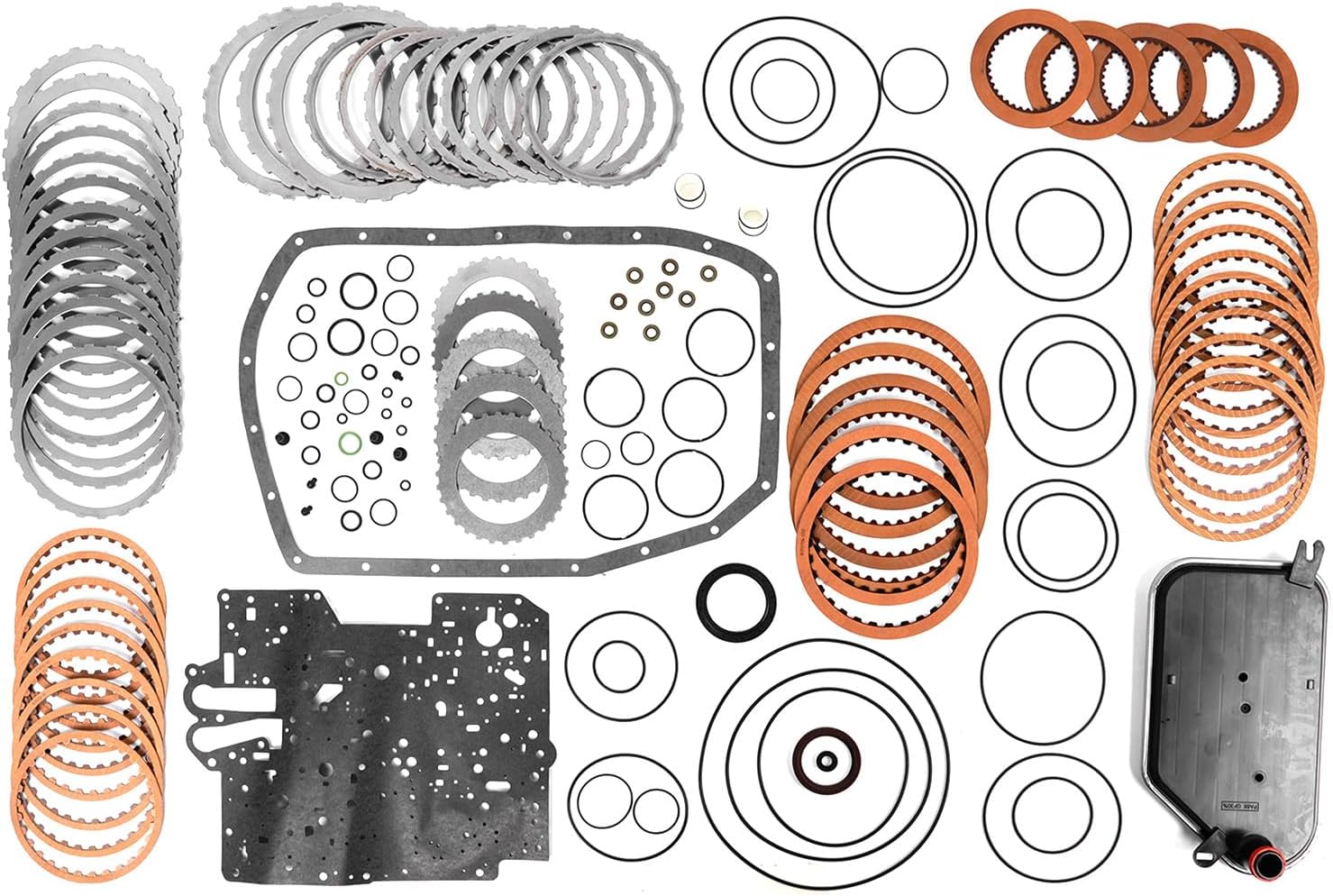
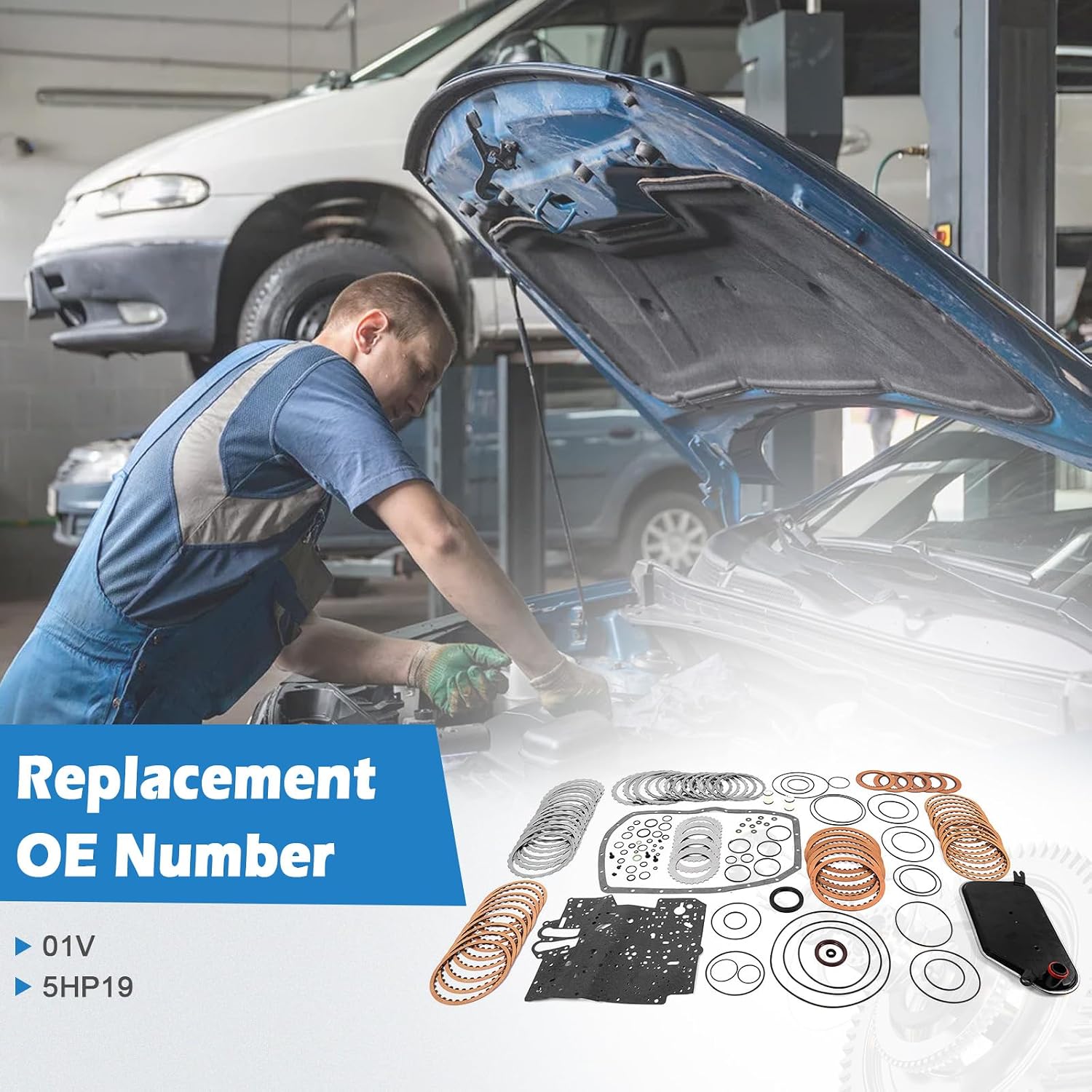
An E46 330i or 330Ci, a 325i, or an E39 525i whose five-speed automatic now slurs the upshifts, slips once it is hot, or throws the car into a failsafe gear has a ZF 5HP19 that is wearing out its clutch packs. This master rebuild kit (manufacturer part MATT-GN03636) is the complete overhaul set for that unit in one box: friction plates, steel plates, the rubber and metal-clad seal set, the pan gasket and the internal filter. The 5HP19 is the transmission BMW catalogs as the A5S 325Z, and Audi applications of the same family carry the 01V code.
What the clutch packs do inside a 5HP19
The 5HP19 builds five forward gears from a Ravigneaux-type gearset controlled by three brakes and four clutches, with ratios from 3.665 in first to 0.742 in fifth. Every shift releases one of those elements while another applies, and the transmission computer times the overlap with pressure solenoids. When the friction material wears thin, the applying element needs more time and more oil to grab, so the computer sees engine speed rise between gears. That is the flare drivers feel, and when the slip exceeds the ratio limits, the unit drops into its emergency gear to protect itself. Replacing every friction, steel and seal restores the stack heights and seal integrity the shift timing was calibrated around.
Symptoms of a worn 5HP19
- Engine flares between gears, most often on the 2-3 or 3-4 upshift once the fluid is hot
- Slipping in fourth or fifth on the highway or under throttle
- Delayed or soft engagement into Reverse after a long drive
- Failsafe or limp mode with gear-ratio faults stored
- Darkened fluid with lining debris in the pan and on the filter
Before you buy: rule out the look-alikes
Two common 5HP19 complaints are not clutch-pack failures. A squeal or squawk heard when you lift off the throttle, most noticeable in first and second, sounds like a dying pump, but Transmission Digest traced it on the 5HP19 and 5HP24 to the stator sprag inside the torque converter, so a rebuild kit will not quiet it. Electrical faults are the other trap: a failing pressure solenoid or internal harness can mimic slipping, so scan the transmission module and read live data first (see our guide to solenoid testing without a factory scan tool). If fluid level is right, there are no electrical faults, and the unit still flares and slips, worn clutches are the likely cause. Our flare versus slip guide explains how to tell them apart on a road test.
Fitment: read the tag first
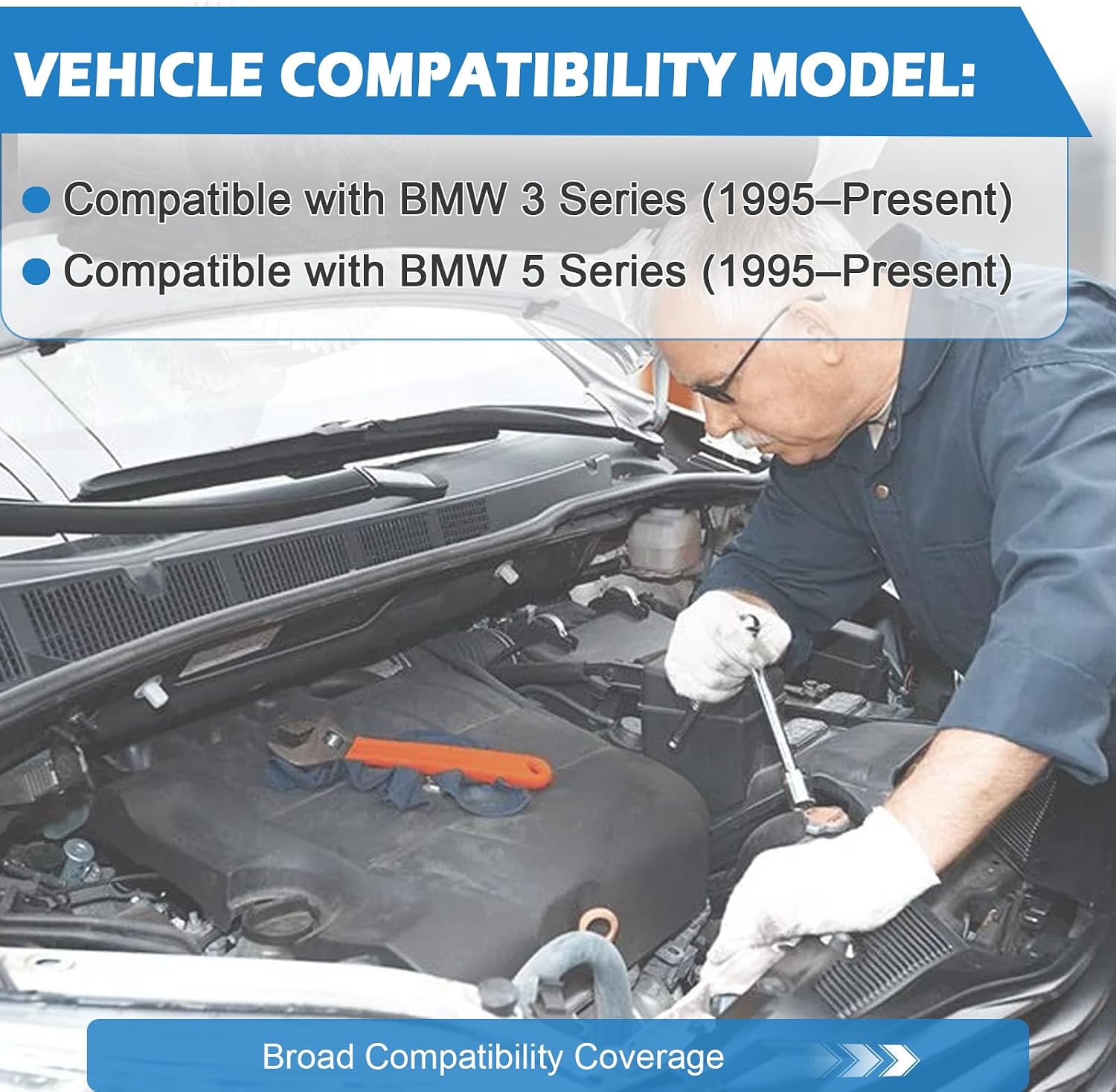
Listed fitment is the BMW 330i 3.0L 2001-2007, 323i 2.5L 2000-2001 and 2006-2007, 325Ci and 330Ci 2001-2006, 525i 2.5L 2001-2003 and 325i 2.5L 2001-2002. Two cautions. The 2006-2007 323i and 330i are E90 sedans, which use a six-speed automatic, so this kit does not fit them. And BMW mixed suppliers in the E46 years, with some automatics built with the GM 5L40-E instead of the ZF. Older E36 and early E39 cars used the 5HP18, and later Audi and Porsche units moved to the revised 5HP19FL, whose internals differ. Transmission Digest notes that the first four digits of the part number on a ZF tag identify the transmission type, and its 5HP19 example begins with 1060; the serial line tells the parts counter which running changes apply. Read that tag, or send us the year and VIN, before you order.
Install notes
- Clean and measure every drum while it is out. A cracked or worn drum will not hold a new pack; we carry a replacement 5HP19 clutch drum if yours fails inspection.
- Soak the new frictions in ATF before installation and check each pack's clearance as you stack it against the new steels.
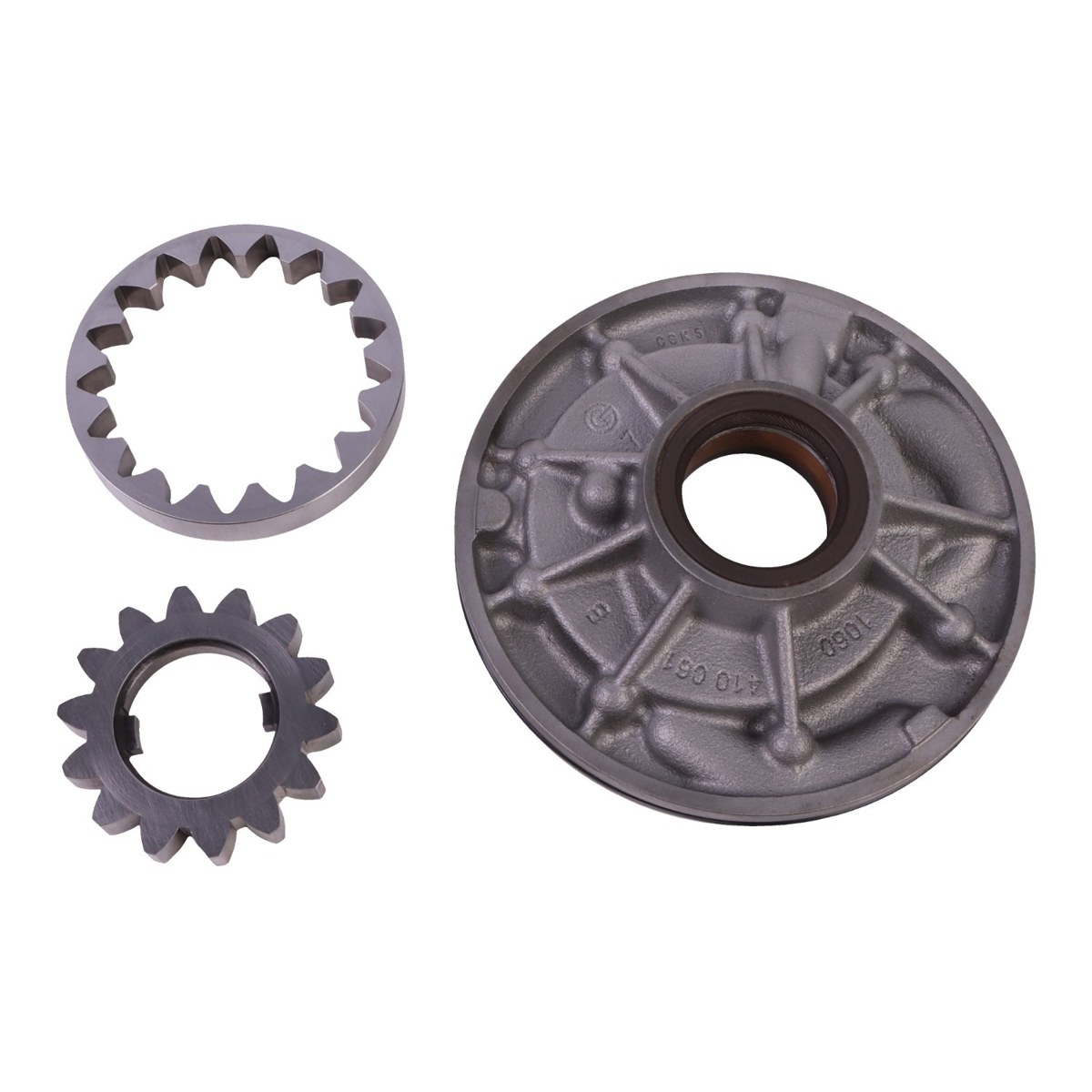
- Replace every seal in the kit, including the pump and drum seals you cannot reach once the case is closed. Inspect the pump body and gears; a scored pump can be swapped for a remanufactured 5HP19 pump.
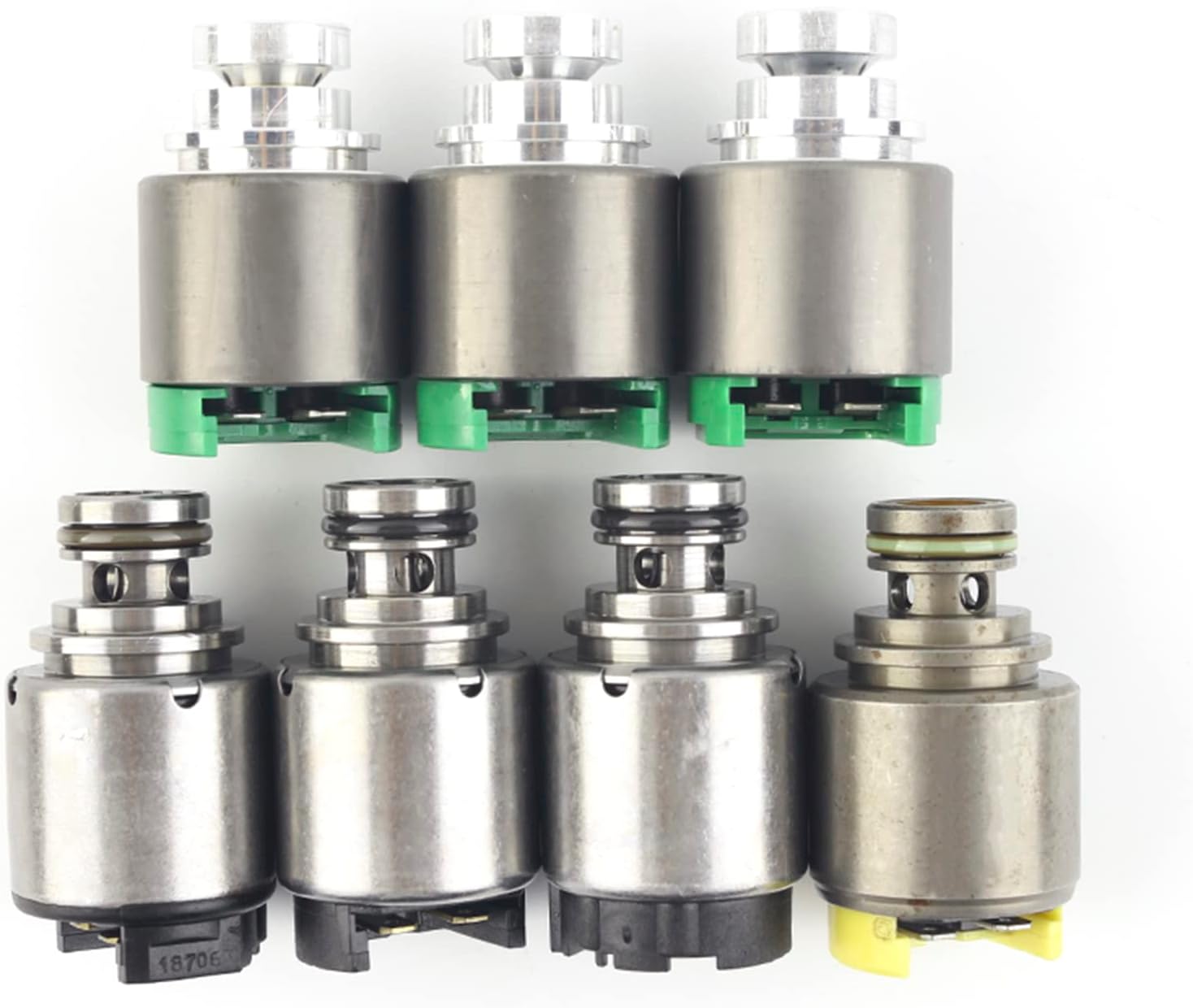
- If you had solenoid faults, change the set while the valve body is off; the 5HP19 seven-piece solenoid kit covers all seven.
- Fit the new internal filter and pan gasket last, fill with the ATF your vehicle's service information specifies, set the level at the specified temperature, then reset the transmission adaptations, as covered in our adaptive relearn guide.