A GM 10L80 that has racked up six figures, or a few years of towing, is not the same transmission that left the factory. By then it has a short list of documented ways it can go wrong, and most of them give you a warning before they turn into a comeback. This is the checklist a working truck deserves before you hand it back: what to check first, what parts actually wear, and when a pan and filter service is not enough.
This is not a repeat of a basic fluid service. If you need the step-by-step pan, filter and fill procedure, that is covered in full detail in our 10L80 filter and pan service guide. This article is the higher-level walk-through: the order to check things in, and the specific internal wear points and open recalls that a fluid service alone will not catch.

Step 1: Check for the open recall before you touch anything else
Do this first, before a fluid service, before a pan drop, before you quote anything. As of early 2026, GM has an active NHTSA recall on part of the 10-speed family that has nothing to do with wear from use and everything to do with a parts-level defect.
NHTSA recall 26V085000 covers roughly 43,700 model-year 2022 Chevrolet Tahoe and Suburban, GMC Yukon and Yukon XL, and Cadillac Escalade and Escalade ESV trucks built with the 10-speed ETRS transmission. GM's Part 573 safety recall report, filed under GM campaign number N252536750, describes a transmission control valve susceptible to excessive wear that can cause a loss of hydraulic pressure within the valve body, which can produce harsh shifting and, in some cases, rear-wheel lockup while driving. A second, related recall, 26V083000, covers a smaller population of earlier Silverado and Sierra trucks that may have been repaired incorrectly under an earlier campaign, 24V797.
The remedy is not a parts swap. GM's recall report describes a free TCM software update that monitors valve performance and is designed to detect excessive wear approximately 10,000 miles before a wheel lockup condition could occur. Once the software detects that wear signature, it limits the transmission to fifth gear, which keeps the truck drivable without letting it reach the failure condition. The report also carries a consumer advisory: Do Not Drive, Park Outside, for any affected vehicle already showing the symptom.
Run the VIN on NHTSA's recall lookup before doing anything else to a high-mileage 10L80 in one of the covered body styles. If the truck is in the recall population and the software has not been applied, that is the first phone call, not the pan gasket.
Step 2: Fluid and filter, on a schedule that matches how the truck is actually used
GM's published fluid change capacity for the 10L80 is 7.7 liters / 8.1 quarts, and the fluid is DEXRON ULV only — not DEXRON VI, not DEXRON HP. That part is not in dispute; it is printed the same way across GM's own capacity documentation. What the public capacity chart does not give you is a single mileage number, because GM's severe-duty maintenance schedules vary by model year and the figure lives in the owner's manual for that specific truck, not in a universal chart.
What GM's severe-service language consistently covers is towing, heavy loads, and sustained high ambient temperatures — conditions that, for most of the trucks this transmission lives in, are the daily routine rather than the exception. The practical rule shops use: pull the severe-duty interval out of the owner's manual for the exact model year in front of you, and if the truck tows, plows, or runs hot climates regularly, do not stretch past it. A 10L80 that has gone its whole life on the normal-duty schedule while towing a trailer every weekend has effectively been on borrowed time since the day it left the lot.
The full pan drop, filter replacement, pan read and fill procedure, including the exact 75-80 C temperature window the fill is set at, is covered step by step in the filter and pan service guide. Do not skip that temperature step on a high-mileage truck; getting it wrong is how a routine service turns into a comeback with a whine or a shudder that was not there before the truck came in.
Step 3: Cooler line and thermal bypass valve, before you blame the fluid
If the complaint on a high-mileage truck includes overheating, harsh shift, shudder, surge, stall, or a neutral/flare condition, GM bulletin 22-NA-182 is the place to look before condemning the fluid or the valve body. The bulletin covers the 6L80, 6L90, 8L90, 10L80, 10L90 and 10L1000, and names a twisted auxiliary cooler line as a documented cause, typically found on lower-mileage vehicles but worth checking at any mileage. On ETRS units (RPO MHS, MQC) a twisted line can set DTC P27EC in the TCM.
If the cooler line checks out straight, the bulletin's next stop is the thermal bypass valve (TBV). Its opening temperatures are specific and worth having memorized:
| Application | TBV location | Opens at |
|---|---|---|
| 10L80 / 10L90 / 10L1000, gas applications | Inside the valve body | 143 F (61 C) |
| 3.0L diesel (LM2 / LZ0) applications | External, on the frame rail | 194 F (90 C) |
Confirm the line, then confirm the valve, in that order, before you start chasing the valve body for an overheating complaint on a truck with a lot of miles on it.
Step 4: The two documented internal wear points
Past the fluid, filter and cooling system, there are two specific internal wear items that transmission technical sources have documented repeatedly on this family at higher mileage. Neither is visible from the pan.
Main pressure regulator valve wear
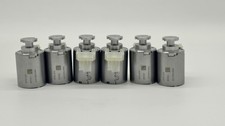
ATRA's GEARS Magazine documents that wear in the main pressure regulator bore and on the outboard spool area is a known issue on the listed GM and Ford 10-speed transmissions. That wear lets line pressure signal oil leak toward exhaust, which minimizes line pressure control. The symptoms it produces: delayed shift engagement, poor shift quality, and burnt clutches. Wear on the inboard spool side of the same valve is separately linked to torque converter apply problems. If a high-mileage truck is coming in with vague complaints about soft or delayed engagement that do not match a specific solenoid code, this valve is a reasonable place to look before condemning the whole valve body or unit.
Solenoid retainer clip collapse
Separately, Sonnax documents that the factory spring-steel retainers holding the heavy linear force solenoids (LFS) in the valve body are known to collapse. Once a retainer collapses, the solenoid is no longer centered in its bore. Its pintle, which extends only about .090 inch, can no longer stroke the inboard clutch control valve correctly, and a loose solenoid can go on to damage the casting at the clutch valve bore opening. The symptoms Sonnax lists: loss of shift solenoid control pressure, poor shift quality, various shift concerns, burnt clutches, and TCC apply or release problems — a symptom list that overlaps enough with the pressure regulator issue above that a tech chasing shift complaints on a worn 10L80 should check both before assuming either one in isolation.
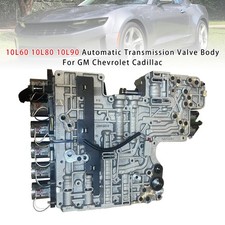
Both of these are bore-and-spool or retainer-level wear issues, not fluid-service issues. A pan and filter service will not touch either one, and on a unit already showing delayed engagement or burnt-clutch symptoms, pulling the valve body for inspection is a more honest diagnosis than another fluid change.
Putting it together: the order to work in
- Run the VIN against NHTSA recalls 26V085000 and 26V083000. If it is affected and unrepaired, that comes first.
- Check the fluid and filter interval against the owner's manual for the exact model year, applying the severe-duty schedule if the truck tows, plows, or runs hot climates.
- Inspect the auxiliary cooler line for a twist if there is any overheating, harsh shift, shudder, surge or neutral/flare complaint, then check TBV behavior against the 143 F / 194 F figures above.
- If shift quality, delayed engagement or burnt clutches show up with no clean solenoid code, pull the valve body and inspect the main pressure regulator bore and the LFS solenoid retainer clips before replacing anything wholesale.
Work it in that order and you catch the cheap, documented problems before they get blamed on parts that are actually fine.
Need parts for this job?
Solenoid kits, valve bodies, filter and pan gasket kits, coolers and rebuild kits for the GM 10L80, on one page with US shipping.
Shop 10L80 parts →Shop the part for this fix
The Sonnax Main Pressure Regulator Valve Kit (105740-12K) that addresses the bore and spool wear covered above, at our sister store CoreTransmissionParts.com. The full 10L80 catalog, including the solenoid retainer kit, is linked below it.
View the main pressure regulator valve kit →FAQ
Is there a recall on the GM 10L80 transmission?
Yes, an active one as of 2026. NHTSA recall 26V085000 covers roughly 43,700 model-year 2022 Chevrolet Tahoe and Suburban, GMC Yukon and Yukon XL, and Cadillac Escalade and Escalade ESV trucks with the 10-speed ETRS transmission, for a transmission control valve susceptible to excess wear that can cause a loss of hydraulic pressure and, in some cases, rear-wheel lockup. A related recall, 26V083000, covers earlier Silverado and Sierra trucks that may have been repaired incorrectly under an earlier campaign (24V797). Check the VIN before doing any other high-mileage work.
What is the GM 10L80 recall remedy?
A free dealer reflash, not a parts replacement. Per GM's NHTSA recall report, the dealer installs new transmission control module software that monitors valve performance and is designed to detect excess wear approximately 10,000 miles before a lockup condition could occur. Once detected, the TCM limits the transmission to fifth gear so the truck stays drivable but cannot reach the failure condition. The recall also carries a 'Do Not Drive Park Outside' advisory for any vehicle already showing the symptom.
What wears out inside a high-mileage 10L80?
Two documented points. The main pressure regulator valve wears in its bore and on the outboard spool, per ATRA's GEARS Magazine, letting line pressure signal oil leak to exhaust and causing delayed shift engagement, poor shift quality and burnt clutches. Separately, the factory spring-steel retainer clips that hold the heavy linear force solenoids can collapse, per Sonnax, letting the solenoid wobble in its bore and damage the valve body casting, which shows up as solenoid control pressure loss, shift concerns and TCC apply or release problems.
How often should a towing truck get a 10L80 fluid and filter service?
GM's published fluid change capacity for the 10L80 is 7.7 liters / 8.1 quarts of DEXRON ULV only, with no interval tied to mileage in the public capacity chart. Shops that service towing and plow trucks commonly cut whatever normal-duty number their specific model year's maintenance schedule lists in roughly half, since GM's own severe-duty criteria, heavy loads, trailering and sustained high temperatures, describe exactly what these trucks do every day. Check the exact figures against the owner's manual for the model year in front of you.
What temperature does the 10L80 thermal bypass valve open at?
143 F (61 C) on gas applications, where the thermal bypass valve sits inside the valve body, per GM bulletin 22-NA-182. On 3.0L diesel (LM2/LZ0) applications the valve is external, mounted on the frame rail, and opens at 194 F (90 C). The bulletin also names a twisted auxiliary cooler line as a documented cause of harsh shift, shudder and overheating complaints on low-mileage trucks, which is why the cooler line gets a visual check on this list even before the bypass valve does.
Related guides
- 10L80 Filter and Pan Service: The Full Job, Start to Fill
- 10L80 Fluid Type and Capacity: DEXRON ULV and the 75-80 C Fill Window
- GM 10L80 Problems and the Valve Body Recall
- 10L80 Overheating: Causes and Prevention
- 10L80 Identification Guide
Sources
- NHTSA / General Motors — Part 573 Safety Recall Report, Campaign 26V085, GM campaign N252536750 (filed February 2026). Backs the recall population (approximately 43,700 model-year 2022 Tahoe, Suburban, Yukon, Yukon XL, Escalade and Escalade ESV with 10-speed ETRS), the transmission control valve wear defect, the loss of hydraulic pressure and rear-wheel lockup consequence, the TCM software remedy with its approximately 10,000-mile early-detection design, the fifth-gear limiting behavior, and the "Do Not Drive, Park Outside" advisory. static.nhtsa.gov (PDF)
- General Motors — Service Bulletin 22-NA-182, "Information on 6L80 6L90 8L90 10L80 10L90 10L1000 Equipped Vehicles With A Harsh Shift, Shudder, Surge, Stall, Neutral/Flare, Transmission Overheating and/or High Transmission Fluid Temperature" (NHTSA-hosted). Backs the twisted auxiliary cooler line cause, DTC P27EC on ETRS units (RPO MHS, MQC), and the thermal bypass valve opening temperatures of 143 F (61 C) inside the valve body on 10L80/10L90/10L1000 gas applications versus 194 F (90 C) on the frame rail for 3.0L LM2/LZ0 diesel applications. static.nhtsa.gov (PDF)
- General Motors TechLink — 2025 Transmission Capacities & Fluids chart (U.S. and Canada). Backs the 7.7 L / 8.1 qt fluid change capacity for the 10L80 and the DEXRON ULV-only fluid requirement. gm-techlink.com (PDF)
- ATRA / GEARS Magazine — "Main Pressure Regulator Valve Kit" (2024). Backs the main pressure regulator wear location (bore and outboard spool), the line-pressure-signal leak-to-exhaust mechanism, the delayed shift engagement, poor shift quality and burnt clutch symptoms, the separate inboard-spool link to converter apply problems, and the Sonnax 105740-12K kit's extended-spool and O-ringed end plug fix. gearsmagazine.com
- Sonnax — Solenoid Stabilization Retainer product page. Backs the LFS solenoid retainer collapse failure mode, the .090 inch pintle extension detail, the resulting loss of shift solenoid control pressure, poor shift quality, TCC apply/release problems and valve body casting damage, the 105740-19K replacement part, and GM/Ford 10-speed fitment across 10L60, 10L80, 10L90, 10L1000, 10R60, 10R80 and 10R140. sonnax.com
- Sonnax — "GM Trucks: Gen. 3 10L60/80/90 Service Valve Body Changes & Identification." Backs the Gen. 3 valve body's June 19, 2025 release tied to GM Safety Recalls N242480630 and N242454440, and the context that GM has addressed wheel-lockup causes in the valve body design across more than one recall cycle. sonnax.com
Keep the fluid specs on your bench
Every major transmission, the exact fluid it takes and the capacity, on one printable sheet. Free, no fluff.
Get the spec chart →