A 10L80 pan service looks like an easy ticket until you are under the truck. There is no drain plug on the stock stamped pan, no dipstick to check your work, no fill tube to pour into, and the filter is not the flat plastic tray you are used to pulling out of a 4L60E. Get any one of those wrong and the customer comes back with a whine, a shudder, or a unit that overheats towing.
This is the whole job on a GM 10L80: what the filter actually does, how to read what falls out of the pan, and the fill procedure that decides whether the service helped or hurt. Every spec below comes from GM's own published documents or from recognized transmission technical sources, and they are listed at the bottom with links.
The 10L80 filter is not a plain screen
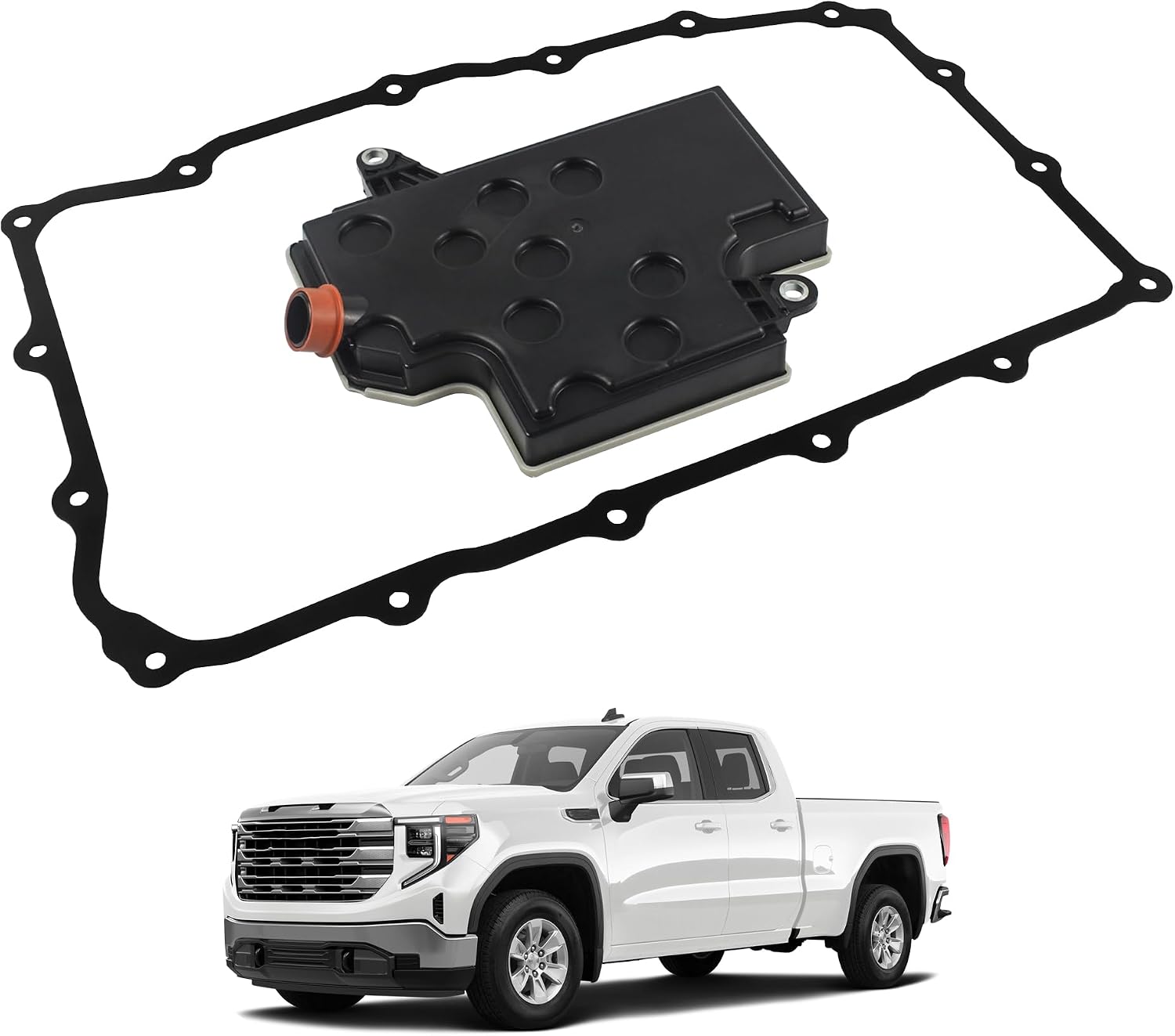
Before you order one, understand what you are replacing. Mike Souza's teardown of the Ford and GM 10-speed filter for Transmission Digest documented a filter assembly with two different media in one housing: a coarse orange media and a fine white media, with the fine media roughly twice the area of the coarse. Between them sits a thermal plate.
The logic is worth understanding because it explains the failure mode. At cold start the fluid is thick, so it takes the easy path and most of the volume flows through the coarse section toward the back of the assembly. That is what keeps the pump primed on a winter start instead of pulling against a restriction. As the fluid heats and thins, the thermal plate moves up toward a ledge along the top of the filter housing, restricting the coarse path and pushing more volume through the fine media, where the small stuff actually gets caught. Souza also notes the thermal plate was later eliminated on the theory that viscosity alone splits the flow the same way.
So this filter is a two-stage device that only does its real filtering once the truck is warm. A unit that lives on short trips never spends much time in the fine-media phase, and a filter that has been in service long enough to load up the fine media starts restricting the pump inlet exactly when the fluid is thinnest and the pump needs the most help.
Souza lists the GM filter as P/N 24291343, shown as an updated number at the time of writing; the current over-the-counter service kit for the 10L60/10L80/10L90 pan carries 24294355 and includes the pan gasket. Buy the filter and the gasket together. The pan gasket on this unit is not something you reuse because it looked fine.
Identify the unit before you touch a bolt
Not every 10L80 in the parking lot is the same transmission. GM's 2025 Transmission Capacities and Fluids chart alone lists the 10L80 under RPO codes MQB, MQC, MHT, MI2, MHS and MHU across Silverado and Sierra 1500, Tahoe, Suburban, Yukon, Escalade and the CT-series cars. Some are ETRS shift-by-wire units; some are cable-shift. ATRA's guidance is to read the RPO label on the driver's door B-pillar with a QR reader app before you start, because the TCM strategy differs between versions and that changes what a symptom means.
Generation matters too, and it changed again recently. Sonnax documents a Gen 3 valve body introduced June 19, 2025, redesigned after the wheel-lockup recalls: the TCC solenoid moved to the case side of the valve body, the separate lower casting was eliminated with the default disable solenoid now mounted on the lower cover plate, and the default valve circuits were reworked so a drop in solenoid feed pressure cannot cause lockup. The quickest visual ID is the TCC solenoid on the case side. Service part numbers are 24071206 for 3.0L diesel and 24071207 for 5.3L and 6.2L gas, both ETRS-only with electronic park. If you have the pan down anyway, note which generation you are looking at and write it on the ticket.
Doing the service
The stamped factory pan has no drain plug, so it comes off wet. Plan for that, and plan for where it lands: Chevrolet Performance's own instructions warn that the area around the transmission is hot from the exhaust and that transmission fluid on a catalytic converter or its heat shield can smoke or catch fire. Protect the exhaust before you break the pan loose, not after.
Working order that keeps the mess and the mistakes down:
- Get the truck level. Not close to level. The level check later is set by a tube standing in the pan, and a tilted vehicle moves that reference.
- Break the pan loose at one corner and let the bulk drain into a catch pan before pulling the rest of the bolts. Roughly eight quarts is coming out over the course of the job.
- Drop the pan flat. Do not tip it. What is sitting in the bottom is the diagnosis, and you want it undisturbed.
- Pull and inspect the filter. Check that the seal came out with the filter and is not still stuck in the bore. A filter O-ring left behind, or a damaged one, is a documented cause of pump aeration on this family.
- Clean the pan and the magnet. Wipe them; do not blow the pan area out with shop air over an open case.
- New filter, new pan gasket, pan bolts torqued in sequence to the figure in service information for your RPO and model year. Do not guess this one from a forum post, and do not run them up with an impact.
One more thing worth doing while the pan is off, straight out of ATRA's 10L diagnostic guidance: if the valve body has been off for any reason, always address the solenoid retainer clips, and inspect the LPC accumulator bore and the linear pintle solenoid bores for wear. Wear in those areas is not repairable at the valve body level. And if a shift-by-wire unit will not move after the valve body goes back on, with P187E and/or P18AB stored, the park pawl actuator lever missed the piston servo opening. The valve body should drop into position without force; if you are pushing, stop and re-align.
Read the pan before you clean it
The pan is the cheapest diagnostic tool on the job. What you find there decides whether this is a fluid service or the start of a much bigger conversation with the customer.
| What is in the pan | What it means |
|---|---|
| Light gray film on the magnet, fine and evenly spread | Normal wear for the mileage. Clean it and continue. |
| Fine black friction material suspended in the fluid | Clutch wear. Note it, and check shift quality and adapt data before selling a service as a fix. |
| Bright metallic flake or chunks, or a heavy paste on the magnet | Something hard is coming apart. A filter and fluid will not fix it, and the cooler circuit is already contaminated. |
| Milky or cloudy fluid | Coolant or water intrusion. Find the source before refilling anything. |
| Fluid that smells burnt and reads very dark | The unit has been overheated. Look at the cooler circuit and the bypass valve, not just the fluid. |
If the truck came in for overheating or high fluid temperature, GM bulletin 22-NA-182 is required reading before you blame the fluid. It covers the 6L80, 6L90, 8L90, 10L80, 10L90 and 10L1000 and names a twisted cooler line as a cause on low-mileage vehicles, which can set DTC P27EC in the TCM on ETRS units (RPO MHS and MQC). The same bulletin gives the thermal bypass valve opening temperatures, and they are numbers worth memorizing: 143 F (61 C) on the 10L80, 10L90 and 10L1000, with the TBV located inside the valve body, except on 3.0L LM2 and LZ0 diesel applications, where the TBV sits on the frame rail external to the transmission and opens at 194 F (90 C).
That internal TBV is also why you cannot cheat the fill temperature, which is the next section.
The fill is the part that gets people
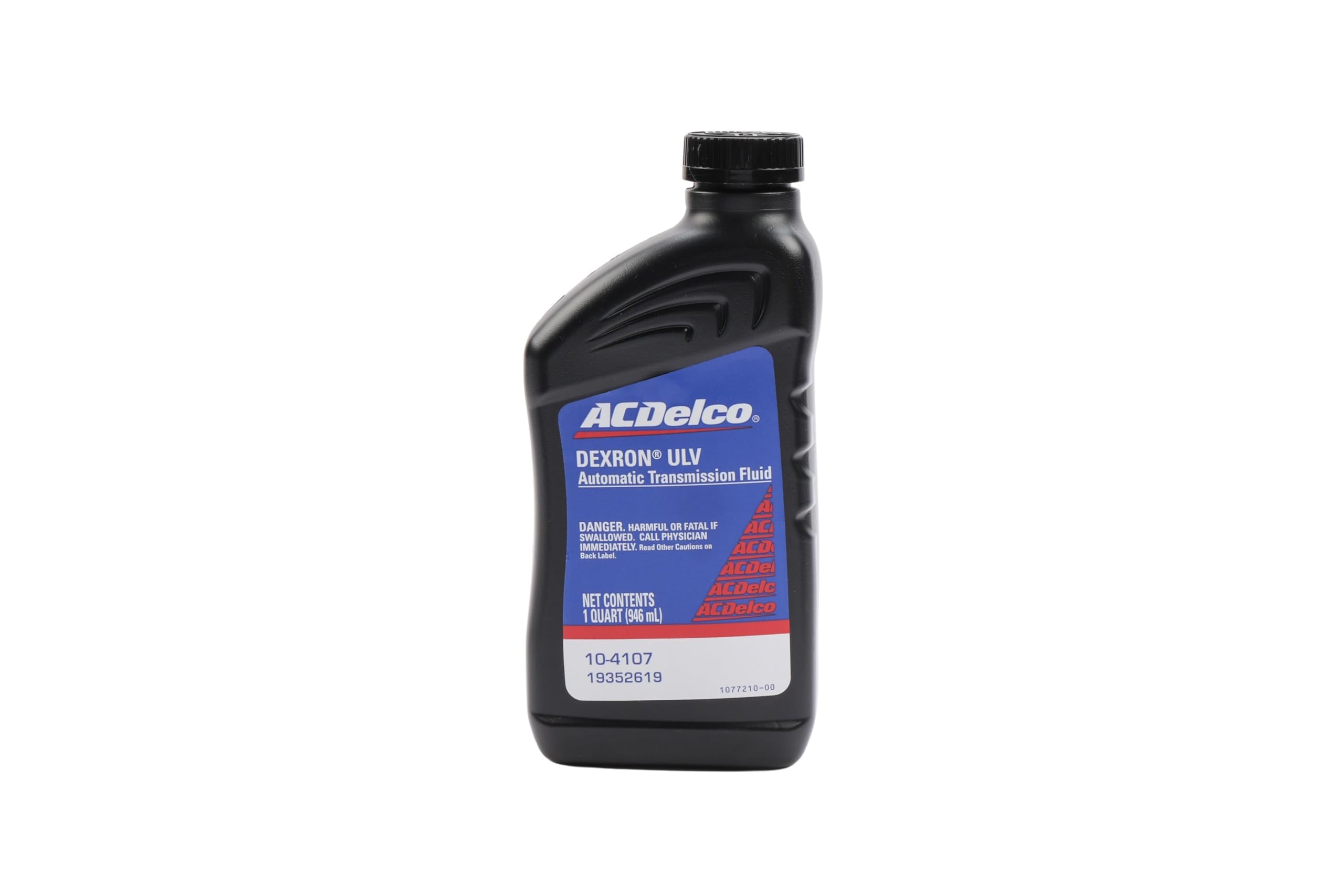
Capacity first. Chevrolet Performance publishes three numbers for the 10-speed RWD family and they are not interchangeable: 7.7 liters / 8.1 quarts for a pan removal and filter replacement, 10.95 liters / 11.6 quarts for an overhaul counting transmission volume only, and 12.52 liters / 13.23 quarts for the complete system including cooler volume. GM's 2025 capacities chart lists the same 7.7 L / 8.1 qt fluid change capacity for every 10L80 application. The fluid is DEXRON ULV and nothing else — the same sheet says in plain language not to use DEXRON VI or DEXRON HP, and to shake the quart bottles before pouring to stir the additives back in.
Now the part that separates a good service from a comeback. There is no dipstick and no fill tube on this transmission; the level is set by a tube standing inside the bottom pan, checked through the plug, with the engine running. The window is narrow, and GM states the consequence of missing it in both directions:
- Transmission fluid temperature must be 75-80 C (167-176 F) when you set the level.
- TFT above 80 C leaves you under-filled. Under-filled causes premature component wear or damage.
- TFT below 75 C leaves you over-filled. Over-filled pushes fluid out the vent tube onto hot exhaust, and causes foaming and pump cavitation.
- Because of that internal thermal bypass valve, do not check the level at all until TFT has reached or exceeded 70 C (158 F).
- The engine must be running when the level check plug is out, or you will lose too much fluid and end up under-filled.
The sequence GM gives: start and idle, bring the fluid to normal operating temperature, brake pedal down and move the selector through every range pausing at least three seconds in each, back to Park with engine speed low at 500-800 rpm, then idle at least one minute. If you need heat, brake-torque it in gear in 10 seconds on, 10 seconds off intervals and do not exceed 1500 engine rpm — holding a stall longer or higher than that can damage the unit internally. Then raise the level vehicle, clean thoroughly around the plug and confirm with a mirror that no dirt will fall into the case, pull the plug, and let it settle. A steady stream means wait for it to slow to a drip; nothing coming out means add until it streams and then drips. Reinstall the plug and torque it to 22 N·m (16 lb-ft).
One trap specific to this case. Souza documented two large plugs on the rear driver's side of the case just above the pan rail, embossed CAR and TRK, plus a smaller one on top found only on GM models. Those are factory-use plugs, not level check points, and the fill level tube in the pan sits slightly higher than the bottom of those case plug holes. Set the level at a case plug and you have just built an under-filled transmission that reads full to whoever did the work.
Noises and complaints after a pan service
If the truck comes back with a new sound, GM's own 10-speed diagnostic tips are the place to start. GM documents that aeration, air pulled into the pump inlet, produces an erratic whine, and that cavitation can produce rattling, whirling, roaring or grinding — and that the causes include a low fluid level, a filter condition, or a damaged O-ring. In other words, the three things your pan service just touched. Before you chase it any further, verify the level correctly at temperature.
Not every noise is yours. On units with automatic start/stop, the electronic auxiliary fluid pump cycles with the engine off and the transmission in Park, and hearing it in a quiet garage when you approach the vehicle is normal operation. GM's bulletin 24-NA-264 collects sound examples for the 10L60/80/90 family with audio links, which is the fastest way to settle an argument about whether a whine is a gearset or a pump.
A harsh or binding shift after service has one cause people create themselves: blocking the cooler bypass valve in full-flow mode to make the unit run cooler. ATRA is explicit about this. Run the transmission below the temperature range the adaptive learning strategy is allowed to operate in and you get harsh or binding shifts, because the TCM never gets to relearn. The bypass valve is there on purpose.
How often, realistically
GM's severe-service language covers towing, heavy loads and sustained high ambient temperatures, and on a 10L80 those conditions are the norm rather than the exception for the trucks this unit lives in. A practical shop interval most rebuilders land on is a pan and filter around 45,000 to 60,000 miles for a towing or plowing truck, and the factory severe-service interval for everything else. What matters more than the number is that the service is done correctly: the right fluid, the right level, at the right temperature. A pan service done at the wrong temperature is worse than no service at all, because it leaves the unit under- or over-filled and the owner believes it was just taken care of.
Need parts for this job?
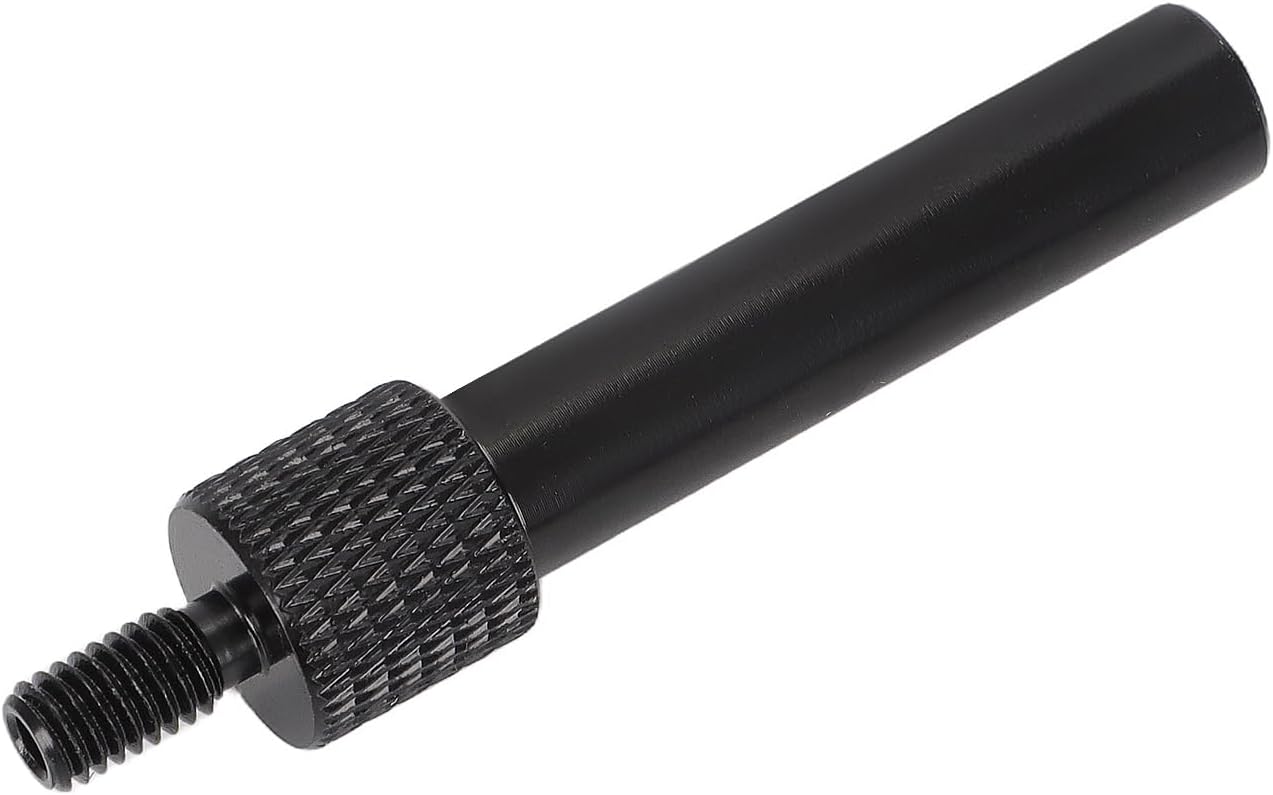
Filter and pan gasket kits, DEXRON ULV, fill adapters, solenoids and rebuild kits for the GM 10L80, on one page with US shipping.
Shop 10L80 parts →Shop the part for this fix
The 10L80 filter and pan gasket kit (OEM 24294355) for 2018-up applications, at our sister store CoreTransmissionParts.com. If you need a different year range or a gasket only, the full 10L80 catalog is linked below it.
View the filter and pan gasket kit →FAQ
Does the 10L80 have a serviceable filter?
Yes. The filter sits inside the bottom pan and is replaced whenever the pan comes off. It is a single assembly containing both a coarse media and a fine media section, documented by Transmission Digest as the GM 10-speed filter and listed there as P/N 24291343, sold currently as service kit 24294355 with the pan gasket. It is not a lifetime part and it is not a plain screen you can clean and reuse.
How much fluid does a 10L80 pan and filter service take?
Approximately 7.7 liters, 8.1 quarts, per both Chevrolet Performance's published capacity table and GM's 2025 Transmission Capacities and Fluids chart. That is the pan removal and filter replacement figure only. An overhaul is 10.95 liters / 11.6 quarts of transmission volume, and a complete system fill including the cooler is 12.52 liters / 13.23 quarts. Put nine quarts on the bench for a service so you are not short at the plug.
What temperature do you set 10L80 fluid level at?
75-80 C, which is 167-176 F, with the engine running, the vehicle level and the selector in Park. Above 80 C you finish under-filled; below 75 C you finish over-filled. Because the transmission has an internal thermal bypass valve, GM says not to check the level at all until TFT has reached or exceeded 70 C (158 F). You need a scan tool or a driver information center readout showing TFT to do this job.
Can you check the 10L80 level at the plugs marked CAR and TRK on the case?
No. Those two large plugs on the rear driver's side of the case above the pan rail are factory-use plugs, and there is no reference to them in the fill procedure. The fill level tube inside the pan sits slightly higher than the bottom of those case plug holes, so filling to a case plug leaves the unit under-filled. Use the plug the GM procedure calls for, with the engine running.
Why does my 10L80 whine after a filter change?
Most often the level is wrong, or the filter seal is. GM's 10-speed diagnostic material attributes pump aeration, which produces an erratic whine, and cavitation, which can produce rattling, whirling, roaring or grinding, to a low fluid level, a filter condition, or a damaged O-ring. Verify the level correctly at 75-80 C before condemning anything, and confirm the old filter seal did not stay in the bore.
Related guides
- 10L80 Fluid Type and Capacity: DEXRON ULV and the 75-80 C Fill Window
- GM 10L80 Problems and the Valve Body Recall
- 10L80 Shift Solenoid Symptoms and Testing
- 10L80 P0741: Torque Converter Clutch Circuit Performance
- 10L80 vs 10L90: Differences and Interchange
Sources
- Chevrolet Performance — Supermatic 10L90 Transmission Kit Installation Instructions, part no. 19420481 (Rev 08SE22). Backs the capacity table (7.7 L / 8.1 qt pan and filter, 10.95 L / 11.6 qt overhaul, 12.52 L / 13.23 qt complete system), the DEXRON ULV requirement and the instruction not to use DEXRON VI or HP, shaking the quart bottles, the 75-80 C (167-176 F) TFT window with its under- and over-fill consequences, the 70 C (158 F) thermal bypass valve floor, the engine-running requirement at the level plug, the range-sweep and 500-800 rpm idle steps, the 10-seconds-on / 10-seconds-off converter stall limit below 1500 rpm, the clean-around-the-plug caution, the exhaust fire warning, and the 22 N·m (16 lb-ft) plug torque. chevrolet.com (PDF)
- General Motors TechLink — 2025 Transmission Capacities & Fluids chart (U.S. and Canada). Backs the 7.7 L / 8.1 qt fluid change capacity and the DEXRON ULV call on every 10L80 row, and the RPO list (MQB, MQC, MHT, MI2, MHS, MHU) across Silverado and Sierra 1500, Tahoe, Suburban, Yukon, Escalade and the CT cars. gm-techlink.com (PDF)
- General Motors — Service Bulletin 22-NA-182, "Information on 6L80 6L90 8L90 10L80 10L90 10L1000 Equipped Vehicles With A Harsh Shift, Shudder, Surge, Stall, Neutral/Flare, Transmission Overheating and/or High Transmission Fluid Temperature" (Version 4, March 2024, NHTSA-hosted). Backs the overheating diagnosis: a twisted cooler line as a cause on low-mileage vehicles, DTC P27EC setting in the TCM on ETRS units (RPO MHS, MQC), and the thermal bypass valve opening temperatures — 143 F (61 C) inside the valve body on 10L80/10L90/10L1000, and 194 F (90 C) on the frame rail for 3.0L LM2 and LZ0 diesels. static.nhtsa.gov (PDF)
- General Motors TechLink — "10-Speed Automatic Transmission Diagnostic Tips," Mid-January 2025 (Vol. 27, No. 2). Backs the post-service noise section: pump aeration producing an erratic whine, cavitation producing rattling, whirling, roaring or grinding, with a low fluid level, a filter condition or a damaged O-ring named as causes; the normal auxiliary G5 pump cycling on automatic start/stop vehicles; the 10L60/80/90 RPO list; and bulletin 24-NA-264 as the sound-example reference. gm-techlink.com (PDF)
- Transmission Digest — "10R80/10L90 Ford & GM Ten Speed Unique Filter System," Mike Souza (April 1, 2019). Backs the filter construction and the pan layout: the fine (white) and coarse (orange) media with the fine media twice the size, the thermal plate and how flow shifts between media as the fluid heats, the note that the thermal plate was later eliminated, GM filter P/N 24291343, the GM metal pan with a fill level tube and fill plug, and the CAR and TRK case plugs being factory-use only and sitting lower than the pan's fill level tube. transmissiondigest.com
- Sonnax — "GM Trucks: Gen. 3 10L60/80/90 Service Valve Body Changes & Identification." Backs the generation identification while the pan is down: the Gen 3 valve body released June 19, 2025, the TCC solenoid relocated to the case side, the eliminated lower casting with the default disable solenoid moved to the lower cover plate, the revised default circuits and pressure regulator valve, and service part numbers 24071206 (3.0L diesel) and 24071207 (5.3L / 6.2L gas), ETRS applications only. sonnax.com
- ATRA / GEARS Magazine — "Diagnosing The 10L Series Transmission," Keith Clark (June 2024). Backs the identification-first approach using the B-pillar RPO label, the warning not to block the cooler bypass valve in full-flow mode because operating below the adaptive learning temperature range causes harsh or binding shifts, the instruction to address solenoid retainer clips whenever the valve body is serviced, inspection of the LPC accumulator and linear pintle solenoid bores, and the P187E / P18AB no-move-after-repair condition caused by the park pawl actuator lever missing the piston servo opening. gearsmagazine.com
Keep the fluid specs on your bench
Every major transmission, the exact fluid it takes and the capacity, on one printable sheet. Free, no fluff.
Get the spec chart →