P0741 on a GM 10L80 is the mirror image of P0742. Here the transmission control module commanded the converter clutch to apply, then watched the gap between engine speed and transmission input shaft speed and never saw that gap close the way it should have. The clutch is slipping, or it never grabbed at all. The customer usually shows up complaining about fuel economy, a converter that feels like it is dragging on the highway, or a rumble-strip shudder at light throttle.
The trap on this unit is that P0741 is a performance code, not a circuit code. The TCM is not telling you a wire is broken. It is telling you the clutch did not do its job, and on a 10-speed the reason is far more often hydraulic than electrical.
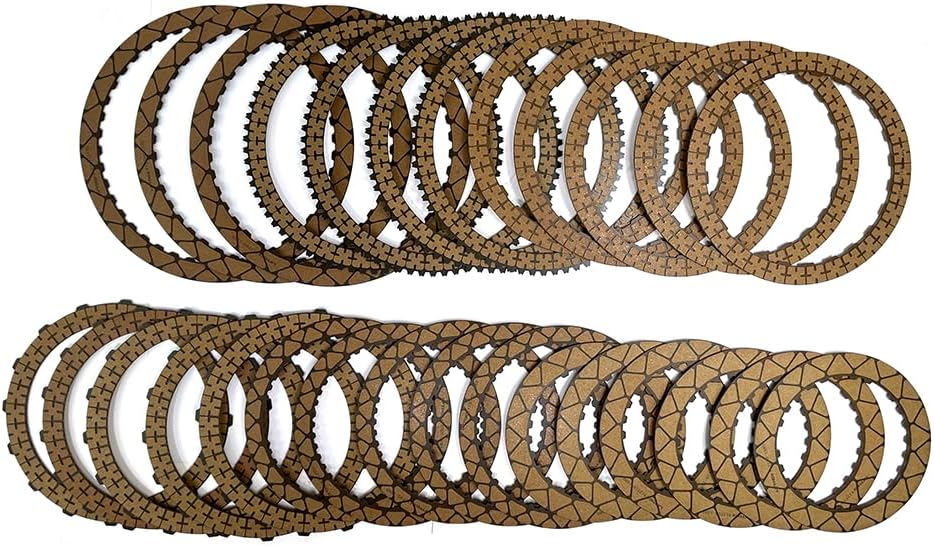
What the TCM is actually measuring
TCC slip speed is engine speed minus transmission input shaft speed. Command the clutch to full lockup and that number should collapse toward zero, because an applied converter clutch is a mechanical link between the engine and the input shaft. If the TCM commands apply and slip stays open by more than the calibration allows for longer than the calibration allows, it sets P0741 and gives up on lockup, which is why the truck often feels like it lost 2 mpg overnight.
So the diagnostic question is never "is the solenoid bad." It is "did the clutch get the apply pressure it was asked for, and did it hold." Those are two different failures with two different fixes.
The hydraulic path that has to work
Per Sonnax, in the GM Gen. 1 10L60, 10L80 and 10L90 the TCC regulator valve controls application and release of the converter. The valve receives signal fluid that forces it to shuttle to its regulating position. In that position the torque converter apply circuit is open to the secondary line and the release circuit is vented, which moves the converter into lockup. Remove the signal fluid and the valve returns to its install position, the apply circuit is disconnected from secondary line, and the release circuit is pressurized.
Read that sequence again with P0741 in mind. Lockup depends on two things going right: signal fluid has to reach and hold the valve in its regulating position, and the apply circuit has to actually be fed from secondary line once it gets there. Sonnax lists exactly what wear does to that circuit: bore wear around the TCC regulator valve reduces converter apply flow, converter release flow and cooler flow, and boost sleeve wear results in signal fluid loss and prevents the torque converter lockup. That is a textbook P0741 in one sentence. The valve never fully shuttles because the signal oil leaks away, so the clutch never gets full apply.
Downstream of that, the TCC priority valve in the lower valve body is the other common offender. Sonnax describes severe wear of the TCC regulator valve bore, caused by oscillation of the OE valve, allowing regulated secondary line and TCC signal pressure to leak to exhaust. The consequences it lists are overheated fluid, loss of converter feed pressure, TCC release concerns, TCC slip code concerns and potential TCM errors. Lose converter feed pressure and there is nothing left to push the clutch against the cover, no matter what the solenoid is commanding.
The O-ringed end plugs belong on the same list. Sonnax's valve body map for this family calls out end plugs in both the upper and lower valve body, and TCC slip codes appear directly in their symptom list along with low line pressure, delayed engagement and burnt clutches. They are the cheapest thing you will address on this repair and they leak the pressure everything else depends on.
Prove it with data before you open anything
GM bulletin 22-NA-015, which covers 2020-2024 Silverado 1500, Sierra 1500, Tahoe, Suburban, Yukon and Escalade models with the 10-speed, is the closest thing to a factory playbook for this circuit. It has technicians road test while recording a session log, then read the graph instead of trusting the seat of their pants. Two of its instructions matter before you record anything.
First, resolve other stored codes. The bulletin opens by telling the technician to check for transmission and engine DTCs, resolve them, and reevaluate the vehicle before proceeding. A pressure control solenoid code or a speed sensor code changes line pressure and changes what your TCC graph means.
Second, get Dynamic Fuel Management out of the way. GM notes that some shudder, shake, vibration or growl can be expected at low speed and light throttle as the vehicle cycles in and out of DFM, and that DFM can be turned off for a test drive by shifting into Manual range L9. It goes further and says a slight vibration that can only be felt when DFM is active should be deemed normal characteristic, with engine and transmission components not replaced for it. Shops have bought converters for what was a cylinder deactivation buzz.
The graph that names the part
Put Engine Speed, Transmission Input Shaft Speed, TCC Slip Speed, TCC Pressure, Engine Torque, pedal position and transmission fluid temperature on one screen, then hold a steady 40 to 50 mph at light throttle. Note that GM revised this bulletin in March 2022 specifically to change the wording from turbine speed to Transmission Input Shaft Speed, so graph the ISS PID.
The bulletin's converter signature is the one that lines up with P0741: TCC pressure control is steady, TCC slip is elevated, engine RPM increases at the shudder point while transmission input shaft speed remains steady, and engine torque and throttle angle both stay flat through the event. Pressure was delivered and held, the clutch still slipped, so the clutch is the failure. GM's own instruction there is to replace the torque converter, and it tells you to collect that data in manual 9th gear so DFM is disabled.
Its valve body signature reads differently: shudder present in Drive but not in Manual L9, throttle typically under 10 percent, engine torque under 100 Nm, and a TCC pressure command that stays parked at 100 kPa. A command sitting on its floor is a control problem, not a friction problem, and GM calls for the valve body.
Then there is the warning every shop should tape to the wall. GM notes that warranty claim reviews indicate that when the torque converter is replaced for shudder, the vehicle often returns for additional engine or transmission repairs, and that in most cases the torque converter is not the cause of the shudder. On P0741, assume the valve body until the graph says otherwise.
Do not unplug it to test
On an older GM unit you could pull the connector and watch the converter clutch drop out. That test is meaningless here. Sonnax's Jim Mobley explains that 10-speed valve bodies use casting-integrated direct-acting solenoids, held into the valve body with retainer clips, that work directly on the clutch control valve and only produce clutch pressure with current. His conclusion is blunt: 10-speed transmissions have no movement unplugged from the electrical source. Cut the power and you have proven nothing.
Mobley also notes that solenoids rarely fail on these units while valves and bores do wear, and names the watch list: main pressure regulator valve, TCC priority valve, TCC regulator valve and boost valve. Three of those four sit in the converter clutch circuit. He flags one more thing worth checking on any valve body you pull, new or used: impregnated separator plate filters come loose and cause valves to stick.
Check the fluid first anyway
A slipping converter clutch and a low fluid level look identical on a scan tool, and this unit has no dipstick. Per GM's 2025 transmission capacities and fluids chart, the 10L80 across Silverado, Tahoe, Suburban, Yukon, Escalade and CT5 applications takes DEXRON ULV with a fluid change capacity of 7.7 liters / 8.1 quarts, in every RPO listed for the unit: MQB, MQC, MHS, MHT, MHU and MI2.
| Item | Spec | Why it matters for P0741 |
|---|---|---|
| Fluid | DEXRON ULV | Ultra low viscosity. TCC apply is calibrated around it; a heavier LV or DEXRON VI fluid changes apply behavior and can set the code on its own |
| Fluid change capacity | 7.7 L / 8.1 qt | What goes back after a pan and filter service, per GM's own chart |
| Transmission RPO | MQB, MQC, MHS, MHT, MHU, MI2 | All take the same fluid and capacity, but generation drives which valve kit fits |
| Level check | Engine running, at temperature | Pull the level plug with the engine off and you lose fluid, then chase a low-level complaint you created |
| Fluid condition | Dark, burnt smell | The clutch has already been slipping. Lining debris is in the valve body now, which widens the repair |
If the fluid comes out dark and smells burnt on a P0741, you have your answer about the converter clutch lining, and you also have a valve body full of friction material. Cleaning the valve body and reusing it without addressing the bores is how this code comes back in six months.
Vacuum test instead of guessing
Sonnax publishes a critical wear area and vacuum test location guide covering the Ford 10R60 and 10R80 and the GM Gen. 1 10L60, 10L80 and 10L90. Test the OE valves in the rest position unless the guide indicates otherwise; a low vacuum reading indicates wear. For P0741, four locations carry TCC symptoms:
- TCC regulator valve (upper valve body, position 208). Listed symptoms are TCC apply and release concerns, low TCC apply pressure in full lockup, and converter shudder with TCC slip. This is the primary suspect.
- TCC priority valve (lower valve body, position 108). Listed for TCC apply and release concerns, overheated fluid, TCC slip codes, and low line pressure with TCC concerns.
- TCC signal damper piston (upper valve body). Keep the hole on the backside of the valve body uncovered while testing this one or you get a false pass.
- End plugs, two locations, one upper and one lower. TCC slip codes are on their symptom list.
Order by generation, not by family
This is where parts get sent back. Sonnax splits the TCC regulator repair three ways and they do not interchange: 105740-16K fits Gen. 1 GM 10L60, 10L80 and 10L90 units with a ridge mark on the OE valve. 105740-17K is the Gen. 2 kit. 105740-15K is the Ford 10R60/10R80 version and is not a GM part. All three require tool F-105740-TL16 and the VB-FIX fixture, because the bore is reconditioned before the oversized valve goes in. The TCC priority valve kit 105740-03K is a drop-in Zip Valve with an O-ringed end plug that seals the bore, so it needs no reaming.
Sonnax Oversized TCC Regulator Valve Kit 105740-16K
The Gen. 1 10L80 fix for a converter clutch that will not hold full lockup. Hardcoat anodized aluminum valve plus a wear-resistant boost sleeve, which is the part that was leaking away your signal oil in the first place. Confirm the ridge mark on the OE valve before ordering, because Gen. 2 units take 105740-17K.
See the 105740-16K TCC regulator kit →Or browse the full 10L80 parts collection, including the 105740-03K priority valve kit
The step everyone forgets after a valve body
If you replace the valve body or any solenoid on this unit, the TCM has to be programmed with the solenoid performance data or you will be back chasing the same code. Transmission Digest's Mike Souza lays out why: each GM transmission control solenoid valve is tested after assembly to determine output fluid pressure at given electrical values, with current applied both increasing and decreasing. Those current-versus-pressure data points are saved and assigned a file number, which is marked on the solenoid valve housing end or on the valve body itself and stored on GM's Techline Information System. That file gets programmed into the vehicle's TCM.
Souza is explicit that replacing the transmission assembly, the lower control valve body assembly with solenoid valves, the transmission control module, or one or more solenoids all require the TCM to be programmed with the new or existing solenoid performance data. Skip it and the TCM is commanding current against a pressure curve that does not match the hardware in the truck. On a converter clutch circuit that is calibrated tightly, that alone can re-set P0741 on a perfectly good repair.
The repair order that works
- Record freeze frame, then road test to reproduce at a steady 40 to 50 mph light throttle.
- Resolve every other stored engine and transmission DTC first, per 22-NA-015, then reevaluate.
- Graph engine speed, input shaft speed, TCC slip speed, TCC pressure, engine torque, pedal and TFT. Repeat in Manual L9 to take DFM out of the picture.
- Set the fluid level correctly with the engine running and inspect what comes out of the pan.
- Vacuum test the TCC regulator, TCC priority, TCC signal damper and end plug bores against the Sonnax guide before condemning the converter.
- Recondition the bores and install the correct kit for your generation. Check the separator plate filter and the solenoid bore tightness while you are in there.
- Refill with 7.7 L / 8.1 qt of DEXRON ULV, then program the solenoid performance data into the TCM.
- Re-graph. Commanded to full lockup, TCC slip should collapse to near zero and hold.
FAQ
What is the difference between P0741 and P0742 on a 10L80?
They are opposite failures of the same circuit. P0741 means the TCM commanded the converter clutch to apply and TCC slip speed never closed down, so the clutch is slipping or never applied. P0742 means it commanded the clutch off and slip never came back, so the clutch is stuck applied and the truck may stall at a stop. P0741 usually points at lost apply pressure or worn clutch lining; P0742 points at signal oil that will not exhaust or a valve that will not return.
Can I drive a 10L80 with P0741?
You can, but not for long without cost. Once the code sets the TCM generally stops commanding lockup, so fuel economy drops noticeably and the converter runs hotter because it is coupling hydraulically all the time. Heat is what kills these units. The bigger risk is that the underlying cause, usually a leaking TCC circuit, is also starving cooler flow, and Sonnax lists overheated fluid as a direct consequence of that same bore wear.
Is P0741 always the torque converter?
No, and assuming so is expensive. GM notes in bulletin 22-NA-015 that warranty claim reviews show vehicles often return for more repairs after a converter is replaced for shudder, and that in most cases the converter is not the cause. The converter is the call only when TCC pressure control is steady, slip is elevated, and engine RPM rises while input shaft speed stays flat. If the TCC pressure command is sitting at 100 kPa and never climbing, that is a valve body.
What fluid does a 10L80 take and how much?
DEXRON ULV only. GM's 2025 transmission capacities and fluids chart lists a fluid change capacity of 7.7 liters, which is 8.1 quarts, for the 10L80 in every application and RPO it covers, including MQB, MQC, MHS, MHT, MHU and MI2. Do not substitute DEXRON VI or a generic low viscosity fluid; the converter clutch apply strategy is calibrated around ULV and the wrong viscosity can set this code by itself.
Do I have to program the TCM after replacing the valve body?
Yes. Per Transmission Digest, every GM control solenoid valve is flow-tested at assembly and its current-versus-pressure data points are stored in a file referenced on the solenoid housing or valve body and held on GM's Techline Information System. That file must be programmed into the TCM whenever the transmission, the lower valve body with solenoids, the TCM, or one or more solenoids are replaced. Skipping it leaves the module commanding against the wrong pressure curve, which can re-set P0741 after a good repair.
Sources
- General Motors — Service Bulletin 22-NA-015, "Diagnostic Tips on GDS Graphing after Road-Test, for Shake and/or Shudder During Steady and/or Light Throttle Acceleration Between 25 and 50 MPH (40 and 80 KM/H) at Steady Speed, and Deceleration at approximately 15 MPH (24 KM/H)," September 2023 revision, NHTSA-hosted. Backs the model and RPO coverage (2020-2024 Silverado 1500, Sierra 1500, Tahoe, Suburban, Yukon and Escalade with transmission RPO MQB, MQC, MHS, MHO, MHT, MI2); the instruction to check for and resolve engine and transmission DTCs before reevaluating; the Dynamic Fuel Management caveat and the Manual L9 method of disabling it, including the note that a vibration only felt while DFM is active should be deemed normal characteristic; the TCC Shudder / Torque Converter signature (steady TCC pressure control, elevated TCC slip, engine RPM rising while input shaft speed stays steady, flat engine torque and throttle angle, data collected in manual 9th gear); the TCC Solenoid / Valve Body signature (present in D but not L9, throttle under 10 percent, engine torque under 100 Nm, TCC pressure command remaining at 100 kPa); the warranty-review note that in most cases the torque converter is not the cause of the shudder; and the March 21, 2022 revision changing turbine speed to Transmission Input Shaft Speed. static.nhtsa.gov (PDF)
- General Motors TechLink — "2025 Transmission Capacities & Fluids (U.S. and Canada only)," rev. 05-2025 A. Backs the 10L80 fluid specification of DEXRON ULV and the fluid change capacity of 7.7 liters / 8.1 quarts, listed identically across Silverado 1500, Tahoe/Suburban, Yukon/XL, Escalade/ESV and CT5 applications under transmission RPO MQB, MQC, MHS, MHT, MHU and MI2. gm-techlink.com (PDF)
- Sonnax — Oversized TCC Regulator Valve Kit 105740-16K product data. Backs the description of how the TCC regulator valve applies and releases the converter in GM Gen. 1 10L60/10L80/10L90 units (signal fluid shuttling the valve to its regulating position, the apply circuit opening to secondary line, the release circuit venting, then the valve returning to its install position); the failure mechanism in which bore wear reduces converter apply flow, release flow and cooler flow and boost sleeve wear causes signal fluid loss that prevents torque converter lockup; the symptom list of TCC apply and release concerns, low TCC apply pressure in full lockup, and converter shudder with TCC slip; the ridge-mark identification for Gen. 1; kit contents of valve, sleeve and spring; and tooling F-105740-TL16 with VB-FIX. sonnax.com
- Sonnax — TCC Priority Valve Kit 105740-03K product data. Backs the severe-wear mechanism in which oscillation of the OE valve wears the TCC regulator valve bore and allows regulated secondary line and TCC signal pressure to leak to exhaust, minimizing secondary line pressure control and resulting in overheated fluid, loss of converter feed pressure, TCC release concerns, TCC slip code concerns and potential TCM errors; and the drop-in Zip Valve repair with an O-ringed end plug that provides a positive seal and prevents TCC signal fluid from leaking to exhaust. sonnax.com
- Sonnax — "Ford 10R60, 10R80; GM 10L60/80/90 (Gen. 1) Critical Wear Areas & Vacuum Test Locations" guide. Backs the instruction to test OE valves in the rest position unless otherwise indicated with a low vacuum reading indicating wear; the valve body map placing the TCC regulator valve at position 208 in the upper valve body and the TCC priority valve at position 108 in the lower valve body; the end plug locations in both upper and lower valve bodies with TCC slip codes among their symptoms; the note to keep the hole on the backside of the valve body uncovered while testing the TCC signal damper piston; and the kit selection of 105740-15K for Ford 10R60/80, 105740-16K for GM Gen. 1 and 105740-17K for GM Gen. 2, all requiring F-105740-TL16 and VB-FIX. sonnax.com
- Sonnax — "Tackling Ford & GM 10-Speed Valve Body Problems, Failing Batteries & More!" Jim Mobley, TASC Force, March 4, 2025. Backs the casting-integrated direct-acting solenoid (CIDAS) design held into the valve body with retainer clips, working directly on the clutch control valve and producing clutch pressure only with current, so 10-speed transmissions have no movement unplugged from the electrical source; the observation that solenoids rarely fail while valves and bores do wear; the wear watch list of main pressure regulator valve, TCC priority valve, TCC regulator valve and boost valve; and the warning that impregnated separator plate filters come loose and cause valves to stick. sonnax.com
- Transmission Digest — "10R80/10L90 10-Speed Solenoid Function," Mike Souza, October 1, 2018. Backs the solenoid characterization requirement: GM transmission control solenoid valves are pressure-regulating valves tested after assembly to determine output fluid pressure at given electrical values with both increasing and decreasing current, with the current-versus-pressure data points saved to a file number marked on the solenoid valve housing end or valve body and stored on the Techline Information System; and the list of components whose replacement requires the TCM to be programmed with new or existing solenoid performance data (transmission assembly, lower control valve body assembly with solenoid valves, transmission control module, one or more solenoids). transmissiondigest.com