P0742 is the code that shows up right after the customer says the truck died at the stop sign. On a GM 10L80 it means the transmission control module commanded the converter clutch to release, watched for slip to come back between the engine and the input shaft, and never saw it. The clutch is still holding. With no fluid coupling left to absorb the difference, the engine gets dragged down to vehicle speed and stalls, the same way a manual stalls when you forget the clutch pedal.
Milder cases do not stall. They shudder at light throttle between 25 and 50 mph and the driver says it feels like rumble strips. That version costs shops more, because a converter usually gets thrown at it before anyone graphs the data.
How the 10L80 applies and releases the converter clutch
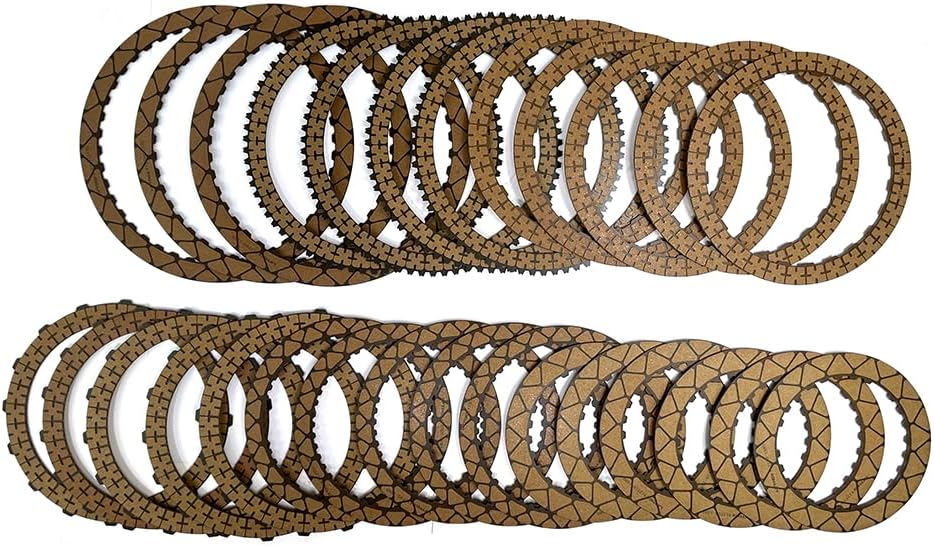
Chevrolet Performance service literature for this family describes the hardware plainly: the 4-element torque converter contains a pump, a turbine, a pressure plate splined to the turbine, and a stator assembly. That pressure plate is the clutch, and when applied it provides a mechanical direct drive coupling of the engine to the transmission. Nothing slips, which is the point, and also the problem when it will not let go.
The hydraulic side is where P0742 actually lives. Per Sonnax, in the GM Gen. 1 10L60, 10L80 and 10L90 the TCC regulator valve controls application and release. It receives signal fluid that forces the valve to shuttle to its regulating position. In that position the converter apply circuit is open to the secondary line and the converter release circuit is vented, which pulls the clutch into lockup. Once signal fluid is removed from the circuit, the regulator valve returns to its install position, the apply circuit is disconnected from the secondary line, and the release circuit is pressurized to push the clutch back off.
That release sequence is the mechanism behind the code. Releasing the clutch is not passive: signal oil has to exhaust, and the valve has to travel back so release oil can pressurize behind the pressure plate. Anything that keeps signal oil in the circuit, or keeps the valve from returning, leaves the clutch applied. That is P0742.
Upstream of the regulator valve sits a TCC signal damper piston. Sonnax describes its job as dampening the signal pressure from the TCC solenoid before it reaches the TCC control valve, removing the pressure spikes. When that bore or piston wears it can no longer control the variation, and Sonnax lists the results as TCC apply and release concerns, overheated fluid, overheated converter and delayed engagement. Small part, outsized effect on this circuit.
Diagnose it with GM's own graph signatures
GM bulletin 22-NA-015, covering 2020-2024 Silverado 1500, Sierra 1500, Tahoe, Suburban, Yukon and Escalade models with the 10-speed, exists to sort out shudder and shake between 25 and 50 mph. It tells the technician to road test while recording a session log, then read the graph. Three of its signatures matter for a stuck-on converter clutch, and they are separated by data, not by feel.
The Drive versus Manual L9 test
Run the complaint in Drive, then run the same road in Manual range L9. L9 disables Dynamic Fuel Management and changes how the TCC is scheduled. GM notes that some shudder, shake or growl at low speed and light throttle is normal as the engine cycles in and out of DFM, and that a vibration only felt while DFM is active should be deemed normal characteristic, with no engine or transmission components replaced for it.
Signature 1: TCC solenoid or valve body
Per 22-NA-015, the valve body is the call when the shudder is present in Drive but not present in Manual L9, throttle is typically less than 10 percent, engine torque is less than 100 Nm, TCC slip speed is zero or near zero, and the TCC pressure command remains at 100 kPa. That last pair is the tell. A pressure command that will not move off its floor while measured slip sits at zero is the definition of a clutch that is not being let go, whether the solenoid is hung or the valve is.
Signature 2: TCC solenoid drift
GM's drift pattern shows the shudder present in both Drive and Manual L9, typically under 15,000 miles, with transmission input shaft speed following engine speed and engine torque relatively consistent within plus or minus 25 Nm. Engine torque stays flat while engine speed rises and falls. GM's instruction here is also the valve body.
Signature 3: actually the converter
The converter is the call only when TCC pressure control is steady, TCC slip is elevated, engine RPM increases at the shudder point while transmission input shaft speed remains steady, and both engine torque and throttle angle stay flat through the event. GM attaches a warning to that section that every shop should read: warranty claim reviews indicate that when the torque converter is replaced for shudder the vehicle often returns for additional engine or transmission repairs, and in most cases the torque converter is not the cause of the shudder.
Put Engine Speed, Transmission Input Shaft Speed, TCC Slip Speed, TCC Pressure, Engine Torque, pedal position and transmission fluid temperature on one graph. Commanded off, slip should open up by a few hundred RPM as the clutch releases. If it stays pinned near zero through a decel below 30 mph, you have confirmed the condition rather than just read a stored code. Watch Transmission Input Shaft Speed, not turbine speed; GM changed that wording in a March 2022 revision of this bulletin.
Do not unplug it to test, that trick does not work here
On an older GM unit you could pull the transmission connector and see whether the converter clutch dropped out. That test is worthless here. Sonnax's Jim Mobley points out that 10-speed valve bodies use casting-integrated direct-acting solenoids, held in with retainer clips, working directly on the clutch control valve and producing clutch pressure only with current. His conclusion is flat: 10-speed transmissions have no movement unplugged from the electrical source. Kill the power and you have proven nothing about the TCC circuit.
Mobley also notes that solenoids rarely fail on these units, but valves and bores do wear, and he names the ones to watch: the main pressure regulator valve, the TCC priority valve, the TCC regulator valve and boost valve. Three of those four are in the converter clutch circuit.
Check the fluid before you touch the valve body
A large share of converter clutch complaints on these trucks come back to level and fluid, and this unit is unforgiving about how you set it. There is no dipstick; the level is set by a tube in the bottom pan, and the temperature window is narrow.
| Spec | Figure | Why it matters for P0742 |
|---|---|---|
| Fluid | DEXRON ULV, GM P/N 19352619 (US), 19352620 (Canada) | Ultra low viscosity. TCC apply strategy is calibrated around it; a heavier LV fluid changes apply and release behavior |
| Pan and filter service | 7.7 L / 8.1 qt | What goes back in after dropping the pan to inspect |
| Overhaul, transmission volume only | 10.95 L / 11.6 qt | Bench-built unit before cooler fill |
| Complete system including cooler | 12.52 L / 13.23 qt | Dry fill after a converter or cooler change |
| Level check temperature | TFT 75-80 C (167-176 F) | Above 80 C you end up under filled, below 75 C over filled |
| Thermal bypass | Do not check until TFT reaches 70 C (158 F) | Internal thermal bypass valve, so a cold check reads wrong |
| Engine state at check | Running | Pull the level plug with the engine off and you lose fluid, then chase a low-level complaint you created |
A low or aerated 10L80 gives soft TCC control and shudder that looks exactly like a hung valve. Set the level correctly at temperature, drive it, and re-read the data before condemning hardware. If the fluid comes out dark and smells burnt, the clutch has already been dragging, the lining debris is now in the valve body, and that changes the scope of the repair.
Where the wear actually is
Once you are in the pan, vacuum test rather than guess. Sonnax publishes a guide covering the Ford 10R60 and 10R80 and the GM Gen. 1 10L60, 10L80 and 10L90 that maps every critical wear area with its test port. Test valves in the rest position unless the guide says otherwise; a low reading indicates wear. Four locations list TCC apply and release concerns among their symptoms:
- TCC regulator valve, upper valve body. Sonnax lists TCC apply and release concerns, low TCC apply pressure in full lockup, and converter shudder with TCC slip. Cause is bore wear reducing converter apply flow, release flow and cooler flow, with boost sleeve wear causing signal fluid loss.
- TCC signal damper piston, lower valve body. Bore or piston wear lets signal oil exhaust or spike. Note the guide's instruction to keep the hole on the backside of the valve body uncovered while testing this one, or you get a false pass.
- TCC priority valve, lower valve body. Listed symptoms include TCC apply and release concerns, TCC slip codes, overheated fluid and low line pressure.
- O-ringed end plugs. Listed for low line pressure, TCC slip codes, various shift concerns, delayed engagement and burnt clutches. Cheap to address while the body is already apart.
Get the generation right before you order
This is where parts get returned. Sonnax splits the TCC regulator repair three ways and they are not interchangeable:
- 105740-16K fits Gen. 1 GM 10L60, 10L80 and 10L90 units with a ridge mark on the OE valve. Contents are valve, sleeve and spring.
- 105740-17K fits Gen. 2 GM 10L60, 10L80 and 10L90 plus the Allison 10L1000. It is a regulator and boost valve kit, containing regulator valve, boost valve, boost sleeve and spring, because on Gen. 2 the signal fluid acts on a boost valve and sleeve assembly rather than on the regulator valve directly.
- 105740-15K is the Ford 10R60 and 10R80 version, for units without the ridge mark. It is not a GM part. Ordering by family name instead of by generation is how it ends up in a GM box.
All three need tool F-105740-TL16 and the VB-FIX fixture, because the bore gets reconditioned before the oversized valve goes in. The TCC signal damper piston kit 105740-06K is a drop-in that needs no reaming, and the TCC priority valve kit is 105740-03K.
Sonnax Oversized TCC Regulator Valve Kit 105740-16K
The Gen. 1 10L80 repair for a converter clutch that will not release cleanly. Hardcoat anodized aluminum valve with a wear-resistant boost sleeve, so the bore you just reconditioned does not go soft again. Check for the ridge mark on the OE valve first, since Gen. 2 units take 105740-17K instead.
See the 105740-16K TCC regulator kit →Or browse the full 10L80 parts collection, including 105740-17K, 105740-06K and 105740-03K
The repair order that works
- Record freeze frame, then clear and road test to reproduce. Above 45 mph, then a decel below 30 mph.
- Graph engine speed, input shaft speed, TCC slip speed, TCC pressure, engine torque, pedal and TFT. Repeat the run in Manual L9.
- Resolve any other stored DTCs first. GM's bulletin opens by telling the technician to check for engine and transmission DTCs and resolve them before reevaluating, because the TCM's own protection strategies change what you are looking at.
- Set the fluid level correctly at 75-80 C with the engine running. Inspect what comes out of the pan.
- Vacuum test the TCC regulator, TCC signal damper, TCC priority valve and end plug bores against the Sonnax guide.
- Recondition and install the correct oversized kit for the generation you actually have. Replace the filter and pan gasket, then refill with 7.7 L / 8.1 qt of DEXRON ULV.
- Re-graph before calling it done. TCC slip should open up on a commanded release, and TCC pressure should track the command instead of sitting flat.
Keeping it from coming back
The 10L80 runs its converter clutch far harder than a 6L80 ever did, so the TCC circuit sees duty cycle older units never approached. Service the fluid on schedule and set the level at the right temperature, because ULV thins with heat and a dragging clutch cooks it fast. And when you are in the valve body for any reason, address the TCC bores on the bench rather than waiting for the comeback. Sonnax's reasoning for selling oversized parts is that correcting this bore wear would otherwise require replacing the whole valve body, and per Transmission Digest, GM 10-speed valve bodies have been hard to find on back order.
FAQ
Will a 10L80 with P0742 stall the truck at a stop?
It can, and that is the classic complaint. If the converter clutch stays mechanically locked, the engine has no fluid coupling to slip through as the vehicle comes to a stop, so it bogs and dies exactly the way a manual does when you forget the clutch pedal. Milder cases do not stall, they just feel like the truck is dragging a brake and shudder between 25 and 50 mph. Either way the TCM is reporting the same thing: it commanded the clutch off and TCC slip speed never came back.
How do I tell a valve body problem from a bad torque converter?
Drive it in Drive, then drive the same stretch in Manual L9. Per GM bulletin 22-NA-015, if the shudder is present in D but gone in L9, with throttle under 10 percent, engine torque under 100 Nm, TCC slip speed at or near zero and the TCC pressure command parked at 100 kPa, GM calls for the valve body. If TCC pressure control is steady but TCC slip is elevated and engine RPM rises at the shudder point while input shaft speed stays flat, that pattern points at the converter.
Can I unplug the transmission connector to see if the converter clutch releases?
No, and that habit will mislead you on a 10-speed. Sonnax's Jim Mobley notes these units use casting-integrated direct-acting solenoids that only produce clutch pressure with current, so a 10-speed has no movement at all unplugged. The old 4L60E trick of pulling the connector to force the TCC off does not transfer. Use bidirectional controls and watch TCC slip speed instead.
What fluid and how much does a 10L80 take when I drop the pan for P0742?
DEXRON ULV only, GM part 19352619 in the U.S. and 19352620 in Canada. Chevrolet Performance lists 7.7 L / 8.1 qt for a pan and filter service, 10.95 L / 11.6 qt for an overhaul and 12.52 L / 13.23 qt for the complete system including the cooler. Set the level with transmission fluid temperature between 167 and 176 F, engine running, or you will end up over or under filled.
Is it worth reconditioning the valve body instead of buying a new one?
Usually, if the bores are the only problem. Sonnax sells the oversized TCC regulator valve kit 105740-16K for Gen. 1 10L60/10L80/10L90 units and kit 105740-17K for Gen. 2 units and the 10L1000, both installed with tool F-105740-TL16 and the VB-FIX fixture. That is a fraction of the cost of a valve body, and GM 10-speed valve bodies have been on back order. Vacuum test first so you are fixing the bore that actually failed.
Sources
- General Motors — Service Bulletin 22-NA-015, "Diagnostic Tips on GDS Graphing after Road-Test, for Shake and/or Shudder During Steady and/or Light Throttle Acceleration Between 25 and 50 MPH (40 and 80 KM/H) at Steady Speed, and Deceleration at approximately 15 MPH (24 KM/H)," September 2023 revision, NHTSA-hosted. Backs the model coverage (2020-2024 Silverado 1500, Sierra 1500, Tahoe, Suburban, Yukon and Escalade with transmission RPO MQB, MQC, MHS, MHO, MHT, MI2); the instruction to resolve engine and transmission DTCs before reevaluating; the TCC Solenoid / Valve Body signature (present in D but not Manual L9, throttle under 10 percent, engine torque under 100 Nm, TCC slip speed zero or near zero, TCC pressure command remaining at 100 kPa, valve body should be replaced); the TCC Solenoid Drift signature (present in both D and L9, typically under 15,000 miles, ISS following engine speed, engine torque within plus or minus 25 Nm, valve body should be replaced); the TCC Shudder / Torque Converter signature (steady TCC pressure control, elevated TCC slip, engine RPM rising while ISS stays steady); the warranty note that in most cases the torque converter is not the cause of the shudder; the Dynamic Fuel Management caveat and the L9 method of disabling it; and the March 21, 2022 revision changing turbine speed to Transmission Input Shaft Speed. static.nhtsa.gov (PDF)
- Chevrolet Performance — Supermatic 10L90 Transmission Kit Installation Instructions, P/N 19420481, Rev 08SE22. Backs the 4-element torque converter description (pump, turbine, pressure plate splined to the turbine, stator) and the pressure plate providing a mechanical direct drive coupling when applied; DEXRON ULV as the required fluid with P/N 19352619 (US) and 19352620 (Canada); the capacity table of 7.7 L / 8.1 qt for pan removal and filter replacement, 10.95 L / 11.6 qt for overhaul transmission volume, and 12.52 L / 13.23 qt for the complete system including cooler; the 75-80 C (167-176 F) TFT window with the over-fill and under-fill consequences on either side; the internal thermal bypass valve requiring TFT to reach 70 C (158 F) before checking; and the caution that the engine must be running when the level check plug is removed. chevrolet.com (PDF)
- Sonnax — Oversized TCC Regulator Valve Kit 105740-16K product data. Backs the Gen. 1 10L60/10L80/10L90 application and the ridge-mark identification; the full apply and release sequence through the TCC regulator valve (signal fluid shuttling the valve, apply circuit opening to secondary line, release circuit venting, then the valve returning to install position with the release circuit pressurized); bore wear reducing converter apply flow, release flow and cooler flow; boost sleeve wear causing signal fluid loss and preventing lockup; the symptom list of TCC apply and release concerns, low TCC apply pressure in full lockup, and converter shudder with TCC slip; kit contents of valve, sleeve and spring; and tooling F-105740-TL16 with VB-FIX. sonnax.com
- Sonnax — Oversized TCC Regulator & Boost Valve Kit 105740-17K product data. Backs the Gen. 2 10L60/10L80/10L90 and 10L1000 application; the Gen. 2 difference in which the boost valve and sleeve assembly receives the signal fluid that shuttles the regulator valve; and the kit contents of regulator valve, boost valve, boost sleeve and spring. sonnax.com
- Sonnax — "Ford 10R60, 10R80 & GM 10L60/80/90 (Gen. 1) Vacuum Test Guide," November 2023. Backs the valve body map and the instruction to test valves in the rest position unless otherwise indicated, with a low vacuum reading indicating wear; the TCC regulator valve location in the upper valve body with kit selection 105740-15K for Ford 10R60/80 versus 105740-16K for GM Gen. 1 and 105740-17K for GM Gen. 2; the TCC signal damper piston (105740-06K) and TCC priority valve (105740-03K) locations with their TCC apply and release symptoms; the O-ringed end plug repair (105740-13K) listing TCC slip codes and low line pressure; and the note to keep the hole on the backside of the valve body uncovered while testing the signal damper. sonnax.com
- Sonnax — TCC Signal Damper Piston Kit 105740-06K product data. Backs the damper's function of smoothing the signal fluid pressure applied from the TCC solenoid before it is routed to the TCC control valve by removing pressure spikes; the failure mode in which bore or piston wear allows TCC signal oil pressure to be exhausted and prevents correct TCC apply; and the resulting symptoms of lube failures, TCC apply and release concerns, overheated fluid, overheated converter and delayed engagement. sonnax.com
- Transmission Digest — "Tips for common issues with Ford, GM 10-speed transmissions," Jim Mobley, March 11, 2025. Backs the casting-integrated direct-acting solenoid (CIDAS) design held in with retainer clips, working directly on the clutch control valve and producing clutch pressure only with current, so 10-speed transmissions have no movement unplugged from the electrical source; the observation that solenoids rarely fail while valves and bores do wear; the specific watch list of main pressure regulator valve, TCC priority valve, TCC regulator valve and boost valve; impregnated separator plate filters coming loose and sticking valves; and GM 10-speed valve bodies being hard to find because of back orders. transmissiondigest.com
- Transmission Digest — "Hydraulics Fundamentals: Converter Clutch Control Part 1," Bob Warnke (Sonnax vice president of technical development, TASC Force), April 1, 2019. Backs the converter circuit terminology used here (converter apply, converter bypass, impeller in, turbine out); the point that most converter failures are related to the TC clutch and overheating conditions; and the distinction between pressure and flow, with low converter charge pressure showing up as higher stall, low power, poor mileage and starved lube. transmissiondigest.com