"It's a 10L80" is not an identification. It is a family name. Between 2017 and today that name has covered three different valve body architectures, two different shifter systems, an optional stop-start feature, and a safety recall that applies to some of those units and not others. Order a part off the family name alone and you are guessing.
This is the order I work in on a unit I have not seen before: RPO first, family second, valve body generation third, then the electronics. Every one of those steps is verifiable in a few minutes, and each one eliminates a whole category of wrong parts.

Step 1: pull the RPO code, not the model year
ATRA's own guidance on this family is that the easiest way to identify the unit is the RPO code, read off the QR label on the driver's door B pillar with a QR reader app on a phone. That label is the factory build record for that VIN, and it beats anything you can see with the pan still on.
The useful part is that GM publishes which RPOs are 10L80s. Service Bulletin 22-NA-015 covers shake and shudder complaints on 2020-2024 Silverado 1500, Sierra 1500, Tahoe, Suburban, Yukon and Escalade models with the L84 and L87 engines, and its transmission RPO field lists MQB, MQC, MHS, MHO, MHT and MI2. A January 2023 revision of that same bulletin added M12, MHO and MHT to the RPO section, which tells you the list grew as applications did. GM's 2025 Transmission Capacities and Fluids chart carries more 10L80 codes on the car and crossover side, including MHU.
Two things to take from that. First, a code like MQB is a specific build of 10L80, not a generic label, which is exactly why bulletins scope themselves by RPO instead of by model name. Second, no single bulletin's RPO list is the complete set of 10L80 codes, because each bulletin only lists the codes relevant to the vehicles it covers. Use the door label to identify your unit; use the bulletin list to confirm the unit belongs in that bulletin.
Step 2: separate the family members by fluid and capacity
If you are staring at a loose unit with no label, fluid volume is a fast sanity check before you go any further. GM's 2025 capacities chart is the reference:
| Unit | Fluid | Fluid change capacity | Notes |
|---|---|---|---|
| 10L60 | DEXRON ULV | 7.7 L / 8.1 qt | Lightest duty of the family; RPO MQA in the CT4 and MQ2 in the CT5 |
| 10L80 | DEXRON ULV | 7.7 L / 8.1 qt | Truck, SUV and car applications; the volume unit of the family |
| 10L90 | DEXRON ULV | 7.7 L / 8.1 qt | 650 lb-ft rating; RPO MHX in the CT5 and MHO in the Escalade/ESV, MI4 in the 2017-2021 Camaro |
| 10L1000 | DEXRON ULV | 13.6 L / 14.4 qt | Heavy duty; nearly twice the fluid, which is the giveaway |
Correction and update, September 19, 2026: an earlier version of this table put the 10L90 RPO MHX on the XT6 and the 10L60 codes on the XT4. GM's 2025 chart actually lists MHX under the CT5, MQA under the CT4 and MQ2 under the CT5; the XT4 and XT6 use 9-speed front-drive units. The same chart gives the 10L60, 10L80 and 10L90 an identical 7.7 L fluid change, so volume cannot separate those three. What GM rates differently is torque: the Chevrolet Performance Supermatic 10L90 instructions put the 10L90 at 650 lb-ft and list the overhaul fill at 10.95 L (11.6 qt), with 12.52 L (13.23 qt) for the complete system including the cooler. For the full 10L90 walkthrough, see our 10L90 identification guide.
The capacity gap between a 10L80 and a 10L1000 is the cleanest separator in the family. If someone handed you a unit and a drain pan and you caught fourteen quarts, you are not holding a 10L80. Note also that every row in this family calls for DEXRON ULV. Any listing that tells you a 10L80 takes DEXRON VI is quoting an outdated or careless source, and that mistake is common enough online that it doubles as a test of whether a page is worth reading.
Step 3: identify the valve body generation, because that is what actually changed
This is the step most people skip, and it is the one that decides whether the part on the shelf will work. There are three generations of 10L60/10L80/10L90 valve body.
Generation 1 (2017-2019)
The original architecture. Gen 1 units use latch valves in the clutch control circuits and a smaller separator plate. This is the generation whose TCC regulator valve bore wear is the classic cause of lockup shudder: wear around that bore cuts converter apply flow, release flow and cooler flow all at once, while boost sleeve wear bleeds off signal oil and kills lockup outright.
Generation 2 (2019 and later)
GM changed the clutch application, deleted the latch valves, and added checkballs in line with the feed limit valves to handle clutch regulation instead. The separator plate got larger. The lower casting is still there with the default disable solenoid mounted in it, and the feed limit high valve is present along with boost balls for the C and F clutches. Gen 2 is the generation that carries the recall exposure covered below.
Generation 3 (June 19, 2025 and later, as a service part)
The newest valve body exists under two part numbers: 24071206 for 3.0L diesel applications and 24071207 for 5.3L and 6.2L gas in GM trucks. Both fit ETRS models with electronic park control only. The fastest way to spot one is the solenoid layout: the TCC solenoid moved to the case side of the valve body, the lower casting is gone entirely, and the default disable solenoid now mounts to the lower cover plate. Inside, the pressure regulator valve was redesigned toward the 10L1000 design, there is now only a single feed limit valve (the feed limit high valve train is gone), and the C and F clutch boost balls were removed. The clutch control valves are labeled A through F, cast right into the lower valve body, which is a genuinely useful change on the bench.
The Gen 3 valve body was redesigned specifically to prevent the wheel lockup condition behind the recalls, and it will back-service earlier vehicles even though it does not look like what came out. That is the trap: a correct Gen 3 replacement for a Gen 2 truck will look wrong to a tech expecting a visual match, and the instinct is to send it back. Verify fitment by VIN before you install it, every time.
Step 4: ETRS or cable, and does it have stop-start
Two build options split the family further, and both are visible without a teardown. The unit either has ETRS (Electronic Transmission Range Select, shift-by-wire, with electronic park control) or a conventional cable-operated shifter. Separately, some applications carry the Auto Start Stop Feature. ETRS is not cosmetic for parts purposes: the Gen 3 valve body part numbers above are ETRS-only, so a cable-shift truck cannot take one.
Step 5: is this unit in the recall?
GM Safety Recalls N242480630 and N242454440 cover the 10L1000 and the Gen 2 10L60, 10L80 and 10L90 in 2019-and-later cars, SUVs and trucks. The root cause is wear in the feed limit low valve, which gradually bleeds off the control pressure feeding the default disable solenoid. What the customer feels is a momentary rear wheel lock-up at higher speed, sometimes with an unexpected downshift to 2nd gear. P0747, E clutch engaged when it should be disengaged, is the code that commonly turns up with it.
Notice what that means for identification. A 2018 Gen 1 10L80 sits outside this recall. A 2021 Gen 2 10L80 sits inside it. Same family name, an entirely different conversation with the customer, and the only thing separating them is the generation you identified in Step 3.
Step 6: confirm it electronically on the bench
Solenoid identification and the data file
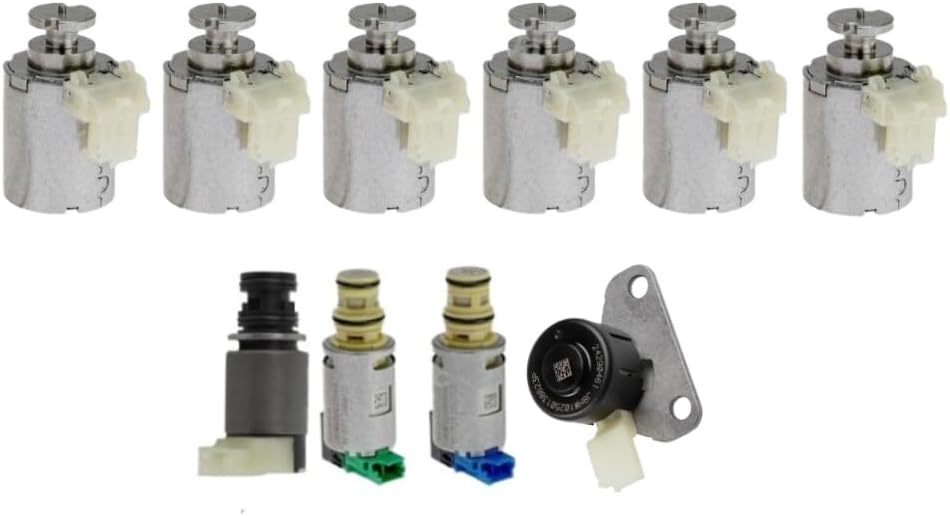
The 10L uses eight transmission control solenoid valves, and all eight are pressure-regulating, not simple on/off. Each one is flow-tested after assembly with increasing and then decreasing current applied to the coil winding, and the resulting current-versus-pressure data points are saved to a numbered file. That file number is marked on the solenoid valve housing end or on the valve body itself, and the file lives on GM's Techline Information System. It has to be programmed into the TCM whenever you replace the transmission assembly, the lower control valve body with solenoids, the TCM, or one or more solenoids. It is the same idea as solenoid characterization on the 8L90.
ATRA's guidance adds a related warning worth knowing before you quote the job: the Linear Pintle solenoids are not available separately. If one is sticking, or if the LPC accumulator bore or a Linear Pintle bore is worn, you are ordering a valve body and doing PUN or MCVM programming, not swapping a solenoid. Weak or broken solenoid retainer clips belong on the same inspection list.
The four speed sensors
There are four internally mounted two-wire Hall-effect speed sensors, all fed a 9-volt supply from the TCM: input speed sensor (ISS, also called turbine speed sensor), intermediate speed sensor 1, intermediate speed sensor 2, and output speed sensor. Three of them are conventional, with a magnetic pickup in the tip reading a steel reluctor ring; intermediate speed sensor 1 reads a 50-tooth ring welded to the reaction planet carrier internal gear and reverse brake clutch hub.
The input speed sensor is the odd one out and the one that catches people. It has no magnet in the tip. Instead it reads a reluctor ring of 40 evenly spaced magnets bonded in rubber, riveted to the input planet carrier and read straight through the wall of a non-ferrous transfer shell. That difference shows up on the meter: the input speed sensor measures approximately 346.7 kilohm, while the other three measure roughly 4.88 milliohm. If you are checking a harness and one sensor reads nothing like its neighbors, that is the expected result, not a fault. The connectors are keyed with the alignment tab in a different location per color, and where two connectors share a color they sit far enough apart on the case to prevent a swap.
What the ID actually buys you on a shudder complaint
Here is the payoff, using the shudder case straight out of 22-NA-015. On a verified 25-50 mph shudder, GM has you record a GDS session and graph three things: engine torque, engine speed and transmission ISS. If the shudder is present in Drive but not in Manual L9, throttle is under 10 percent, engine torque is under 100 Nm, TCC slip speed is zero or near zero, and the TCC pressure command sits at 100 kPa, the valve body is the repair. If instead TCC slip is elevated while engine torque and throttle angle stay steady and engine RPM rises and falls against a steady ISS, the converter is the repair.
GM attaches a note to that second case worth repeating to anyone who reaches for a converter first: warranty claim review shows that when the converter is replaced for shudder, the vehicle often comes back for additional engine or transmission work, because in most cases the converter was not the cause. Also, run the test in manual 9th so Dynamic Fuel Management is disabled, or you will chase a normal DFM vibration as a transmission fault.
One more that has nothing to do with the transmission and everything to do with wasted hours: a chassis code C0267, low brake fluid level, will cause no upshifts in Tow Haul mode on this family. Nothing in the OEM procedure points you there. Scan the whole vehicle before you drop a pan.
The short version to write on the job ticket
- RPO code from the QR label on the driver's door B pillar. MQB, MQC, MHS, MHO, MHT, MI2, M12 and MHU are all 10L80 codes GM has published.
- Generation. Latch valves and a small plate equals Gen 1 (2017-2019). Checkballs at the feed limit valves and a larger plate equals Gen 2 (2019 and later). TCC solenoid on the case side with no lower casting equals the Gen 3 service valve body (24071206 diesel, 24071207 gas, ETRS only).
- Shifter. ETRS with electronic park, or cable. This gates the Gen 3 valve body.
- Recall exposure. Gen 2 and 10L1000 only, under N242480630 and N242454440. Feed limit low valve, watch for P0747.
- Solenoid data file read off the solenoid housing end or the valve body, and programmed into the TCM after any solenoid, valve body, TCM or transmission replacement.
- Fluid: DEXRON ULV, 7.7 L / 8.1 qt for a pan and filter service.
Shop the part for this fix
If the ID lands on solenoids or a valve body, our sister store stocks the OEM 10L80 shift solenoid kit alongside the rest of the 10L80 hard parts line. Order by generation, not by model year.
View the 10L80 OEM solenoid kit →Or browse the full 10L80 parts collection at CoreTransmissionParts.com
Need parts for this job?
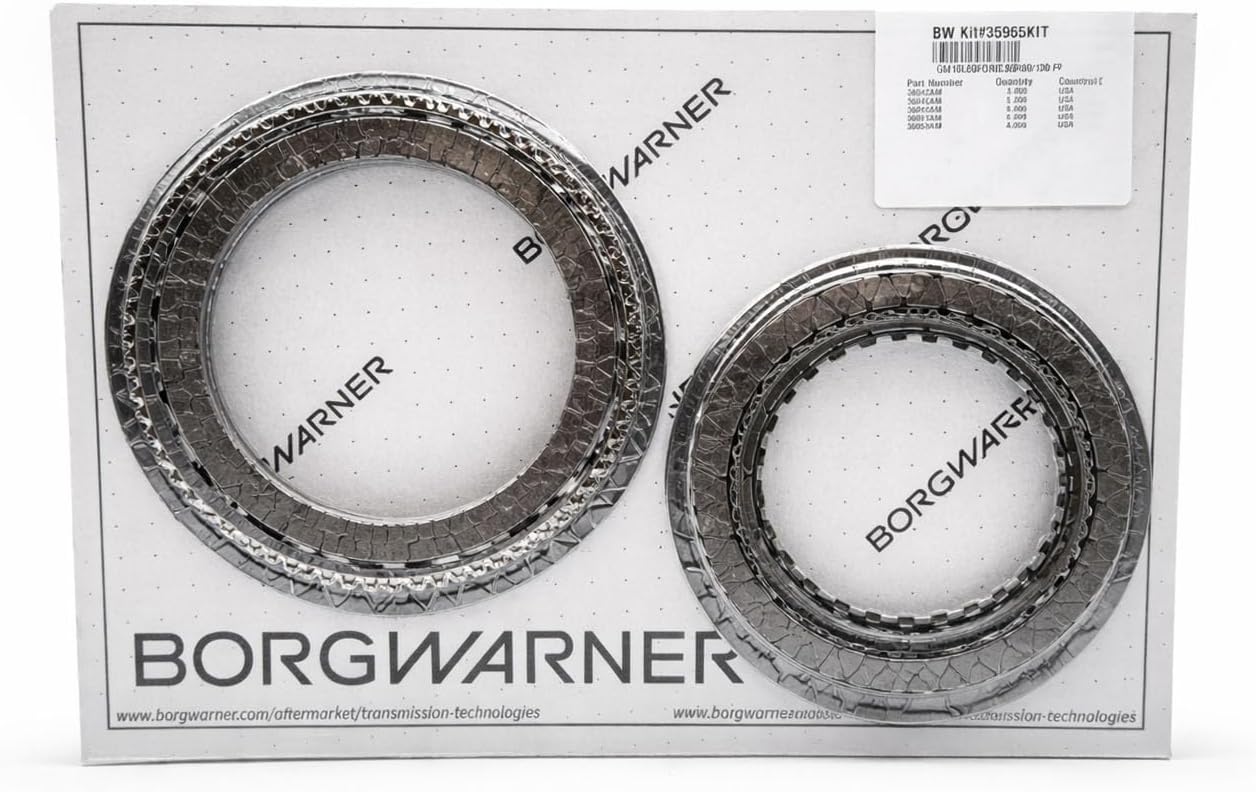
Filters and pan gaskets, valve body solenoid kits, clutch modules, bushings and rebuild kits for the GM 10L80, on our own checkout.
Shop 10L80 parts →FAQ
What RPO code is a GM 10L80?
There is no single one. GM Service Bulletin 22-NA-015 lists the 10L80 under transmission RPOs MQB, MQC, MHS, MHO, MHT and MI2 across 2020-2024 Silverado 1500, Sierra 1500, Tahoe, Suburban, Yukon and Escalade models with the L84 and L87 engines, and a January 2023 revision of that same bulletin added M12, MHO and MHT to the RPO section. GM's 2025 Transmission Capacities and Fluids chart shows still more 10L80 codes on the car side, including MHU. The RPO tells you which build of 10L80 you have, so read it off the QR label on the driver's door B pillar rather than guessing from the model year.
How do I tell a Gen 1 10L80 from a Gen 2?
Look at the valve body, not the case. Gen 1 units built from 2017 through 2019 use latch valves in the clutch control circuits and a smaller separator plate. The Gen 2 valve body that started production in 2019 dropped the latch valves in favor of checkballs in line with the feed limit valves, changed the clutch application, and uses a larger plate. Both Gen 1 and Gen 2 still carry a lower casting with the default disable solenoid mounted in it, which is what separates them from the Gen 3 service valve body.
Is my 10L80 covered by the GM 10-speed wheel lockup recall?
Only if it is a Gen 2 unit. GM Safety Recalls N242480630 and N242454440 cover the 10L1000 and the Gen 2 10L60, 10L80 and 10L90 in 2019-and-later vehicles. The root cause is wear in the feed limit low valve, which bleeds off the control pressure feeding the default disable solenoid and can produce a momentary rear wheel lock-up with a drop back to 2nd gear. P0747, E clutch engaged when it should be disengaged, is the code that commonly shows up with it.
Do I have to program the TCM after replacing a 10L80 valve body?
Yes. Each of the eight transmission control solenoid valves is flow-tested at the factory and assigned a solenoid performance data file, and that file number is marked on the solenoid housing end or on the valve body itself and stored on GM's Techline Information System. Replacing the transmission assembly, the lower control valve body with solenoids, the TCM, or even one solenoid requires that data to be programmed into the TCM. Skip it and the unit runs on someone else's calibration.
What is the difference between a 10L80 and a 10L90?
They are different torque ratings inside the same 10L family, and while many valve body service parts cross 10L60, 10L80 and 10L90, the units are not interchangeable as assemblies. Generation matters more than the number on the tag: a Gen 2 10L90 and a Gen 2 10L80 share the valve body architecture and the recall exposure, while a Gen 1 10L90 shares neither. Verify by RPO and by valve body generation before you order anything.
Related guides
- 10L80 vs 10L90: Differences, Interchange and Which Is Stronger
- GM 10L80 Problems and the Valve Body Recall
- 10L80 Valve Body Symptoms
- 10L80 Fluid Type and Capacity: DEXRON ULV and 8.1 Quarts
- 10L80 Torque Converter Shudder
Sources
- General Motors — Service Bulletin 22-NA-015, "Diagnostic Tips on GDS Graphing after Road-Test, for Shake and/or Shudder During Steady and/or Light Throttle Acceleration Between 25 and 50 MPH" (September 2023, NHTSA-hosted). Backs the 10L80 RPO list (MQB, MQC, MHS, MHO, MHT, MI2), the 2020-2024 Silverado 1500, Sierra 1500, Tahoe, Suburban, Yukon and Escalade coverage with L84 and L87 engines, the January 2023 revision that added M12, MHO and MHT, and the shudder diagnostic thresholds quoted here: TCC slip at or near zero with the TCC pressure command held at 100 kPa pointing at the valve body, versus elevated TCC slip with steady engine torque and throttle angle pointing at the converter, plus the instruction to test in manual 9th so Dynamic Fuel Management is disabled and the warranty note that the converter is usually not the cause. static.nhtsa.gov (PDF)
- Transmission Digest — "GM 10L Generation 3 Valve Body: Identification and Changes," Jim Dial, Sonnax TASC Force (April 2026). Backs the Gen 3 valve body facts: it came into existence June 19, 2025; part numbers 24071206 for 3.0L diesel and 24071207 for 5.3L and 6.2L gas; ETRS models with electronic park control only; the TCC solenoid moved to the case side as the fastest visual ID; the lower casting eliminated with the default disable solenoid moved to the lower cover plate; clutch control valves labeled A through F cast into the lower valve body; a pressure regulator valve redesigned toward the 10L1000; a single feed limit valve; and the instruction to verify fitment by VIN because the Gen 3 back-services Gen 2 vehicles without looking the same. transmissiondigest.com
- Sonnax — "Understanding the '19-Later GM 10-Speed Safety Recall." Backs the recall scope and mechanism: Safety Recalls N242480630 and N242454440 covering the 10L1000 and Gen 2 10L60, 10L80 and 10L90 in 2019-and-later cars, SUVs and trucks; the feed limit low valve as the root cause; the gradual loss of control pressure feeding the default disable solenoid; the momentary wheel lock-up with a downshift to 2nd gear; and DTC P0747 (E clutch engaged when it should be disengaged) as the code that commonly accompanies it. sonnax.com
- Transmission Digest — "10R80/10L90 10-Speed Solenoid Function," Mike Souza (October 2018). Backs the solenoid identification and TCM programming requirement: transmission control solenoid valves 1 through 8 are pressure-regulating valves, each flow-tested after assembly at increasing and then decreasing coil current to produce current-versus-pressure data points saved as a numbered file, marked on the solenoid valve housing end or on the valve body itself, stored on the Techline Information System, and required to be programmed into the TCM when the transmission assembly, lower control valve body with solenoids, TCM, or one or more solenoids is replaced. transmissiondigest.com
- Transmission Digest — "Ford & GM 10R80/10L90 Speed Sensor Functions," Mike Souza (January 2019). Backs the speed sensor section: four internally mounted two-wire Hall-effect sensors (input speed sensor, intermediate speed sensor 1, intermediate speed sensor 2, output speed sensor) on a 9-volt TCM supply; the input speed sensor reading a 40-magnet reluctor ring bonded in rubber and riveted to the input planet carrier through a non-ferrous transfer shell, with no magnetic pickup in its tip; intermediate speed sensor 1 reading a 50-tooth steel ring welded to the reaction planet carrier internal gear and reverse brake clutch hub; the resistance split of approximately 346.7 kilohm at the input sensor versus 4.88 milliohm at the other three; and the per-color connector alignment tab keying. transmissiondigest.com
- ATRA / GEARS Magazine — "Diagnosing the 10L Series Transmission." Backs the field identification method and the rebuild cautions: reading the RPO code from the QR label on the driver's door B pillar with a phone QR reader as the easiest way to identify the unit; the existence of Generation 1 and Generation 2 builds; the ETRS shift-by-wire versus conventional cable shifter split and the Auto Start Stop Feature option; sticking Linear Pintle solenoids and clutch control valves with weak or broken retainer clips; LPC accumulator and Linear Pintle bore wear requiring valve body replacement because those solenoids are not sold separately; PUN or MCVM programming after a valve body swap; and the fact that chassis DTC C0267 (low brake fluid level) will cause no upshifts in Tow Haul mode. gearsmagazine.com
- General Motors TechLink — 2025 Transmission Capacities & Fluids chart (U.S. and Canada). Backs the fluid and capacity cross-check used to separate the family: DEXRON ULV on every 10L60, 10L80, 10L90 and 10L1000 row, a 7.7 liter / 8.1 quart fluid change capacity for the 10L80, the 13.6 liter / 14.4 quart figure that belongs to the 10L1000, and additional 10L RPO codes including MHU, MQA, MQ2 and MHX. gm-techlink.com (PDF)
- Chevrolet Performance (General Motors) — Supermatic 10L90 Transmission Kit Installation Instructions, P/N 19420481, Rev. 08SE22. Backs the 10L90 comparison figures in the family table: the 650 lb-ft torque rating, the 7.7 L pan-and-filter, 10.95 L overhaul and 12.52 L complete-system capacities, DEXRON ULV only, and the 2017-2021 Camaro RPO MI4 service reference. View source (PDF)
Keep the fluid specs on your bench
Every major transmission, the exact fluid it takes and the capacity, on one printable sheet. Free, no fluff.
Get the spec chart →