The 10L80 does not give you much warning. A truck comes in with a harsh 4-5, the customer mentions the light came on once and went out, and three weeks later the same truck tries to lock the rear wheels at 70 mph. Those are the same failure at two different stages, and both of them live in the valve body.
This unit has burned a lot of shops because the diagnostic habits that work on a 6L80 do not carry over. The solenoids are built into the casting and act directly on the clutch control valves, so the usual "swap the solenoid pack and see" move costs money and fixes nothing. What follows is the symptom-to-valve map, what to look at on the scan tool before the pan comes down, and how to prove the valve body is worn instead of guessing.
Why this valve body plays by different rules
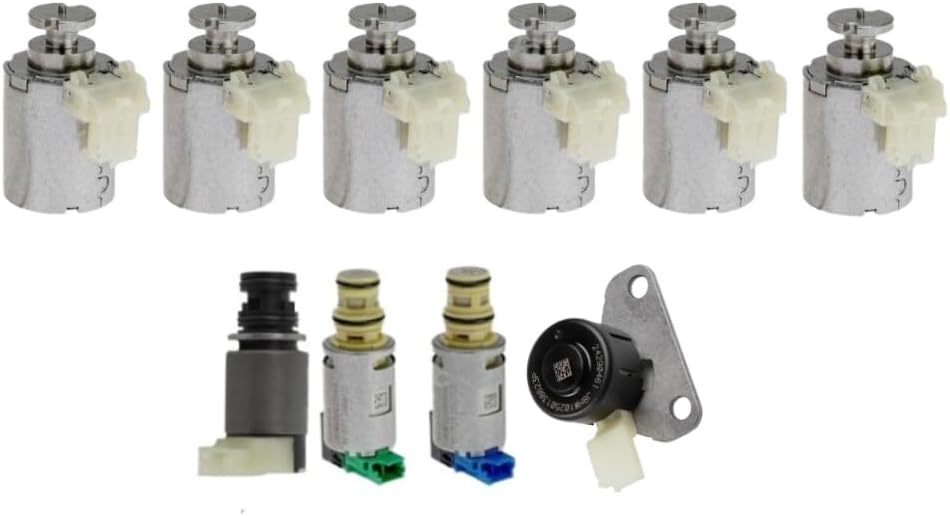
The 10L60, 10L80 and 10L90 family uses what Sonnax calls casting-integrated, direct-acting solenoids, or CIDAS. The solenoid is not a bolt-on pressure regulator feeding a separate regulator valve stack the way it is on a 4L60E. The solenoid works directly on the clutch control valve, and it only produces clutch pressure when it is energized.
Two practical consequences fall out of that. First, an unplugged 10-speed does nothing. There is no default gear to limp home on if the harness is out, because no current means no clutch pressure anywhere. Second, and more useful to you, a solenoid that tests fine electrically can still leave a clutch applied, because the thing that actually failed is the regulator valve the solenoid is pushing on. Sonnax puts it plainly in their 10-speed service coverage: the solenoids themselves almost never fail, and the real culprits are solenoid regulator valves that will not return to a closed position because of bore wear.
That is why a solenoid kit on a P0747 is the most common comeback on this unit. The code is honest, the parts choice is not.
The symptom-to-valve map
Sonnax publishes a critical-wear-area guide for the 10R60, 10R80 and GM 10L60/80/90 Gen. 1 valve bodies that pairs each valve with the complaints it produces. This is the single most useful page to have on the bench, because it lets you work backward from the customer's description to a short list of bores to test. The highlights:
| Valve | Location | Complaints it produces |
|---|---|---|
| "A" clutch control valve | Lower | No Reverse, Reverse slip, slips 2nd through 4th, gear ratio codes |
| "B" clutch control valve | Lower | 1-2 slip, no 2nd through 5th, gear ratio codes |
| "C" clutch control valve | Lower | No Reverse, Reverse slip, no 8th through 10th |
| "D" clutch control valve | Lower | No Forward or Reverse, slips on take-off |
| "E" clutch control valve | Lower | No Reverse, Reverse slip, 3-4 slip, no 4th through 10th |
| "F" clutch control valve | Lower | No Drive engagement, slips in 1st and 2nd, no 5th through 9th |
| LPC anti-back flow valve | Lower | Harsh engagements, harsh downshifts, soft or flared upshifts |
| Main pressure regulator valve | Upper | Low line pressure, delayed engagement, poor shift quality, burnt clutches |
| Clutch gain control valve | Upper | 4-5 harsh or flare, harsh 6-4 downshift, passing-gear flare back to 4th |
| TCC regulator valve | Upper | Converter shudder, TCC slip, low apply pressure in full lockup |
| TCC priority valve | Lower | TCC apply and release concerns, overheated fluid, TCC slip codes |
| Lube control / bypass valves | Upper | Overheated fluid, lube failure, low cooler flow |
Notice how many rows include "gear ratio codes." On a clutch-to-clutch ten-speed, a worn clutch control valve bore does not announce itself as a pressure code. It shows up as the TCM catching a ratio it did not command. If you are chasing scattered ratio codes on a unit with clean fluid and no clutch debris, you are probably looking at a valve body, not a hard-parts failure.
Two more wear points are worth knowing because they get missed. The latch valves in the A, B, C and F positions get chewed up by their retainer clip, and the solenoid stabilization hardware, the clip insert and retainer that hold the solenoids square to their bores, wears and causes a loss of shift solenoid control pressure. Sonnax also flags the impregnated plate filters coming loose from the separator plate and jamming valves, which is a failure you will only find by pulling the plate and looking.
The feed limit low valve: the one that became a recall
The failure that put this transmission in the news is a single valve. The feed limit low valve acts as a limit valve for solenoid feed to the default disable solenoid, and it is part of the boost ball circuitry that controls clutch regulation. When the bore wears, control pressure to that solenoid bleeds off gradually. The default enable and default select valves downstream lose their reference, and per Sonnax's technical write-up on the recall, the transmission can drop to lower gears or create a bindup condition.
From the driver's seat that is a momentary wheel lock-up at road speed, often with a hard downshift out of 7th or 8th into 2nd, and it shows up mostly when the transmission is hot. Sonnax notes cases developing in as few as 35,000 miles on trucks that tow.
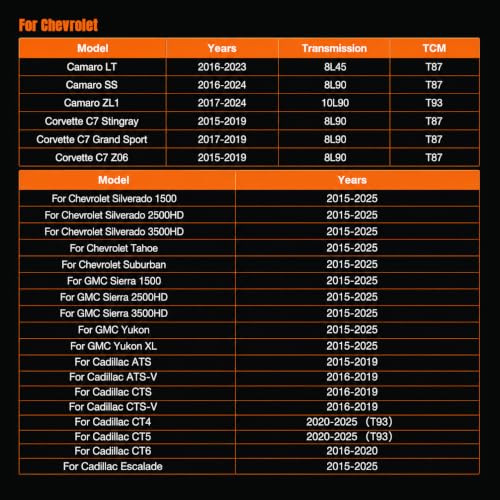
The paperwork backs it up. NHTSA campaign 26V085000, GM's number N252536750, covers 43,743 of the 2022 Tahoe, Suburban, Yukon, Yukon XL, Escalade and Escalade ESV built with the 10-speed and electronic transmission range select, with the defect described as a transmission control valve that may fail and lock up the rear wheels. The remedy is TCM software that catches the pressure loss and defaults the truck to a safe gear. An earlier campaign, 25V148000 under GM number N242480630, did the same thing for 90,081 CT4, CT5, CT6 and Camaro units.
Software does not fix a worn bore, and GM knows it. On April 17, 2026 GM released Special Coverage N252536751 for the same 2022 SUVs, describing the condition as a transmission control valve that "has worn, resulting in a gradual loss of pressure within the valve," with effects that "can cause harsh shifting, setting a service engine soon message, reduced engine performance or P0747 diagnostic trouble code." Coverage runs 15 years or 150,000 miles. The service procedure points to bulletin 25-NA-255, and the labor operation GM pays is "Control Valve Spacer Plate and Spool Valve Replacement" at 3.3 hours. Read that labor description twice: GM is paying to replace the spool valve and the spacer plate together, in the body, not to replace the valve body.
Testing it in the vehicle, before the pan comes down
Do the free work first. On this unit the in-vehicle pass is about ruling things out and steering the teardown, not about confirming bore wear.
- Pull all modules, not just the TCM. Note whether P0747 is current or in history, and whether ratio codes are stacking up on specific gears. Cross-reference those gears against the table above to pick your suspect valve.
- Check the vehicle against open field actions. Run the VIN for recall 26V085000 and Special Coverage N252536751 before you quote anything. On a 2022 full-size SUV with P0747, the customer may have a 15-year/150,000-mile GM repair sitting there. Quoting a rebuild over the top of that is a good way to lose a customer.
- Verify fluid condition and level properly. Low or aerated fluid mimics valve wear. Burnt fluid with clutch material in the pan changes the job entirely, and GM's own repair procedure is not intended for units with excessive clutch debris.
- Command clutch pressures with a scan tool and watch the reaction. Because CIDAS solenoids drive the clutch control valves directly, commanding a clutch and watching input speed, output speed and calculated ratio tells you which circuit cannot hold. A circuit that responds to command but decays as the unit heats up is the signature of a leaking bore, not a bad solenoid.
- Test the battery and charging system. This sounds unrelated and it is not. Sonnax has fielded enough post-repair complaints of harsh engagements and erratic shifts traced to weak batteries that they call it out in their 10-speed service article. Confirm system voltage is solid before you condemn hydraulics.
Bench testing: the vacuum test is the whole game
Bore wear is a leak, and a leak is measurable. Cap the bore, pull vacuum on the test port with a hand pump, and read what the valve holds. A low reading means clearance the valve should not have.
The procedure details that matter on this family:
- Test valves in their rest position unless the guide says otherwise. Do not push a valve to a stroked position and test there.
- For the feed limit low valve, test at the balance end of the valve. Sonnax's acceptable reading is 18 in-Hg or higher. Below that, the bore is leaking enough to matter.
- For the A, B, C and F latch valve locations, you have to seal the bore with your thumb to get a usable reading. Skip that and you will read low on a good valve and replace parts you did not need to.
- On Gen. 1 latch valves, look for 16 in-Hg or higher at all three test locations on each valve, per Sonnax's Chris Leach. Then check the bore with a flashlight: a buckling spring can hog out the bore in a way vacuum alone misses, and Leach says leaving that damage means an immediate comeback. Sonnax's position is that every 10-speed rebuild should replace or modify the latch valves (105740-47K drop-in, 105740-71K oversized).
- For the LPC and TCC signal damper pistons, keep the hole on the backside of the valve body uncovered while testing. Covering it gives a false pass.
- Pull the separator plate and inspect every impregnated filter before you reassemble. A filter that has lifted at one edge will find a valve to stick.
Sonnax's test guide is a free PDF and it shows the exact arrow location for every test point on both the upper and lower bodies. Print it, laminate it, keep it with the vacuum pump.
What to replace, and what not to skip
Once you have readings, the parts decision is straightforward. Valves that hold get left alone. Valves that leak get a drop-in replacement if the bore is only lightly worn, or an oversized valve with a reamed bore if it is not.
For the recall failure specifically, Sonnax offers a feed limit low valve kit (105740-54K) and a feed limit high valve kit (105740-58K), with oversized versions (105740-59K and 105740-60K) for bores too far gone for a drop-in. The other common repairs on this body are the main pressure regulator valve (105740-12K, oversized 105740-20K), the TCC regulator valve (105740-16K for GM Gen. 1 and 105740-17K for Gen. 2), the TCC priority valve (105740-03K), the O-ringed end plug kit (105740-13K), the latch valve stem repair (105740-47K), and the solenoid stabilization clip insert and retainer (105740-01K and 105740-19K).
If the body is past saving on a truck, know which service part you are getting. Sonnax reports that GM released a Gen. 3 10L60/80/90 service valve body on June 19, 2025, as 24071206 (3.0L diesel) and 24071207 (5.3L and 6.2L gas), and that both fit only ETRS trucks with electronic park control. It looks nothing like the Gen. 2 it replaces: the TCC solenoid moves to the case side, the default disable solenoid mounts to the lower cover plate, there is only one feed limit valve (the feed limit high valve and its C and F boost balls are gone), and the default enable and default select circuit is redesigned so low solenoid feed can no longer produce the wheel lock-up. It still back-services the earlier trucks, but verify fitment by VIN before you order.
One thing not to skip: if you are following GM's route on a covered vehicle, the spacer plate goes with the valve. The labor operation is written as plate and valve for a reason, and a new valve behind an old plate is a repair that comes back.
Shop the part for this fix
The Sonnax feed limit low valve kit 105740-54K is the direct repair for the bore wear behind the 10-speed wheel-lock-up recall. Our sister store stocks it, along with the full Sonnax 10L80 valve body line and the Zip Kit if you are doing the whole body at once.
Sonnax 105740-54K feed limit low valve kit →Doing the whole valve body? Start at the full 10L80 parts collection.
Reassembly and refill
Two details cause more no-start-after-repair calls than anything else on this unit. The first is the pump seal: Sonnax reports installers leaving it out or misplacing it, and the result is no movement and no line pressure at all. The second is solenoid connector seating, since a solenoid that is not fully home in a CIDAS body will not produce pressure and you will be back inside the transmission.
Fluid is not negotiable. GM's 2025 transmission capacities chart lists the 10L80 fluid change capacity at 7.7 liters (8.1 quarts) of DEXRON ULV across every RPO in the truck and SUV lineup. ULV is a distinct specification from DEXRON HP used in the 8-speeds and from DEXRON VI. Setting the final level by the GM hot-check procedure matters more than the quart count, because an overfill on this unit aerates and produces exactly the shift complaints you just fixed.
Need parts for this job?
Solenoid kits, filters and pan gaskets, bench harnesses and the tooling for 10L80 valve body work, priced for the shop and shipped from the USA.
Shop 10L80 parts →FAQ
What are the first symptoms of a bad 10L80 valve body?
The earliest complaints are usually harsh shifts, a delayed engagement into Drive or Reverse, and a check engine light. GM describes the condition on the 2022 full-size SUVs as harsh shifting, a service engine soon message, reduced engine performance, or DTC P0747. On higher-mileage units the complaint escalates to a momentary rear-wheel lock-up at road speed with a sudden downshift, which is what pushed GM to a safety recall.
Can you test a 10L80 valve body without removing it?
You can narrow it down but you cannot confirm it. Because the 10L80 uses casting-integrated direct-acting solenoids, a scan tool can command individual clutch pressures and you can watch gear-ratio and slip data react, which tells you which clutch circuit is weak. Confirming bore wear still takes the valve body on the bench with a vacuum tester, because wear leaks show up as a low vacuum reading and not as an electrical fault.
Does a 10L80 valve body have to be replaced as a complete unit?
Not any more for the common failure. GM Special Coverage N252536751 sends technicians to bulletin 25-NA-255 and pays a labor operation called Control Valve Spacer Plate and Spool Valve Replacement at 3.3 hours, which is a targeted in-body repair rather than a complete valve body swap. Aftermarket drop-in valve kits from Sonnax address the same wear, plus the valves that GM does not cover.
What causes P0747 on a GM 10-speed?
P0747 sets when the TCM sees a clutch applied that it commanded off. On the 10L80 the usual root cause is not the solenoid at all, it is wear in the feed limit low valve bore that bleeds off the control pressure feeding the default disable solenoid circuit. The solenoid regulator valves then fail to return closed and a clutch stays applied. Replacing solenoids alone on a P0747 is the classic comeback.
How much fluid does a 10L80 take after valve body work?
GM lists the 10L80 fluid change capacity as 7.7 liters, which is 8.1 quarts, and the fluid is DEXRON ULV. That is the pan-and-filter number, not the dry-fill number. Do not substitute DEXRON HP or DEXRON VI, and set the final level by the GM hot-level procedure with the fluid in the specified temperature window rather than by the quart count alone.
Related guides
- GM 10L80 transmission problems: the valve body wear behind the wheel-lock-up recall
- 10L80 shift solenoid symptoms
- 10L80 harsh shift causes
- 10L80 limp mode causes
- 10L80 fluid type and capacity
- 10L90 valve body symptoms and testing
Sources
- Sonnax, "Understanding the '19-Later GM 10-Speed Safety Recall." Backs the feed limit low valve's function as a limit valve for solenoid feed to the default disable solenoid, the bindup and low-gear-drop mechanism, the 35,000-mile field cases, the 18 in-Hg vacuum spec at the valve balance end, and part numbers 105740-54K, -58K, -59K and -60K. sonnax.com/tech_resources/1519
- Sonnax, "Ford 10R60, 10R80; GM 10L60/80/90 (Gen. 1) Vacuum Test Guide" (PDF). Backs the full symptom-to-valve table, the rest-position testing rule, the thumb-seal requirement at the A/B/C/F latch valves, the uncovered-backside-hole note for the damper pistons, and the valve-specific Sonnax part numbers. 10L80-VacTestGuide.pdf (guide page: sonnax.com/tech_resources/1362)
- Sonnax, "Tackling Ford & GM 10-Speed Valve Body Problems, Failing Batteries & More." Backs the CIDAS description and the no-movement-unplugged behavior, the loose impregnated plate filters sticking valves, latch valves damaged by the retainer clip, the missing pump seal causing no line pressure, and the battery-related post-repair complaints. sonnax.com/tech_resources/1479
- General Motors, Special Coverage N252536751, "Rear Wheel Lockup" (April 17, 2026), filed with NHTSA. Backs the worn control valve and gradual pressure loss description, the harsh shifting / service engine soon / reduced engine performance / P0747 effects, the 15-year or 150,000-mile coverage term, the reference to service bulletin 25-NA-255, and the 3.3-hour "Control Valve Spacer Plate and Spool Valve Replacement" labor operation. static.nhtsa.gov/odi/tsbs/2026/MC-11031380-0001.pdf
- NHTSA Safety Recall Report 26V085000 (GM N252536750). Backs the 43,743-unit population, the 2022 Tahoe / Suburban / Yukon / Yukon XL / Escalade / Escalade ESV application with 10-speed and ETRS, the transmission control valve failure causing rear wheel lock-up, and the TCM software remedy. static.nhtsa.gov/odi/rcl/2026/RCLRPT-26V085-3557.pdf
- Sonnax, Jim Dial, "GM Trucks Gen. 3 10L60/80/90 Service Valve Body: Changes & Identification." Backs the June 19, 2025 release, part numbers 24071206 (3.0L diesel) and 24071207 (5.3L/6.2L gas), the ETRS-with-electronic-park-control-only fitment, the relocated TCC and default disable solenoids, the single feed limit valve with the feed limit high valve eliminated, and the redesigned default valve circuit that prevents wheel lock-up. sonnax.com/tech_resources/1619
- Sonnax, Chris Leach, "Why Every 10-Speed Rebuild Needs Latch Valve Attention." Backs the four latch valves in the Gen. 1 GM 10L60/80/90, stem-into-retainer damage and spring buckling, the 16 in-Hg reading at all three test locations, the flashlight bore inspection, and kits 105740-47K and 105740-71K. sonnax.com/tech_resources/1659
- GM TechLink, "Transmission Capacities & Fluids" (2025 edition, PDF). Backs the 10L80 fluid change capacity of 7.7 L / 8.1 qt and the DEXRON ULV specification across the truck and SUV RPOs. gm-techlink.com TechLink-transmission-fluid-capacities-2025_A.pdf