An overheat complaint on a GM 10L80 is rarely a mystery once you stop treating it as one problem. It is a flow problem, a fluid problem, or a heat-source problem, and the three leave different fingerprints. The mistake I see most often in the bay is a shop bolting a bigger cooler onto a truck whose factory cooler was never getting fed in the first place.
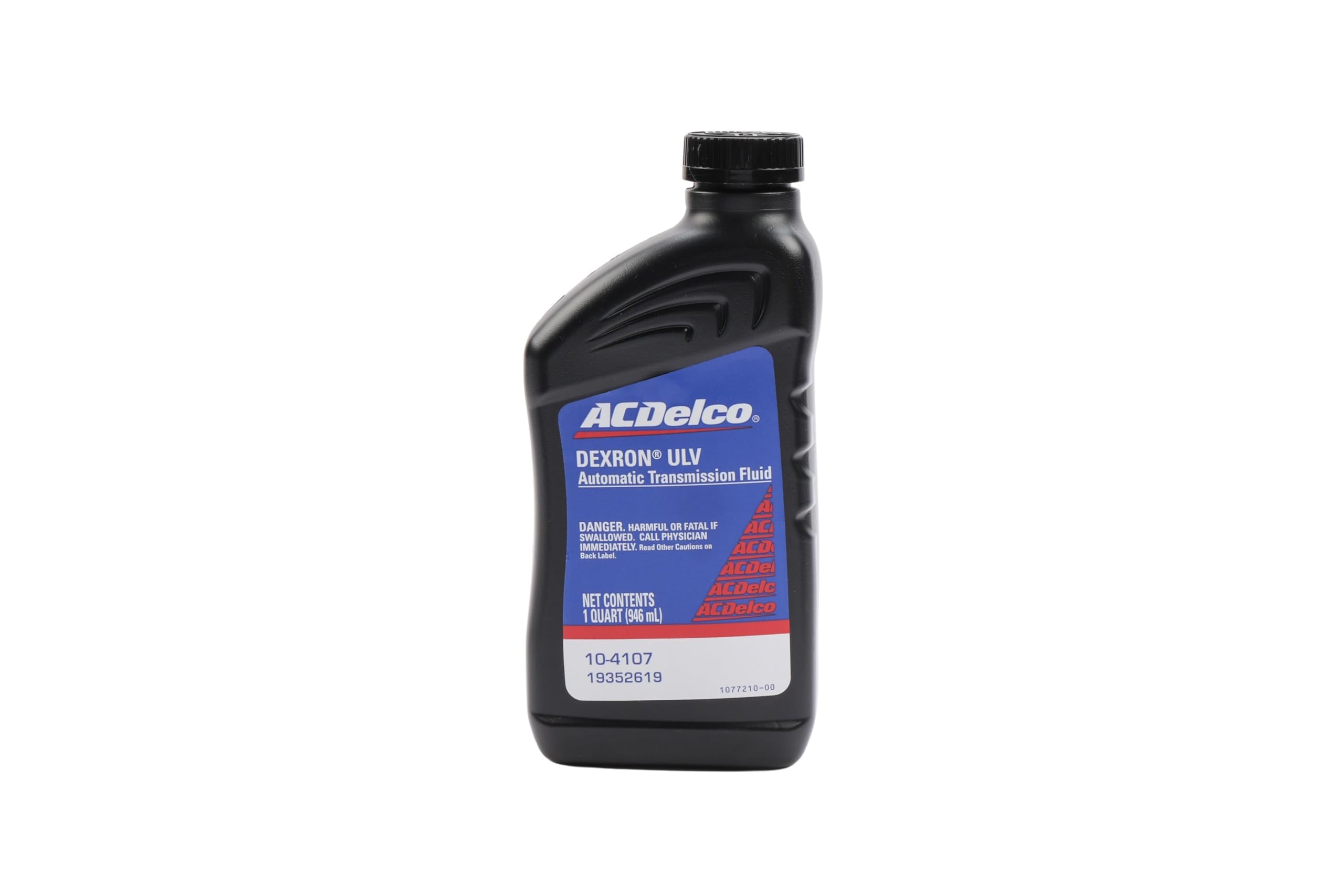
This unit gives you almost no margin to work with. It carries 7.7 liters (8.1 quarts) of DEXRON ULV for a fluid change, per GM TechLink's 2025 capacities chart, and ULV is thin by design — roughly 4.4 to 4.6 cSt at 100C. Thin fluid carries heat away well but has a narrower film-strength window when it gets hot. A 4L80E can shrug off a bad afternoon. A 10L80 records it in the clutch lining.
What "too hot" actually means on this transmission
Before you chase a cause, put a number on the complaint. Most customers say "it overheats" when what they mean is "the gauge went higher than I like." Pull the transmission fluid temperature (TFT) PID on a scan tool and watch it against engine coolant temperature on the same screen.
Two things matter. First, GM's calibration on these trucks sets DTC P0218 — transmission fluid over temperature — when TFT stays above a calibrated ceiling for a calibrated time, generally in the 140C (284F) neighborhood held for around a minute. Second, and more useful day to day, the TCM will throttle the transmission long before that. ATRA's Gears coverage of the 10L series lists P175E, Transmission Control System — Shift Limiting Active, as the code that sets when the module activates a protective strategy. If a customer reports the truck "stopped shifting right" on a grade and then came back after cooling off, P175E history is where you look, not P0218.
Practical rule on the bench: a 10L80 in a moving truck should track close to engine coolant temperature. Sonnax describes the design intent for this 10-speed family as holding transmission fluid within about plus-or-minus 10F of engine temperature. A unit reading 40 or 50 degrees above coolant in cruise is not "running a little warm." That is a cooling circuit that is not moving oil.
Why the 10-speed has so little thermal reserve
Both the GM 10L and Ford 10R families were built around active transmission warm-up. Transmission Digest's teardown of the 10-speed cooling strategy explains the reason bluntly: manufacturers earn emissions credit for getting the powertrain to operating temperature fast, so the cooling system is designed to withhold cooling early in the drive cycle and only open up once the fluid is hot.
On the 10L80, that gatekeeping is done by a thermal bypass valve. GM bulletin 22-NA-182 gives the number that most techs get wrong: the TBV on the 10L80, 10L90 and 10L1000 opens at 143F (61C), and on every application in that bulletin except the 3.0L LM2 diesel, the valve lives inside the valve body, not out on the frame rail. On the LM2 it is external and opens at 194F (90C) instead. Compare that to a 6L80 at 158F external, or an 8L90 at 194F external, and you can see how differently the 10-speed is set up.
Why that matters for an overheat: if the bypass valve is inside the valve body, you cannot inspect it, tap it, or replace it from underneath. A stuck-closed TBV on a 10L80 means the pan comes down and the valve body comes out. There is no shortcut.
The causes, in the order I check them
1. Fluid level, before anything else
There is no dipstick. The check is done at a specified fluid temperature through the level-control plug, and a unit that is even a quart low will read as an overheat because there is less oil in circulation and less time in the pan to shed heat. Every diagnosis on this transmission starts here, and GM's own bulletin procedure ends each branch with an instruction to check the transmission fluid level following SI and add fluid if needed, for exactly that reason.
The temperature window matters as much as the plug. GM's published procedure for the 10L90 in the Chevrolet Performance Supermatic instructions, which uses the same pan-plug check and the same in-valve-body bypass as the 10L80, sets the level at 75–80C (167–176F) TFT and spells out the failure modes: set it above 80C and the unit ends up under-filled, set it below 75C and it ends up over-filled. It also says not to check at all until TFT has reached 70C, because the bypass valve has to be open for the cooler circuit to be full. The common shop mistake is checking right after a highway drive, seeing fluid dribble out of the plug at 95C and calling it full. That truck leaves a quart short and comes back "overheating."
1a. A dry cooler after a rebuild or swap
ATRA's Steve Garrett describes the rebuilder's version of the same problem in GEARS: the unit goes in with an empty cooler, the level is set cold, and once the fluid reaches operating temperature the bypass valve opens, the cooler fills and the pan level drops. The customer comes back with slipping or dropping out of gear, and it runs hot because it is now low. The Supermatic numbers show the scale on this family: 10.95 L in the transmission alone versus 12.52 L with the cooler. Garrett also warns against plugging or bypassing the valve to chase a heat complaint, citing GM units that would not relearn shift adapts because the fluid never reached the minimum adaptive learn temperature. The 10L90 version of this diagnosis, including the ZL1 track rules, is in our 10L90 overheating guide.
2. A twisted cooler line — the low-mileage surprise
This is the one that catches shops off guard because it shows up on trucks with almost no miles on them. GM bulletin 22-NA-182 names a twisted rubber cooler line as a cause of harsh shifting, shudder, surge, stall, neutral/flare and transmission overheating on 6L80, 6L90, 8L90, 10L80, 10L90 and 10L1000 vehicles. The line gets rotated during assembly or a previous repair and stays kinked.
The bulletin's fix is direct: inspect the cooler lines, and if a line is twisted, disconnect it at the transmission auxiliary cooler, untwist it and reconnect. If it stays misshapen after untwisting, replace it. You may have to pull the underbody panels to see the lines clearly. One more detail worth having in your head — on ETRS (shift-by-wire) units under RPO MHS and MQC, GM notes a twisted cooler line may set DTC P27EC in the TCM. If you have P27EC and a heat complaint on the same truck, go look at the lines before you go anywhere near the valve body.
3. Restricted cooler or cooler lines
If the lines are straight, flow-test the circuit. GM has warned about this for two decades: bulletin 02-07-30-052J states plainly that insufficient oil flow through the ATF cooling system will cause premature transmission failure, and it is why the J-45096 flow test tool exists. One thing that bulletin gets right and most shortcut versions of this test get wrong — the minimum acceptable flow rate is tied to the temperature of the fluid you are testing with, not a single universal number. Do the test at the specified supply temperature or the result means nothing. On 2012-and-later vehicles the flow test procedure lives in SI rather than in that bulletin.
Debris from a previous failure is the usual restriction. If a converter or a clutch pack has already come apart once, the cooler holds the evidence and will re-cook the rebuild you just installed.
4. Thermal bypass valve stuck closed
With lines straight and cooler flow verified, a unit that still will not shed heat points at the TBV. Stuck closed, fluid never reaches the cooler at all. The GM bulletin treats it as the next suspect after a cooler line check for exactly this reason. On a non-LM2 10L80 the repair is a valve body job; on the 3.0L diesel it is a frame-rail component you can service on its own.
5. Valve body bore wear stealing cooler feed
This is the cause most often missed, and it is the one that makes a truck look fine empty and go hot under load. Sonnax documents that wear at the TCC regulator valve bore in these 10-speeds lets secondary line pressure and TCC signal pressure exhaust, and lists overheated fluid and loss of converter feed pressure among the results. A slipping, partially applied converter clutch is a heat generator, and at the same time the oil that should be routed out to the heat exchanger goes back to the sump.
The Sonnax fix for that circuit is the TCC priority valve kit 105740-03K (oversized version 105740-22K), which is also bundled into Zip Kit 10L80-G1-10R80-ZIP for GM Gen.1 10L60/10L80/10L90 and Ford 10R60/10R80/10R90 valve bodies. Sonnax lists low cooler flow among the complaints that kit addresses. ATRA also flags the LPC accumulator bore and the linear pintle solenoid bores as wear areas on this valve body — and notes the linear pintle solenoids are not sold separately, so a bore that is gone takes the valve body with it.
6. The engine side
Do not skip this. As Transmission Digest puts it in its 10-speed cooling walkthrough, the transmission will not normally cause the engine to overheat, but an overheating engine will absolutely cook the transmission — the two share the heat exchanger. Thermostat failures on these engines are common. If engine coolant temperature is out of range, fix that first and re-evaluate.
The diagnostic sequence that saves you a teardown
- Verify fluid level at the specified temperature. No dipstick, no guessing.
- Scan for stored and history codes. P27EC points at cooler lines; P175E tells you the module was already protecting itself; P0218 confirms a genuine over-temperature event.
- Graph TFT against engine coolant temperature on a road test. Note the delta, not just the peak.
- Inspect the rubber cooler lines for a twist per 22-NA-182, underbody panels off if needed.
- Shoot the cooler inlet and outlet with an infrared thermometer. Transmission Digest recommends a gun with at least 12:1 optics and adjustable emissivity. A cooler with almost no inlet-to-outlet temperature drop is not flowing. Do these checks at operating temperature, around 212F (100C), per the service manual instructions for the vehicle.
- Flow-test the cooler circuit at the specified supply temperature.
- Only then pull the pan. Look at the filter and the magnet before you make a decision about the valve body.
What heat has already cost you
Once a 10L80 has been genuinely hot, the question changes from "why" to "what is still good." Varnished, dark ULV that smells burnt is not serviceable by a fluid change — the additive package is spent and the friction lining has already given up material. The filter and pan magnet will tell you how much. Fine gray fuzz is normal wear. Black paper-like flakes are clutch lining, and that means the friction modules are going to need attention regardless of what you do to the cooling circuit.
The honest call: fix the cooling fault, service the fluid and filter, then road test and re-scan. If shift quality and TCC behavior come back to normal, you caught it early. If the unit still slips or flares after the thermal problem is repaired, the clutches are cooked and the cooling fix bought you nothing but a delay.
Prevention that actually works
- Use DEXRON ULV, and only DEXRON ULV. GM states outright that it is not a suitable replacement for DEXRON III or DEXRON VI, and the reverse is equally true. A heavier fluid in a transmission calibrated around 4.4–4.6 cSt at 100C changes pump flow, clutch apply and cooler flow at once.
- Service the fluid and filter on time. 7.7 L / 8.1 qt per change. Heat is cumulative on this unit and clean fluid is the cheapest thermal margin available.
- Inspect the cooler lines any time the truck is on a lift. The twisted-line failure from 22-NA-182 costs nothing to catch and a transmission to miss.
- Repair the valve body bores rather than ignoring a TCC complaint. Converter shudder and heat are the same fault wearing two different faces on a 10L80.
- Use Tow/Haul when the truck is loaded. Fewer shift cycles and earlier converter lockup means less heat generated, which is easier than getting rid of heat after the fact.
Sonnax TCC Priority Valve Kit 105740-03K (10L80)
The honest pitch: if your 10L80 runs hot under load with a clean cooler and straight lines, this is the circuit to look at. Sonnax lists this kit for TCC apply and release concerns and overheated fluid caused by wear at that bore — the failure that starves cooler feed while the converter clutch slips. It is a drop-in repair to an existing valve body, not a replacement unit.
Shop the part for this fix →Need something else for this job? The full 10L80 parts collection has filters, pan gaskets, the full Zip Kit, solenoid kits and clutch modules.
Need parts for this job?
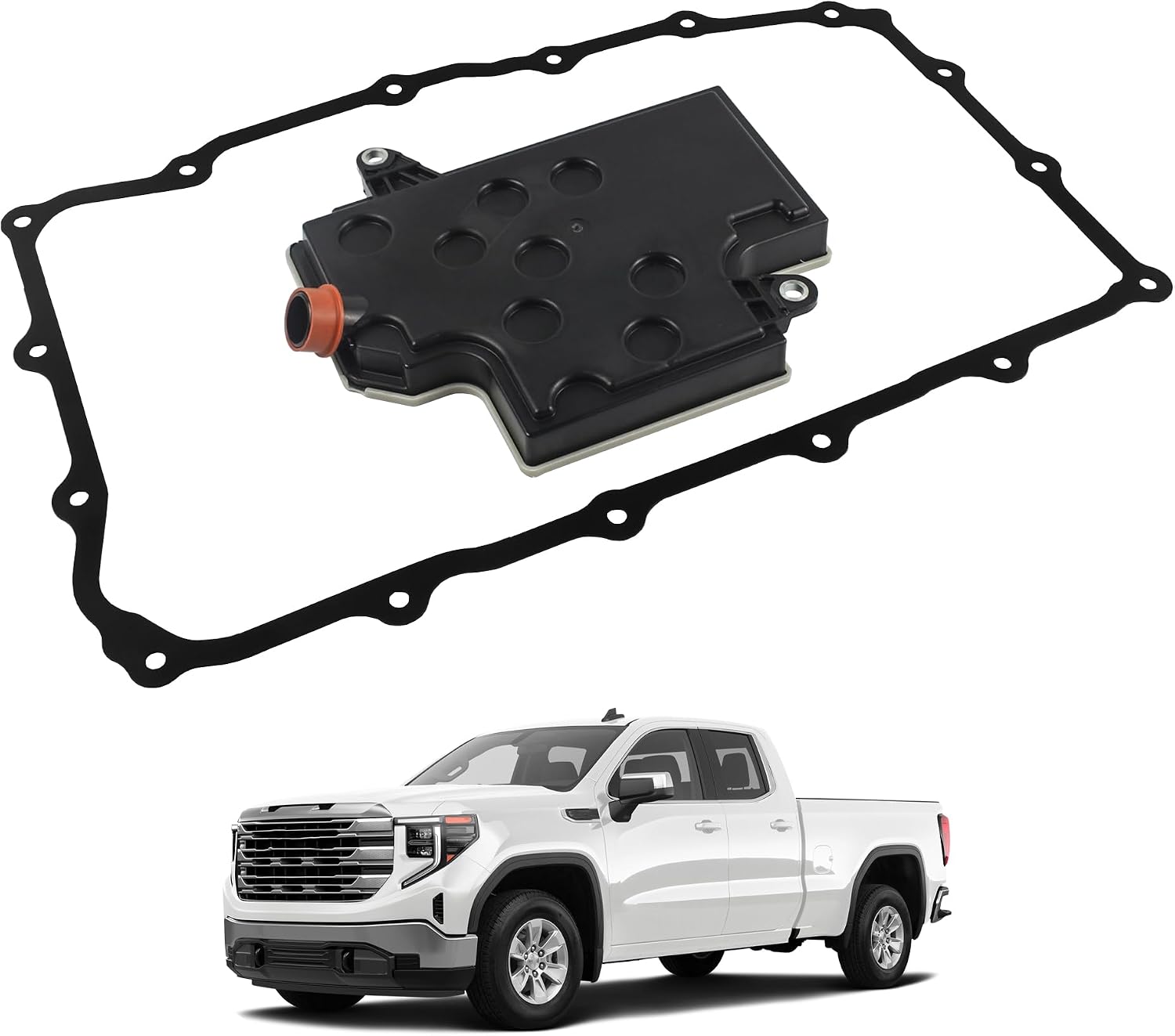
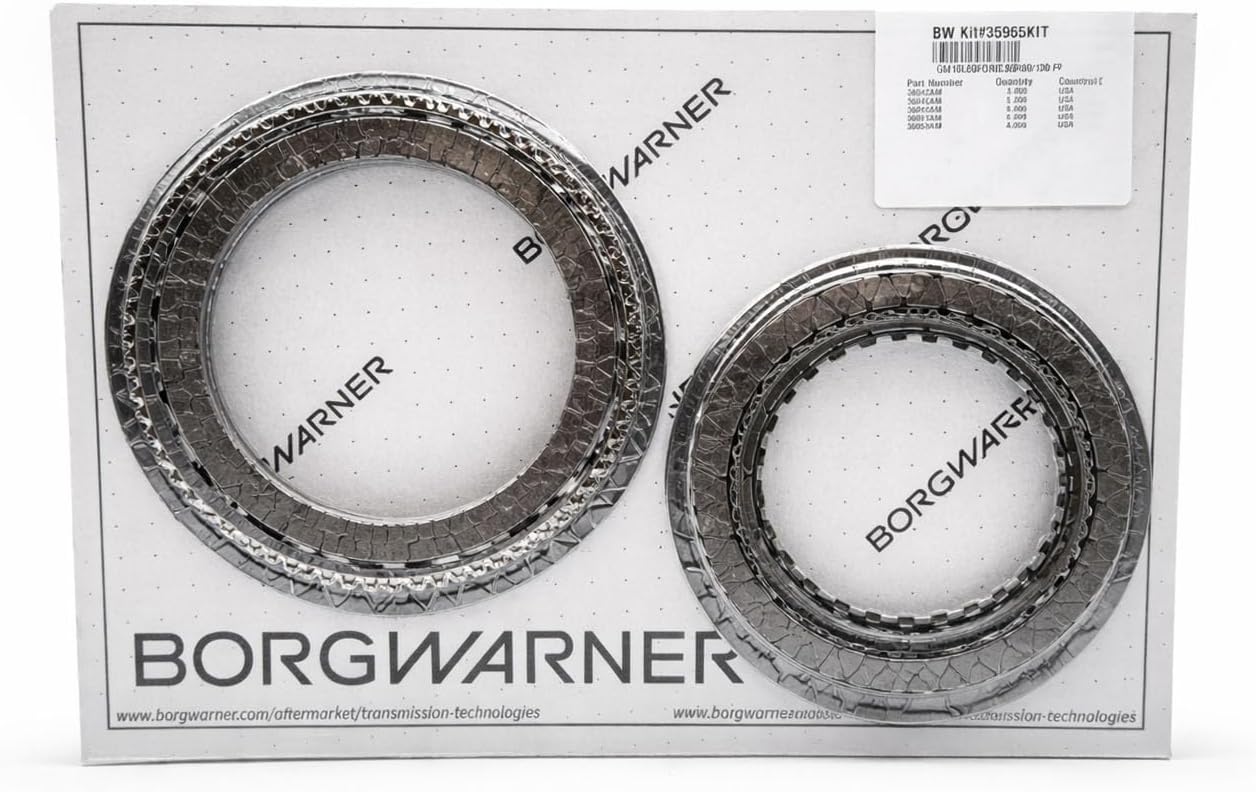
DEXRON ULV, filter and pan gasket kits, solenoid kits and 10L80 clutch modules are on our 10L80 parts page, with checkout on site. If you are already dropping the pan for a cooling diagnosis, order the filter, gasket and nine quarts of ULV together so the pan comes off once.
FAQ
What transmission temperature is too high on a 10L80?
Judge it as a delta, not a single number. The design intent for this 10-speed family is to hold fluid temperature within roughly 10F of engine temperature, so a unit cruising 40 to 50 degrees above coolant is already telling you the cooler is not being fed. The TCM's hard over-temperature code, P0218, does not set until fluid stays near 140C (284F) for a calibrated time, which is well past the point where the fluid and clutch lining start taking damage. Do not wait for the code.
Why does my 10L80 still run hot after installing a bigger cooler?
Because a cooler only works if fluid reaches it. On a non-diesel 10L80 the thermal bypass valve sits inside the valve body and only opens at 143F per GM bulletin 22-NA-182; stuck closed, it sends fluid straight back to the sump no matter what is bolted to the front of the truck. A twisted rubber cooler line or a worn TCC regulator valve bore produces the same result. Verify flow through the circuit you already have before adding capacity.
Does the 10L80 go into limp mode when it overheats?
It limits itself before it limps. ATRA documents P175E, Transmission Control System — Shift Limiting Active, as the code the 10L series sets when the module engages a protective strategy, which the driver feels as reduced or held gears rather than a full limp. A truck that lost shift quality on a long grade and recovered after cooling down is the classic pattern. Check history codes, because the condition often clears itself before the vehicle reaches you.
Can I keep driving a 10L80 that overheated once?
Only after you know why it happened. A single over-temperature event caused by a twisted cooler line, caught early and repaired, is usually survivable with a fluid and filter service. Repeated heat cycles are not — the ULV additive package is spent by sustained high temperature, and once clutch lining is in the pan the damage is mechanical and permanent. Pull the pan and read the filter and magnet before you decide.
Will a transmission flush fix 10L80 overheating?
No, and it can make a diagnosis harder. A flush replaces fluid; it does not straighten a kinked cooler line, free a stuck bypass valve, or restore a worn valve body bore. Flow-testing and flushing the cooler circuit itself is worth doing, particularly after a prior failure has put debris into it, but treat that as part of the repair rather than the repair.
Related guides
- 10L80 Fluid Type and Capacity
- 10L80 Filter and Pan Service
- 10L80 Torque Converter Shudder
- 10L80 Limp Mode Causes
- 10L80 Towing Upgrades and Cooling
- 10L90 Overheating: Causes, Diagnosis and Prevention
Sources
- General Motors Service Bulletin 22-NA-182 (revised August 15, 2023) — thermal bypass valve opening temperatures for 6L80/6L90 (158F), 8L90 (194F) and 10L80/10L90/10L1000 (143F, internal to the valve body except 3.0L LM2), the twisted cooler line cause and repair steps, and DTC P27EC on ETRS units. View bulletin (NHTSA)
- General Motors Service Bulletin 02-07-30-052J (May 2015) — automatic transmission oil cooler flow test with essential tool J-45096, the warning that insufficient cooler flow causes premature transmission failure, and the note that minimum flow rate is tied to supply fluid temperature. View bulletin (NHTSA)
- GM TechLink, Transmission Capacities & Fluids (2025) — 10L80 fluid change capacity of 7.7 L / 8.1 qt of DEXRON ULV across Silverado, Sierra, Tahoe, Suburban, Yukon and Escalade applications under RPO MQB, MQC, MHT, MHS, MHU and MI2. View capacities chart
- Sonnax, Ford 10-Speed Transmission Cooling: Heat Exchangers, Control Valves & Basic Diagnostics — the two cooling system layouts used in this 10-speed family, the plus-or-minus 10F fluid-to-engine temperature target, and TCC regulator valve bore wear producing overheated fluid and lost converter feed pressure. Read the Sonnax tech article
- Sonnax unit page, 10R80 / GM Gen.1 10L60-10L80-10L90 — TCC priority valve kit 105740-03K and oversized 105740-22K for TCC apply/release and fluid overheating, and Zip Kit 10L80-G1-10R80-ZIP listing low cooler flow among the complaints addressed. View Sonnax unit listing
- ATRA / Gears Magazine, Diagnosing the 10L Series Transmission — DTC P175E (Transmission Control System, Shift Limiting Active) as the protective-strategy code, LPC accumulator and linear pintle solenoid bore wear, and linear pintle solenoids not being serviced separately. Read the Gears article
- Transmission Digest, Ford 10-Speed Transmission Overheating Issues (Jim Mobley) — active transmission warm-up strategy and why these units withhold cooling early, checking fluids at operating temperature around 212F (100C), infrared thermometer requirements (minimum 12:1 optics, adjustable emissivity), and engine overheating as a cause of transmission overheating. Read the Transmission Digest article
- Chevrolet Performance (General Motors), Supermatic 10L90 Transmission Kit Installation Instructions, P/N 19420481 — 75–80C level-check window with the under-fill (above 80C) and over-fill (below 75C) consequences, the 70C minimum check temperature because of the internal thermal bypass valve, and the 10.95 L transmission-only versus 12.52 L complete-system capacities. View instructions (PDF)
- ATRA / GEARS Magazine, Steve Garrett, Keep Your Cool: Cooler Bypass Systems — the GM 10L 143F (61C) valve opening, the empty-cooler level drop after a rebuild, and the warning against bypassing the valve because of adaptive learn temperature thresholds. Read the Gears article