Every 10L80 that comes across my bench with burnt clutches and a trailer hitch on the truck tells the same story, and it is almost never about torque capacity. The unit did not tear itself apart pulling a load. It cooked, slowly, over a few summers, and the clutch lining gave up long before any hard part did.
So before we talk about upgrades, understand what you are actually fighting. This transmission carries a small charge of very thin fluid, and it depends on a cooling circuit that GM designed to be in play almost constantly. When any part of that circuit is restricted, the 10L80 has very little thermal reserve to fall back on.
The bypass valve opens at 143F, and that changes everything
Start here, because it is the single fact that separates the 10-speed from every GM unit you worked on before it. Per GM service bulletin 22-NA-182, the thermal bypass valve in the 10L80, 10L90 and 10L1000 opens at 143F (61C), and on nearly every application it lives within the valve body.
Line that up against the rest of the family from the same bulletin. The 6L80 and 6L90 bypass opens at 158F (70C). The 8L90 opens at 194F (90C). Both of those are external to the transmission. The 10-speed opens more than 50 degrees earlier than an 8L90 does.
Read that as a design statement. GM wants this transmission on the cooler almost immediately after warm-up, because thin fluid and ten closely spaced ratios generate heat the unit cannot store. The practical consequence for a towing truck is that the cooling circuit is not a hot-weather backup system. It is a full-time part of normal operation, and anything that restricts it shows up as a temperature complaint far sooner than it would on a 6L80.
There is one exception worth remembering. On the 3.0L LM2 and LZ0 Duramax, the bulletin states the bypass valve is on the frame rail, external to the transmission, and opens at 194F (90C) instead. Two trucks, same 10L80 tag, two completely different cooling strategies and two different places to go looking. Check the engine RPO before you chase anything.
Check the cooling you already have before you buy more
The instinct when a customer says it gets hot towing is to sell a bigger cooler. Hold off. GM's own bulletin says the first thing to inspect on these trucks is something that costs nothing to fix.
Bulletin 22-NA-182 lists the cause of harsh shifting, shudder, surging, stalling, neutral/flare and transmission overheating on these units as, in its words, a twisted cooler line on low mileage vehicles. Not a worn-out cooler. A rubber line that got rotated during assembly or a previous repair and never untwisted. The bulletin notes you may have to drop the under-body panels to see it clearly.
The repair is exactly as simple as it sounds: disconnect the cooler line from the transmission auxiliary cooler, untwist it, and reconnect it. If the line stays misshapen after untwisting, replace it. Either way, check the fluid level following SI afterward and add fluid if needed, because you just opened the circuit.
One more detail from that bulletin that saves diagnostic time: a twisted cooler line may set DTC P27EC in the TCM on ETRS transmissions, RPO MHS and MQC. If you have a towing overheat complaint and a P27EC in memory, go look at the line before you do anything else.
When the heat is coming from inside the valve body
Here is the failure that fools good technicians, because the cooler and the lines check out fine and the truck still runs hot under load.
Per Sonnax, oscillation of the OE valve causes severe wear of the TCC regulator valve bore in these 10-speeds, which allows regulated secondary line and TCC signal pressure to leak to exhaust. The consequences Sonnax lists are the tell: overheated fluid, loss of converter feed pressure, TCC release concerns, TCC slip code concerns and potential TCM errors.
Think about what that means hydraulically. Oil that was headed for the heat exchanger leaks back into the sump through a worn clearance instead. The cooler is perfect. The lines are perfect. Nothing is being sent to them. Meanwhile the converter clutch is short on apply pressure, so it slips, and a slipping converter clutch is a heater with a bolt pattern.
This is why a towing overheat complaint on a higher-mileage 10L80 deserves a pressure and flow check, not a parts swap. The pattern that points at the valve body is a truck that runs normal temperatures empty and climbs hard only under trailer load, usually with converter clutch codes or a light-throttle shudder in the history.
Sonnax's repair for that circuit is a sleeved, oversized valve with an O-ringed end plug that restores the seal and stops the pressure loss. If you are already in the valve body, address the wear list while it is on the bench rather than going back in twice.
Fluid: ULV only, and 8.1 quarts is your whole margin
Per GM TechLink's 2025 transmission capacities and fluids chart, the 10L80 takes DEXRON ULV with a fluid change capacity of 7.7 liters, or 8.1 quarts. That figure is identical across Silverado 1500, Tahoe, Suburban, Yukon, Escalade and CT5 applications, under RPO MQB, MQC, MHS, MHT, MHU and MI2.
Eight quarts is not much fluid to absorb the heat of a heavy tow on a grade. That is the real argument for a deeper pan: not because the factory pan is weak, but because more fluid volume and more cast surface area buy you thermal headroom the design does not otherwise have.
On fluid selection, there is a specific trap. The blue-label Mobil 1 Synthetic LV ATF HP exchange that shops associate with GM shudder repairs comes from bulletin 18-NA-355, and that bulletin covers 8L45 and 8L90 units under transmission RPO M5N, M5T, M5U and M5X. It is not a 10-speed procedure. Your 10L80 gets ULV. Putting a heavier fluid in a transmission calibrated around ultra-low viscosity changes clutch apply behavior and can create the exact complaint you were trying to fix.
| Item | Spec | Why it matters when towing |
|---|---|---|
| Fluid | DEXRON ULV | Not DEXRON VI, not the HP fluid from the 8L bulletins. Apply pressures are calibrated around this viscosity |
| Fluid change capacity | 7.7 L / 8.1 qt | The entire thermal buffer you have. A deep pan adds to it |
| Bypass valve opens | 143F (61C) | Inside the valve body. Cooler circuit is in play nearly all the time |
| Bypass valve, 3.0L LM2 / LZ0 | 194F (90C) | Frame rail mounted, external. Different part, different location |
| 6L80 / 6L90 for reference | 158F (70C) | External valve. Do not carry 6L diagnostic habits onto a 10-speed |
| 8L90 for reference | 194F (90C) | External valve, 51 degrees later than the 10-speed |
| Related DTC | P27EC | Twisted cooler line on ETRS units, RPO MHS and MQC |
Why bypass valves fail, and why flushing can lie to you
ATRA's Gears magazine covers cooler bypass systems across manufacturers and confirms the GM 10L family figure of 143F, alongside the 158F late 6L, the 194F 8L, and Ford 10-speed valves that open considerably higher at 206 to 215F. Worth knowing if you service both brands, because a Ford 10R80 that reads 200F may be behaving exactly as designed while a GM 10L80 at the same temperature is telling you something.
Gears identifies two failure modes for these valves: debris accumulation and wax element degradation. When either one leaves the valve stuck in the bypass position, you get little or no cooler flow, fluid temperature climbs, and clutches and components pay for it.
The service warning from that same article is the one shops get wrong most often. If the bypass valve is not open when you run a cooler flush, you are flushing everything except the cooler. The debris you were trying to remove stays exactly where it was, and you hand the truck back believing the circuit is clean. Get the fluid up to temperature so the valve is open before you flush, or you have accomplished nothing.
The upgrades that are actually worth the money
Ranked by what I see return the most in the real world, on a truck that tows regularly:
- Fix the factory circuit first. Inspect for the twisted cooler line, verify the bypass valve is opening, and confirm the level is correct. This costs shop time and nothing else, and it resolves a meaningful share of overheat complaints on low-mileage trucks.
- Shorten the service interval. The severe-service reality of towing is that eight quarts of thin fluid does not stay in spec as long as a normal-duty schedule assumes. Pan, filter and fresh ULV on a tighter interval is the cheapest insurance on this unit.
- A deep aluminum pan. More fluid volume and more cast surface area, in that order of importance. This is the one bolt-on that directly addresses the 10L80's thin thermal margin.
- Valve body attention at higher mileage. If the bores are already leaking cooler and converter feed oil, no external cooling upgrade will save it. Address the wear, then upgrade.
- Use Tow/Haul every time. Free, and GM designed it for exactly this.
Notice what is not on that list: an oversized cooler bolted onto a circuit nobody verified. Capacity you add downstream of a restriction does nothing.
Tow/Haul is part of the cooling system
GM's own owner literature is blunt about what the button does. Tow/Haul adjusts the transmission shift pattern to reduce shift cycling, which provides increased performance, vehicle control, and enhanced transmission and engine cooling when driving down steep hills or mountain grades, when towing, or when hauling heavy loads.
On a ten-speed, that matters more than it did on a four-speed. The ratio steps are narrow, so an unloaded calibration will hunt between gears on a grade with a trailer behind it. Every one of those shifts is clutch slip, and clutch slip is heat. Tow/Haul widens the shift points and keeps the transmission in a gear instead of cycling through them.
Tow/Haul Mode Grade Braking, which GM notes is enabled only while Tow/Haul is selected and the vehicle is not in Range Selection Mode, uses the engine and transmission to help hold speed on downhill grades. That keeps the service brakes out of the equation on a long descent.
How to verify the cooling circuit on the truck
A repeatable check beats an opinion:
- Scan for stored codes first, P27EC especially. Resolve what you find before interpreting anything else.
- Get the fluid above 143F so the bypass valve is open. Below that, cooler flow readings mean nothing on a 10-speed.
- Watch transmission fluid temperature and engine coolant temperature side by side on the scan tool. These systems are engineered to hold the transmission near engine temperature, so a large and growing gap under load is your signal.
- Use an infrared thermometer on the cooler lines, inlet versus outlet. No meaningful drop across the cooler while the valve should be open means flow is not getting there.
- If flow is low and the lines are straight and unrestricted, the leak is internal. Pressure test and inspect the valve body rather than replacing external parts.
- Recheck the fluid level any time you open the circuit. This unit has no dipstick, and a low level looks exactly like a cooling problem.
10L80 Deep Cast Aluminum Transmission Oil Pan (2019-2025)
The honest pitch: this does not make the transmission stronger. It adds fluid volume and cast surface area to a unit that only carries 8.1 quarts, which is the one thing you can bolt on that directly widens the thermal margin a towing 10L80 is short of. Fit it at the same time as a filter and fresh ULV so you are only in the pan once.
See the 10L80 deep pan →Need something else for this job? The full 10L80 parts collection has filters, pan gaskets, solenoid kits and valve body repairs.
Need parts for this job?
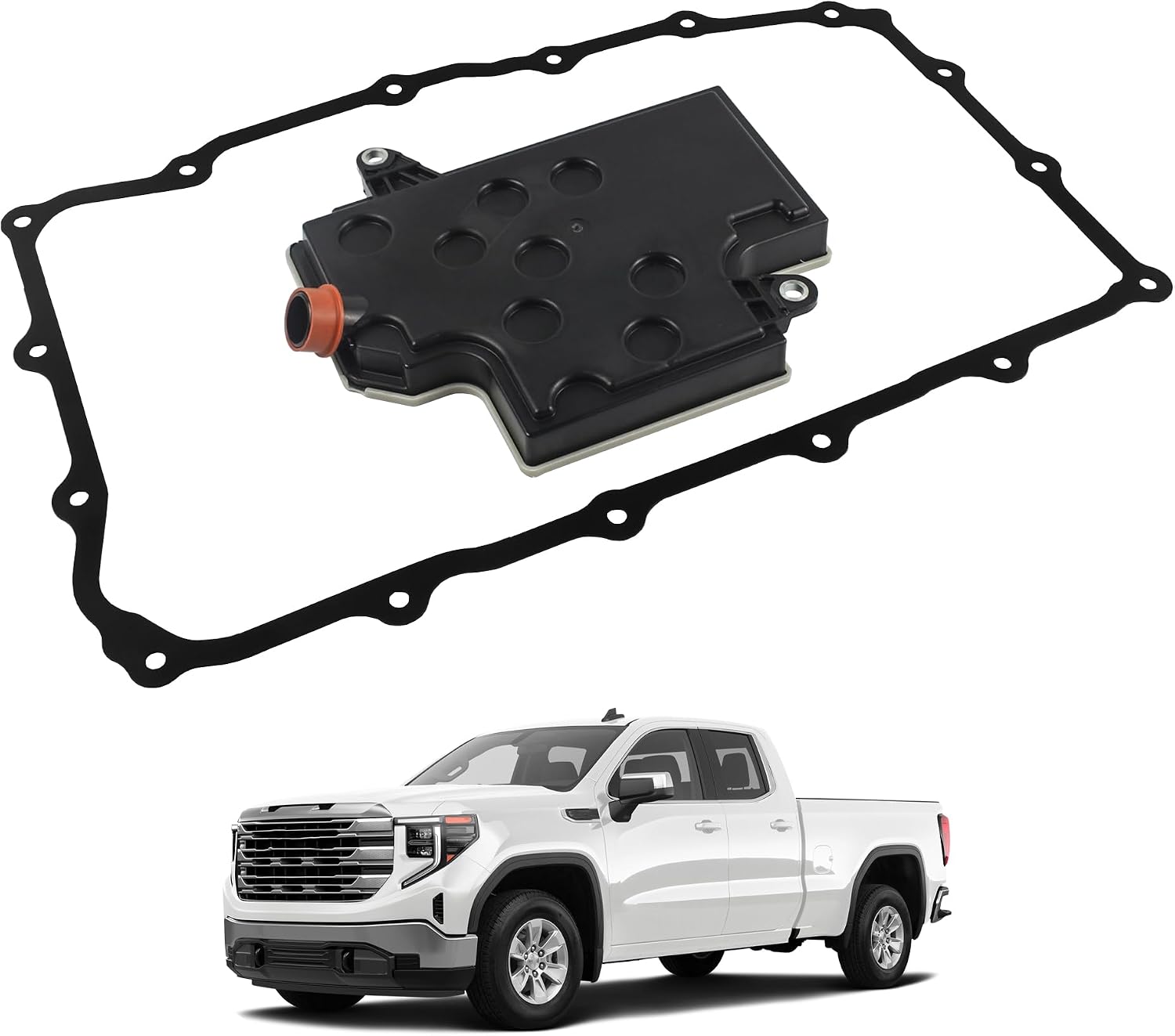
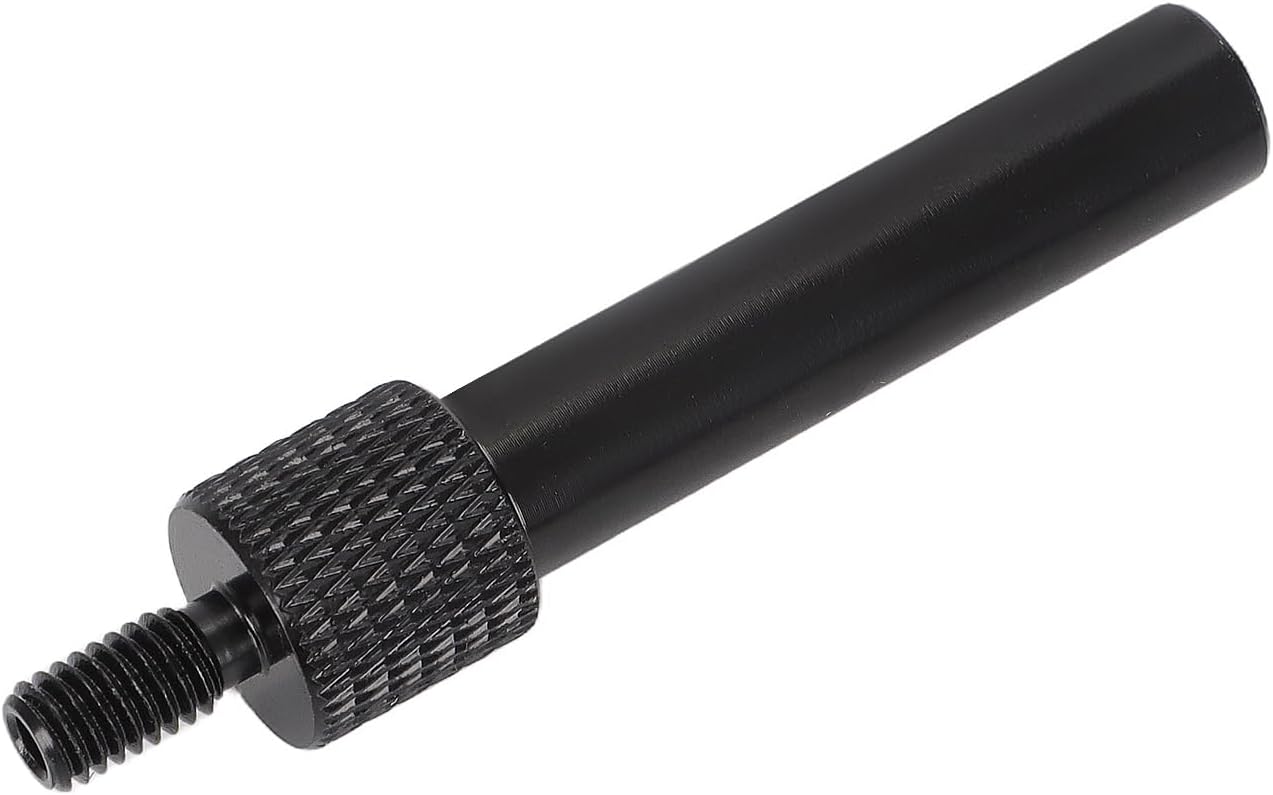
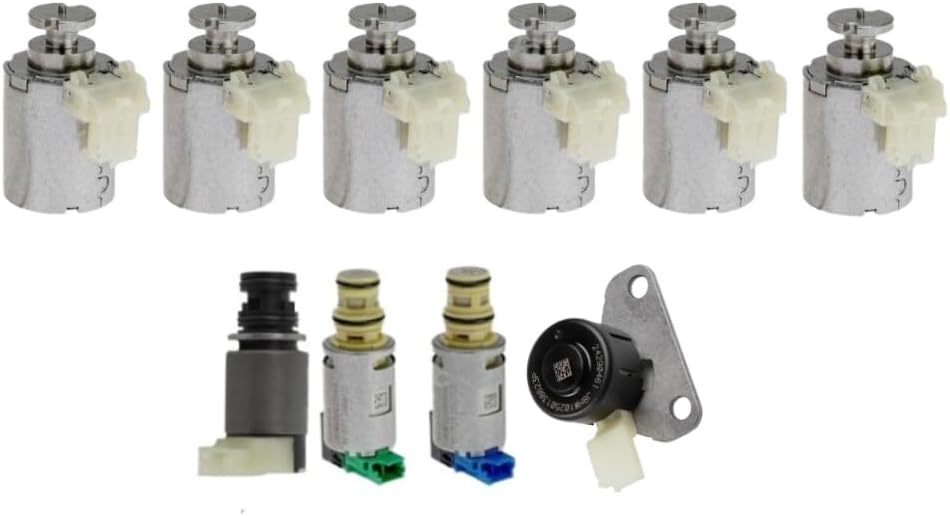
Filter and pan gasket kits, DEXRON ULV fill tooling, solenoid kits and 10-speed bench tools for the GM 10L80 are on our 10L80 parts page, with checkout on site. If you are servicing a truck that tows, order the filter and gasket together with the fluid so the pan comes off once.
FAQ
At what temperature does the 10L80 thermal bypass valve open?
143F (61C). GM bulletin 22-NA-182 lists that opening temperature for the 10L80, 10L90 and 10L1000, and states the valve sits within the valve body on every application the bulletin covers except the 3.0L LM2 and LZ0 diesels. On those diesels the bypass valve is mounted on the frame rail, external to the transmission, and opens at 194F (90C) instead. That is a 51 degree difference between two trucks that both say 10L80 on the tag, so confirm the engine RPO before you diagnose a cooling complaint.
Does a 10L80 need an auxiliary transmission cooler for towing?
Most 10L80 trucks already have one from the factory, which is why GM bulletin 22-NA-182 instructs technicians to disconnect the cooler line at the transmission auxiliary cooler when checking for a twist. Before adding cooling capacity, verify the cooling you already paid for is working. A twisted rubber cooler line, a bypass valve stuck closed, or valve body bore wear will overheat a trailer-towing 10L80 no matter how large a cooler you bolt to the front of it.
What fluid and capacity does a 10L80 take?
DEXRON ULV, 7.7 liters or 8.1 quarts for a fluid change. GM TechLink's 2025 transmission capacities and fluids chart lists that same figure for the 10L80 across Silverado 1500, Tahoe, Suburban, Yukon, Escalade and CT5 applications under RPO MQB, MQC, MHS, MHT, MHU and MI2. Do not substitute DEXRON VI, and do not assume the blue-label HP fluid from the shudder bulletins belongs in it. Bulletin 18-NA-355, which prescribes that HP fluid exchange, covers 8L45 and 8L90 units, not the 10-speed.
Can a worn valve body make a 10L80 overheat while towing?
Yes, and it is a common miss. Sonnax documents that oscillation of the OE valve wears the TCC regulator valve bore in these 10-speeds, which lets regulated secondary line and TCC signal pressure leak to exhaust. The symptoms it lists include overheated fluid and loss of converter feed pressure. Oil that should be going out to the heat exchanger goes back to the sump instead, so the cooler is intact but is never fed. A truck that runs normal temperatures empty and climbs hard under trailer load fits that pattern.
Does Tow/Haul mode actually help transmission temperature?
It does, and GM says so directly. Its own owner literature describes Tow/Haul as adjusting the transmission shift pattern to reduce shift cycling, which provides increased performance, vehicle control, and enhanced transmission and engine cooling when driving down steep hills or mountain grades, when towing, or when hauling heavy loads. On a 10-speed with narrow ratio steps, the hunting between gears that Tow/Haul suppresses is exactly the behavior that generates clutch slip and heat.
Sources
- General Motors — Service Bulletin 22-NA-182, "Information on 6L80, 6L90, 8L90, 10L80, 10L90, 10L1000 Equipped Vehicles with A Harsh Shift, Shudder, Surge, Stall, Neutral/Flare, Transmission Overheating and/or High Transmission Fluid Temperature," September 2024 revision, NHTSA-hosted. Backs the thermal bypass valve opening temperatures for each family (6L80/6L90 at 158F/70C external, 8L90 at 194F/90C external, and 10L80/10L90/10L1000 at 143F/61C within the valve body); the exception that the 3.0L LM2 and LZ0 diesel bypass valve is frame-rail mounted, external, and opens at 194F (90C); the stated cause of a twisted cooler line on low mileage vehicles; the repair sequence of disconnecting the line at the transmission auxiliary cooler, untwisting, replacing if still misshaped, and rechecking fluid level per SI; the note that under-body panels may need removal to see the lines; and that a twisted cooler line may set DTC P27EC in the TCM on ETRS transmissions, RPO MHS and MQC. static.nhtsa.gov (PDF)
- General Motors TechLink — "2025 Transmission Capacities & Fluids (U.S. and Canada only)," rev. 05-2025 A. Backs the 10L80 fluid specification of DEXRON ULV and the fluid change capacity of 7.7 liters / 8.1 quarts, listed identically across Silverado 1500, Tahoe/Suburban, Yukon/XL, Escalade/ESV and CT5 applications under transmission RPO MQB, MQC, MHS, MHT, MHU and MI2. Also backs the 10L1000 capacity of 13.6 L / 14.4 qt on the same DEXRON ULV specification. gm-techlink.com (PDF)
- General Motors — Service Bulletin 18-NA-355, "Shake and/or Shudder During Light Throttle Acceleration Between 25 and 80 MPH (40 and 128 KM/H) at Steady Speed," August 2019, NHTSA-hosted. Backs the point that the blue-label Mobil 1 Synthetic LV ATF HP fluid exchange procedure applies to 8L45 and 8L90 automatics under transmission RPO M5N, M5T, M5U and M5X, and is therefore not a 10-speed procedure; also backs that the prescribed correction for TCC shudder on those units is the fluid exchange rather than component replacement. static.nhtsa.gov (PDF)
- Sonnax — TCC Priority Valve Kit 105740-03K product data (Ford 10R60/10R80, GM 10L60/80/90). Backs the failure mechanism in which oscillation of the OE valve causes severe wear of the TCC regulator valve bore, allowing regulated secondary line and TCC signal pressure to leak to exhaust; and the resulting symptom list of overheated fluid, loss of converter feed pressure, TCC release concerns, TCC slip code concerns and potential TCM errors. Also backs the described repair of a wear-resistant sleeve and upgraded valve with an O-ringed end plug to restore hydraulic control. sonnax.com
- Gears Magazine (ATRA) — "Keep Your Cool: Cooler Bypass Systems." Backs the independent confirmation of bypass valve opening temperatures across families, including the GM 10L at 143F, the late 6L at 158F, the 8L at 194F, and Ford 10-speed valves opening considerably higher at roughly 206 to 215F; the two primary bypass valve failure modes of debris accumulation and wax element degradation; the consequence that a valve stuck in the bypass position produces little or no cooler flow and rising fluid temperature; and the service warning that flushing with the valve closed flushes everything but the cooler. gearsmagazine.com
- Chevrolet (General Motors) — 2022 Silverado 2500 HD / 3500 HD Owner's Manual, "Tow/Haul Mode" and "Tow/Haul Mode Grade Braking," pp. 240-241. Backs GM's own description of Tow/Haul as adjusting the transmission shift pattern to reduce shift cycling, providing increased performance, vehicle control, and enhanced transmission and engine cooling when driving down steep hills or mountain grades, when towing, or when hauling heavy loads; and that Tow/Haul Mode Grade Braking is enabled only while Tow/Haul is selected and the vehicle is not in Range Selection Mode, assisting in maintaining desired vehicle speeds on downhill grades by using the engine and transmission to slow the vehicle. chevrolet.com (PDF)