A 10L90 that runs hot is almost never a mystery transmission. It is a flow problem, a level problem or a heat-source problem, and each one leaves a different fingerprint on the scan tool. The expensive mistake I see is a shop bolting a bigger cooler onto a car or truck whose factory cooler was never getting fed in the first place. The unit comes back in six months with glazed clutches and the new cooler still bolted on.
The 10L90 is rated at 650 lb-ft, so it is rarely torque that kills one. It lives in three very different worlds: the Escalade that tows, the Camaro ZL1 and CT5-V that get driven hard on track, and the crate Supermatic units that end up in swaps with whatever cooler the builder had on the shelf. Each world overheats a different way. This post covers how GM designed the cooling circuit, what the factory documents say is normal, the causes in the order I check them, and how to keep one cool for good. Bulletin numbers and specs come from GM, Chevrolet Performance, ATRA, Sonnax and Transmission Digest, listed at the bottom. Where a number is my own bench habit, I say so.
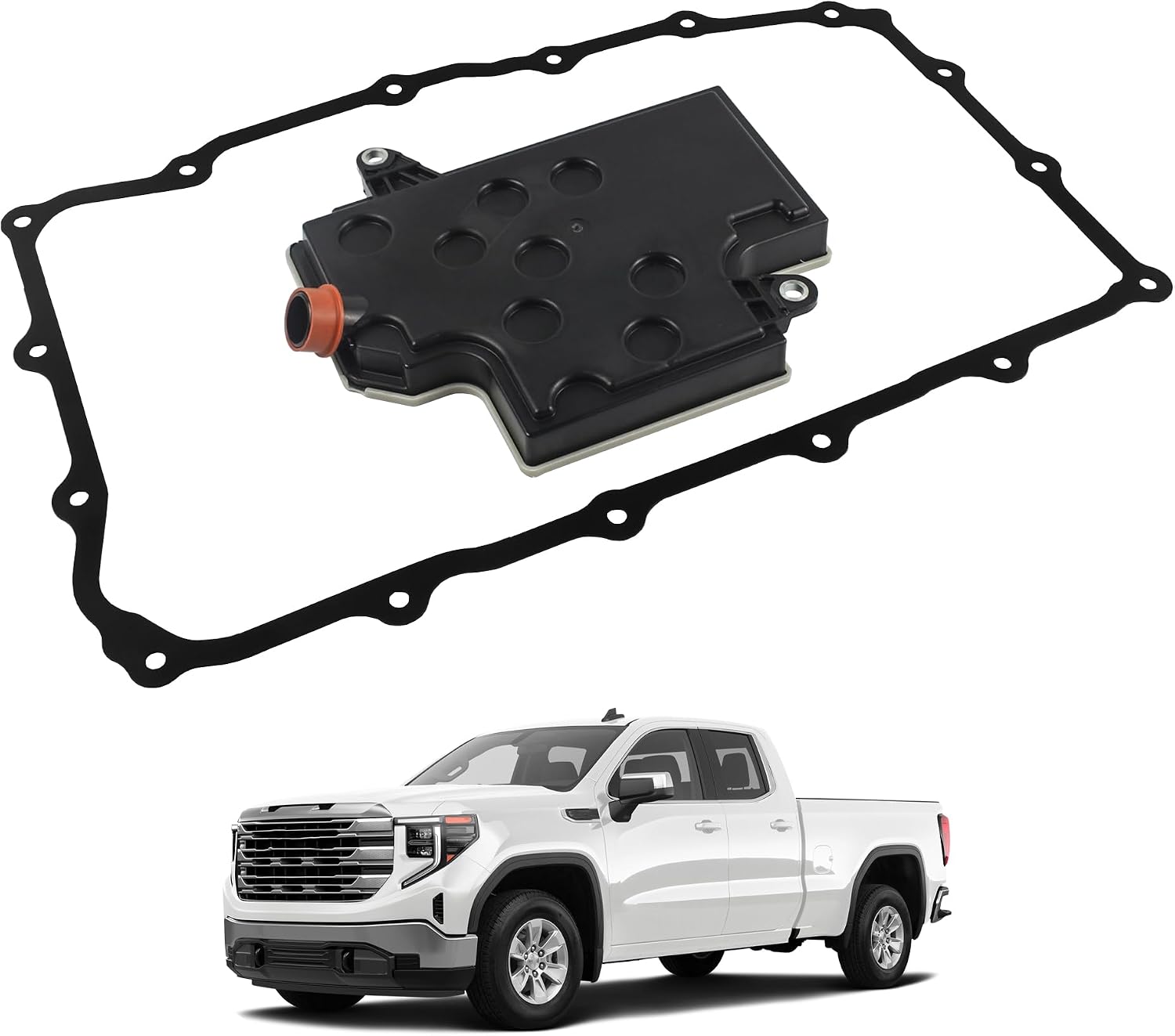
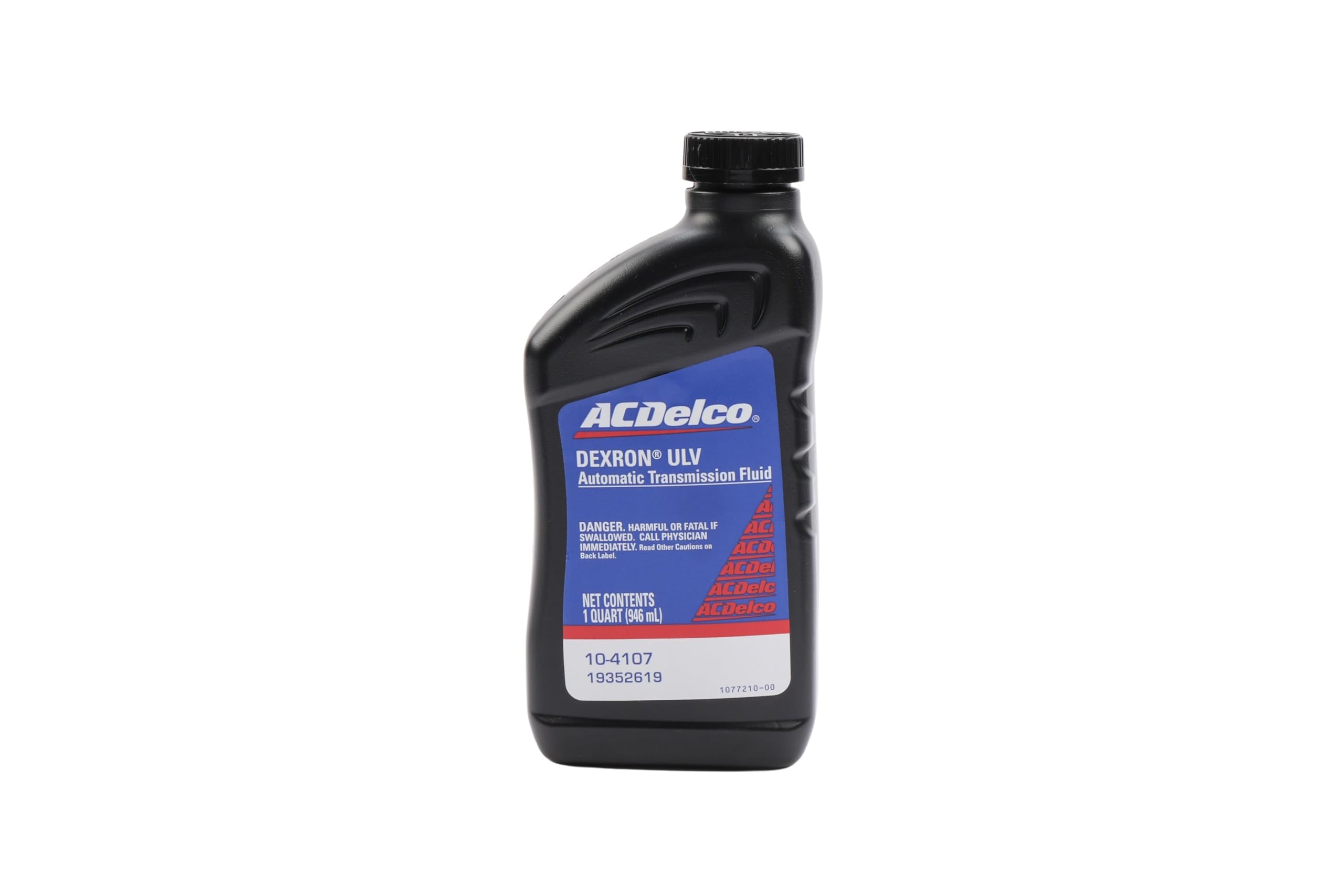
How GM built the 10L90 cooling circuit
Start with the design intent, because it explains every failure below. Transmission Digest's walkthrough of 10-speed overheating lays out why these units are built the way they are: a powertrain produces fewer emissions the faster it reaches operating temperature, and manufacturers earn EPA credit for active warm-up strategies. So the cooling system is designed to hold cooling back while the fluid is cold, and to open up once it is warm.
On the 10L90 that gatekeeper is a thermal bypass valve (TBV). GM bulletin 22-NA-182 gives the numbers: on the 10L80, 10L90 and 10L1000 the TBV opens at 143F (61C) and sits inside the valve body on every listed application except the 3.0L diesel trucks. The rest of GM's family is different:
| Unit | TBV opens | Location |
|---|---|---|
| 10L80 / 10L90 / 10L1000 | 143F (61C) | Inside the valve body |
| 10-speed with 3.0L LM2 / LZ0 diesel | 194F (90C) | Frame rail, external |
| 6L80 / 6L90 | 158F (70C) | External |
| 8L90 | 194F (90C) | External |
Two consequences matter for an overheat diagnosis. First, 143F is low. Once the unit is warm, the cooler is in the circuit for essentially all of normal driving, so the 10L90 depends on its cooler full time rather than as a hot-weather backup. Second, you cannot reach the valve from under the car. A TBV stuck in bypass on a 10L90 means the pan comes down and the valve body comes out.
The Chevrolet Performance Supermatic instructions confirm the internal valve from a different angle: because the transmission has an internal thermal bypass valve, the fluid level should only be checked after TFT has reached at least 70C (158F). Below that, the cooler circuit may not have filled yet, and whatever level you set is wrong.
What "too hot" actually looks like
Put a number on the complaint before you chase it. Most owners say "it overheats" when what they mean is "the gauge went higher than I like." Pull transmission fluid temperature (TFT) on the scan tool and graph it against engine coolant temperature on the same screen during a road test. The delta between them tells you more than the peak.
| Item | Value | Source |
|---|---|---|
| Fluid | DEXRON ULV only (P/N 19352619 US, 19352620 Canada) | Chevrolet Performance 19420481 |
| Pan and filter service | 7.7 L / 8.1 qt | Chevrolet Performance 19420481 |
| Overhaul, transmission only | 10.95 L / 11.6 qt | Chevrolet Performance 19420481 |
| Complete system incl. cooler | 12.52 L / 13.23 qt | Chevrolet Performance 19420481 |
| Level-check TFT window | 75–80C (167–176F) | Chevrolet Performance 19420481 |
| TBV opens | 143F (61C), in valve body | GM 22-NA-182 |
| Track fluid change interval (ZL1-1LE) | Every 15 hours of track use | GM 19-NA-038 |
My own working numbers, not GM's: a healthy 10L90 in street driving tracks within a few degrees of coolant once both are warm. Under a trailer or on a road course it will run hotter, and settling somewhere around 200F under sustained load is not alarming. What is alarming is a unit that keeps climbing past 220F on flat ground, or one that does not come back down within a few minutes of the load coming off. That is a cooling circuit that is not moving oil, not a transmission "running a little warm."
The causes, in the order I check them
1. Fluid level, set at the wrong temperature
Every overheat diagnosis on this unit starts with the level, because a low 10L90 has less oil in circulation and less time in the pan to shed heat. There is no dipstick. The level is set through a check plug in the pan at a specific temperature, and Chevrolet Performance is blunt about what happens when you miss the window: set the level with TFT above 80C and the unit ends up under-filled; set it below 75C and it ends up over-filled. An under-filled transmission causes premature wear. An over-filled one can push fluid out the vent tube, foam or cavitate the pump.
The under-fill trap is the one I see most. Someone checks it right after a highway drive with the fluid at 95C, sees it dribble out the plug, calls it full, and the car leaves the shop short. It runs hot, the owner complains, and the next shop adds a cooler. GM's own bulletin 22-NA-182 ends every branch of its procedure with "check the transmission fluid level following SI. Add fluid if needed" for exactly this reason. Our 10L90 filter and pan service post walks through the procedure.
2. A dry cooler after a rebuild or trans swap
This is the one that comes back to rebuilders. Steve Garrett's GEARS article on cooler bypass systems describes it: a shop installs the unit, the cooler is still empty, the level gets set cold, and then the transmission reaches operating temperature, the bypass valve opens, the cooler fills and the pan level drops. The customer comes back with a slipping or dropping-out-of-gear complaint, and the unit is running hot because it is now low.
On a 10L90 the fix is simply doing the fill properly. The Chevrolet Performance numbers tell you the scale of the problem: 10.95 liters in the transmission alone, 12.52 liters with the cooler. That is roughly 1.5 liters sitting in a cooler and lines that were empty on first start. Get TFT past 70C so the valve is open, cycle through the ranges, then set the level in the 75–80C window. Garrett also warns against plugging or bypassing the valve to "fix" a cooling complaint; on GM units he cites 8L applications that would not relearn shift adapts because the fluid never reached the minimum adaptive learn temperature.
3. A twisted rubber cooler line
This one shows up on low-mileage vehicles and catches shops off guard. GM bulletin 22-NA-182 lists harsh shift, shudder, surge, stall, neutral/flare and transmission overheating or high fluid temperature on the 6L80 through 10L1000 family, and names a twisted cooler line on low mileage vehicles as a cause. The rubber section gets rotated during assembly or a previous repair and pinches flow.
The bulletin procedure: inspect the lines, removing underbody panels if needed to see them. If a line is twisted, disconnect it at the transmission auxiliary cooler, untwist it and reconnect. If it stays misshapen, replace it. Then check the level per SI.
Note the P27EC nuance. The bulletin says a twisted line may set DTC P27EC on ETRS transmissions, RPO MHS and MQC. The 10L90 Escalade (RPO MHO) is in the bulletin's coverage but not in that DTC list, so no P27EC does not clear the lines on a 10L90. Go look. The Camaro and CT5 are not listed in 22-NA-182 at all, but the physics of a kinked rubber line do not care what bulletin covers the car.
4. Thermal bypass valve stuck in bypass
If the lines are straight and the level is right, 22-NA-182 sends you to the TBV next. A valve stuck in bypass sends little or no oil to the cooler no matter how big the cooler is. The quick field check I use: with the engine running and TFT well past 143F, shoot the cooler inlet and outlet with an infrared thermometer. A cooler with the lines at nearly the same temperature as the pan, or with a stone-cold inlet, is not being fed. Transmission Digest recommends an IR gun with at least 12:1 optics, adjustable emissivity and a laser pointer, or a thermal camera that fits into tight spaces. A cheap 6:1 gun pointed at a line from across the bay reads the frame rail, not the line.
On the 10L90 the TBV lives in the valve body, so confirming it means pulling the valve body. That is also the moment to check for the next cause.
5. TCC regulator bore wear: less cooler flow, more heat made
This is the cause that fools good techs, because the lines are clean, the cooler flows on the bench and the car still runs hot under load. Sonnax documents it on Gen. 1 10L60, 10L80 and 10L90 valve bodies: bore wear at the TCC regulator valve reduces converter apply and release flow, and boost sleeve wear causes signal fluid loss that can prevent lockup. The listed complaints are TCC apply and release concerns, low TCC apply pressure in full lockup, converter shudder and TCC slip.
Think through what that does to temperature. Oil that should travel through the converter and on to the cooler leaks to exhaust instead, so cooler flow drops. At the same time, the converter clutch is short on apply pressure and slips, and a slipping converter clutch is a heater. You get both halves at once: more heat made, less heat removed.
The tell on the scan tool is a unit that runs normal temperatures cruising light, climbs hard only under sustained load, and shows TCC slip speed that will not settle to near zero in lock-up, often with a light-throttle shudder in the history. Sonnax's repair is oversized TCC regulator valve kit 105740-16K, installed after reaming the bore with the F-105740-TL16 tool kit. Our 10L90 torque converter shudder post covers the converter side of that diagnosis.
6. Driving style and calibration on the performance cars
The Camaro and CT5-V units overheat in a way the trucks do not: on track. GM's own bulletin 19-NA-038 for the 2019 Camaro ZL1-1LE with the 10L90 (RPO MGL) spells out three things every owner who tracks one should know:
- The transmission should have its fluid set to the track-specific fluid level before track use, and GM says that level set should be done at the dealer.
- Transmission fluid should be changed after every 15 hours of track usage.
- GM cautions that manually tap-shifting the 10-speed during track events can lead to slower lap times and may induce higher transmission temperatures. The Track Mode calibration holds gears, rev-matches downshifts and is designed to manage the car without paddle input.
That last point is counterintuitive to people who grew up on manuals, and it is where I see heat damage on the Camaros that come in. The owner paddle-shifts every corner, the unit makes extra shifts and extra converter slip, and fluid that should last a season is done in a weekend. The same bulletin also notes GM ships loose power steering deflectors with the ZL1-1LE for extra underbody cooling at track events, which tells you how seriously GM takes underhood heat on that car.
7. The engine side
Do not skip it. The transmission and engine share heat exchange on these vehicles, and Transmission Digest's 10-speed article makes the point that the whole thermal system, including thermostats, grille shutters and heat exchangers, is managed together for warm-up. An engine running hot, a bad thermostat or a blocked radiator stack will drag TFT up with it. If coolant temperature is out of range, fix that first and re-test.
The diagnostic sequence that saves a teardown
- Set the level correctly. TFT past 70C so the TBV is open, then set it through the check plug in the 75–80C window. Not hotter.
- Scan for codes. P0218 is the generic transmission over-temperature code; TCC slip codes point at the converter circuit; P27EC on an ETRS truck points at cooler lines.
- Road test and graph TFT against coolant. Note the delta, when it grows, and whether TCC slip goes near zero in lock-up.
- Inspect the rubber cooler lines for a twist per 22-NA-182, underbody panels off if needed.
- IR the cooler inlet and outlet with TFT well past 143F. No temperature drop across the cooler means no flow.
- Flow-test the circuit if the lines look good but the IR readings are marginal.
- Pull the valve body only after all of the above. Inspect the TBV and the TCC regulator bore on the bench.
How to keep a 10L90 from overheating
- Keep the level right. It is the cheapest prevention there is, and the most commonly botched. Any time the cooler circuit has been opened, re-check it at temperature.
- Use DEXRON ULV only. Chevrolet Performance says in plain words not to use DEXRON VI or DEXRON HP, and to shake the quart bottles before pouring. A thicker fluid does not run cooler in this unit; it slows clutch fill and upsets the adapts.
- Change the fluid on the duty cycle, not the calendar. Track cars on GM's 15-hour track interval. Towing Escalades on the severe schedule, covered in our 10L90 towing upgrades post.
- Flush coolers with the valve open. After any failure that put friction material in the oil, flush the cooler and lines warm, above 143F. A flush with the TBV in bypass cleans everything but the cooler.
- Let the calibration do its job. On track, run Track Mode and stay off the paddles unless you have a reason. On the street, do not hold low gears for no reason.
- On a swap, size the cooler for the job. The Supermatic instructions require an appropriate external transmission cooler and ship the unit with a cooler line adapter using #6 AN fittings. GM says not to pry the plugs out or reuse the seal if the adapter comes off. Mount the cooler where it sees real airflow, and wire a TFT gauge so you can see what the unit is doing.
- Add cooling capacity last. A bigger auxiliary cooler buys margin on a vehicle that genuinely works hard. It does not fix a twisted line, a stuck TBV or a worn TCC regulator bore.
10L90 Sonnax Oversized TCC Regulator Valve Kit 105740-16K
If the unit only runs hot under sustained load and shows TCC slip, this is the Sonnax repair for the worn Gen. 1 TCC regulator bore that starves converter and cooler flow.
See the 105740-16K kit →FAQ
What temperature is normal for a 10L90?
Once warm, a healthy 10L90 in street driving tracks close to engine coolant temperature. The thermal bypass valve opens at 143F (61C) per GM bulletin 22-NA-182, and the correct fluid level is set at 75 to 80C (167 to 176F). Under sustained towing or track load it will run hotter, but a steady climb past about 220F on flat ground points to a cooling problem.
Where is the thermal bypass valve on a 10L90?
Inside the valve body. GM bulletin 22-NA-182 says the 10L80, 10L90 and 10L1000 bypass valve opens at 143F and sits in the valve body on every listed application except the 3.0L diesel trucks, where it is on the frame rail. That means a stuck valve on a 10L90 is a valve body removal job.
Why does my 10L90 run hot after a rebuild?
The most common reason is a cooler that was empty when the level was set. Once the fluid passes 143F the bypass valve opens, the cooler and lines fill, and the pan level drops, which causes slipping and heat. The complete system holds 12.52 liters including the cooler versus 10.95 liters for the transmission alone, so set the level only after the fluid is past 70C and inside the 75 to 80C window.
Does paddle shifting make a Camaro 10L90 overheat?
It can on track. GM bulletin 19-NA-038 for the ZL1-1LE cautions that manually tap-shifting the 10-speed during track events may induce higher transmission temperatures. GM also calls for a track-specific fluid level and a fluid change every 15 hours of track use.
Will a bigger transmission cooler fix a 10L90 that overheats?
Only if the factory circuit is actually working. A twisted cooler line, a bypass valve stuck closed, a low fluid level or TCC regulator bore wear will all keep oil from reaching the cooler no matter how big it is. Fix those first, then add cooling capacity for vehicles that tow or run on track.
Sources
- General Motors — Service Bulletin 22-NA-182, September 2024 revision, filed with NHTSA. Backs the overheating and high fluid temperature condition list, the twisted cooler line cause and repair steps, P27EC on ETRS RPO MHS and MQC only, Escalade RPO MHO coverage, the "check fluid level following SI" step, and the TBV opening temperatures and locations for the 6-, 8- and 10-speeds. View source (PDF)
- General Motors — Service Bulletin 19-NA-038, February 2019, "2019 Camaro ZL1-1LE with 10-Speed Automatic Transmission New Model Features," filed with NHTSA. Backs the 10L90 RPO MGL application, the track-specific fluid level, the 15-hour track fluid change interval, the caution that tap-shifting on track may induce higher transmission temperatures, Track Mode shift behavior and the power steering deflectors for underbody cooling. View source (PDF)
- Chevrolet Performance (General Motors) — Supermatic 10L90 Transmission Kit Installation Instructions, P/N 19420481. Backs DEXRON ULV only (P/N 19352619 / 19352620), no DEXRON VI or HP, the 7.7 L, 10.95 L and 12.52 L capacities, the 75–80C level-check window and the under-fill/over-fill consequences, the internal thermal bypass valve and 70C minimum check temperature, the external cooler requirement and #6 AN cooler line adapter. View source (PDF)
- Sonnax — Oversized TCC Regulator Valve Kit 105740-16K. Backs the Gen. 1 10L60/10L80/10L90 TCC regulator bore wear reducing converter apply and release flow, boost sleeve signal loss, the listed TCC complaints and the F-105740-TL16 tooling. View source
- ATRA / GEARS Magazine — Steve Garrett, "Keep Your Cool: Cooler Bypass Systems." Backs the GM 10L 143F (61C) valve opening, the dry-cooler-after-rebuild level drop and slipping complaint, and the warning against bypassing the valve because of adaptive learn temperature thresholds. View source
- Transmission Digest — Jim Mobley, "Ford 10-Speed Transmission Overheating Issues." Backs the emissions-driven active warm-up design reasoning for 10-speed cooling systems and the IR thermometer recommendation (minimum 12:1 optics, adjustable emissivity, laser pointer). View source