The 10L90 is the strong-side build of GM's ten-speed family, and it earns most of its repair work in five repeatable ways. Four of them can be sorted out with a scan tool, a road test and a look at a rubber hose, before anything comes apart. The fifth one is a recall. What kills margin on this unit is the shop that skips the first four and starts pricing a torque converter.
First: know which 10L90 you have
The 10L90 rides behind the high-torque engines — Camaro ZL1, Cadillac CT5 under RPO MHX, Escalade and Escalade ESV under RPO MHO — while the 10L80 covers the volume applications. GM TechLink's ten-speed diagnostic material treats the 10L60, 10L80 and 10L90 as one service family across 2020–2025 CT4, CT5, Escalade, Camaro, Silverado 1500, Tahoe, Suburban, Sierra 1500 and Yukon models, and for most of what follows that is the right way to think about it.
The split that matters on the bench is generation. Sonnax draws the line in late 2019. Gen. 1 valve bodies control each clutch with a linear-force solenoid feeding a regulating valve and a latch valve. Gen. 2 valve bodies threw the latch valves out and added two new valves, feed limit low and feed limit high, working with checkballs Sonnax calls boost balls. Valve body parts do not interchange between the two, and neither do the failure patterns below.
Problem 1: Shudder between 25 and 50 mph
This is the complaint that sells the most torque converters and fixes the fewest trucks. GM's bulletin 22-NA-015 exists specifically to stop that, and it is worth reading before you quote anything.
Start with the road test, and get Dynamic Fuel Management out of the way first. Per the bulletin, some shudder, shake, vibration or growl at low speed and light throttle is normal as the engine cycles in and out of DFM. Shift to Manual Range L9 to disable DFM and see whether the complaint survives. If it disappears, you are chasing a design characteristic.
If it survives, record a GDS session log and graph four channels: engine speed, engine torque, transmission input shaft speed (ISS), and pedal. GM gives four signatures:
| What the graph shows | Condition | The repair |
|---|---|---|
| Engine torque swinging more than roughly ±25 Nm with no shift active and throttle relatively constant; ISS tracking engine speed closely | Engine-related, not transmission | Diagnose the engine — GM points at the camshaft actuator path in 22-NA-080 |
| Shudder present in both D and L9; ISS follows engine speed; engine torque relatively flat, under ±25 Nm; typically under 15,000 miles | TCC solenoid / valve body | Replace the valve body |
| Shudder in D but not in L9; throttle under 10 percent and engine torque under 100 Nm; TCC slip at or near zero; TCC pressure command parked at 100 kPa | TCC solenoid drift | Replace the valve body |
| TCC pressure control steady but TCC slip elevated; engine RPM rises at the shudder point while ISS stays steady | Torque converter | Replace the converter — last, not first |
GM adds a line worth quoting to the customer: warranty claim reviews show that when the converter is replaced for shudder, the vehicle often comes back for additional engine or transmission repairs, and in most cases the converter was not the cause. A ten-speed shudder complaint under 15,000 miles is a valve body until the data says otherwise.
Problem 2: Overheating, harsh shift and neutral/flare from a twisted cooler line
This one is almost insulting in how cheap the fix is. GM bulletin 22-NA-182 covers 6L80, 6L90, 8L90, 10L80, 10L90 and 10L1000 vehicles with harsh shifting, shudder, surging, stalling, neutral/flare, transmission overheating or above-normal fluid temperature — before or after an overhaul — and the stated cause is a twisted cooler line on low-mileage vehicles.
On ETRS units (RPO MHS, MQC) a twisted line can set DTC P27EC in the TCM. The procedure is to inspect the rubber cooler lines, sometimes with the underbody panels off to see them clearly. If a line is twisted, disconnect it at the auxiliary cooler, untwist it and reconnect. If it stays misshapen after untwisting, replace it, then check the fluid level per SI and add if needed.
If the lines are clean, the next suspect is the thermal bypass valve. Know where yours is, because it is not the same across the family:
- 10L80, 10L90, 10L1000: TBV opens at 143°F (61°C) and lives inside the valve body — except on the 3.0L LM2 and LZ0 diesels, where it sits on the frame rail and opens at 194°F (90°C).
- 6L80, 6L90: 158°F (70°C), external to the transmission.
- 8L90: 194°F (90°C), external to the transmission.
That placement is the part shops get wrong. A 10L90 running hot with clean cooler lines means the valve body comes out, not the cooler.
Two 10L90-specific notes on this. First, the September 2024 revision of 22-NA-182 lists the 2021–2025 Escalade under RPOs MHS, MHO and MQC, but it ties P27EC to MHS and MQC only. MHO is the Escalade 10L90, so no P27EC in memory does not clear the cooler lines on that truck. Go look anyway. Second, inside the valve body, Sonnax documents TCC regulator valve bore wear on the Gen. 1 10L90 that reduces converter apply flow, converter release flow and cooler flow, repaired with oversized kit 105740-16K. That is the unit that runs normal empty and climbs hard under a trailer.
For towing Escalades, GM gives owners a hard ceiling: the 2021 Escalade owner's manual flags transmission fluid at 130–150°C (270–300°F) as dangerous, and puts vehicles that frequently tow a trailer on the severe maintenance schedule, which includes transmission fluid and filter changes. The full cooling and service plan is in our 10L90 towing upgrades and cooling guide.
The other overheat cause is even more basic. Sonnax lists "overheating with incorrect ATF level" among the routine problems seen during and after ten-speed repair, alongside speed sensor issues and incorrect assembly. Set the level at the correct fluid temperature and a surprising number of complaints go away on their own.
Problem 3: Feed limit low valve wear, and the Gen. 2 recall
Sonnax ties this wear to the 10L1000 and the Gen. 2 10L60, 10L80 and 10L90, but the recall that covers the 10L90 cars is narrower than most shops assume. GM's Part 573 filing for NHTSA campaign 25V-148 (GM recall N242480630, March 6, 2025) covers 90,081 passenger cars with the 10-speed: the 2020–2022 Camaro, 2020–2021 CT4 and CT5, and 2019–2020 CT6. It does not list the Escalade or the trucks; Sonnax lists a separate campaign, N242454440, for momentary rear wheel lock-up. GM describes a control valve that wears over time and gradually loses pressure, with harsh shifting and, in rare cases, a lock-up lasting under 150 ms. The worn part is the feed limit low valve.
The mechanism explains the symptom exactly. Besides its job in the boost ball circuit, the feed limit low valve acts as a solenoid regulator limiting feed to the default disable (DD) solenoid. The DD solenoid is powered at all times and only drops out during a default event. It positions two upper-valve-body valves, default enable and default select. With the DD solenoid on, those two route exhaust backfill pressure to a relief valve. With it off, they direct line pressure into the exhaust backfill circuit and apply the A, B, C and D clutches through the exhaust ports — which is 2nd gear.
So when the feed limit low valve wears and solenoid feed pressure to the DD solenoid drops, the transmission can fall into that default apply on its own, most often while shifting up into 7th or 8th. The driver feels the vehicle drop to 2nd or the drive wheels try to lock. Sonnax's field notes on this failure:
- Wear can show up in as few as 35,000 miles on tow trucks and heavy-trailer applications.
- It is a hot complaint. Let the vehicle cool and it usually behaves normally until temperature comes back up — that cool-down check is the fastest field confirmation you have.
- The code that rides along is P0747, which says the E clutch is on when it should be off.
- Extended driving in this condition will destroy clutch packs, because the unit binds up intermittently.
The recall remedy is a software update, and it changes what the complaint looks like. Per the 25V-148 filing, the new TCM software detects valve wear about 10,000 miles before a lock-up could occur and then limits the transmission to fifth gear, with a service engine light and a reduced propulsion message, until the next key cycle. GM also built the 2021 CT6, 2022 CT4/CT5 and 2023 Camaro with that software from the factory. So a 10L90 car that "will not upshift past 5th" is often a detected worn valve, not a failed transmission. Per GEARS magazine, GM's campaigns extend transmission coverage to 10 years or 150,000 miles, and GM's revised steel feed limit low valve (24059372), higher-rate spring (24279142) and modified spacer plates were released first for the 10L1000, not the smaller 10L units. Software does not un-wear a valve. Outside coverage, Sonnax sells drop-in feed limit low valve kit 105740-54K and feed limit high kit 105740-58K to restore bore function and stop the repeat. The full diagnosis is in our 10L90 won't shift into overdrive guide.
Problem 4: Valve body bore wear and assembly mistakes
Beyond the feed limit valves, Sonnax names four wear areas to check on any ten-speed valve body, new or used: the main pressure regulator valve, the TCC priority valve, the TCC regulator valve and boost valve, and the latch valves, which get beat up by the retainer clip. Main pressure regulator wear reads as low line pressure, delayed engagement, poor shift quality and burnt clutches. TCC regulator bore wear cuts converter apply flow, release flow and cooler flow all at once; boost sleeve wear loses signal fluid and kills lockup outright. Both of those land on the driver as the same 25–50 mph shudder from Problem 1, which is why the graph comes before the parts order.
Two more items belong on the same inspection:
- Solenoids and their retainers. Ten-speed valve bodies use casting-integrated direct-acting solenoids held in by retainer clips. They act directly on the clutch control valve and only make clutch pressure with current, which is why a ten-speed has no movement at all unplugged. Check them for bore tightness; Sonnax stabilization retainer 105740-19K holds the heavy solenoids and prevents spring retainer collapse.
- Separator plate filters. The impregnated plate filters come loose and stick valves. Look hard at the plate before you decide the casting is good.
And one assembly error that will cost you a whole day: the steel-rubber pump seal between the valve body and the case. Leave it out or misposition it and you get no movement and no line pressure on a unit you just finished.
Problem 5: CDF drum sleeve movement and "stove pipe" failure
The hard-part failure on this family is the CDF drum. Sonnax puts CDF drum sleeve movement and cylinder clutch container failure — known in shops as stove pipe failure — at the top of its common ten-speed problem list, along with main shaft plugs loosening.
When the internal sleeve slides, it uncovers fluid ports and clutch apply pressure bleeds off, which reads on a scan tool as slipping, slide-bumps, neutral conditions and ratio error codes. One point matters for anyone reusing a core: drum sleeve movement and sealing ring damage are caused by shift problems, not by the valve body. A unit that comes in with CDF drum failure plus flares and bumpy downshifts does not automatically need a new valve body too.
Air-check every drum through the pump with the assembly out of the case, before it goes in. That one test catches clutch pack leaks and leaking shaft plugs while they are still cheap to fix. Sonnax CDF drum saver kit 129910-01K addresses the drum itself.
Noises that are not failures
GM released bulletin 24-NA-264 cataloging ten-speed sounds with audio examples, because too many of these units were being condemned for normal noise. The highlights, per TechLink:
- Reaction gearset whine. Light-to-moderate driving, loudest with the reaction set in 4th or 5th around 20–35 mph, and the frequency changes as the transmission shifts. Use tap-shift to walk through the gears. It should not be present in 7th, because that ratio is 1:1 and the gears are locked. If it is there in 7th, look elsewhere.
- Pump gear whine. Sweep engine speed slowly from base idle to 2,500 RPM in Park. If you can reproduce it there, replacing the front support and/or the oil pump usually corrects it.
- Blowoff valve chirp. ETRS vehicles only: a faint, non-rhythmic chirp from underneath at roughly 1,000 RPM in Park, caused by the return-to-park blowoff valve unseating on line pressure spikes from clutch command cycling. Normal just off idle.
- Garage shift clunk. A thud 400–700 ms after a key start or a garage shift, related to C2 clutch application at high line pressure stopping the rotating components too quickly. GM modified the C2 calibration for it.
- Underbody gear rattle in 7th only. Idler gear bearing interference fit, light acceleration, 7th gear alone.
Aeration and cavitation are the exception on that list. Erratic whine in Park, or rattling, roaring or grinding, can mean a low fluid level, a filter problem or a damaged O-ring, and usually there is a DTC along for the ride.
Fluid and service specs that prevent half of this
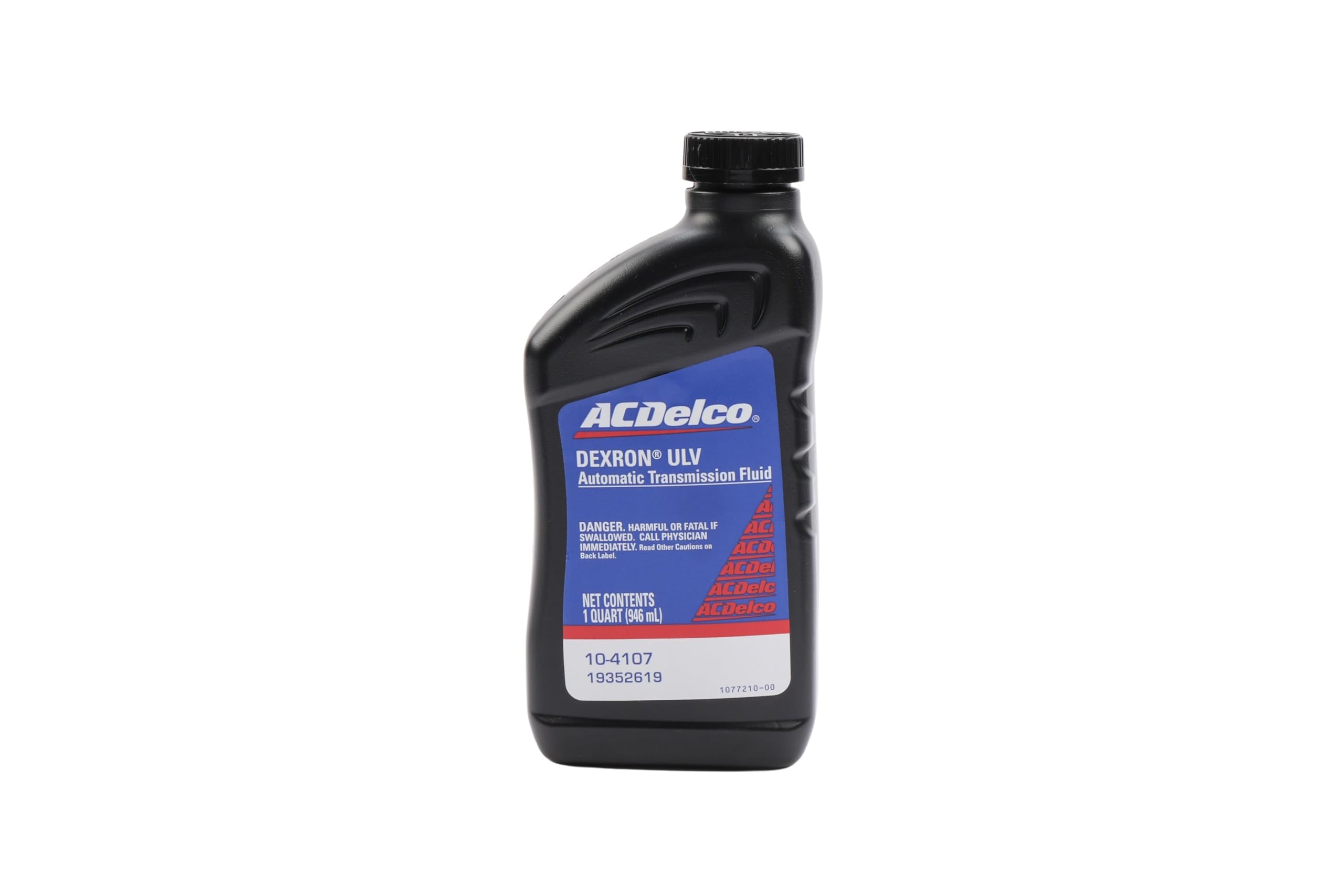
The 10L90 takes DEXRON ULV and nothing else. GM TechLink's 2025 capacity chart lists the fluid-change capacity at 7.7 liters / 8.1 quarts for both the CT5 (MHX) and Escalade/ESV (MHO) applications — the same as the 10L80. For contrast, the 8L90 in that same chart takes 7.0 L / 7.4 qt of DEXRON HP. Those are not interchangeable specifications.
Ultra-low-viscosity fluid is load-bearing in this design. Sonnax puts it plainly: use the fluid designed to reduce friction and workload in the pump, either DEXRON ULV or MERCON ULV, because a universal or older-spec fluid will produce shift complaints and premature failure. A ten-speed filled with the wrong ATF hands you a diagnostic puzzle that looks electrical and is not.
Last, check the batteries before you believe anything the TCM tells you. Sonnax documents ten-speed work trucks acting like they have valve body problems — harsh engagements, erratic up and downshifts, adapts that will not settle — when the real fault is a battery near the end of its roughly three-year life. It is a five-minute load test that saves a pan gasket.
Sonnax Zip Kit for the Gen. 1 10L90 valve body (10L80-G1-10R80-ZIP)
If the road test put you on the valve body, this is the kit that addresses the worn bores instead of swapping a casting and hoping. Gen. 2 units need the feed limit valve kits instead — 105740-54K for the low valve behind the recall condition.
See the 10L90 Sonnax Zip Kit →FAQ
Is the 10L90 the same transmission as the 10L80?
Mechanically they are the same family and share most service parts, but the 10L90 is the higher-torque build and carries its own RPO codes, MHO on Escalade and MHX on the CT5. The more useful split is generation, not model number. GM dropped the clutch latch valves in late 2019 and went to feed limit low and feed limit high valves with boost check balls, which Sonnax calls Gen. 2. Valve body parts do not cross between the two.
What fluid does a 10L90 take and how much?
DEXRON ULV, and nothing else. GM TechLink's 2025 capacity chart lists the 10L90 at 7.7 liters / 8.1 quarts for a fluid change, the same figure as the 10L80. Ultra-low-viscosity fluid is part of how this unit's shift calibration works, so filling it with a DEXRON VI or an LV fluid produces shift complaints that look like valve body wear and are not.
My 10L90 shudders at 40 mph. Is it the torque converter?
Usually not. GM bulletin 22-NA-015 tells technicians to graph engine torque, engine speed and transmission input shaft speed on a road test first. If engine torque swings more than about 25 Nm with no shift active and steady throttle, the problem is in the engine. If the shudder is present in Drive but disappears in manual L9 with TCC slip near zero, the valve body is the repair. GM notes in the same bulletin that converters replaced for shudder frequently come back for more work.
What causes a 10L90 to overheat?
Check the cooler line before condemning anything internal. GM bulletin 22-NA-182 documents twisted rubber cooler lines on low-mileage vehicles causing harsh shift, shudder, surge, stall, neutral/flare and high fluid temperature, and setting DTC P27EC on ETRS units. If the lines are clean, look at the thermal bypass valve, which on the 10L90 lives inside the valve body and opens at 143 degrees F (61 C).
Why does my 10L90 whine in 4th and 5th but not 7th?
That is the reaction planetary gearset, and it is usually characteristic rather than a failure. GM TechLink notes the whine shows up in light-to-moderate driving around 20 to 35 mph and changes frequency as component speeds change with each shift. It should not be present in 7th gear because that ratio is 1:1 and the gears are locked. A whine that is still there in 7th is coming from somewhere else, most often the pump.
Sources
- General Motors — Service Bulletin 22-NA-182, "Information on 6L80, 6L90, 8L90, 10L80, 10L90, 10L1000 Equipped Vehicles with A Harsh Shift, Shudder, Surge, Stall, Neutral/Flare, Transmission Overheating and/or High Transmission Fluid Temperature" (June 2024, version 5; NHTSA-hosted). Backs the twisted cooler line as a documented cause on low-mileage vehicles; the note that a twisted cooler line may set DTC P27EC in the TCM on ETRS transmissions (RPO MHS, MQC); the instruction to disconnect and untwist the line at the auxiliary cooler and replace it if it stays misshapen; and the thermal bypass valve opening temperatures — 143°F (61°C) for the 10L80, 10L90 and 10L1000 with the TBV inside the valve body, versus 158°F (70°C) external on 6L80/6L90 and 194°F (90°C) external on 8L90 and on LM2/LZ0 diesels. Also backs that this bulletin replaced PIP5792E. static.nhtsa.gov (PDF)
- General Motors — Service Bulletin 22-NA-015, "Diagnostic Tips on GDS Graphing after Road-Test, for Shake and/or Shudder During Steady and/or Light Throttle Acceleration Between 25 and 50 MPH" (July 2022; NHTSA-hosted). Backs the 25–50 mph steady/light-throttle shudder description; the use of Manual Range L9 to disable Dynamic Fuel Management for a clean test; the engine-related threshold of engine torque varying more than about ±25 Nm with no shift active and steady throttle; the TCC solenoid valve body pattern with shudder present in both D and L9, input speed following engine speed, engine torque under ±25 Nm, and the condition typically appearing under 15,000 miles; the TCC solenoid drift pattern with shudder in D but not L9, throttle under 10 percent, TCC slip at or near zero and TCC pressure command held at 100 kPa; the torque converter pattern of elevated TCC slip with steady TCC pressure control; and GM's warranty-review note that converters replaced for shudder often return for further repair. static.nhtsa.gov (PDF)
- General Motors — GM TechLink, "2025 Transmission Capacities & Fluids (U.S. and Canada only)" reference chart, revision 05-2025 A. Backs the 10L90 fluid-change capacity of 7.7 liters / 8.1 quarts and the DEXRON ULV specification, listed under CT5 (RPO MHX) and Escalade/ESV (RPO MHO); the identical 7.7 L / 8.1 qt DEXRON ULV figure for the 10L80; and the contrasting DEXRON HP fill for the 8L80/8L90 at 7.0 L / 7.4 qt. gm-techlink.com (PDF)
- General Motors — GM TechLink, "10-Speed Automatic Transmission Diagnostic Tips," Mid-January 2025, Volume 27, No. 2 (credit Mark Gordon). Backs the coverage list of 2020–2025 CT4, CT5, Escalade, Camaro, Silverado 1500, Tahoe, Suburban, Sierra 1500 and Yukon models with the 10L60/80/90 family and RPO codes including MHO and MHX; the reaction planetary gearset whine in 4th and 5th around 20–35 mph with the tip that it should not be present in 7th gear because that ratio is 1:1 and the gears are locked; the pump-gear whine isolation method of sweeping engine speed from idle to 2,500 RPM in Park; the ETRS return-to-park blowoff valve chirp at roughly 1,000 RPM being normal; the 400–700 ms garage shift clunk tied to C2 clutch application at high line pressure; the 7th-gear-only idler gear rattle from bearing interference fit; aeration and cavitation as sources of whine, rattle and roar; and the reference to Bulletin 24-NA-264. gm-techlink.com (PDF)
- Sonnax — "Tackling Ford & GM 10-Speed Valve Body Problems, Failing Batteries & More!" Jim Mobley, TASC Force, March 4, 2025. Backs the common 10-speed failure list of CDF drum sleeve movement, cylinder clutch container ("stove pipe") failure, main shaft plugs loosening, overheating from incorrect ATF level, speed sensor issues and incorrect assembly; the casting-integrated direct-acting solenoid design held by retainer clips that only makes clutch pressure with current, so the unit will not move unplugged; the instruction to check the main pressure regulator, TCC priority, TCC regulator, boost and latch valves for bore wear; loose impregnated separator plate filters sticking valves; the steel-rubber pump seal between valve body and case causing no movement and no line pressure if left out or mispositioned; the point that drum sleeve movement and sealing ring damage are caused by shift issues rather than the valve body; CDF drum saver kit 129910-01K; solenoid stabilization retainers 105740-19K; and the failing-battery pattern that mimics valve body trouble, with GM and Ford batteries lasting roughly three years. sonnax.com
- Sonnax — "Understanding the '19-Later GM 10-Speed Safety Recall," Jim Dial, TASC Force, May 16, 2025. Backs the feed limit low wear across the 10L1000 and Gen. 2 10L60, 10L80 and 10L90; the momentary wheel lock-up at higher speeds with a possible downshift to 2nd gear; the feed limit low valve as the worn control valve causing gradual loss of control pressure; that valve's second job as a solenoid regulator limiting feed to the default disable solenoid, which positions the default enable and default select valves; the default strategy that routes line pressure into the exhaust backfill circuit to apply the A, B, C and D clutches in 2nd gear when the DD solenoid is off; feed limit low wear appearing in as few as 35,000 miles on towing and hauling applications; the hot-only symptom pattern; DTC P0747 as the accompanying code; the warning that extended driving in that condition will destroy clutch packs through bindup; the late-2019 Gen. 2 change from latch valves to the feed limit valves and boost balls; and Sonnax feed limit low valve kit 105740-54K and feed limit high valve kit 105740-58K. sonnax.com
- NHTSA — Part 573 Safety Recall Report 25V-148, General Motors LLC, submitted March 6, 2025 (GM recall N242480630). Backs the 90,081 covered vehicles (2020–2022 Camaro, 2020–2021 CT4 and CT5, 2019–2020 CT6 with the 10-speed); the control valve wear and under-150 ms lock-up description; the remedy software that detects wear about 10,000 miles early and limits the transmission to fifth gear with a reduced propulsion message until the next key cycle; and the production software on 2021 CT6, 2022 CT4/CT5 and 2023 Camaro. static.nhtsa.gov (PDF)
- GEARS Magazine (ATRA) — Steve Garrett, "Checking Out Your Seat Belt to See How Well It Works! P0747 on GM 10-Speed Applications." Backs the 10-year/150,000-mile coverage extension under GM campaigns N242480630 and N242454440, and the revised steel feed limit low valve 24059372, spring 24279142 and spacer plates released first for the 10L1000. gearsmagazine.com
- General Motors — Service Bulletin 22-NA-182, September 2024 revision (NHTSA-hosted). Backs the 2021–2025 Escalade coverage under RPOs MHS, MHO and MQC, and P27EC being tied to ETRS RPOs MHS and MQC only. static.nhtsa.gov
- Sonnax — Oversized TCC Regulator Valve Kit 105740-16K. Backs the 10L90 (Gen. 1) TCC regulator bore wear that reduces converter apply, converter release and cooler flow. sonnax.com
- Cadillac (General Motors) — 2021 Cadillac Escalade Owner's Manual. Backs the 130–150°C (270–300°F) dangerous transmission temperature range and the severe-service definition that includes frequent trailer towing. cadillac.com