A 10L90 that will not climb into 8th, 9th or 10th rarely feels broken to the driver. It launches hard, the first several shifts are crisp, and then at 60 mph the engine is turning a few hundred rpm more than it should and the gear display never moves. On a Camaro ZL1 or a Cadillac V car that complaint often arrives with a service engine light and a "reduced propulsion" message, and a lot of shops read that as a failed transmission. Most of the time it is not. It is the TCM choosing not to upshift, and the job is to find out why before anything comes out of the car.
This guide covers the 10L90 specifically: the passenger-car applications, the GM recall that deliberately caps these units at 5th, and the valve body wear behind it. Facts are cited to GM, Sonnax and ATRA's GEARS magazine, listed at the bottom. Where something is my bench opinion, I say so.
| What you see | Most likely cause | First check |
|---|---|---|
| Stuck in 5th, service engine light, reduced propulsion message | Recall or production TCM software detected feed limit low valve wear | VIN recall status (N242480630), P0747, valve body |
| Stuck in one forward gear plus Reverse, several codes stored | Failsafe strategy after an electrical or hydraulic code | Scan every module, not just the TCM |
| Commanded 8th but ratio still reads 1.00 | Shift requested and not completed: hydraulics or clutch clearance | Commanded vs. attained gear, input and output speed |
| Upshifts only by paddle, never on its own | Manual/tap mode latched on, or a shifter input fault | Shift lever position and tap status on the scan tool |
| No 10th for the first few minutes, fine once warm | Normal cold-start and adapt temperature strategy | Fluid temperature before judging anything |

What overdrive means on a 10L90
There is no overdrive unit and no OD button. Chevrolet Performance's installation sheet for its Supermatic 10L90 kit (which it says is based on the production 10L90 from 2017–2021 Camaros, RPO MI4) describes four simple planetary gearsets, two brake clutches and four rotating clutches, six multi-disc clutches in all, delivering ten forward ratios and one reverse. The same document lists the ratios, and they are your most useful diagnostic tool:
| Gear | Ratio | Why it matters here |
|---|---|---|
| 5th | 1.526 | The gear the recall software limits the unit to |
| 6th | 1.278 | Last underdrive ratio |
| 7th | 1.000 | Direct drive |
| 8th | 0.854 | First overdrive; the downshift from here is where GM says lock-up occurs |
| 9th | 0.689 | Second overdrive |
| 10th | 0.636 | Top gear, light throttle cruise only |
The TCM uses three speed sensors, so you can do the same math it does. Divide input shaft speed by output shaft speed and compare the answer to the table. If commanded gear says 8 and the ratio says 1.00, the shift was asked for and never finished. If commanded gear says 5 and never climbs, the transmission is obeying an instruction, and the problem is in why that instruction was given.
One trap that belongs only to swaps and crate installs: Chevrolet Performance warns that with its engine control kit and an aftermarket gauge display, the ECM will not show gears 9 and 10 in some cases even though the transmission is using all ten. On a hot rod with a 10L90 behind an LT4, confirm the ratio before you believe the dash.
Cause 1: The recall software limiting it to 5th
This is the first thing to rule in or out on any 2019-and-later passenger car with a GM ten-speed, because it is not a malfunction. It is the remedy doing its job.
GM's Part 573 Safety Recall Report for NHTSA campaign 25V-148 (GM recall N242480630), submitted March 6, 2025, covers 90,081 vehicles equipped with the 10-speed transmission: 50,147 Chevrolet Camaros (2020–2022), 27,097 Cadillac CT5s and 2,235 CT4s (2020–2021), and 10,602 Cadillac CT6s (2019–2020). The defect GM describes is a transmission control valve that "may be susceptible to excess wear over time," causing harsh shifting and, in rare cases, a momentary wheel lock-up. GM's chronology puts that lock-up at under 150 milliseconds and lists 115 field reports received between February 2022 and November 2024.
The remedy is software, not hardware. Per the filing, dealers install new TCM software that monitors valve performance and detects excess wear approximately 10,000 miles before a lock-up could occur. Once it detects wear, the transmission is limited to fifth gear, because the lock-up happens on a downshift from eighth. The driver gets a service engine light and a reduced propulsion message, and GM says the limit stays in place until the next key cycle. In the driver's words, the car feels sluggish and will not upshift.
Two details from the same filing matter at the counter. First, the recall lists vehicles by "10-speed transmission," not by RPO, so run the VIN instead of guessing from the badge. Second, GM states that 2021 CT6, 2022 CT4 and CT5, and 2023 Camaro vehicles were built with the wear-detecting software from the factory. A later car that was never part of the recall can still arrive capped at 5th for the same reason.
Cause 2: The worn feed limit low valve behind it
The software is only the messenger. Sonnax's breakdown of the recall identifies the worn part as the feed limit low valve in the Gen. 2 valve body, used on the 10L1000 and the Gen. 2 10L60, 10L80 and 10L90. Besides its role in the boost ball circuit, that valve limits solenoid feed to the default disable (DD) solenoid. The DD solenoid is powered on at all times until a default event; it holds the default enable and default select valves in position. When the feed limit low bore wears and DD feed pressure drops, those valves can move on their own and apply the drive default, which is 2nd gear.
That is the mechanism behind the symptoms Sonnax lists: a sudden downshift from 7th or 8th to 2nd, attempted wheel lock-up, harsh shifts, conditions that get worse hot and settle down after the vehicle cools, and DTC P0747, which says the E clutch is on when it should be off. Sonnax reports this wear as early as 35,000 miles, and in a second article as early as 30,000, with tow and heavy-trailer vehicles hit hardest.
ATRA's GEARS magazine explains how the TCM catches it. In Steve Garrett's P0747 article, the TCM watches the slip speed ratio of the off-going clutch during a shift; if the calculation shows torque still being carried by a clutch that has been commanded off, the clutch is judged not to be releasing. A second monitor, which GM calls "startle mitigation," looks for unintended deceleration at steady throttle when no shift is commanded. Garrett notes the updated software then forces the unit into 5th with the service engine soon light on, "which may be what you see now as a symptom" when the car comes in. He also reports the GM campaigns extend transmission coverage to 10 years or 150,000 miles, which is worth checking before the customer pays for anything.
On hardware: GEARS lists GM's revised parts, a steel feed limit low valve (24059372) replacing the aluminum one, a longer higher-rate spring (24279142) and spacer plates with modified balance passages, and says those were released first for the 10L1000, with GM not yet releasing them for the smaller 10L units at the time of writing. For a 10L90 outside coverage, the aftermarket answer is Sonnax's feed limit low valve kit 105740-54K for a lightly worn bore, or the oversized 105740-59K when the bore is too far gone, reamed with bore sizing tool 105740-BST. In my experience it pays to inspect the feed limit high valve at the same time, because the same side-loading that wore one usually has not spared the other.
Cause 3: Failsafe and shift-limiting strategies
The recall is not the only reason a 10L90 holds a low gear. Keith Clark's 10L diagnostic article in GEARS lists P175E, Transmission Control System Shift Limiting Active, as the code the TCM sets when it has started protecting itself because of questionable sensor input. His advice is to scan every module, because codes outside the transmission change shift strategy too. His example is a chassis code (C0267) that prevents upshifts in Tow/Haul. On a performance car that means the ABS, engine and body modules get read before anyone blames the valve body.
Chevrolet Performance's sheet adds a simple rule that explains a lot of odd road tests: the TCM "will only allow shifting into a gear appropriate for the engine speed and vehicle speed." A bad vehicle speed input, a speed sensor fault or a tire size change the calibration does not know about will change which gears the TCM considers legal.
Cause 4: Manual or tap mode left engaged
This one costs nothing to fix, and I have watched it get misdiagnosed. The Chevrolet Performance documentation describes how the 10L90's tap and paddle logic works: tap is available above 7 mph (12 km/h), and once the TCM receives a tap request it stays in full tap mode, so the driver has to shift it. On that calibration it only returns to automatic shifting when the lever goes back to Drive or tap-up is held for 3 seconds. Production cars differ in the details, but the lesson carries over: before diagnosing a no-upshift, confirm on the scan tool that the shifter is in Drive and manual mode is not active.
Cause 5: A TCM and valve body that do not match
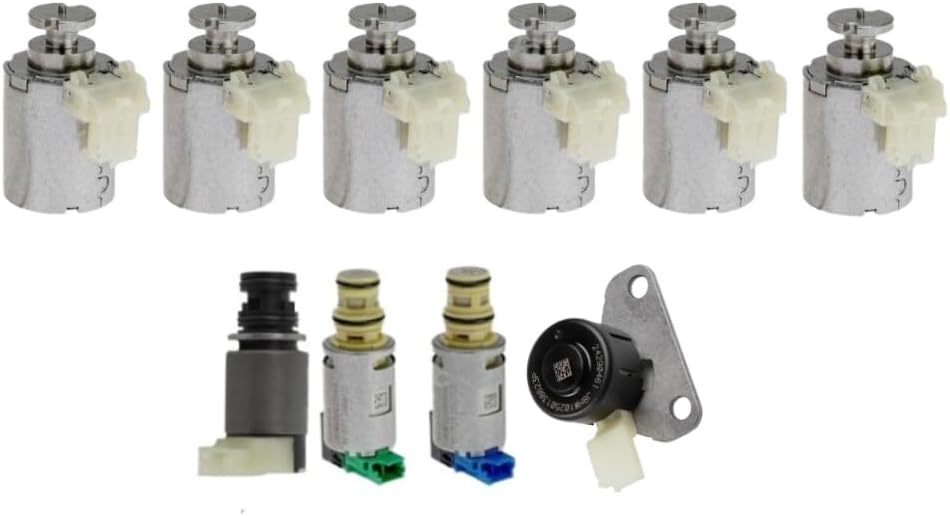
Chevrolet Performance says it plainly: each controller is flashed with the solenoid characteristics of the solenoids in a given transmission, and controllers and transmissions are matched. They tell crate customers not to mix them. The same principle applies in the service bay. After a valve body swap, a solenoid replacement or a used-unit install, a TCM still carrying the old solenoid data will command pressures that do not match the hardware. Missed or incomplete shifts, flares and upper-gear complaints follow. Confirm the characterization data was programmed and relearn the adapts before you condemn anything else. GEARS also points out that the linear pintle solenoids are not sold separately, so a stuck one means a valve body and a programming step, not a single part.
Cause 6: Cold operation, which is normal
Do not judge this complaint on a cold car. Per GEARS, below 158°F (70°C) coolant at startup the engine runs catalyst light-off for 25 to 90 seconds, and the transmission still has to reach its adaptive learning temperature range. GM treats 75–80°C (167–176°F) as normal 10L90 fluid temperature. Get it there, then drive at steady light throttle.
Cause 7: Clutch clearance or a hydraulic failure to complete the shift
If the TCM commands 8th and the ratio stays at 7th, the problem is real hardware. Clark's GEARS article is blunt: if clutch clearances are outside specification, "the transmission strategy will not be able to compensate," and the result can be no upshift or harsh shifts. His high-mileage inspection list for the family includes weak or broken solenoid retainer clips, sticking linear pintle solenoids and clutch control valves, a worn LPC accumulator bore, and reused sealing rings that leak. Those are all pressure-loss faults, and on a ten-speed a pressure loss in the upper-gear clutches shows up as a refused or aborted shift long before it shows up as a slip.
The scan tool sequence that sorts it
- Run the VIN for open recalls and the extended coverage. Note whether the reduced propulsion message is on.
- Pull codes from every module with freeze frame. P0747 plus a 5th-gear cap on a Gen. 2 unit is the recall pattern until proven otherwise. Note P175E.
- Warm it up to normal fluid temperature before judging shift behavior.
- Confirm shifter position and manual mode status on the scan tool.
- Log commanded gear, attained gear, input and output speed. Divide input by output and compare to the ratio table. Commanded 5 that never climbs is a strategy decision. Commanded 8 that never arrives is hydraulic or mechanical.
- If there has been recent valve body or TCM work, verify solenoid characterization and relearn adapts.
- Then pull the pan and the valve body: feed limit low and high valves and bores, solenoid retainers, sealing rings, and clutch clearance.
The honest summary for most 10L90 owners with this complaint: the car is not refusing overdrive because the transmission is worn out. A valve wore, the software caught it, and the TCM parked the unit in 5th on purpose. That is a valve body repair and a software check, not a rebuild. For the related wear patterns, see our 10L90 common problems guide.
10L90 Sonnax Feed Limit Low Valve Kit 105740-54K
The part that addresses the wear the recall software is detecting, without buying a complete valve body. Check the bore first; if it is past the drop-in kit, you need the oversized kit and the reamer.
See the 10L90 feed limit low valve kit →FAQ
Why is my 10L90 stuck in 5th gear?
On a 2019-and-later Camaro or Cadillac with the GM ten-speed, the most common reason is the recall or production TCM software doing its job. GM's filing for NHTSA recall 25V-148 says the software detects control valve wear about 10,000 miles before a wheel lock-up could occur, then limits the transmission to fifth gear with a service engine light and a reduced propulsion message. The worn part behind it is usually the feed limit low valve in the valve body.
Which cars are covered by the GM 10-speed fifth gear recall?
NHTSA campaign 25V-148, GM recall N242480630, covers 90,081 vehicles with the 10-speed transmission: 2020-2022 Chevrolet Camaro, 2020-2021 Cadillac CT4 and CT5, and 2019-2020 Cadillac CT6. GM also says 2021 CT6, 2022 CT4 and CT5, and 2023 Camaro vehicles were built with the wear-detecting software, so a later car can be capped at 5th for the same reason. Run the VIN to be sure.
Does fixing the recall give me 10th gear back?
Not by itself. The recall remedy is software that detects the worn valve and limits the unit to 5th to prevent lock-up, so once wear is detected the valve body still needs repair. For a 10L90 outside coverage, Sonnax feed limit low valve kit 105740-54K, or oversized 105740-59K for a badly worn bore, addresses the wear. Check first for the GM coverage extension to 10 years or 150,000 miles.
How can I tell if my 10L90 is actually in 10th gear?
Divide input shaft speed by output shaft speed on a scan tool and compare it to the gear ratios: 7th is 1.000, 8th is 0.854, 9th is 0.689 and 10th is 0.636. Chevrolet Performance notes some aftermarket gauge setups will not display gears 9 and 10 even when the transmission is using them. Judge it warm, at steady light throttle.
Will a 10L90 skip overdrive when it is cold?
It can hold lower gears briefly, and that is normal. GEARS notes that with coolant below 158 degrees F at startup the engine runs catalyst light-off for 25 to 90 seconds, and the transmission also has to reach the temperature range where adaptive learning is allowed. GM uses 75 to 80 degrees C as normal fluid temperature for the 10L90.
Sources
- NHTSA — Part 573 Safety Recall Report 25V-148, General Motors LLC, submitted March 6, 2025 (GM recall N242480630). Backs the 90,081 vehicles with the 10-speed transmission and the per-model counts (50,147 2020–2022 Camaro, 27,097 2020–2021 CT5, 2,235 2020–2021 CT4, 10,602 2019–2020 CT6); the control valve wear defect language; the under-150 ms lock-up and 115 field reports; the remedy software that detects wear about 10,000 miles early and limits the transmission to fifth gear with a service engine light and reduced propulsion message until the next key cycle; lock-up occurring on a downshift from eighth; and the production software on the 2021 CT6, 2022 CT4/CT5 and 2023 Camaro. View source (PDF)
- Chevrolet Performance (General Motors) — Supermatic 10L90 Transmission Kit Installation Instructions, 19420481, Rev 08SE22. Backs the production 2017–2021 Camaro 10L90 basis (RPO MI4), the four gearsets and six clutches, the three speed sensors, the ten gear ratios (4.696 through 0.636), gears 9 and 10 not displaying with some aftermarket gauges, the TCM allowing only gears appropriate to engine and vehicle speed, tap mode behavior (above 7 mph, stays in tap until the lever returns to Drive or tap-up is held 3 seconds), matched controllers flashed with solenoid characteristics, and the 75–80°C operating temperature. View source (PDF)
- Sonnax — “Understanding the ’19-Later GM 10-Speed Safety Recall.” Backs the feed limit low valve's role limiting solenoid feed to the default disable solenoid, the default enable and default select valves, the 2nd gear drive default, the downshift from 7th or 8th to 2nd, hot-only behavior, P0747 (E clutch on when it should be off), wear as early as 35,000 miles, the affected Gen. 2 units including the 10L90, and kits 105740-54K and 105740-59K. View source
- Sonnax — “Overcome the GM 10-Speed Wheel Lockup Recall with a Sonnax Feed Limit Low Valve Kit.” Backs failure in as little as 30,000 miles, 5th gear only operation and the reduced propulsion message as listed symptoms, and recalls N242480630 and N242454440. View source
- GEARS Magazine (ATRA) — Steve Garrett, “Checking Out Your Seat Belt to See How Well It Works! P0747 on GM 10-Speed Applications.” Backs the off-going clutch slip speed monitor, the startle mitigation monitor, the post-update 5th gear limp mode with the SES light, the 10-year/150,000-mile coverage extension, and the revised steel feed limit low valve 24059372, spring 24279142 and spacer plates released first for the 10L1000. View source
- GEARS Magazine (ATRA) — Keith Clark, “Diagnosing the 10L Series Transmission.” Backs P175E shift limiting active, scanning all modules because outside codes alter shift strategy (C0267 example), catalyst light-off below 158°F for 25–90 seconds, adaptive learning temperature, out-of-spec clutch clearance causing no upshift, and the high-mileage list of retainer clips, linear pintle solenoids (not sold separately), LPC accumulator bore wear and leaking reused sealing rings. View source