The complaint comes in the same way every time. The truck drives fine, pulls hard, shifts smooth, and then somewhere around 55 or 60 mph it just sits there a few hundred rpm higher than it should and will not go any further. No slip, no flare, no noise. Nothing is wrong with the way it drives. It simply stops upshifting. On a GM 10L80 that pattern is a gear-limiting strategy far more often than it is a burnt clutch, and if you pull the unit before you find out why the TCM quit upshifting, you are going to rebuild a transmission that did not need it.
What overdrive means on a ten-speed
There is no overdrive unit hanging off the back of this thing and no OD button on the shifter. Transmission Digest's teardown of the joint Ford and GM ten-speed lays out the architecture: four planetary gear sets and six clutch assemblies, four rotating and two braking, with four elements applied and only two released during each gear change. First through sixth are underdriven, seventh is a true 1:1, and eighth, ninth and tenth are the overdriven ratios.
| Gear | Ratio | What it is |
|---|---|---|
| 5th | 1.52 | The gear the recall software parks you in |
| 6th | 1.28 | Last underdriven ratio |
| 7th | 1.00 | Direct drive |
| 8th | 0.85 | First overdrive |
| 9th | 0.69 | Second overdrive |
| 10th | 0.64 | Top overdrive |
Those numbers are your diagnostic tool. The 10L80 gives you no useful mid-shift pressure reading, so the honest way to know what gear the unit is actually in is to divide input speed by output speed on the scan tool and compare the answer to that table. If commanded gear says 8 and the math says 1.00, the shift was asked for and never happened. If commanded gear says 5 and never climbs, the transmission is doing precisely what it was told to do, and your problem is upstream of the hydraulics.
Rule out the recall software before you touch anything
This is the most common cause of a no-overdrive complaint on a 2019-and-later GM ten-speed right now, and it is not a failure at all. It is the remedy.
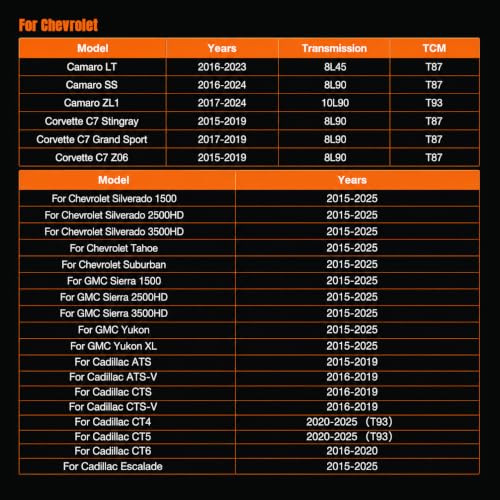
GM's Part 573 Safety Recall Report for NHTSA campaign 25V-148 (GM number N242480630), filed March 6, 2025, covers 90,081 vehicles: 2019–2020 Cadillac CT6, 2020–2021 Cadillac CT4 and CT5, and 2020–2022 Chevrolet Camaro built with the ten-speed. GM's defect language is worth reading closely: "A transmission control valve in some of these vehicles may be susceptible to excess wear over time, resulting in a gradual loss of pressure within the valve that can cause harsh shifting. In rare cases, the wheels may experience a momentary lock up." GM's own chronology puts that lock-up at under 150 milliseconds and documents 115 field reports received between February 2022 and November 2024.
Now the part that puts vehicles on your lift. The remedy is not a new valve body. Per the same filing: "Dealers will install new transmission control module software that will monitor valve performance and detect excess wear approximately 10,000 miles before a wheel lock up condition could occur. Once detected, the transmission will be limited to fifth gear, preventing the possibility of a wheel lock up condition, which occurs in a downshift from eighth gear." GM adds that the driver will experience this as sluggish or reduced propulsion, with a service engine light and a reduced propulsion message in the cluster, and that the limit holds until the next key cycle.
So a customer whose vehicle was reflashed under the recall, and whose valve has since worn past the software's threshold, arrives with something that runs, drives, and refuses to go past 5th. That is not a broken transmission. That is the TCM telling you, correctly, that the valve is worn.
Sonnax reports the same gear cap across the wider Gen. 2 family — 10L1000, 10L60, 10L80 and 10L90 — and that the OE control valve behind it can fail in as little as 30,000 miles, with tow-duty units often needing attention by 35,000. Run the VIN before you quote anything.
The valve that causes it, and why fifth gear
The worn part is the feed limit low valve. Sonnax's breakdown of the recall explains that it does two jobs at once: it sits in the boost ball circuitry used to regulate the A and B clutches, and it acts as a solenoid regulator limiting the amount of solenoid feed reaching the default disable (DD) solenoid. The DD solenoid in turn controls the default enable and default select valves in the upper valve body, and those two govern the power-down default strategy, which is 2nd gear in Drive and Reverse in Reverse.
That valve carries heavy side load, so the bore wears and pressure leaks off. When feed pressure to the DD solenoid drops, the default enable and default select valves can stroke when nobody asked them to. Sonnax lists the resulting symptoms as a sudden downshift to 2nd from 7th or 8th, harsh shifts, bind-up when hot, momentary wheel lock-up, and DTC P0747, the E clutch reading on when it should be off. Their note that the condition shows up most when shifting into the higher gears is exactly why GM's software backstop caps the unit at 5th: keep it below the range where the default event happens and the wheels cannot lock.
For the record, the control valve bodies GM named as the recalled component on 25V-148 are part numbers 24049466, 24043769, 24047993, 24049469 and 24047995. GM also states the condition was corrected in production on the 2021 CT6, the 2022 CT4 and CT5, and the 2023 Camaro.
Sonnax Feed Limit Low Valve Kit 105740-54K
This is the part that addresses the wear the recall software is detecting. The drop-in kit restores valve function in a worn bore without buying a complete valve body. If the bore is too far gone, the oversized version 105740-59K reams to size with bore sizing tool 105740-BST.
See the 10L80 feed limit low valve kit →Other reasons the TCM caps the gear
The recall software is not the only strategy that holds a 10L80 out of overdrive, and pulling codes before you drive the vehicle keeps you out of trouble.
Transmission Digest documents that the failsafe gear command on this unit can be anything from 2nd gear and Reverse up to 8th gear and Reverse, depending on which electrical solenoid or hydraulic code set in the external TCM, and that there are several failsafe strategies keyed to the code category. In the Type A category, autostart/autostop, grade braking, manual shift control, neutral idle, powertrain downshift braking, tap up and tap down, and TCC control are all disabled; transmission adaptive pressure control freezes at the current adapt values; and the transmission gear allowed is restricted to Reverse plus a single forward gear, 3rd or 5th depending on the code.
Read that list again. A ten-speed sitting in one forward gear with TCC control disabled feels exactly like a failed transmission from the driver's seat, and the cause can be a solenoid circuit fault you fix without ever dropping the pan. Scan every module, not just the TCM.
Normal behavior that gets misdiagnosed as no overdrive
Before you sell a repair, make sure the vehicle was actually given a fair shot at top gear.
- Cold operation. ATRA's GEARS coverage of the 10L series notes that with coolant below 158°F (70°C) at start-up, the ECM runs catalytic converter light-off programming — raised idle, retarded timing, added injector pulses — for 25 to 90 seconds, and the unit still has to reach the temperature range where adaptive learning is permitted. Nothing about the first mile of a cold start tells you whether it will pull 10th.
- Tow/Haul and grade braking. Both change the shift schedule deliberately and will hold lower gears far longer than a customer expects.
- Throttle position. Ninth and tenth want light, steady throttle at a steady road speed. A test drive with your foot in it proves nothing.
- Charging system. Current-monitored solenoid drivers are the first circuits to get unhappy when system voltage sags, and these trucks are hard on batteries. Load test before you judge shift quality on any ten-speed that has been sitting in the shop for a few days.
The scan tool sequence that sorts it
- Pull all codes, all modules. A stored P0747 with a no-overdrive complaint on a Gen. 2 unit is the recall pattern until proven otherwise. Note whether the reduced propulsion message is present in the cluster.
- Check the VIN for open campaigns. If the recall reflash is what is capping the gear, the diagnosis is already done and the dealer pays for the software.
- Warm it up. Get transmission fluid temperature into the normal operating band and out of the light-off and pre-adapt windows before you judge anything.
- Log commanded gear against attained gear, ISS and OSS. Divide input by output and compare to the ratio table above. Commanded 8 with an attained ratio still sitting at 1.00 is a hydraulic or mechanical failure to make the shift. Commanded 5 that never climbs is a strategy decision.
- Watch the solenoid commands through the 7-8 shift. GEARS puts the clutch overlap on this unit at roughly 0.3 seconds, and four elements have to be applied for power flow through the geartrain. If the TCM never commands the oncoming element, you are chasing software and codes, not clutches.
- Then, and only then, drop the pan. GEARS's high-mileage inspection list for this family is weak or broken solenoid retainer clips, sticking linear pintle solenoids and clutch control valves, a worn LPC accumulator bore, excessive clutch clearance and worn rotating sealing rings. Note that the linear pintle solenoids have not been sold separately, so a stuck one means a valve body and a programming step, not a twenty-dollar part.
Putting overdrive back, with real numbers
- Software first. Let the dealer do the recall reflash if it is open. It costs the customer nothing and it is the piece that addresses the safety risk.
- Then the hardware. The feed limit low valve and its bore are the root cause. Sonnax kit 105740-54K drops into a lightly worn bore; 105740-59K is the oversized version and requires reaming with bore sizing tool 105740-BST. The companion feed limit high valve kit is 105740-58K.
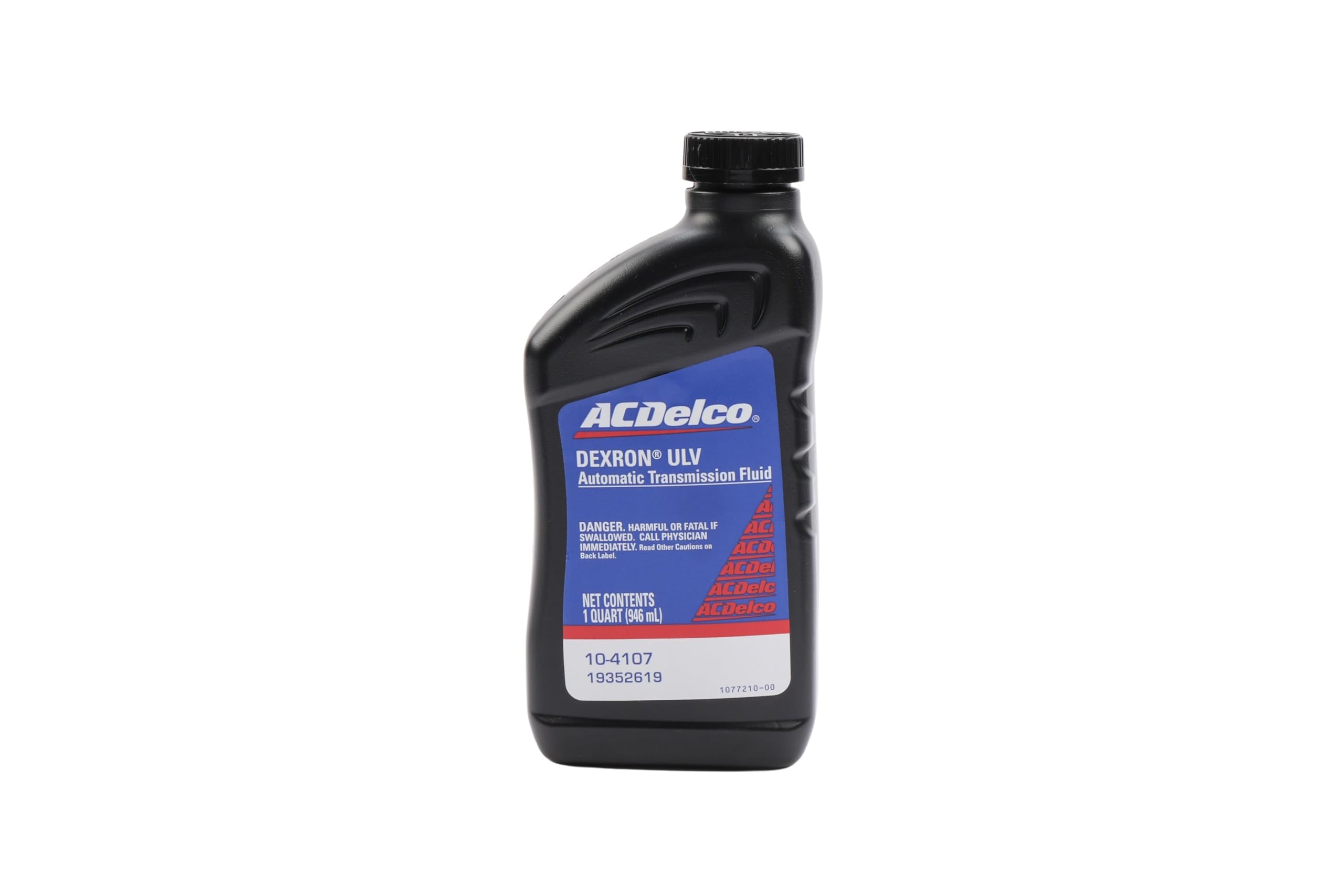
- Fluid. DEXRON ULV only. GM TechLink's 2025 transmission capacities chart lists 7.7 L / 8.1 qt for a 10L80 fluid change across RPO codes MQB, MQC, MHT, MI2, MHS and MHU. That is a service fill, not a dry fill. The 10L1000 in the HD trucks is a different animal at 13.6 L / 14.4 qt.
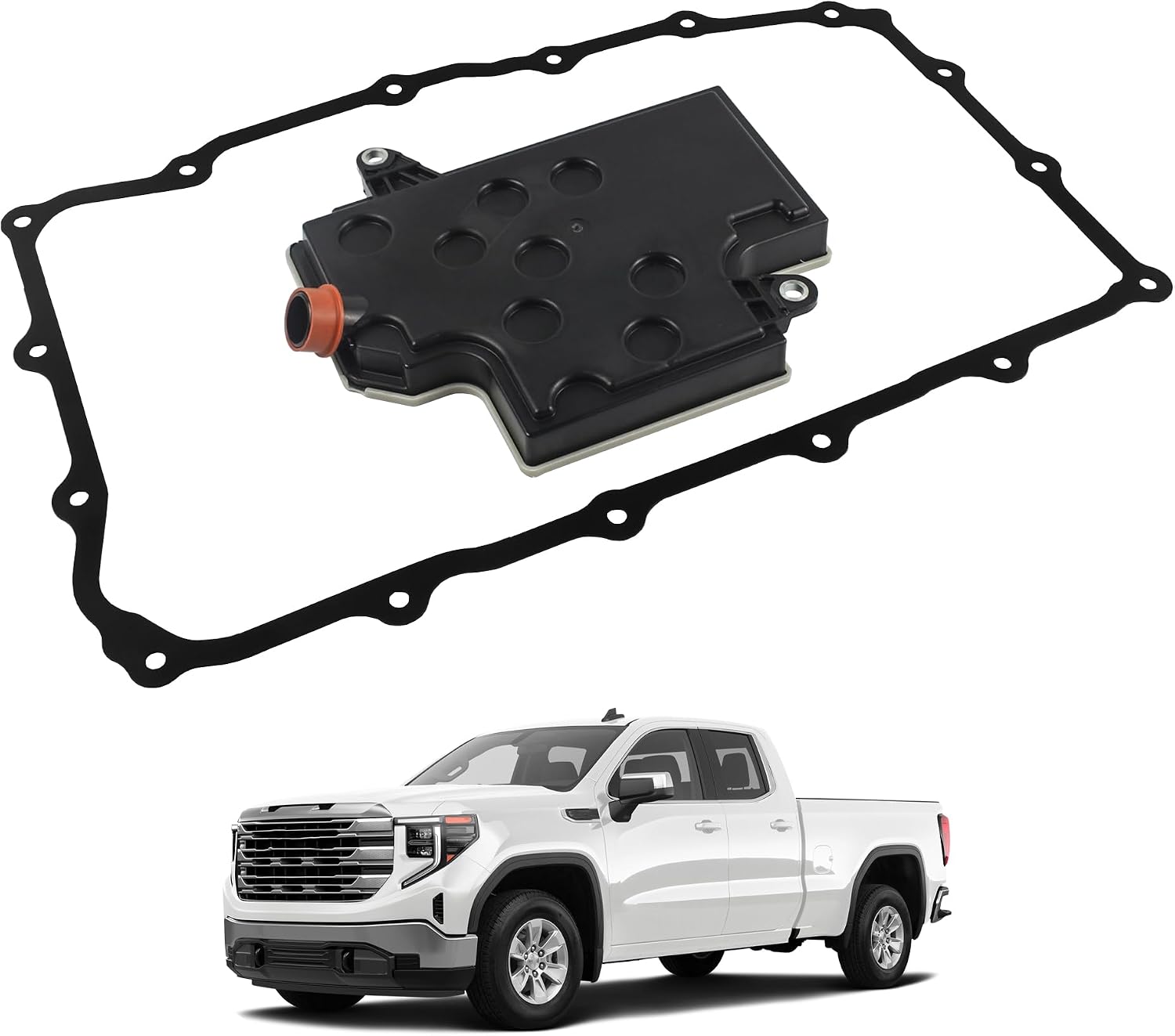
- Filter and pan gasket. You are in there anyway, and a clean filter is cheap insurance on a unit whose upper gears depend entirely on pressure the TCM cannot directly measure.
- Relearn. Adaptive pressure control freezes during failsafe events. After the repair, run a proper relearn drive cycle through the full ratio range before you decide whether 10th is back.
The honest summary for the customer is short: on a Gen. 2 GM ten-speed, "it will not shift into overdrive anymore" usually means a control valve wore out and the computer noticed before they did. That is a valve body repair, not a rebuild, and it is a much better conversation to have on the phone than after the unit is on the bench.
FAQ
Why is my 10L80 stuck in 5th gear?
On a Gen. 2 GM 10-speed that is most often the recall software doing exactly what it was written to do. GM's Part 573 report for NHTSA campaign 25V-148 states the new transmission control module software monitors valve performance, detects excess wear approximately 10,000 miles before a wheel lock-up could occur, and then limits the transmission to fifth gear along with a service engine light and a reduced propulsion message. The gear cap is the fix for the safety risk, not the fix for the transmission.
Does the 10L80 have an overdrive gear I can switch off?
It has three. Transmission Digest's teardown of the joint Ford and GM 10-speed notes that first through sixth are underdriven, seventh is a straight 1:1, and eighth through tenth are overdriven. There is no separate overdrive button the way a four-speed had one. Tow/Haul and grade braking only change the shift schedule and how long the calibration holds the lower gears.
Will a 10L80 shift into 10th gear when the transmission is cold?
Usually not, and that is normal. ATRA's GEARS coverage of the 10L series notes that with engine coolant below 158 degrees F (70 degrees C) at start-up, the ECM runs catalytic converter light-off programming for 25 to 90 seconds, and the unit still has to reach the temperature range where adaptive learning is allowed. Judge a no-overdrive complaint on a fully warmed unit at steady light throttle, not on the first mile.
What fluid and how much does a 10L80 take after a valve body repair?
DEXRON ULV, nothing else. GM TechLink's 2025 transmission capacities chart lists 7.7 liters / 8.1 quarts for a 10L80 fluid change across RPO codes MQB, MQC, MHT, MI2, MHS and MHU. That is the service figure, not a dry fill, and an ultra-low-viscosity unit filled with LV fluid will give you shift complaints that look hydraulic and are not.
Is the Sonnax feed limit low valve kit a substitute for the recall?
No, and it is not meant to be. The recall reflash is free at the dealer and is what keeps the wheels from locking. Sonnax kit 105740-54K addresses the worn valve and bore that caused the condition in the first place, which is what actually gives the customer their upper gears back. Run the VIN, let the dealer do the software, then fix the hardware.
Sources
- NHTSA — Part 573 Safety Recall Report 25V-148, General Motors LLC, submitted March 6, 2025 (GM recall N242480630). Backs the 90,081 potentially involved vehicles at a 1 percent estimated defect rate; the covered 2019–2020 Cadillac CT6, 2020–2021 Cadillac CT4 and CT5 and 2020–2022 Chevrolet Camaro; the quoted defect and remedy language including the fifth-gear limit, the approximately 10,000-mile early detection and the downshift-from-eighth lock-up mechanism; the under-150-millisecond lock-up duration and the 115 field reports received between February 2022 and November 2024; the recalled control valve body part numbers 24049466, 24043769, 24047993, 24049469 and 24047995; and the production correction on the 2021 CT6, 2022 CT4/CT5 and 2023 Camaro. static.nhtsa.gov (PDF)
- Sonnax — "Understanding the '19-Later GM 10-Speed Safety Recall," Jim Dial. Backs the feed limit low valve's dual role in the boost ball circuitry and as a solenoid regulator limiting feed to the default disable solenoid; the DD solenoid's control of the default enable and default select valves and the 2nd-gear-in-Drive default strategy; the symptom set of momentary wheel lock-up, sudden downshift to 2nd from 7th or 8th, harsh shifts and bind-up when hot; the note that the problem is most common when shifting into the higher gears; DTC P0747 as the accompanying code; wear appearing as early as 35,000 miles on towing applications; and the recall software placing the transmission in 5th gear with the MIL illuminated. sonnax.com
- Sonnax — "Overcome the GM 10-Speed Wheel Lockup Recall With a Sonnax Feed Limit Low Valve Kit." Backs the OE control valve failing in as little as 30,000 miles; the affected 10L1000 and Gen. 2 10L60, 10L80 and 10L90 units; operation limited to 5th gear after the software update; and the two repair paths, drop-in kit 105740-54K for minimal bore wear and oversized kit 105740-59K requiring reaming for severe wear, both avoiding a complete valve body replacement. sonnax.com
- Transmission Digest — "Quick Peek at New Ford / GM 10 Speed," Mike Souza, August 2018. Backs the four planetary gear sets and six clutch assemblies (four rotating, two braking) with four elements applied and two released per gear change; first through sixth underdriven, seventh at 1:1 and eighth through tenth overdriven; the eight-to-nine solenoid count with six normally low linear shift solenoids, a normally low TCC variable force solenoid and a normally high line pressure solenoid; and the failsafe gear command ranging from 2nd gear and Reverse to 8th gear and Reverse, with the Type A DTC strategy disabling autostart/autostop, grade braking, manual shift control, neutral idle, powertrain downshift braking, tap up/tap down and TCC control, freezing adaptive pressure values and restricting the unit to Reverse plus one forward gear. transmissiondigest.com
- ATRA / GEARS Magazine — "Diagnosing The 10L Series Transmission." Backs the requirement that four components be applied for power flow through the geartrain; the roughly 0.3-second clutch overlap in the shift strategy; the catalytic converter light-off programming that runs 25 to 90 seconds when coolant is below 158°F (70°C) at start-up; the high-mileage failure list of weak or broken solenoid retainer clips, sticking linear pintle solenoids and clutch control valves, worn LPC accumulator bore, excessive clutch clearance and worn rotating sealing rings; and the note that the linear pintle solenoids are not available separately. gearsmagazine.com
- General Motors — GM TechLink, "2025 Transmission Capacities & Fluids" reference chart. Backs the DEXRON ULV specification for all 10L80 applications and the 7.7 L / 8.1 qt fluid change capacity across RPO codes MQB, MQC, MHT, MI2, MHS and MHU, plus the 13.6 L / 14.4 qt figure listed for the 10L1000. gm-techlink.com (PDF)