Half the 10L80 slip complaints that come through the door are not slipping clutches. They are hydraulic leaks that let a clutch apply late or release early, and the customer describes the result as slipping because that is what it feels like from the driver's seat. The distinction matters, because one of those gets fixed at the valve body in an afternoon and the other one is a unit out.
This is how to tell them apart on a GM 10L80, what actually causes each, and the order to check them in so you are not tearing down a transmission that needed a $60 valve kit. Everything below is sourced from GM service documents, the NHTSA recall filing, Sonnax and ATRA, with links at the bottom.
What "slipping" means on a 10-speed, and how the TCM sees it
The 10L80 carries six clutch packs and four planetary gearsets, which is how it gets ten forward ratios out of a package that fits where a 6L80 used to live. More clutches means more apply circuits, and every one of those circuits is a place pressure can go missing.
The TCM does not have a slip sensor. It infers slip from speed. Mike Souza's teardown for Transmission Digest documented four internally mounted two-wire Hall-effect speed sensors fed 9 volts from the TCM: the input speed sensor (also called the turbine speed sensor), intermediate speed sensor 1, intermediate speed sensor 2, and the output speed sensor. The TCM uses the rpm value from each one to control line pressure, shift timing, correct gear ratio and torque converter clutch slip speed.
The reluctor counts matter if you ever scope one. The input sensor reads 40 evenly spaced magnets bonded in rubber on a ring riveted to the input planet carrier and is the only one of the four without a magnetic pickup in the tip; ISS1 and ISS2 each read a 50-tooth steel reluctor and the output sensor a 68-tooth wheel. Souza measured input sensor resistance at roughly 346.7 k-ohm against 4.88 m-ohm for the other three, so a sensor in the wrong hole is not a subtle mistake.
On a slip complaint, graph input, both intermediates and output together during the event. If engine and input rpm climb while output does not follow, a clutch is not holding. If the ratio stays correct and the engine surges, you are chasing converter clutch slip, not a gear clutch.
Cause 1: feed limit low valve wear, the valve behind the recall
This is the first thing to rule out on a 2019-later unit, because GM has put it in writing. NHTSA recall 25V-148, GM number N242480630, filed March 26, 2025, covers 90,081 Cadillac CT4, CT5, CT6 and Chevrolet Camaro vehicles with the 10-speed. GM's own defect description: a transmission control valve "may be susceptible to excess wear over time, resulting in a gradual loss of pressure within the valve that can cause harsh shifting," and "in rare cases, the wheels may experience a momentary lock up." The cause section is blunter still — wear in the valve body "can cause a fluid leak leading to a pressure drop that causes certain valves to move unexpectedly."
Sonnax named the valve. Jim Dial's writeup identifies it as the feed limit low valve, which does double duty: it is part of the boost ball circuitry that regulates clutch apply, and it limits solenoid feed to the default disable (DD) solenoid. The DD solenoid holds the default enable and default select valves in position. With those valves released, line pressure routes to the exhaust backfill circuit and applies the ABCD clutches through the exhaust ports — the power-down default, which is second gear.
So when that feed pressure drops, the unit can fall into lower gears or bind up depending on what gear it was commanding. Dial reports the symptom shows up shifting into 7th or 8th, where the vehicle suddenly drops to 2nd or the drive wheels try to lock. On 10L1000 applications the valve has worn out in as few as 35,000 miles on tow trucks and heavy trailer pullers. It is usually hot-only: let it cool and it behaves.
Two numbers to take to the bench. Vacuum test the balance end of the valve, where the wear concentrates: a good bore reads 18 in-Hg or higher. Sonnax sells drop-in kit 105740-54K for the low valve and 105740-58K for the high valve, but if the bore tests below 8 in-Hg a drop-in will not recover it and you need the oversized kits, 105740-59K and 105740-60K, with the reaming tools. The other tell is a stored P0747, which in effect says the E clutch is on when it should be off.
Do not let a customer drive on this one. Sonnax is explicit that extended driving in that condition will destroy clutch packs, because the unit binds up intermittently. The recall software update helps by dropping the unit into 5th gear and lighting the MIL when the TCM detects the wear, but the software does not fix the bore.
Cause 2: CDF drum sleeve walk
The second high-probability cause is mechanical and it is shared with the Ford 10R80. The C, D and F clutches live on a common drum, and a sleeve inside that drum can shift rearward under heat and load, uncovering fluid ports from behind the sleeve. Pressure meant for three clutch circuits leaks out.
Sonnax publishes the symptom list for its CDF Drum Saver Kit 129910-01K, which fits the Ford 10R80 and both GM 10L80 generations: bump shifts, no 2nd, neutral shifts and slide shifts. That is exactly the vocabulary customers use when they say it slips. A slide shift, where the unit drifts between gears instead of grabbing, is a pressure loss signature, not a worn friction signature. The kit uses a stepped sleeve that cannot shift rearward in the drum plus a set screw that locks it from rotating, along with front and rear bushings.
Cause 3: sealing rings, bushings and the air check that finds them
Caleb Perham of the Sonnax TASC Force put it plainly in Transmission Digest: bushing and sleeve failures plague these units with loss of pressure and other shift-related concerns, and wear on the sealing ring and hub bushing is one of the biggest causes of lost charge pressure, which shows up as lockup and overheat complaints. Internal sealing ring and bushing wear specifically causes slipping, slide bumps, neutral conditions and ratio error codes.
The test that finds it costs nothing. Using the input and the mating part, air check each drum to confirm the clutch pack seals, which also tells you whether a shaft is leaking. There are plugs in the shaft that block fluid and keep it in its intended circuit; if a plug leaks you get shift concerns. Perham's advice is to air check the complete assembly through the pump before loading it into the case, which catches leaks while you can still do something about them.
ATRA's Keith Clark adds the two rules people break on reassembly. Clutch clearances must be within specification for this unit to shift correctly — excessive clearance shows up as harsh shifts and poor performance at higher mileage. And you must replace the rotating sealing rings: reused rings leak and produce intermittent shift quality complaints, which is the most frustrating kind of comeback because it will not reproduce on the lift.
Cause 4: low line pressure from a worn main pressure regulator
If the whole unit feels lazy rather than one shift being wrong, look at line pressure. Sonnax documents wear in the main pressure regulator bore and on the outboard spool area producing low line pressure, delayed engagement, poor shift quality and burnt clutches, with wear at the inboard spool affecting converter apply. Kit 105740-12K uses an extended front spool that works in unworn bore area, with an O-ringed end plug so signal oil stops leaking to exhaust. Clark's inspection list for the valve body covers the LPC accumulator bore and the linear pintle solenoid bores; wear in those areas is not repairable at the valve body level.
One non-obvious item from the same Sonnax article: check the battery. A failing battery causes drivability complaints and an apparent failure to adapt after a repair, showing up as harsh engagements or erratic up and downshifts that improve once the vehicle warms. Before you condemn your own work on an adaptive 10-speed, load test the battery.
Cause 5: the fluid, the level, and the cooler line
The 10L80 requires DEXRON ULV. Perham's warning is that these low-viscosity fluids exist to cut pump workload, and using universal or older-generation fluid "will result in shift complaints and premature failure." Chevrolet Performance's own instructions for the 10-speed family say the same thing in reverse: do not use DEXRON VI or DEXRON HP.
Level matters as much as type, and this unit has no dipstick. The level is set with the engine running at a transmission fluid temperature of 75 to 80 C (167 to 176 F), and GM states that above 80 C you finish under-filled and below 75 C you finish over-filled. A low level lets the pump take in air. GM's TechLink diagnostic tips describe aeration producing an erratic whine and cavitation producing rattling, whirling, roaring or grinding, with the causes listed as a low fluid level, a filter condition or a damaged O-ring.
Then there is the overheat path, which is where slipping and flare complaints often actually start. GM bulletin 22-NA-182, version 5, June 2024, covers the 6L80, 6L90, 8L90, 10L80, 10L90 and 10L1000 with a condition list that includes harsh shifting, shudder, surging, stalling, neutral/flare and transmission overheating — neutral/flare was added to that list in the December 2022 revision. The cause GM names is a twisted cooler line on low mileage vehicles, which can set DTC P27EC in the TCM on ETRS units (RPO MHS, MQC). Inspect the lines, untwist or replace, then recheck the level. If the lines are fine, GM points at the thermal bypass valve, which on the 10L80, 10L90 and 10L1000 sits inside the valve body and opens at 143 F (61 C), except on 3.0L LM2 and LZ0 diesels where it is on the frame rail and opens at 194 F (90 C).
Symptom to cause, at a glance
| What the vehicle does | Look here first |
|---|---|
| Drops to 2nd from 7th or 8th, or wheels momentarily lock, hot only | Feed limit low valve wear. Vacuum test the balance end; 18 in-Hg or better is good. Check for P0747 and for open recall 25V-148 coverage. |
| Slide shifts, bump shifts, no 2nd, momentary neutral | CDF drum sleeve walked rearward, uncovering ports. |
| Intermittent flare on one specific shift | Leaking rotating sealing ring or shaft plug on that clutch circuit. Air check the drum. |
| Delayed engagement, lazy everywhere, burnt smell | Low line pressure. Main pressure regulator bore wear, then LPC accumulator and pintle bores. |
| Erratic whine, rattle or roar with the slip | Pump aeration or cavitation. Low level, filter, or a damaged O-ring. |
| Flare or neutral only when hot, high fluid temp | Twisted cooler line per 22-NA-182, then the thermal bypass valve. |
| Vibration at steady cruise, 28-53 mph, with growl or hum | Not slip. Radio calibration per 23-NA-194 first, converter per 24-NA-242 only if it remains. |
That last row surprises people, but it is GM's own sequence in the January 2025 TechLink: for a shudder with a growl or humming sound between 28 and 53 mph, a service calibration for the A11 radio is available, and only if the shudder or noise still occurs after that update should the converter be replaced.
The order to work it in
- Scan all modules and record freeze frame. P0747 points hard at the feed limit low valve, ratio codes at a specific clutch circuit, P27EC at the cooler line.
- Read the RPO label on the door B-pillar. ATRA's standing advice on this family: variants differ enough that a wrong assumption sends the diagnosis sideways.
- Verify the fluid level correctly, engine running, at 75 to 80 C. Not cold, not guessed.
- Check open recall coverage by VIN before you sell a teardown.
- Graph input, intermediate and output speeds during the complaint to confirm the unit is actually losing ratio.
- Pull the valve body and vacuum test the feed limit low and high bores, main pressure regulator, and the TCC circuit valves.
- If the valve body is clean, go internal. CDF drum sleeve, sealing rings, bushings, clutch clearances.
That order rules out the cheap, high-probability causes before the expensive one. Teardown first is how a shop ends up rebuilding a unit that comes back slipping because the worn bore went right back in.
Need parts for this job?
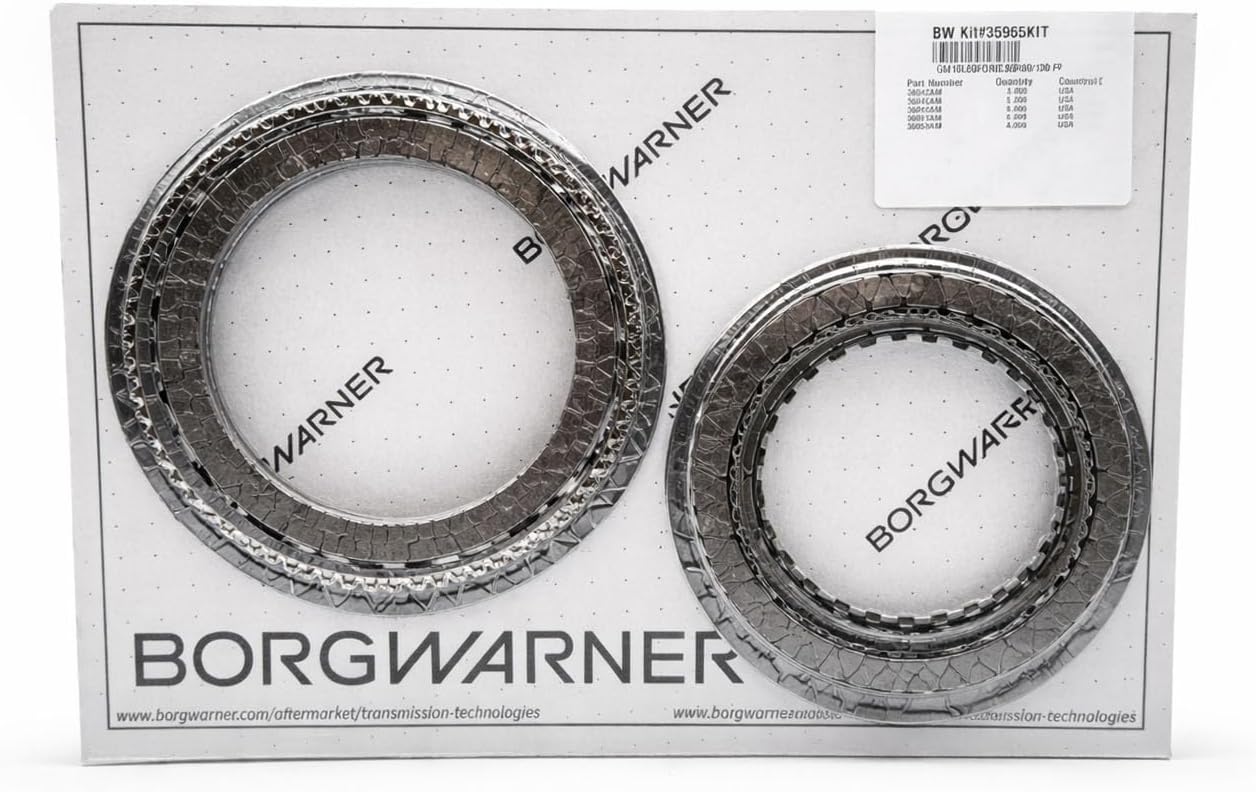
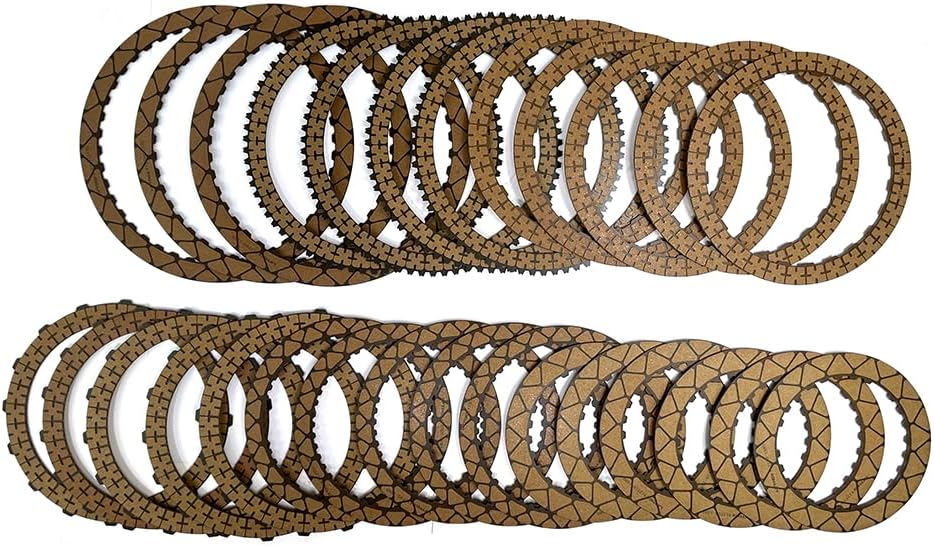
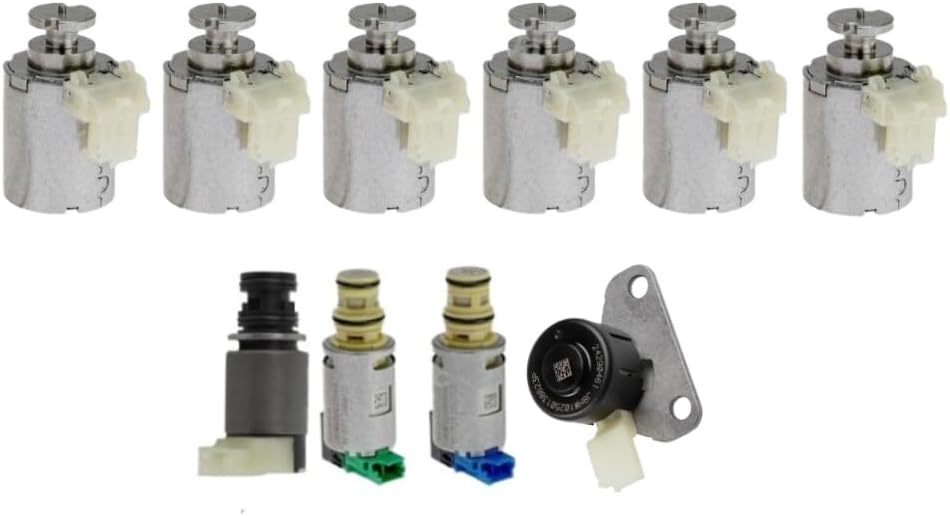
Friction clutch kits, solenoid kits, filters, bushings and rebuild kits for the GM 10L80, on one page with US shipping.
Shop 10L80 parts →Shop the part for this fix
If the vacuum test confirms feed limit low valve wear, this is the drop-in repair: the Sonnax feed limit low valve kit 105740-54K, at our sister store CoreTransmissionParts.com. If your bore tests below 8 in-Hg you need the oversized kit and tooling instead, and the full 10L80 catalog is linked below.
View the feed limit low valve kit →FAQ
Why does my 10L80 only slip when it is hot?
Hot-only slipping points at a hydraulic leak rather than a burnt clutch. Clearances open up and fluid thins as the unit heats, so a worn valve bore or a leaking sealing ring that holds pressure cold cannot hold it at temperature. Sonnax specifically calls out letting the vehicle cool as a quick check for feed limit low valve wear, because the transmission usually behaves normally until it is hot. A clutch that is actually burnt slips cold too.
Can a 10L80 slip with no codes stored?
Yes, briefly. The TCM watches four two-wire Hall-effect speed sensors and computes gear ratio and torque converter clutch slip speed from them, so a sustained slip normally sets a ratio or TCC code. A short flare on one shift, or a slide-bump caused by a leaking clutch circuit, can pass without crossing the threshold that sets a DTC. Record a scan tool graph of input, intermediate and output speeds during the complaint rather than waiting for a code.
What is the 10L80 valve that GM recalled, and does it cause slipping?
GM safety recall 25V-148, manufacturer number N242480630, covers a transmission control valve that wears over time and causes a gradual loss of pressure, harsh shifting and in rare cases a momentary wheel lock-up. Sonnax identifies it as the feed limit low valve, which also limits solenoid feed to the default disable solenoid. When that feed goes low the unit can drop to a lower gear or bind up, and Sonnax warns that continuing to drive in that condition will destroy clutch packs.
How do you tell 10L80 torque converter shudder from clutch slip?
Shudder is a vibration at a steady cruise with engine and output speed still matched; slip shows engine rpm rising without road speed following. On GM 10-speeds a shudder with a growl or hum between 28 and 53 mph is addressed first by a radio calibration update per bulletin 23-NA-194, and only if it remains after that does GM direct you to replace the torque converter per bulletin 24-NA-242. Verify TCC slip speed on the scan tool before you pull a converter.
Will a fluid change fix a slipping 10L80?
Only if the fluid is the actual cause. A low level or a filter or O-ring problem lets the pump take in air, which GM ties to whine, rattling and roaring noises, and the wrong fluid causes shift complaints and premature failure because these units require DEXRON ULV specifically. If the frictions are already burnt or a valve bore is worn, fresh fluid changes nothing. Verify the level at 75 to 80 C before spending money on anything else.
Related guides
- GM 10L80 Problems and the Valve Body Recall
- 10L80 Shift Solenoid Symptoms and Testing
- 10L80 P0748: Pressure Control Solenoid Performance
- 10L80 P0741: Torque Converter Clutch Circuit Performance
- 10L80 Fluid Type and Capacity: DEXRON ULV and the 75-80 C Fill Window
- 10L80 Filter and Pan Service: The Full Job, Start to Fill
Sources
- NHTSA / General Motors LLC — Part 573 Safety Recall Report 25V-148, manufacturer recall N242480630, submitted March 26, 2025. Backs the recall population (90,081 vehicles across 2020-2021 CT4, 2020-2021 CT5, 2019-2020 CT6 and 2020-2022 Camaro with the 10-speed), the defect description (a transmission control valve susceptible to excess wear resulting in a gradual loss of pressure that can cause harsh shifting, and in rare cases momentary wheel lock-up), and the stated cause of excessive valve body wear causing a fluid leak and pressure drop that moves valves unexpectedly. static.nhtsa.gov (PDF)
- Sonnax — "Understanding the '19-Later GM 10-Speed Safety Recall," Jim Dial, May 16, 2025. Backs the identification of the recalled valve as the feed limit low valve, its second job limiting solenoid feed to the default disable solenoid, the default enable and default select valve function and the ABCD/2nd gear default, the 7th-to-8th drop to 2nd and wheel lock-up complaint, hot-only behavior, wear at as few as 35,000 miles on heavy-duty 10L1000 applications, DTC P0747 indicating the E clutch on when it should be off, the warning that extended driving destroys clutch packs, the recall software dropping the unit into 5th gear, the 18 in-Hg vacuum test target at the balance end and the below-8 in-Hg threshold for oversized repair, and kits 105740-54K, 105740-58K, 105740-59K and 105740-60K. sonnax.com
- Transmission Digest — "What you need to know about 10-speed transmission repair," Caleb Perham (Sonnax TASC Force), April 7, 2025. Backs the six clutch packs and four planetaries, bushing and sleeve failures causing loss of pressure, sealing ring and hub bushing wear as a major cause of lost charge pressure leading to lockup and overheat concerns, internal sealing ring and bushing wear causing slipping, slide bumps, neutral conditions and ratio error codes, the drum and through-pump air check procedure and leaking shaft plugs, and the requirement for DEXRON ULV rather than universal or older fluid. transmissiondigest.com
- Transmission Digest — "Ford & GM 10R80/10L90 Speed Sensor Functions," Mike Souza, January 1, 2019. Backs the four internally mounted two-wire Hall-effect speed sensors on a 9-volt TCM supply, their designations (ISS1, input, ISS2, output), the TCM using their rpm values to control line pressure, shift timing, correct gear ratio and torque converter clutch slip speed, the 40-magnet input reluctor with no magnetic tip, the 50-tooth ISS1 and ISS2 reluctors, the 68-tooth output reluctor, and the approximate 346.7 k-ohm input sensor resistance versus 4.88 m-ohm for the other three. transmissiondigest.com
- General Motors — Service Bulletin 22-NA-182, Version 5, June 2024 (NHTSA-hosted). Backs the condition list for 6L80, 6L90, 8L90, 10L80, 10L90 and 10L1000 vehicles (harsh shifting, shudder, surging, stalling, neutral/flare, transmission overheating and above-normal fluid temperature), neutral/flare having been added in the December 19, 2022 revision, the twisted cooler line on low mileage vehicles as the named cause, DTC P27EC setting in the TCM on ETRS transmissions (RPO MHS, MQC), and the thermal bypass valve opening temperatures of 143 F (61 C) inside the valve body on 10L80/10L90/10L1000 and 194 F (90 C) on the frame rail for 3.0L LM2 and LZ0 diesels. static.nhtsa.gov (PDF)
- General Motors TechLink — "10-Speed Automatic Transmission Diagnostic Tips," Mid-January 2025 (Vol. 27, No. 2). Backs aeration producing an erratic whine and cavitation producing rattling, whirling/roaring or grinding with a low fluid level, a filter condition or a damaged O-ring named as causes, the 10L60/80/90 RPO list, and the shudder sequence: a vehicle shudder with a growl or humming sound between 28-53 mph addressed first by the A11 radio (RPO IOR) service calibration per bulletin 23-NA-194, with torque converter replacement per bulletin 24-NA-242 only if the condition remains. gm-techlink.com (PDF)
- Sonnax — "Tackling Ford & GM 10-Speed Valve Body Problems: Failing Batteries & More." Backs main pressure regulator bore and outboard spool wear producing low line pressure, delayed engagement, poor shift quality and burnt clutches with inboard wear affecting converter apply, the 105740-12K extended-spool and O-ringed end plug repair, the TCC priority, TCC regulator and boost valve wear items, and the failing-battery effect showing up as apparent failure to adapt with harsh engagements or erratic shifts after a repair. sonnax.com
- Sonnax — CDF Drum Saver Kit 129910-01K product and application data. Backs the CDF drum repair covering Ford 10R80 and GM 10L80 Gen. 1 and Gen. 2, the published symptom list of bump shifts, no 2nd, neutral shifts and slide shifts, and the kit contents: a stepped sleeve that will not shift rearward, a locking set screw, and front and rear bushings. sonnax.com
- ATRA / GEARS Magazine — "Diagnosing The 10L Series Transmission," Keith Clark, June 4, 2024. Backs the requirement that clutch clearances be within specification for the unit to shift correctly with excessive clearance causing harsh shifts at high mileage, the rule that rotating sealing rings must be replaced because reused rings leak and cause intermittent shift quality, inspection of the LPC accumulator and linear pintle solenoid bores with wear there not repairable at valve body level, addressing solenoid retaining clips whenever the valve body is serviced, and identifying the exact unit variant by the B-pillar RPO label before diagnosis. gearsmagazine.com
- Chevrolet Performance — Supermatic 10L90 Transmission Kit Installation Instructions, part no. 19420481. Backs the DEXRON ULV requirement and the instruction not to use DEXRON VI or DEXRON HP, and the 75-80 C (167-176 F) fluid temperature window for setting level with the consequences in both directions. chevrolet.com (PDF)
Keep the fluid specs on your bench
Every major transmission, the exact fluid it takes and the capacity, on one printable sheet. Free, no fluff.
Get the spec chart →