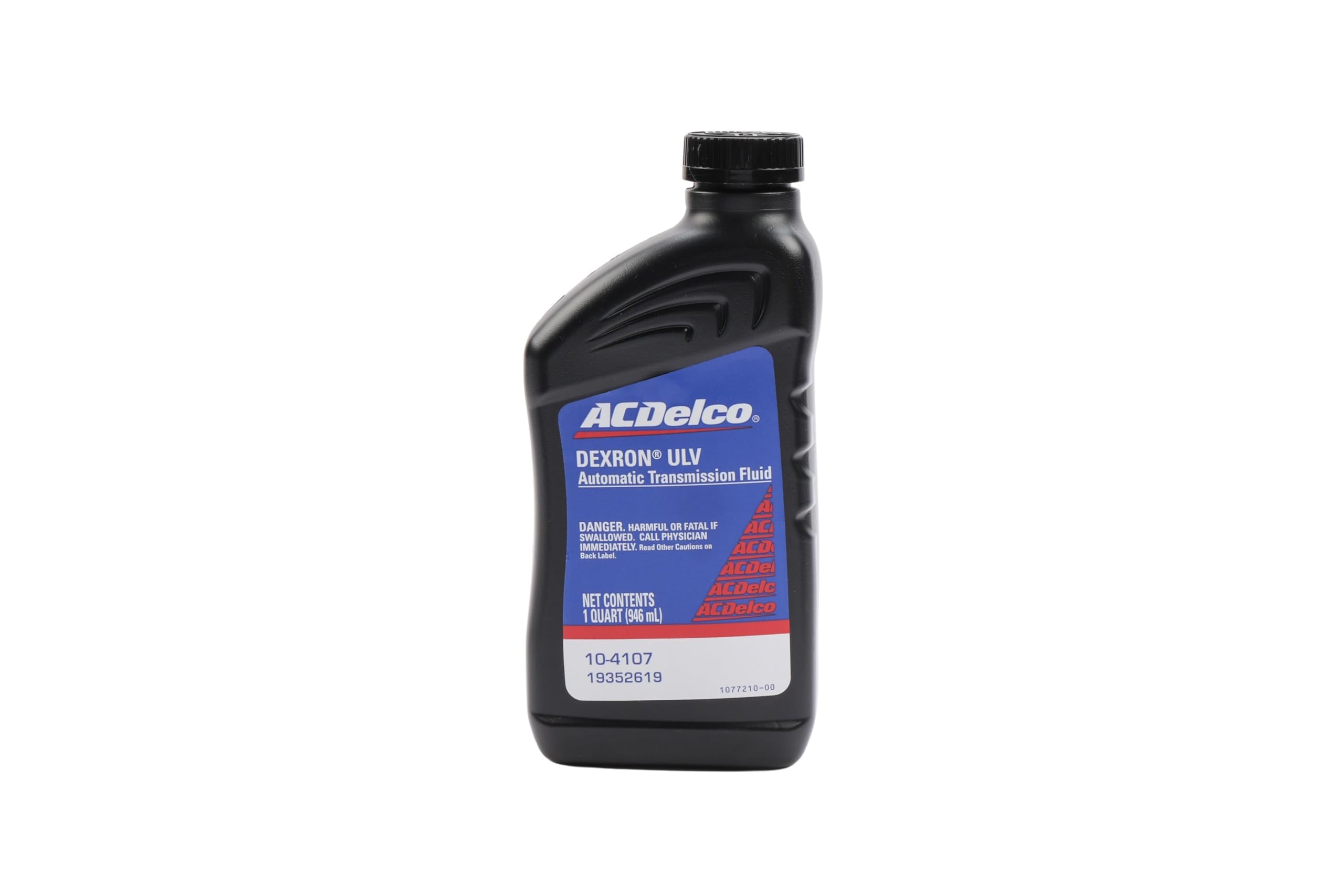
Short answer first, because that is what most people landing here need at the parts counter: a GM 10L90 takes DEXRON ULV and nothing else, and a pan-and-filter service takes about 7.7 liters, 8.1 quarts. That is the whole answer for a routine service. The longer answer matters the moment you are doing anything else, because GM publishes three different capacity numbers for this unit, the level is set through a plug in the pan at a specific fluid temperature, and there are two plugs on the side of the case that look like fill points and will leave you under-filled if you use them.
Everything below comes from GM's own documents for this exact transmission: the Chevrolet Performance Supermatic 10L90 installation sheet, GM TechLink's 2025 capacity chart and bulletin 22-NA-182. Where I am giving bench opinion instead of a GM number, I say so.
| 10L90 spec | Value | Source |
|---|---|---|
| Fluid | DEXRON ULV only. GM P/N 19352619 (US), 19352620 (Canada) | Chevrolet Performance 19420481 |
| Pan removal and filter replacement | 7.7 L / 8.1 qt | Chevrolet Performance; GM TechLink 2025 |
| Overhaul (transmission volume only) | 10.95 L / 11.6 qt | Chevrolet Performance 19420481 |
| Complete system including cooler | 12.52 L / 13.23 qt | Chevrolet Performance 19420481 |
| Level-check fluid temperature (TFT) | 75–80°C (167–176°F), not before 70°C (158°F) | Chevrolet Performance 19420481 |
| Level check plug torque | 22 N·m (16 lb-ft) | Chevrolet Performance 19420481 |
| Thermal bypass valve opens | 61°C (143°F), inside the valve body | GM bulletin 22-NA-182 |
Which vehicles have a 10L90
The 10L90 is the high-torque rear-drive member of GM's 10-speed family, and it is worth confirming you actually have one before you order anything, because the 10L80 and 10L60 share the case family and the RPO codes are how you tell them apart. GM TechLink's 2025 capacity chart lists the 10L90 under the Cadillac CT5 as RPO MHX and the Escalade and Escalade ESV as RPO MHO. Bulletin 22-NA-182 lists 2021–2024 Escalade models with the L87, LM2 and LT4 engines under RPOs MHS, MHO and MQC, which is the mix of 10L80 and 10L90 you will see on that platform. The Chevrolet Performance sheet adds the one people forget: the 2017–2021 Camaro 10L90 is RPO MI4, and GM tells crate-transmission buyers to order service parts against that Camaro build.
Pull the RPO sticker in the glovebox or run the VIN before you commit. On an Escalade in particular, the engine tells you a lot and the RPO tells you the rest.
For reference, the crate Supermatic 10L90 is rated at 650 lb-ft, weighs about 237 lb, and runs a 4.696 first gear through a 0.636 tenth. The production truck and Cadillac units share the architecture and the fluid, which is why the capacity and fill numbers below carry across.
DEXRON ULV, and why nothing else goes in
GM's 10L90 sheet does not hedge on this. It specifies DEXRON ULV, P/N 19352619 in the US and 19352620 in Canada, says to use it only, warns that the wrong fluid may cause internal damage, and then says it again in plain words: do not use DEXRON VI or DEXRON HP. It also says something most techs skip right past: the quart containers of DEXRON ULV have to be shaken before pouring to stir the additives back up. Ten seconds a bottle. Do it.
Why be so rigid about a fluid? Because viscosity is the number the whole hydraulic system is tuned around. Lubegard's breakdown of the 10-speed fluids lays out how the targets have dropped over time: four- and five-speed transmissions ran ATF around 7.5 cSt at 100°C, six-speeds around 6.0 cSt, and DEXRON HP sits at 5.95 cSt. The ultra-low-viscosity category went thinner still. On a 10L90, clutch fill times, the variable-vane pump output and the TCM's adapts are all built around that thinner fluid. Put a heavier fluid in and the unit does not fail on the spot; it just fills clutches slower, shifts late and firm, and hands you a drivability complaint that looks like a valve body problem on the scan tool when it is really the bottle.
"ULV" on the label does not mean it fits a GM
The trap here is that Ford's fluid carries the same three letters. Motorcraft's own product sheet lists MERCON ULV at 4.5 cSt at 100°C, 19.2 cSt at 40°C, and a viscosity index of 152, under its own license number. That is a Ford specification written for the 10R family. DEXRON ULV is a separate GM license. Lubegard makes the same point about the whole category: Ford and GM each called for a different OEM fluid for what is essentially a co-developed transmission. Two fluids with the same nickname are still two specs. On a GM unit, you want a bottle that carries the DEXRON ULV license.
Multi-vehicle ULV fluids that list both specs on the label exist, and some of them are good fluids. My bench rule: on anything still under powertrain warranty, or anything that just came back from a valve body repair, I use licensed DEXRON ULV and keep the receipt. On an out-of-warranty truck with a customer watching the bill, a quality multi-spec ULV that names DEXRON ULV on the label is defensible. What is never defensible is DEXRON VI or HP because it was on the shelf.
Three capacity numbers, and which one you are buying for
The single most common parts mistake on this unit is buying one job's worth of fluid for a different job. The Chevrolet Performance sheet gives all three:
- Pan removal and filter replacement: 7.7 L / 8.1 qt. This is the routine service number, and it matches GM TechLink's 2025 chart for both 10L90 rows. The converter and the cooler circuit keep their fluid, so this is an exchange of part of the charge, not all of it.
- Overhaul, transmission volume only: 10.95 L / 11.6 qt. A dry rebuilt unit going back in with a converter that is not full.
- Complete system including cooler volume: 12.52 L / 13.23 qt. A rebuilt unit with a flushed or replaced cooler and lines, everything empty.
What I actually put on the bench: nine quarts for a service, fourteen for a rebuild. You will have leftovers. That is the point. Being half a quart short with the truck on a lift and TFT climbing past the window is how people rush a level set.
And do not grab a number off the wrong row of the chart. The same GM chart lists the 8L90 at 7.0 L / 7.4 qt of DEXRON HP and the 10L1000 at 13.6 L / 14.4 qt for a fluid change. Different units, different fluid, nearly double the volume on the heavy-duty ten-speed.
No dipstick: how the level is actually set
The 10L90 has no fill tube and no dipstick. GM's sheet describes it directly: a tube in the bottom pan sets the fluid level, and you check it through the plug in the pan. Transmission Digest's teardown of the Ford and GM ten-speeds describes the same layout, a metal pan on the GM unit with a fill level tube and fill plug, and flags the trap. On the rear driver's side of the case, just above the pan rail, sit two large plugs embossed CAR and TRK, plus a smaller plug on top of the case found only on GM units. The factory fill procedure never mentions them. They are for factory use only, and the fill level tube in the pan sits higher than the bottom of those case plug holes. Fill to a case plug and you have under-filled the transmission while feeling like you did it right.
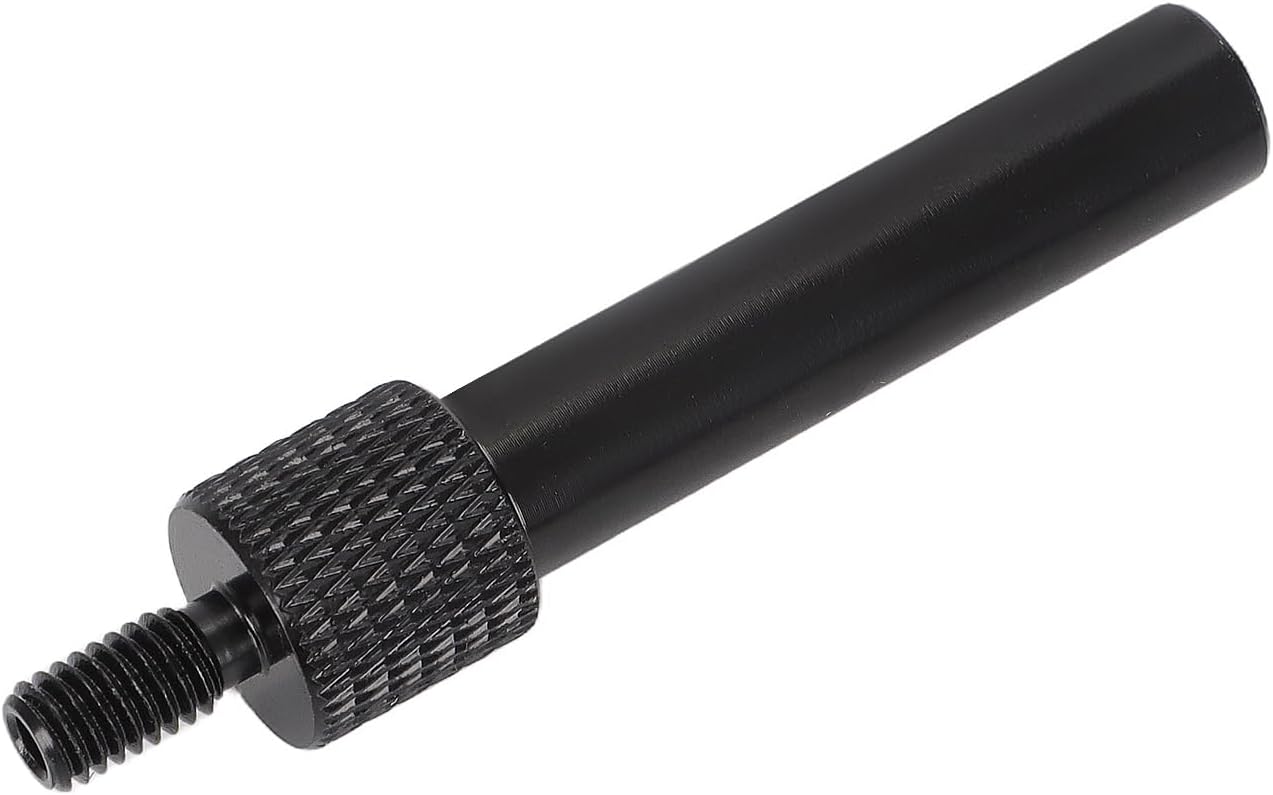
Because you are filling upward into the pan, you need a hand transfer pump or a threaded fill adapter. There is no funnel path into this transmission.
The temperature window is the whole job
GM specifies a TFT of 75–80°C (167–176°F) for the level check, and spells out what happens if you miss it: above 80°C you end up under-filled, below 75°C you end up over-filled. There is also a hard floor. The 10L90 has an internal thermal bypass valve, and GM says not to check the level at all until TFT has reached or exceeded 70°C (158°F). Bulletin 22-NA-182 gives the other half of that story: on the 10L80, 10L90 and 10L1000 the TBV sits inside the valve body and opens at 143°F (61°C). Below that, the cooler circuit is not fully in play and any level reading is fiction.
Do not borrow a fill temperature from a 6-speed or 8-speed procedure you have memorized. Those units have external bypass valves at different opening temperatures (22-NA-182 lists 158°F for the 6L80/6L90 and 194°F for the 8L90) and different procedures. The 10L90 number is 75–80°C.
GM's sequence, condensed:
- Start and idle the engine and bring the fluid to operating temperature, watching the TFT PID on a scan tool.
- Foot on the brake, move the shifter through every range, pausing at least three seconds in each, and return to Park with the engine at 500–800 RPM.
- Idle at least one minute.
- If you need heat, set the parking brake, hold the service brake in Drive and run converter stalls 10 seconds on, 10 seconds off, never above 1500 RPM. GM warns that longer stalls or higher RPM can damage the unit internally.
- Raise the vehicle level, engine running, shifter in Park.
- Clean around the plug with compressed air before you touch it. GM asks for a mirror check to confirm the area is clean, because anything that falls in goes straight to the pan.
- With the engine running, remove the plug. If fluid runs in a steady stream, wait for it to drip. If nothing comes out, add fluid until it runs in a stream and then drips.
- Reinstall the plug at 22 N·m (16 lb-ft).
Two warnings from the same document are worth repeating. Pull the check plug with the engine off and you drain far more than the level, leaving the unit under-filled. And GM's overfill warning is not about shift quality: an over-filled unit can push fluid out the vent tube and onto a hot exhaust, with a fire risk, along with foaming and pump cavitation. Under-fill is the quiet one, and GM describes it simply as premature component wear or damage.
Running hot? Check the cooler line before the fluid
If a low-mileage 10L90 comes in with high fluid temperature, harsh shifts, shudder or surge, fresh fluid is not the first move. Bulletin 22-NA-182 names a twisted rubber cooler line as a cause on low-mileage vehicles across the 6L80, 6L90, 8L90, 10L80, 10L90 and 10L1000. GM's fix is to disconnect the line at the auxiliary cooler, untwist it and reconnect, replacing it if it stays misshapen, then check the level per service information. If the line is fine, the bulletin points to the thermal bypass valve as the next suspect. That is an hour of diagnosis that saves a customer eight quarts of fluid they did not need.
The filter is part of the fluid spec
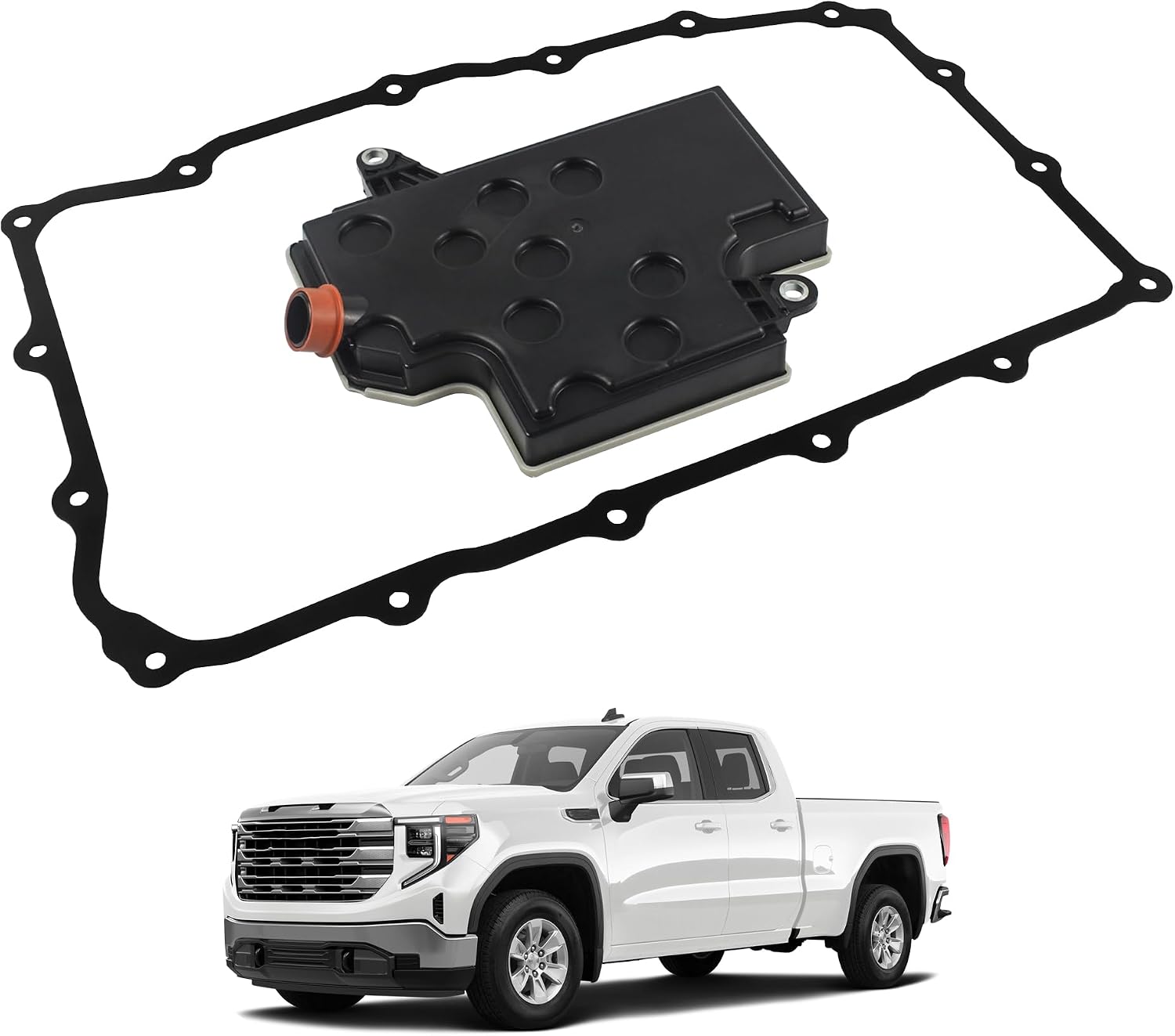
The ten-speed filter is engineered around the fluid's viscosity curve, which is a second reason heavy fluid does not belong in it. Transmission Digest's teardown describes two media in one housing, a coarse orange media and a fine white media, with a thermal plate between them. Cold, when the fluid is thick, flow favors the low-restriction path so the pump primes fast. As the fluid heats and thins, the thermal plate closes toward a ledge in the housing and pushes more volume through the fine media, where the small debris gets caught. Change the fluid's viscosity and you change how that filter splits its flow. Current aftermarket kits for the 10L60, 10L80 and 10L90 pan are listed under GM filter number 24294355. Confirm against your build before you order, because this family has seen revisions.
How often to service it, from the bench
This is my opinion, not a GM number. On a 10L90 doing what it was built for, a heavy Escalade in city traffic or anything that tows, I want the pan down around 45,000 miles. On a light-duty car that never sees a trailer, 75,000 to 100,000 is defensible. The better rule is to let the first service set the next interval: clean pan and red fluid at 45,000, stretch it. Brown fluid and a fuzzy magnet at 60,000, and the next one is not optional.
10L90 Transmission Filter with Gaskets
If the pan is coming down for fluid anyway, this is the one part that should go in with it: the sump filter plus gaskets, so the pan seals the first time.
See the 10L90 filter and gasket set →FAQ
What transmission fluid does a 10L90 take?
DEXRON ULV only. GM's 10L90 documentation specifies P/N 19352619 in the US and 19352620 in Canada, and states plainly not to use DEXRON VI or DEXRON HP. The quart bottles should be shaken before pouring to remix the additives. Ford MERCON ULV is a separate specification and is not a substitute on a GM unit.
How many quarts does a 10L90 hold?
It depends on the job. A pan removal and filter replacement takes about 7.7 liters, 8.1 quarts. An overhaul counting transmission volume only takes 10.95 liters, 11.6 quarts. A complete system fill including the cooler takes 12.52 liters, 13.23 quarts. Buy about nine quarts for a service and fourteen for a rebuild.
How do you check the fluid level on a 10L90 with no dipstick?
The level is set by a tube inside the pan and checked through the plug in the pan, with the vehicle level, the engine running and the shifter in Park. Transmission fluid temperature must be 75 to 80 C (167 to 176 F), and never check before it reaches 70 C (158 F). Remove the plug with the engine running, let it drip or add until it drips, then torque the plug to 22 N-m (16 lb-ft).
Can I fill a 10L90 through the CAR or TRK plug on the side of the case?
No. Those two case plugs on the rear driver's side are for factory use only and are not part of the fill or level procedure. The fill level tube in the pan sits higher than the bottom of those plug holes, so filling to a case plug leaves the transmission under-filled.
Is 10L90 fluid the same as 10L80 fluid?
Yes. GM's 2025 capacity chart lists both the 10L80 and the 10L90 at 7.7 liters, 8.1 quarts of DEXRON ULV for a fluid change, and they share the pan, filter and no-dipstick level procedure. The heavy-duty 10L1000 also uses DEXRON ULV but takes 13.6 liters, 14.4 quarts for a fluid change.
Sources
- Chevrolet Performance (General Motors) — Supermatic 10L90 Transmission Kit Installation Instructions, part no. 19420481, Rev 08SE22. Backs the DEXRON ULV requirement (P/N 19352619 US / 19352620 Canada), the instruction not to use DEXRON VI or DEXRON HP, the shake-the-quarts note, all three capacities (7.7 L / 8.1 qt pan and filter, 10.95 L / 11.6 qt overhaul, 12.52 L / 13.23 qt complete system), the pan-tube level design, the 75–80°C TFT window and its over/under-fill consequences, the 70°C thermal bypass floor, the 10-on / 10-off stall limit under 1500 RPM, the engine-running plug removal, the 22 N·m (16 lb-ft) plug torque, the vent-tube overfill warning, the 2017–2021 Camaro RPO MI4 reference, and the 650 lb-ft rating, weight and gear ratios. View source
- General Motors TechLink — 2025 Transmission Capacities & Fluids (U.S. and Canada), revision 05-2025 A. Backs the 10L90 rows (CT5 RPO MHX and Escalade/ESV RPO MHO, both 7.7 L / 8.1 qt DEXRON ULV), the 8L90 at 7.0 L / 7.4 qt DEXRON HP, and the 10L1000 at 13.6 L / 14.4 qt. View source
- General Motors — Service Bulletin 22-NA-182, “Information on 6L80, 6L90, 8L90, 10L80, 10L90, 10L1000 Equipped Vehicles with A Harsh Shift, Shudder, Surge, Stall, Neutral/Flare, Transmission Overheating and/or High Transmission Fluid Temperature” (June 2024, NHTSA-hosted). Backs the 2021–2024 Escalade RPO coverage, the twisted cooler line cause and repair, and the thermal bypass valve opening temperatures: 143°F (61°C) inside the valve body on the 10-speeds, 158°F on the 6L80/6L90 and 194°F on the 8L90. View source
- Ford Motor Company / Motorcraft — MERCON ULV Automatic Transmission Fluid Product Typicals. Backs the MERCON ULV figures of 4.5 cSt at 100°C, 19.2 cSt at 40°C and viscosity index 152 under its own license number, used to show that Ford's ULV is a separate specification from GM's. View source
- Lubegard — “The Year of the 10-Speed.” Backs the viscosity history (about 7.5 cSt at 100°C for four- and five-speeds, 6.0 cSt for six-speeds, 5.95 cSt for DEXRON HP) and the point that Ford and GM each call for a different OEM fluid in the ULV category. View source
- Transmission Digest — Mike Souza, “10R80/10L90 Ford & GM Ten Speed Unique Filter System,” April 2019. Backs the GM metal pan with fill level tube and fill plug, the CAR and TRK case plugs and the GM-only top plug, the finding that those plug holes are factory-use only and sit below the pan's fill level tube, and the dual-media filter with its thermal plate. View source