A quote to service a 10L90 can come back anywhere from under $200 to over $900, and most of that spread has nothing to do with the transmission. It comes from how many drains the shop does, whether it buys fluid at dealer list, and whether it owns the fill adapter and is willing to spend the time setting the level at temperature. Below is the job taken apart into its real line items: what GM says the unit holds, what the parts cost right now, what the fill procedure actually demands, and the two situations where paying for a fluid service is the wrong move entirely.
Start with what the 10L90 actually holds
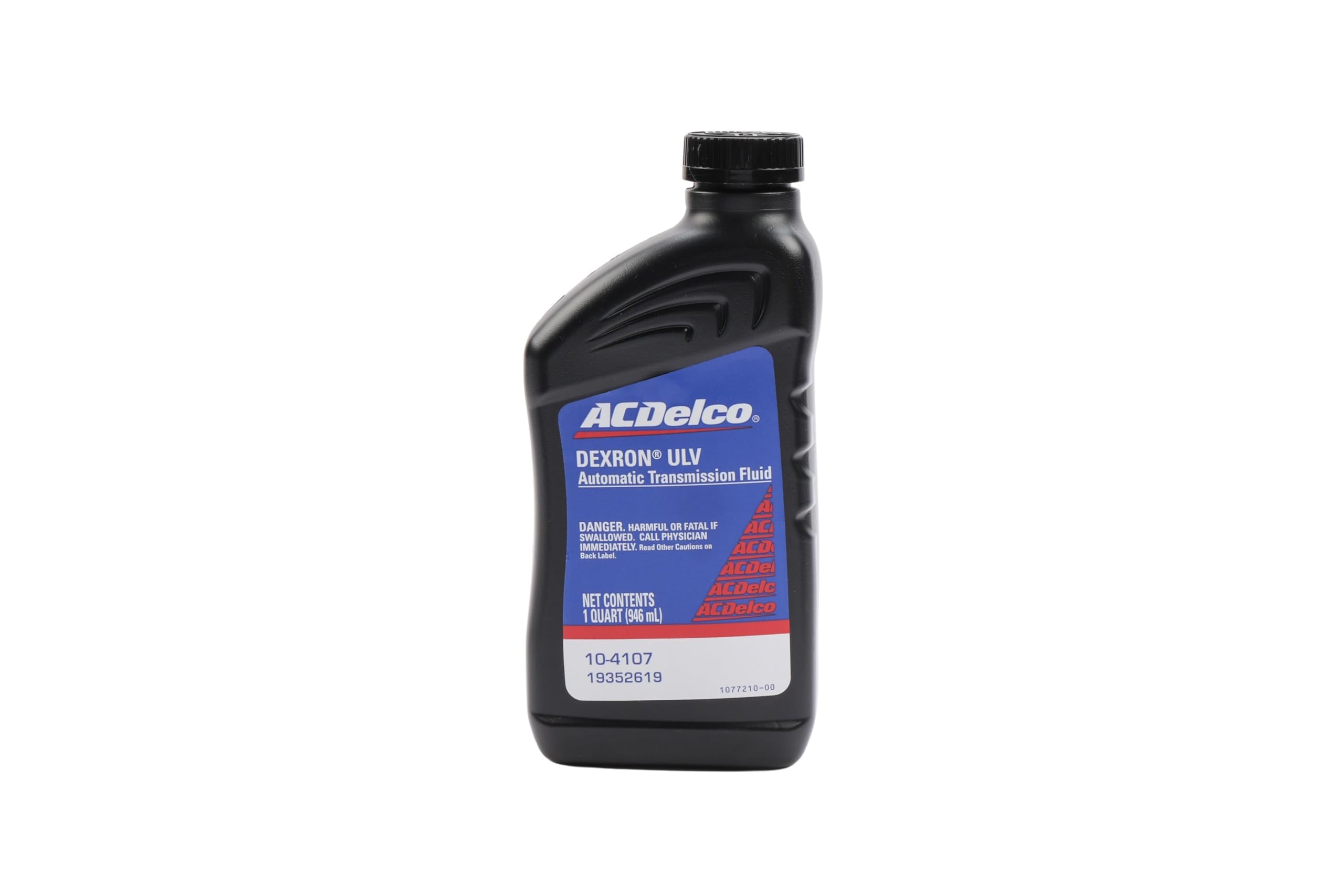
GM TechLink's 2025 capacity chart lists the 10L90 twice, once under CT5 with RPO MHX and once under Escalade/ESV with RPO MHO. Both rows read the same: 7.7 liters, 8.1 quarts, DEXRON ULV. The 10L80 rows in that chart are identical, which is why the 10L60/10L80/10L90 family shares service parts.
Two things about that number matter for pricing. First, it is a fluid change capacity, not a total capacity. Pull the pan and the torque converter and the cooler circuit stay full. One drain and fill exchanges a portion of the charge, not all of it, and any quote promising all-new fluid from a single pan drop is selling something it is not doing.
Second, the fluid spec is not negotiable. That same chart lists the 8L90 at 7.0 L / 7.4 qt of DEXRON HP. Different unit, different fluid, different number. ULV is an ultra-low-viscosity fluid that the ten-speed's shift and TCC calibration is built around, and a parts counter that hands you a case of HP because it is close enough has just created a drivability complaint that will read like valve body wear on a scan tool.
The parts bill, line by line
| Line item | What it is | Price |
|---|---|---|
| DEXRON ULV, 8 quarts | ACDelco OE fluid at $17.99/qt | $143.92 |
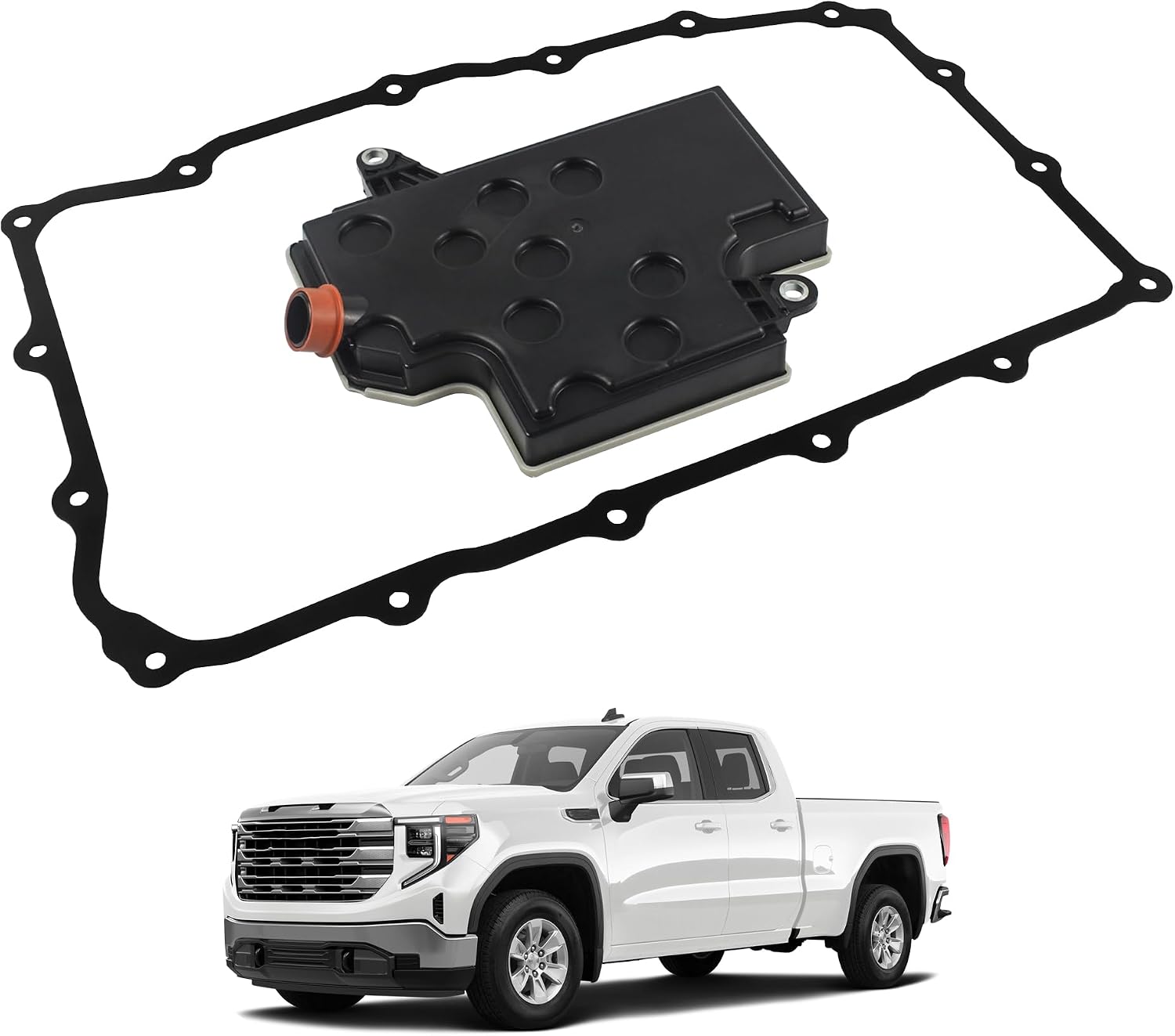
| Filter and pan gasket kit | Replaces OE sump filter 24294355 | $30.99 |
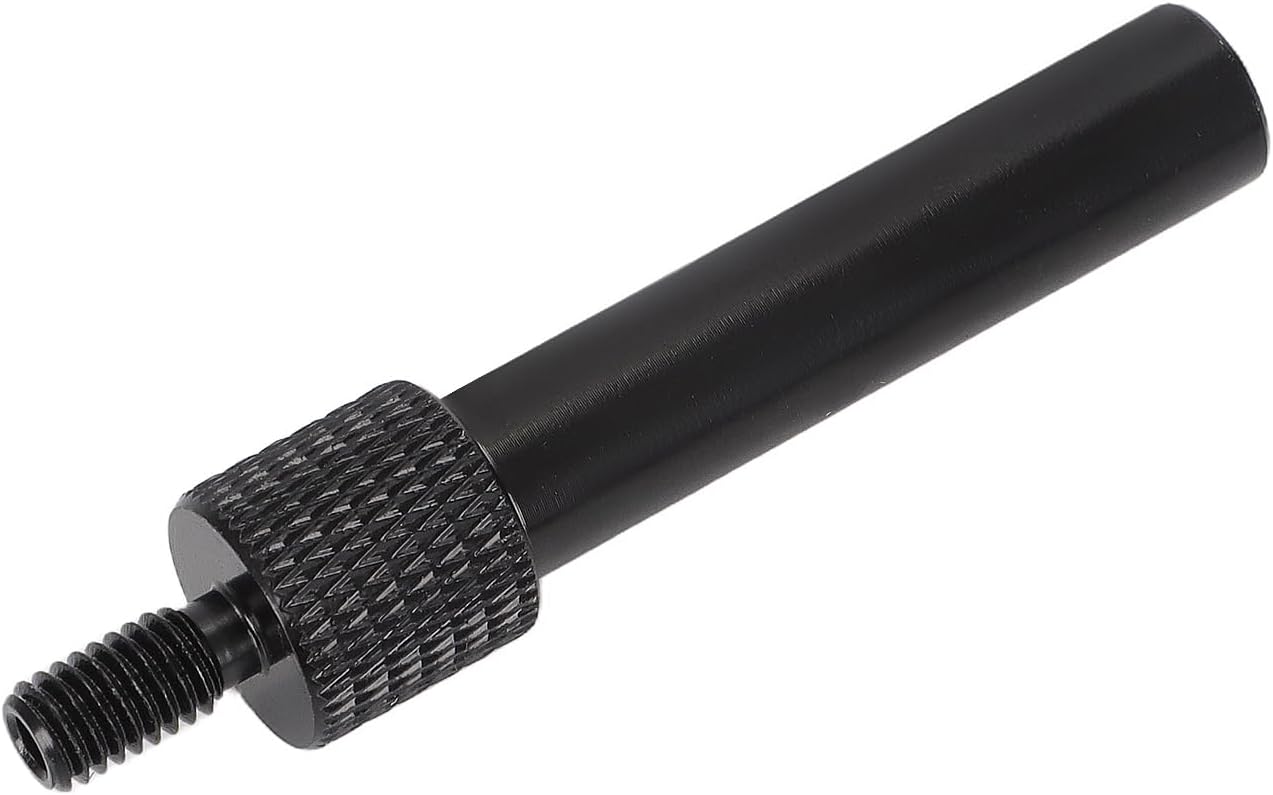
| Fill adapter | One-time tool purchase, no dipstick on this unit | $36.99 |
| Check plug seal | A few dollars. Replace it, do not reuse it. | $3 to $8 |
| Parts subtotal, first service | Single drain and fill, including the tool | about $215 |
| Parts subtotal, every service after | Tool already on the shelf | about $178 |
Worth knowing before you go shopping: the boutique ULV gallons are not automatically the cheap route. At $79.99 to $92.99 a gallon, and a gallon being four quarts, two gallons to cover 8.1 quarts lands within a few dollars of buying ACDelco quarts. The savings on this job come from labor and from not doing work the truck does not need, not from hunting a bargain fluid.
On the filter: current catalogs list the OE sump filter as 24294355, covering the 10L60, 10L80 and 10L90 from 2019 on. When Transmission Digest first documented this filter system in 2019 the GM number in circulation was 24291343, listed as updated, at a $35 to $40 street price. Check the number against your own build before you order, because this family has been revised more than once.
Why the labor line is not thirty minutes
The 10L90 has no dipstick and no fill tube. The GM pan is metal with a fill level tube and fill plug in the pan itself, which means the level is set from underneath, at temperature, with the engine running. That single design decision is most of the labor cost.
There is also a trap built into the case. On the rear driver's side, just above the pan rail, sit two large plugs stamped CAR and TRK, with a smaller one on top of the case. The factory manual gives them no role in the level or fill procedure. They are factory-use only, and the fill level tube in the pan sits higher than the bottom of those case plug holes. Fill to a case plug and you have just under-filled a transmission while feeling like you did it right.
The level-set method GM publishes for this exact unit, in the Chevrolet Performance Supermatic 10L90 instructions (part no. 19420481), runs like this:
- Transmission fluid temperature must be 75–80°C (167–176°F) at the moment you check. Above 80°C you end up under-filled, below 75°C over-filled. Do not check at all until TFT has reached at least 70°C (158°F), because of the internal thermal bypass valve.
- Under-filled causes premature component wear. Over-filled pushes fluid out the vent tube, foams the charge and cavitates the pump.
- Vehicle level, engine idling, shift lever through every range with a three-second pause in each, back to Park, idle a full minute, engine speed held low at 500–800 RPM. If you need heat, converter stalls 10 seconds on and 10 off, never above 1500 RPM.
- The engine must be running when the check plug comes out. Pull it with the engine off and you lose fluid and end up under-filled.
- Let it drain until it drips. If nothing comes out, add until it runs and then drips. Reinstall the plug at 22 N·m (16 lb-ft).
A caution if you have serviced GM's 6- and 8-speeds: do not carry their fill temperature over to this unit. Those transmissions use external bypass valves that open at different temperatures, and their published procedures differ. On the 10L90 the number is 75–80°C.
One 10L90-specific wrinkle: the thermal bypass valve on the 10L80, 10L90 and 10L1000 opens at 143°F (61°C) and lives inside the valve body, per GM bulletin 22-NA-182. The exception is the 3.0L LM2 and LZ0 diesels, where it sits on the frame rail and opens at 194°F. The cooler circuit has to be full before a level reading means anything, so the heat cycle is part of the job, not an optional step.
Add it up honestly: hoist time, pan down, filter and gasket, pump the fill in through the side, heat cycle, scan tool watching the TFT PID until it sits in the 75–80°C window, then the level set. 1.5 to 2.5 hours is a fair number. A half-hour quote means the shop is exchanging through the cooler lines and never setting level at temperature, and that is a different job than the one you think you bought.
What the three tiers actually cost
| Who does it | What you get | Typical out-the-door |
|---|---|---|
| DIY, single drain and fill | 8 qt ULV, filter and gasket kit, fill adapter, your afternoon | $180 to $215 |
| Independent shop | Same parts, 1.5 to 2.5 hr at $120 to $180/hr | $355 to $625 |
| Dealer | List-price parts, book time, GM procedure | $450 to $800 |
| Triple drain and fill | Roughly 24 qt of fluid plus an extra hour of cycling | $700 to $1,000+ |
Those are September 2026 street parts prices and typical independent labor rates. Your market moves the labor number more than anything else on this page. What should not move is the procedure. If two quotes come back $250 apart, ask both shops whether they set the level through the pan check plug with the fluid between 167 and 176°F (75–80°C). The answer usually explains the spread.
Three times the quote should not be a fluid service at all
A twisted cooler line. GM bulletin 22-NA-182 covers 2021–2023 Escalade, Silverado 1500, Sierra 1500, Tahoe, Suburban and Yukon models with the 6L80, 6L90, 8L90, 10L80, 10L90 and 10L1000, and it documents harsh shifting, shudder, surging, stalling, overheating and above-normal fluid temperature caused by a twisted rubber cooler line on a low-mileage vehicle. The repair is to disconnect the line at the auxiliary cooler, untwist it and reconnect, replacing it only if it stays misshapen, then check the level per SI. That is a hose and an hour, not $700 of fluid. If a low-mileage truck comes in hot and shifting hard, rule this out first.
A car stuck in 5th gear. GM's Part 573 report for NHTSA recall 25V-148 (GM N242480630) covers 90,081 vehicles with the 10-speed, including the 2020–2022 Camaro, the 2020–2021 CT4 and CT5, and the 2019–2020 CT6. The remedy is TCM software that watches for valve body wear and, about 10,000 miles before a wheel lock-up could occur, limits the transmission to 5th gear with a reduced propulsion message. A 10L90 car that shows up locked in 5th after that update has a worn valve body the TCM already caught. Fresh fluid will not clear it; the bore has to be repaired. See our 10L90 rebuild cost breakdown for what that job involves.
Fluid that already told you the answer. If the pan comes down full of friction material and the fluid is brown, the fluid change is the diagnostic, not the repair. Sonnax's Gen. 1 ten-speed valve body kit for the 10L60, 10L80, 10L90, 10R60 and 10R80 lists its target complaints as TCC apply and release concerns, overheated fluid, various shift concerns, delayed engagement, burnt clutches, lube failures, loss of shift solenoid control pressure and low cooler flow. Every one of those traces back to pressure lost through worn bores, not to tired fluid. Fresh ULV in a unit with a worn main pressure regulator bore buys a few weeks of better manners and no more.
Where the money is well spent: the filter
The ten-speed filter is not a screen with a gasket on it. It uses two media types in one housing, fine white media and coarse orange media, with a thermal plate between them. Cold, when the fluid is thick, most of the volume takes the low-restriction coarse path so the pump primes quickly. As the fluid heats and thins, the thermal plate moves toward a ledge in the housing, restricting the coarse side and pushing volume through the larger fine-media side, where the small particles get caught. That is an engineered flow path, and it is the reason a no-name filter is a poor place to save eight dollars. Sonnax also flags loose impregnated plate filters causing valves to stick in this family. A cheap filter that shifts or sheds becomes a valve body bill.
How often, from the bench
This part is my opinion rather than a spec. On a 10L90 doing what it was built for, meaning a heavy Escalade in traffic or a truck that tows, I want the pan down at 45,000 miles. On a light-duty commuter that never sees a trailer, 75,000 to 100,000 is defensible. The better rule is to let the first service set the interval: if the pan is clean and the fluid is still red at 45,000, stretch the next one. If it is brown at 60,000 with a fuzzy magnet, you have your answer and the next service is not optional.
10L90 Transmission Filter with Gaskets
If you are only buying one part for this job, this is it: the sump filter plus the gaskets, so the pan goes back up sealed the first time instead of after a second trip under the truck.
See the 10L90 filter and gasket set →FAQ
How much does a 10L90 fluid change cost?
Parts for a single pan-down drain and fill run about $175: eight quarts of DEXRON ULV plus a filter and pan gasket kit. Add a one-time fill adapter of around $37 if you do not own one. At an independent shop paying 1.5 to 2.5 hours of labor, the out-the-door number usually lands between $355 and $625. A dealer quoting list parts and book time is typically $450 to $800, and a triple drain and fill can push past $900 because it triples the fluid.
How many quarts does a 10L90 take?
GM TechLink's 2025 capacity chart lists the 10L90 fluid-change capacity at 7.7 liters, which is 8.1 quarts, for both the CT5 under RPO MHX and the Escalade and Escalade ESV under RPO MHO. That is the service fill, not the total. A pan-down drain leaves the torque converter and the cooler circuit full, so one drain and fill exchanges only part of what is in the transmission.
Can I use DEXRON VI or DEXRON HP in a 10L90?
No. The 10L90 is specified for DEXRON ULV, an ultra-low-viscosity fluid the shift calibration is built around. GM's own capacity chart shows how different the neighboring units are: the 8L90 takes 7.0 liters of DEXRON HP, not ULV. Filling a ten-speed with a heavier fluid produces shift quality complaints and TCC behavior that reads like valve body wear on a scan tool and is not.
Does a 10L90 have a dipstick?
No. The GM ten-speed uses a metal pan with a fill level tube and a fill plug, and the level is set through a check plug in the pan with the engine running. The two large plugs on the rear driver's side of the case stamped CAR and TRK are factory-use only. The fill level tube sits higher than the bottom of those case plug holes, so filling to a case plug leaves the unit under-filled.
Is a triple drain and fill worth the extra money on a 10L90?
It depends on why you are doing it. For routine maintenance on a unit with clean red fluid, one drain and fill with a new filter is the sensible spend. For a unit with darkened fluid and a shift or shudder complaint, exchanging most of the charge is worth it, because a single pan drop leaves the converter and cooler charge in place. What a triple fill will not do is fix worn valve body bores.
Sources
- General Motors — GM TechLink, “2025 Transmission Capacities & Fluids (U.S. and Canada only),” revision 05-2025 A. Backs the 10L90 fluid-change capacity of 7.7 liters / 8.1 quarts and the DEXRON ULV specification, listed under CT5 (RPO MHX) and Escalade/ESV (RPO MHO), the identical 7.7 L / 8.1 qt DEXRON ULV figure for the 10L80, and the contrasting 8L90 figure of 7.0 L / 7.4 qt of DEXRON HP. View source
- Chevrolet Performance (General Motors) — Supermatic 10L90 Transmission Kit Installation Instructions, part no. 19420481, Rev 08SE22. Backs the 10L90-specific check and fill procedure: the 75–80°C (167–176°F) TFT window with its under-fill and over-fill consequences, the 70°C (158°F) thermal bypass floor, the vent-tube, foaming and pump cavitation warning for an over-filled unit, the 500–800 RPM range-cycling steps, the 10-second stall limit under 1500 RPM, the requirement that the engine be running when the level check plug is removed, and the 22 N·m (16 lb-ft) plug torque. View source
- General Motors — Service Bulletin 22-NA-182, “Information on 6L80 6L90 8L90 10L80 10L90 10L1000 Equipped Vehicles With A Harsh Shift, Shudder, Surge, Stall, Transmission Overheating and/or High Transmission Fluid Temperature” (September 2022; NHTSA-hosted). Backs the twisted rubber cooler line as a documented cause of harsh shift, shudder, surge, stall, overheating and high fluid temperature on low-mileage 10L90 vehicles, the model coverage list, the untwist-or-replace repair followed by a level check per SI, and the thermal bypass valve opening at 143°F (61°C) inside the valve body on 10L80, 10L90 and 10L1000 units except the 3.0L LM2 and LZ0 diesels, where it is frame-rail mounted and opens at 194°F (90°C). View source
- Transmission Digest — Mike Souza, “10R80/10L90 Ford & GM Ten Speed Unique Filter System,” April 1, 2019. Backs the two-media filter design (fine white media and coarse orange media with a thermal plate between them), the cold-start and hot-operation flow paths, the GM filter part number 24291343 noted as updated at the time of writing with a $35 to $40 street price, the 10L90's metal pan with a fill level tube and fill plug, the two case plugs stamped CAR and TRK on the rear driver's side plus the smaller top-of-case plug, and the caution that those case plug holes are factory-use only and filling to them under-fills the transmission. View source
- Sonnax — Zip Kit 10L80-G1-10R80-ZIP product and application data. Backs the Gen. 1 10L60/10L80/10L90 and 10R60/10R80 application coverage and the connected symptom set of TCC apply and release concerns, overheated fluid, various shift concerns, delayed engagement, burnt clutches, lube failures, loss of shift solenoid control pressure and low cooler flow, all traced to circuit pressure loss rather than to fluid condition. View source
- Raybestos Powertrain — filter catalog listing 515289. Backs the current OE sump filter part number 24294355 and its application coverage across the GM 10L60, 10L80 and 10L90 from 2019 on, and the all-plastic sump filter construction. View source
- General Motors — Part 573 Safety Recall Report 25V-148 (GM recall N242480630), March 6, 2025 (NHTSA). Backs the 90,081-vehicle population (2020–2022 Camaro, 2020–2021 CT4 and CT5, 2019–2020 CT6), valve body wear as the cause, and the software remedy that detects wear about 10,000 miles ahead and limits the transmission to 5th gear with a reduced propulsion message. View source