Nobody walks in asking what a 10L80 rebuild costs because they are curious. They ask because they already have two quotes that are three thousand dollars apart and cannot tell which one is lying. Usually neither is. The two shops priced two different jobs and called them both a rebuild.
This unit spreads wider than almost anything else on the lift right now. The same complaint on the same truck can end as a four-hour in-body valve repair, a full teardown with clutches and a converter, or a reman unit with a nationwide warranty. What follows is the line-by-line of where the money goes on a GM 10-speed, which parts are optional and which are not, and the checks that occasionally cancel the whole job before a dollar gets spent.

Before you price anything, find out who is paying
Run the VIN first. On this transmission that habit has paid for itself more than once.
Every 2016-and-newer Chevrolet passenger car, light-duty truck, SUV and crossover carries a 5-year/60,000-mile limited powertrain warranty, and it transfers with the vehicle, which matters on a used truck. A 2022 Silverado bought secondhand in 2024 can still be inside it.
Past that, GM opened Special Coverage N252536751 on April 17, 2026 for the 2022 Tahoe, Suburban, Yukon, Yukon XL, Escalade and Escalade ESV. The condition is written as a transmission control valve that has worn, "resulting in a gradual loss of pressure within the valve," producing harsh shifting, a service engine soon message, reduced engine performance or DTC P0747. Coverage runs 15 years or 150,000 miles from the in-service date regardless of ownership, and the dealer has to complete safety recall N252536750 first. If a customer's truck is on that list and P0747 is set, the repair costs them nothing, and quoting a rebuild over the top of it is how you lose the customer and the job.
What GM's own numbers say the small version costs
The Special Coverage pays 0.2 hours to inspect for DTC P0747 and adds 3.3 hours for the labor operation GM calls Control Valve Spacer Plate and Spool Valve Replacement. Three and a half hours total, on a transmission most people assume has to come out of the truck.
The parts list is short and specific: actuator feed limit valve 24059372, its spring 24279142, control valve body spacer plate 24075091, transmission fluid filter kit 24294355, a control valve body bolt 24073070, a set of pump and auxiliary pump seals, and eight quarts of fluid, GM part 19352619 in the US. GM closes the parts table with a warning worth taping to the toolbox lid: "It is critical that the Valve, Spring, and a Plate are replaced during this repair. Failure to replace all 3 components together will result in ineffective repair and a customer comeback."
That is the floor of the 10L80 cost range, and it exists because the most common failure on this unit is one worn valve bore, not a burned-up geartrain.
The cheap checks that sometimes cancel a rebuild
Before the pan comes down, three things cost almost nothing and occasionally end the conversation.
- The cooler line. GM preliminary information PIP5792E covers 6L80, 6L90, 8L90, 10L80, 10L90 and 10L1000 vehicles with harsh shifts, shudder, surge, stall or above-normal transmission fluid temperature, and names the root cause on low-mileage units as a twisted cooler line. On ETRS units, RPO MHS or MQC, it can set DTC P27EC. Sometimes you disconnect the line at the auxiliary cooler, untwist it, and the complaint is gone.
- The battery. Sonnax calls this out directly in their 10-speed service coverage: after a repair the unit may seem not to be adapting, with harsh engagements or erratic upshifts and downshifts, and weak batteries are behind a real share of it. Their blunt note is that batteries in both Fords and GMs only last about three years. Confirm system voltage before condemning hydraulics.
- The fluid, level and type. GM's 2025 capacities chart lists the 10L80 at 7.7 liters, 8.1 quarts, of DEXRON ULV for a fluid change, the same figure across RPOs MQB, MQC, MHT, MI2, MHS and MHU. ULV is a different specification from the DEXRON HP used in the 8-speeds. The wrong fluid or a bad level produces shift complaints that read exactly like wear.
Where the money actually goes on a full rebuild
The valve body is the biggest single variable
This is the line item that decides which quote you got. ATRA's Gears Magazine states it plainly in its 10L series diagnosis coverage: the linear pintle solenoids are not available separately, and replacing one means ordering a complete valve body assembly identified by its Part Unique Number or MCVM number. That assembly then has to be characterized to the TCM, and GM published PIP5654A specifically because technicians were failing that step when the software would not accept a PUN containing a letter O where they read the number 0.
So the fork is: repair the body you have, or buy the assembly. Repairing means vacuum testing the bores and installing drop-in or oversized valve kits wherever they leak. Sonnax's 10-speed coverage identifies the usual wear list as the main pressure regulator valve, TCC priority valve, TCC regulator and boost valves, and latch valves damaged by their retainer clips, with symptoms running from low line pressure and converter shudder to a loss of shift solenoid control pressure. That path costs a few hundred dollars in kits plus bench time and the bore-sizing tooling. Buying the complete assembly is the expensive path, and on a unit with an otherwise clean geartrain it is often the whole difference between a mid-tier quote and a top-tier one.
Clutches, and why the module kits matter
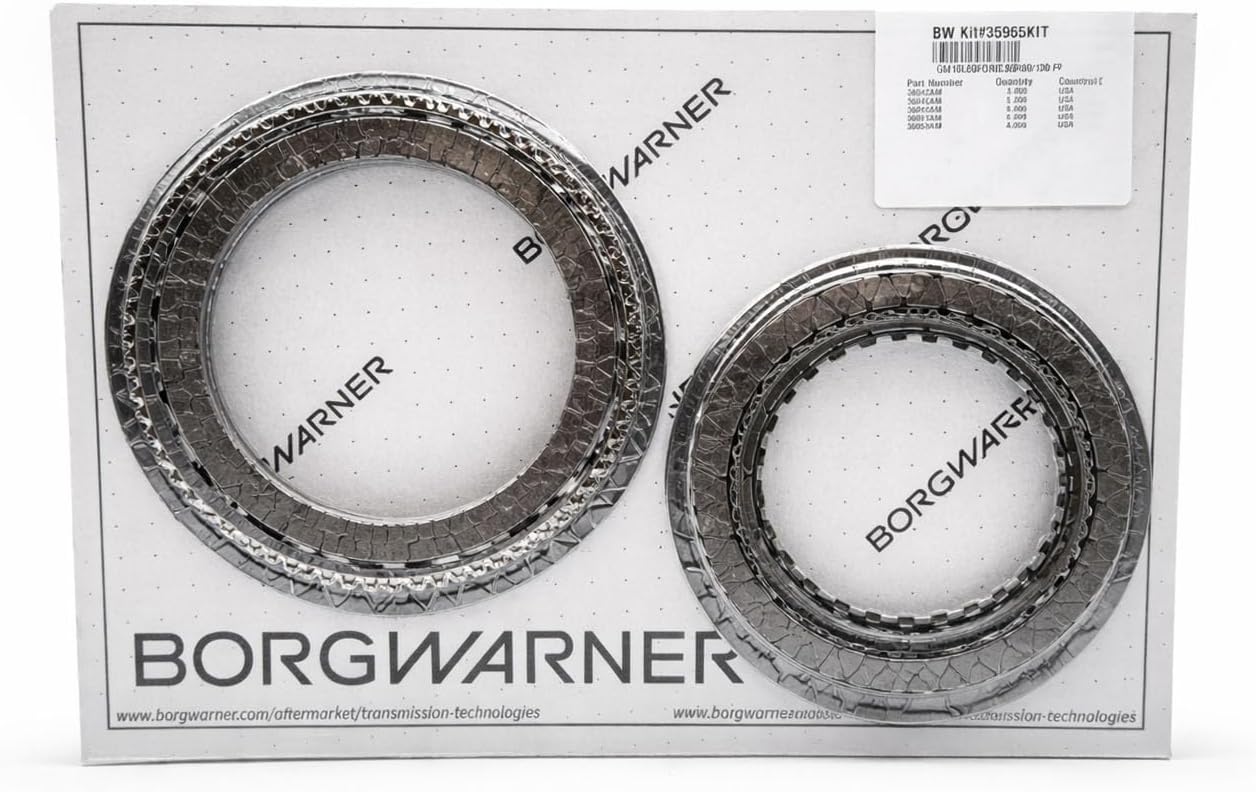
The 10L80 is clutch-to-clutch, and per ATRA's work on this family four components have to be applied for power flow at any given time, with the C, D and E clutches carrying the most engagements. That is a lot of overlap, and it is why a friction module kit is standard on a teardown rather than optional. It is also one of the more predictable numbers in the job: our 2017-up friction clutch module kit, 35955KIT, runs $169.99. Steels get inspected and replaced if they show heat. Excessive clutch clearance sits on ATRA's list of common high-mileage findings, so clearance gets measured and set, not assumed.
Torque converter
The converter is the swing item nobody wants to discuss at quote time. If the complaint included shudder or TCC slip, or if the pan had friction material in it, the converter goes. Debris that came out of the clutches lives in the converter, and reusing one is the fastest way to contaminate a fresh build. A quote that does not name the converter either way is incomplete.
Seals, sealing rings, filter and fluid
Small money, non-negotiable. ATRA's 10L rebuild guidance is direct: when you build this unit you must replace the rotating sealing rings, because reused sealing rings will leak. The filter and pan gasket kit, GM 24294355, is $30.99. Fluid is eight-plus quarts of DEXRON ULV, and an overhaul takes more than the 8.1-quart service figure. None of this is where a build goes over budget, but skipping any of it is where a build comes back.
Labor and tooling
Labor is the half of the bill the parts list never shows. GM pays 3.3 hours for the in-body plate-and-valve repair. A full R&R, teardown, inspection, valve body work, reassembly, refill and relearn is an entirely different block of hours, and shop rate does the rest of the math. Tooling counts too on a unit this new: a piston compressor and snap ring kit for the 10R80/10L80 is $191.99 and a T87A TCM bench harness is $217.99. Shops that already own those can quote the repair path. Shops that do not tend to quote the reman.
The three tiers, side by side
| Tier | What is in it | What drives the price |
|---|---|---|
| Targeted in-body repair | Feed limit valve, spring and spacer plate, filter kit, pump seals, fluid; transmission stays in the truck | GM labor operation is 0.2 hr inspect plus 3.3 hr repair. Parts are a short GM list. Only valid when the geartrain is clean and the code points at the valve. |
| Valve body rework plus soft parts | Vacuum test and valve kits, friction module, steels, sealing rings, filter, gaskets, fluid, converter decision | How many bores fail the vacuum test, and whether the converter goes. Bore-sizing tooling and bench hours. |
| Full rebuild or reman unit | Complete teardown with hard parts and bushings, or a remanufactured assembly with a warranty | Complete valve body assembly versus a repaired body, converter, planetary and drum damage, and whether the TCM needs characterization to a new PUN. |
Ask any shop which row they quoted. A quote that cannot answer that is a guess.
Where 10L80 builds go over budget
Comebacks, almost always, and they are predictable.
- Valve replaced without the plate. GM wrote the warning into the parts table for a reason. Valve, spring and plate go together or the repair does not hold.
- Solenoids replaced instead of valves. The solenoid usually tests fine because the solenoid usually is fine. Worn bores under it are the failure. This is the single most expensive wrong turn on the unit.
- Reused rotating sealing rings. They leak, the clutch on that circuit slips, and the transmission comes back out.
- New valve body installed and never characterized. PIP5654A exists because this step goes sideways in the bay. Budget the scan tool time.
- Voltage never checked. A three-year-old battery turns a good rebuild into a warranty argument about shift quality.
Shop the part for this fix
If the teardown says soft parts, the 2017-up 10L80 master rebuild kit at our sister store covers the frictions, steels, seals and gaskets in one box instead of six part numbers chased separately.
10L80 Transmission Rebuild Kit 2017-Up →Need the valve body side too? The full 10L80 parts collection carries the Sonnax valve kits, bore-sizing tool and Zip Kit.
Keeping the second rebuild from happening
Heat and fluid, with one wrinkle specific to this family. The 10L80 runs a low-viscosity fluid to chase fuel economy, and ULV is less forgiving of heat and dilution than the old DEXRON VI. Trucks that tow earn a shorter interval than the maintenance schedule implies, and a pan-and-filter service at 8.1 quarts of ULV is cheap insurance against the valve wear that starts the chain. Check the cooler lines for the twist PIP5792E describes while the truck is on the rack, and fix the voltage.
Need parts for this job?
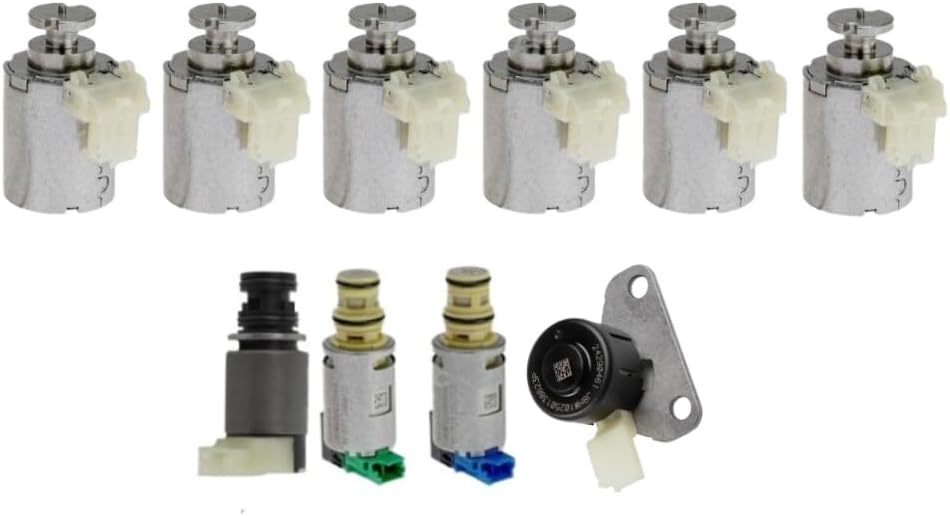
Friction module kits, solenoid kits, filters and pan gaskets, bench harnesses and the tooling for 10L80 work, priced for the shop and shipped from the USA.
Shop 10L80 parts →FAQ
How much does a 10L80 rebuild cost?
The honest answer is that it is three different jobs wearing one name. A targeted in-body valve repair is a few hours of labor plus a short list of GM parts. A full teardown with clutches, bushings, seals, a converter and a reworked valve body is the middle tier and the one most shops quote. A remanufactured unit with a warranty is the top tier. The spread comes almost entirely from whether the valve body and converter get reused, repaired, or replaced.
Is a 10L80 transmission repair covered by GM?
Sometimes, and it is worth ten minutes to find out. Every 2016-and-newer Chevrolet light-duty truck and SUV carries a 5-year/60,000-mile transferable limited powertrain warranty. On top of that, GM Special Coverage N252536751 covers the worn transmission control valve condition on the 2022 Tahoe, Suburban, Yukon, Yukon XL, Escalade and Escalade ESV for 15 years or 150,000 miles when DTC P0747 is set. Run the VIN through a dealer before paying for anything.
Why is the 10L80 valve body so expensive to replace?
Because you usually cannot buy the piece that failed. ATRA's Gears Magazine notes that the linear pintle solenoids in the 10L series are not available separately, so a solenoid concern often means a complete valve body assembly. That assembly then has to be characterized to the TCM using its Part Unique Number or MCVM number, which is a scan tool step, not a bolt-on. Aftermarket valve kits that repair the worn bores in the body you already have are the reason cheaper tiers exist at all.
What fluid and how much does a 10L80 take after a rebuild?
GM's 2025 transmission capacities chart lists the 10L80 fluid change capacity at 7.7 liters, which is 8.1 quarts, of DEXRON ULV, and that figure is the same across every truck and SUV RPO from MQB to MHS. ULV is not interchangeable with DEXRON HP or DEXRON VI. An overhaul takes more than the pan-and-filter number, and the final level is set by the GM hot-check procedure, not by counting quarts.
Can a bad cooler line cause symptoms that look like a failed 10L80?
Yes, and it is the cheapest thing on the list to rule out. GM preliminary information PIP5792E covers harsh shifts, shudder, surge, stall and above-normal fluid temperature on 10L80 and 10L90 vehicles and names a twisted cooler line as a root cause on low-mileage units. On ETRS transmissions, RPO MHS or MQC, it can set DTC P27EC. Untwisting or replacing a line is a fraction of a rebuild.
Related guides
- 10L80 valve body symptoms and testing
- GM 10L80 problems: the valve body wear behind the recall
- 10L80 slipping: causes and fix
- 10L80 torque converter shudder
- 10L80 fluid type and capacity
Sources
- General Motors, Special Coverage N252536751, "Rear Wheel Lockup" (April 17, 2026), filed with NHTSA. Backs the worn control valve and gradual pressure loss description, the P0747 condition, the 15-year/150,000-mile term, the requirement to complete recall N252536750 first, the 0.2-hour inspect and 3.3-hour Control Valve Spacer Plate and Spool Valve Replacement labor times, GM part numbers 24059372, 24279142, 24075091, 24294355, 24073070 and 19352619, and the warning that valve, spring and plate must be replaced together. static.nhtsa.gov/odi/tsbs/2026/MC-11031380-0001.pdf
- General Motors, Preliminary Information PIP5792E (July 29, 2022), filed with NHTSA. Backs the harsh shift, shudder, surge, stall and above-normal fluid temperature complaints on 10L80 and 10L90 vehicles, the twisted cooler line root cause on low-mileage units, and DTC P27EC on ETRS transmissions, RPO MHS and MQC. static.nhtsa.gov/odi/tsbs/2022/MC-10217793-9999.pdf
- General Motors, Preliminary Information PIP5654A (April 9, 2021), filed with NHTSA. Backs the valve body Part Unique Number characterization step after a valve body replacement on 10L60/10L80/10L90 units, and the letter-O versus number-0 problem that causes the software to reject the PUN. static.nhtsa.gov/odi/tsbs/2021/MC-10193447-9999.pdf
- GM TechLink, "Transmission Capacities & Fluids" (2025 edition, PDF). Backs the 10L80 fluid change capacity of 7.7 L / 8.1 qt and the DEXRON ULV specification across RPOs MQB, MQC, MHT, MI2, MHS and MHU, and the separate DEXRON HP spec used by the 8-speeds. gm-techlink.com TechLink-transmission-fluid-capacities-2025_A.pdf
- Sonnax, "Tackling Ford & GM 10-Speed Valve Body Problems, Failing Batteries & More." Backs the valve wear list (main pressure regulator, TCC priority, TCC regulator and boost, latch valves damaged by retainer clips), the symptom set from low line pressure to converter shudder and loss of shift solenoid control pressure, and the battery-related post-repair shift complaints. sonnax.com/tech_resources/1479
- ATRA, Gears Magazine, "Diagnosing The 10L Series Transmission." Backs the statement that linear pintle solenoids are not available separately and require a complete valve body identified by PUN or MCVM number, the common high-mileage findings including sticking linear pintle solenoids, weak solenoid retainer clips and excessive clutch clearance, and the requirement to replace rotating sealing rings on a rebuild. gearsmagazine.com/magazine/diagnosing-the-10l-series-transmission
- ATRA, Gears Magazine, "Shift Anatomy: The GM 10-Speed." Backs the clutch-to-clutch operation with the C, D and E clutches carrying the most engagements, and the fact that the 10L has no pressure sensors, so the TCM relies on solenoid characterization and speed sensor feedback. gearsmagazine.com/magazine/shift-anatomy-the-gm-10-speed
- Chevrolet Owners, Warranty Information. Backs the 5-year/60,000-mile transferable limited powertrain warranty on 2016-and-newer Chevrolet passenger cars, light-duty trucks, SUVs and crossovers. chevrolet.com/owners/warranty