Most 10L90s never see a trailer. The Camaro and CT5 units spend their lives on the street and the occasional track day. The ones that do tow are the Escalades, and the crate Supermatic units that get dropped into trucks and restomods by people who then hook a car hauler to them. Those are the 10L90s that come back to the bench cooked, and the pattern is the same one I see on the 10L80: the hard parts are fine, the clutch lining is glazed, and the fluid smells like it spent a summer on a grade.
The 10L90 is rated at 650 lb-ft, so torque capacity is rarely the thing that lets go. Heat is. This post is about keeping heat out of it: how GM designed the cooling circuit, what the factory tells owners about towing, the two failures that quietly kill cooler flow, and which upgrades are worth money. Specs and bulletin numbers come from GM, Chevrolet Performance, ATRA and Sonnax, all listed at the bottom. Where something is my own bench habit, I say so.
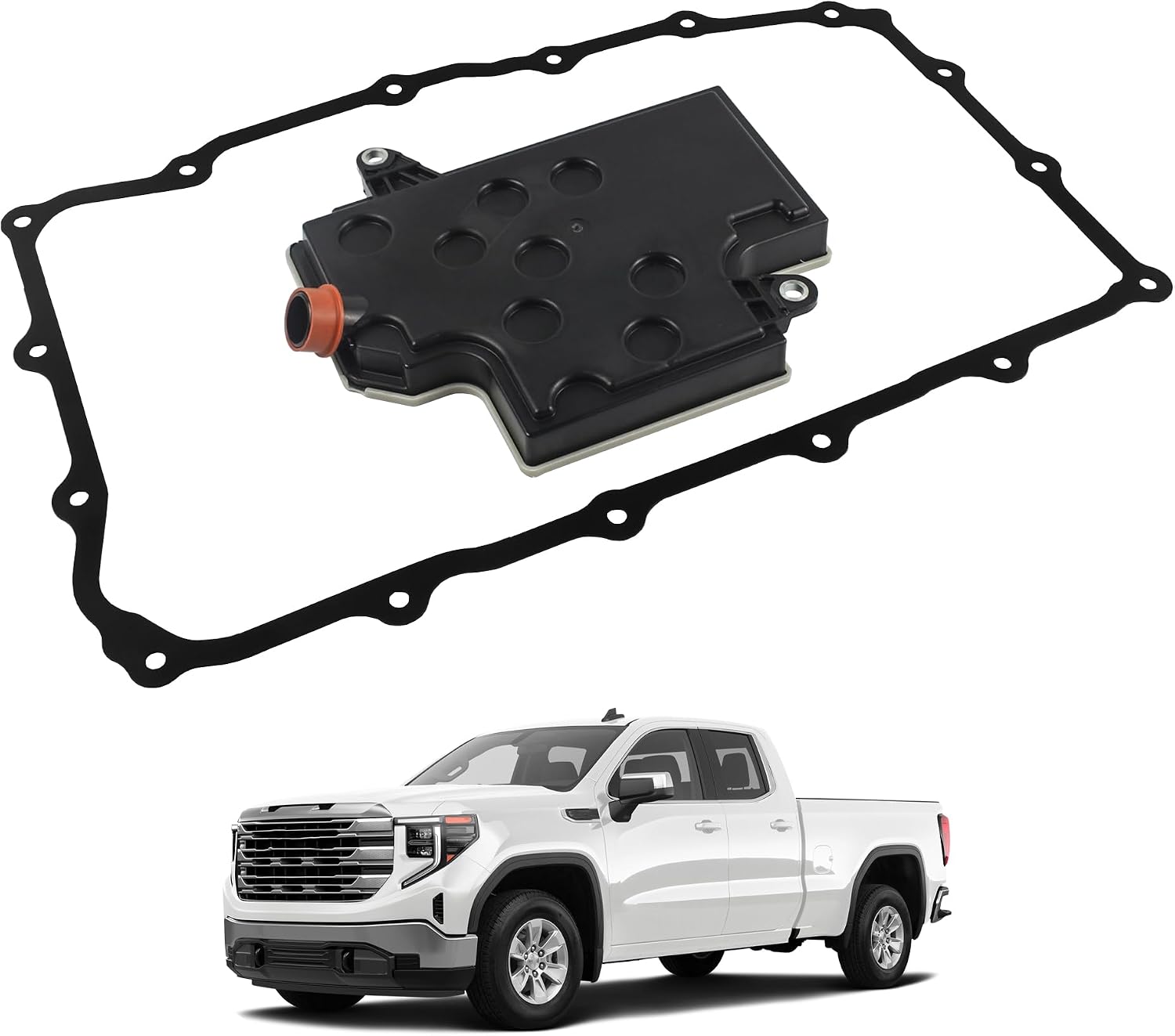
Which 10L90s actually tow
Start by confirming you have a 10L90 at all, because the Escalade platform carries both 10-speeds. GM bulletin 22-NA-182 (September 2024 revision) lists 2021–2025 Escalade models with the L87, LM2 and LT4 engines under transmission RPOs MHS, MHO and MQC. GM TechLink's 2025 capacity chart identifies MHO as the Escalade and ESV 10L90; MHS is a 10L80. Read the RPO off the label before you order anything. Our 10L90 identification guide walks through it.
For the owner side of the equation, the 2021 Escalade owner's manual sets the ground rules. A step bumper hitch is limited to 5,000 lb of trailer, and GM says not to exceed a 1,250 lb tongue weight on a conventional hitch. The maximum trailer rating itself varies by configuration and lives on the Trailering Information Label, so I do not quote a single number for every truck. What matters for the transmission is how close to that ceiling the customer runs, because that is where the heat comes from.
The crate unit is the other towing 10L90. The Chevrolet Performance Supermatic is built from the 2017–2021 Camaro transmission (RPO MI4) with a slip yoke rear housing from a 2018 Tahoe, and it is showing up behind LT engines in trucks that pull. It has its own cooling and calibration rules, covered further down.
The 143F bypass valve means the cooler is always working
This is the fact that separates GM's 10-speeds from everything before them. Per 22-NA-182, the thermal bypass valve on the 10L80, 10L90 and 10L1000 opens at 143F (61C), and it sits inside the valve body on every listed application except the 3.0L Duramax trucks. Compare that to the same bulletin's numbers for the rest of the family:
| Unit | Bypass valve opens | Location |
|---|---|---|
| 10L80 / 10L90 / 10L1000 | 143F (61C) | Inside the valve body |
| 10-speed with 3.0L LM2 / LZ0 diesel | 194F (90C) | Frame rail, external |
| 6L80 / 6L90 | 158F (70C) | External |
| 8L90 | 194F (90C) | External |
A valve that opens at 143F is open for essentially all of normal driving. GM designed the 10-speed to live on its cooler, because a transmission carrying about eight quarts of ultra-low viscosity fluid and ten closely stacked ratios cannot store much heat. The practical takeaway for towing: the cooler circuit is not a hot-weather backup. It is a full-time part of the hydraulic system, and anything that restricts it shows up under a trailer long before it shows up empty.
The flip side is also worth knowing if you work on Fords. ATRA's GEARS magazine lists the Ford 10-speed bypass valves opening considerably higher, in the 206 to 215F range. A 10R80 at 200F may be doing exactly what Ford intended. A 10L90 at 200F with a trailer on it is telling you the circuit is either overloaded or restricted.
What GM says is too hot
The Escalade gives you better data than most trucks, so use it. The trailering app in the 2021 owner's manual shows transmission fluid temperature and flags a dangerous level at 130–150C (270–300F). The manual's instructions are plain: if the transmission hot message appears, stop and idle the engine to cool the fluid, and do not drive while it is overheating, because the damage may not be covered by warranty. The transmission temperature gauge can also be set to show a digital value in the cluster, which is the first thing I have customers turn on before a long tow.
| Item | Value | Source |
|---|---|---|
| Fluid | DEXRON ULV only (P/N 19352619 US) | Chevrolet Performance 19420481 |
| Pan and filter service | 7.7 L / 8.1 qt | GM TechLink 2025 |
| Complete system incl. cooler | 12.52 L / 13.23 qt | Chevrolet Performance 19420481 |
| Level-check TFT | 75–80C (167–176F) | Chevrolet Performance 19420481 |
| Bypass valve opens | 143F (61C), in valve body | GM 22-NA-182 |
| Escalade "dangerous" TFT | 130–150C (270–300F) | 2021 Escalade owner's manual |
| Max tongue weight, conventional hitch | 1,250 lb | 2021 Escalade owner's manual |
My own working numbers, not GM's: a healthy 10-speed pulling a reasonable load on a warm day settles in the high 190s to low 200s F. If it climbs steadily past 220F on flat ground and does not recover when the load comes off, something in the circuit is wrong, and a bigger cooler is not the first answer.
Check the cooling you already have first
GM's own bulletin points at something that costs nothing. 22-NA-182 lists harsh shifting, shudder, surging, stalling, neutral/flare and transmission overheating on these units and says the condition may be caused by a twisted cooler line on low mileage vehicles. The line gets rotated during assembly or a previous repair and pinches the flow.
The repair, straight from the bulletin:
- Inspect the cooler lines. You may need to remove the underbody panels to see them clearly.
- If a line is twisted, disconnect it from the transmission auxiliary cooler, untwist it and reconnect it.
- If it stays misshapen after untwisting, replace it.
- Either way, check the fluid level per SI and top up, because you just opened the circuit.
One nuance that saves time on a 10L90. The bulletin notes a twisted line may set DTC P27EC, but only on ETRS transmissions, RPO MHS and MQC. MHO is not in that list. So on an Escalade 10L90 with an overheat complaint, the absence of P27EC does not clear the lines. Go look.
If the lines are clean, the bulletin sends you to the thermal bypass valve next. Because it lives in the valve body on the 10L90, that is a valve body job, not a frame-rail part swap.
When the heat is coming from inside the valve body
This is the failure that fools good techs, because the cooler and lines test fine and the truck still runs hot under load. Sonnax describes it on the 10L90 (Gen. 1): bore wear around the TCC regulator valve reduces converter apply flow, converter release flow and cooler flow. Their listed symptoms are TCC apply and release concerns, low TCC apply pressure in full lockup, converter shudder and TCC slip.
Think through what that does under a trailer. Oil that should go through the converter and on to the cooler leaks to exhaust instead, so the cooler gets less flow no matter how big it is. The converter clutch is short on apply pressure, so it slips, and a slipping converter clutch on a loaded truck is a heater. You get both halves of the problem at once: more heat made, less heat removed.
The tell on the scan tool is a truck that runs normal temperatures empty, climbs hard only when towing, and has TCC slip codes or a light-throttle shudder in its history. Sonnax's fix is oversized TCC regulator valve kit 105740-16K (valve, sleeve and spring), installed after reaming the bore with the F-105740-TL16 tooling. If you are in the valve body anyway, check the rest of Sonnax's 10-speed wear list while it is on the bench: main pressure regulator, TCC priority valve and the latch valves on Gen 1 bodies.
Fluid and service interval for a truck that tows
The Escalade manual is direct about who needs the severe schedule. Its "Additional Required Services – Severe" chart applies to vehicles frequently towing a trailer, driven in hilly or mountainous terrain, or run in heavy city traffic in hot weather. That severe chart calls for changing the automatic transmission fluid and filter three times through 150,000 miles. The normal chart does not list a transmission fluid change in that span at all. A towing customer who reads the normal schedule is reading the wrong page.
The manual also says the unit has no dipstick and that the check and change procedure is special. It is. The level is set through a case plug at 75–80C TFT, and Chevrolet Performance says not to check before the fluid has reached 70C. Our 10L90 filter and pan service post covers the procedure step by step.
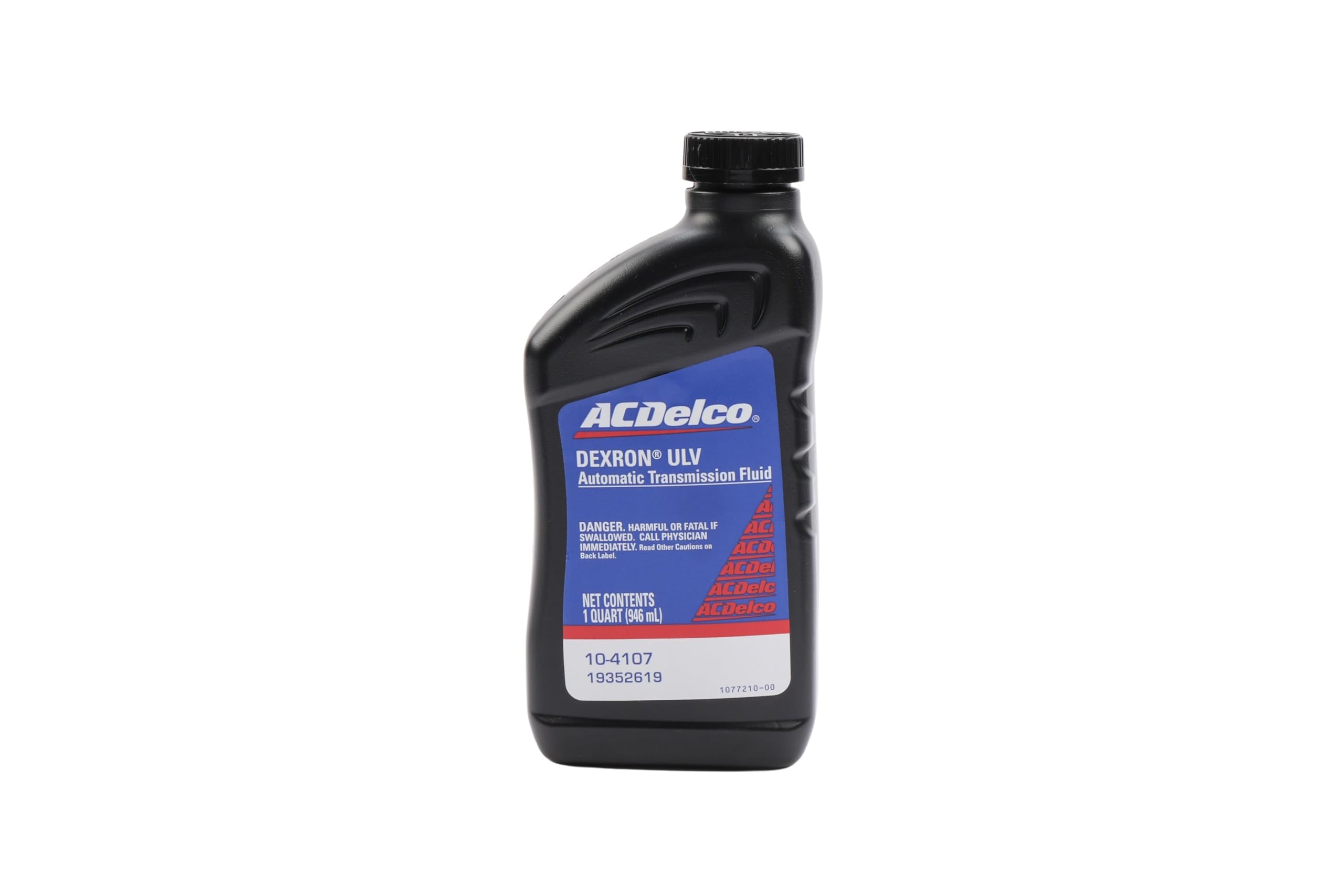
On fluid, there is no upgrade to buy. GM specifies DEXRON ULV only and says in plain words not to use DEXRON VI or DEXRON HP. Chevrolet Performance even says to shake the quart bottles before pouring. A thicker fluid does not make a 10L90 tow better. It slows clutch fill, throws off the TCM's adapts and creates shift complaints that look like hardware. Fresh ULV on a shorter interval is the fluid upgrade.
Flush with the bypass open, or you flushed nothing
GEARS magazine names the two ways cooler bypass valves fail: debris accumulation and wax element degradation. Either one can leave the valve stuck in bypass, which means little or no cooler flow. Their service warning is the one shops get wrong most: if the bypass valve is not open when you run a cooler flush, you flushed everything except the cooler.
On a 10L90 the fix is easy, because 143F is not hard to reach. Get the fluid warm before you flush. After any failure that put friction material in the oil, flush the cooler and lines properly with the valve open. If the unit came apart for a rebuild, budget the complete system volume, 12.52 liters, not the 7.7-liter service number.
Crate 10L90 swaps that tow
The Supermatic instructions set a few rules that matter the moment someone hooks a trailer to a swapped truck:
- You supply the cooler. The Do list says to install cooler lines to an appropriate transmission oil cooler. The unit ships with a cooler line adapter with #6 AN fittings, and GM says not to pry the plugs or reuse the seal if it comes out.
- There is no Tow/Haul calibration. The TCM carries two calibrations, Normal and Sport. The instructions say a column shifter should have tap up/tap down only, not a tow/haul feature.
- It is not a service transmission. GM says not to install it in a production vehicle in place of a service unit, because the calibration does not match production systems.
For a towing swap, that means the cooler is entirely the builder's call and there is no factory schedule to lean on. My bench habit: plate-and-fin cooler sized for the trailer, mounted where it gets real airflow, plumbed with properly sized #6 lines, and a TFT gauge wired to the gauge driver connector the harness already provides. Use the tap function to hold a lower gear on long grades instead of letting it hunt between 8th, 9th and 10th.
The upgrades worth the money, in order
- Fix the factory circuit. Twisted lines, stuck bypass valve, correct level. This is shop time, not parts, and it resolves a real share of low-mileage overheat complaints.
- Put the truck on the severe schedule. Filter kit and fresh DEXRON ULV on the severe interval. On a towing Escalade this is the cheapest life extension there is.
- Use Tow/Haul the way GM describes it. The manual says it works best when the truck and trailer are at least 75 percent of the Gross Combined Weight Rating, and that it adjusts shift pattern and adds grade braking. Running a heavy trailer in Tour mode lets the unit upshift into converter slip on every grade.
- Repair a worn TCC regulator bore. On a higher-mileage Gen 1 unit that only runs hot under load with TCC codes, this restores cooler flow a bigger cooler cannot.
- Add cooling capacity last. A deeper pan or a larger auxiliary cooler buys margin on a truck that genuinely lives at its tow rating. It does not fix a restricted circuit.
10L90 Sonnax Oversized TCC Regulator Valve Kit 105740-16K
If the truck only runs hot under a trailer and has TCC slip history, this is the Sonnax repair for the worn Gen 1 TCC regulator bore that starves converter and cooler flow.
See the 105740-16K kit →FAQ
Can a 10L90 handle towing?
Yes. GM rates the 10L90 at 650 lb-ft, and in the Escalade it is paired with a conventional-hitch tongue weight limit of 1,250 lb per the owner's manual. What kills towing 10L90s is heat, not torque. Keep the cooling circuit unrestricted, use Tow/Haul Mode with heavy trailers and put the truck on GM's severe maintenance schedule.
What temperature is too hot for a 10L90?
The 2021 Escalade trailering app flags transmission fluid at 130 to 150C (270 to 300F) as dangerous, and the manual says to stop and idle the engine if the transmission hot message appears. In practice, a healthy unit towing a reasonable load usually settles around 200F. A steady climb past 220F on flat ground points to a restriction or an internal leak.
How often should I change 10L90 fluid if I tow?
The Escalade owner's manual puts vehicles that frequently tow a trailer on the severe schedule, which calls for changing the automatic transmission fluid and filter three times through 150,000 miles. The normal schedule lists no transmission fluid change in that span. Use DEXRON ULV only, about 8.1 quarts for a pan and filter service.
Why does my 10L90 overheat when towing even with a good cooler?
GM bulletin 22-NA-182 names a twisted cooler line as a cause on low mileage trucks, and a stuck thermal bypass valve, which sits inside the 10L90 valve body and opens at 143F. On higher mileage Gen 1 units, Sonnax documents TCC regulator valve bore wear that cuts converter and cooler flow and lets the converter clutch slip.
Does a crate Supermatic 10L90 have Tow/Haul mode?
No. The Chevrolet Performance instructions say the TCM carries Normal and Sport calibrations, and that a column shifter should have tap up/tap down only, not a tow/haul feature. The builder must also supply an appropriate external cooler through the included #6 AN cooler line adapter.
Sources
- General Motors — Service Bulletin 22-NA-182, September 2024 revision, filed with NHTSA. Backs the 2021–2025 Escalade L87/LM2/LT4 coverage under RPOs MHS, MHO and MQC, the twisted cooler line cause and repair steps, P27EC on ETRS RPO MHS and MQC only, and the thermal bypass valve opening temperatures and locations for the 6-, 8- and 10-speeds. View source (PDF)
- Cadillac (General Motors) — 2021 Cadillac Escalade Owner's Manual. Backs the 5,000 lb step bumper limit, 1,250 lb maximum tongue weight, Tow/Haul Mode operation and the 75 percent of GCWR guidance, the 130–150C (270–300F) dangerous TFT range, the transmission hot message instructions, the severe-service definition including frequent trailer towing, and the severe schedule's transmission fluid and filter changes. View source (PDF)
- Chevrolet Performance (General Motors) — Supermatic 10L90 Transmission Kit Installation Instructions, P/N 19420481, Rev. 08SE22. Backs the 650 lb-ft rating context, Camaro MI4 base with Tahoe MF6 rear housing, the external cooler requirement and #6 AN cooler line adapter, Normal and Sport calibrations with no tow/haul feature, DEXRON ULV only, the 12.52 L complete system capacity and the 75–80C level-check window. View source (PDF)
- GM TechLink — “Transmission Capacities & Fluids,” 2025 edition. Backs the Escalade 10L90 RPO MHO and the 7.7 L / 8.1 qt DEXRON ULV fluid change capacity. View source (PDF)
- Sonnax — Oversized TCC Regulator Valve Kit 105740-16K. Backs the 10L90 (Gen. 1) TCC regulator bore wear reducing converter apply, release and cooler flow, the listed symptoms, the kit contents and the F-105740-TL16 tooling. View source
- ATRA / GEARS Magazine — “Keep Your Cool: Cooler Bypass Systems.” Backs the Ford 10-speed bypass opening range, the debris and wax-element failure modes, and the warning that a flush with the bypass closed misses the cooler. View source