A 10L90 shudder complaint usually sounds like rumble strips at 30 to 50 mph on light throttle, gone the moment the driver presses harder. It gets written up as "torque converter." On this unit that guess is wrong more often than it is right, and GM has put that in writing.
This guide covers the 10L90 in the vehicles it ships in: the Camaro SS and ZL1, the Cadillac CT4-V Blackwing, CT5-V and CT6, and the Escalade, where GM lists it as RPO MHO. The facts below come from GM service bulletins hosted by NHTSA, ATRA's GEARS magazine, Sonnax and Chevrolet Performance, all listed at the bottom. Where something is my own bench opinion, I say so.
| What you see on the graph or road test | What GM calls it | What gets replaced |
|---|---|---|
| Engine torque swinging more than ±25 Nm, engine speed and input shaft speed tracking together | Engine concern (GM points to 22-NA-080, camshaft actuator) | Nothing in the transmission |
| Erratic engine RPM, not a sinewave, small RPM and TPS movement | One or more fuel injectors | Nothing in the transmission |
| Shudder in both Drive and manual L9, torque flat inside ±25 Nm, usually under 15,000 miles | TCC solenoid, valve body | Valve body |
| Shudder in Drive only, gone in L9, TCC slip near 0, TCC pressure command stuck at 100 kPa | TCC solenoid drift, valve body | Valve body |
| Steady TCC pressure, high TCC slip, engine RPM rises while input speed holds steady, logged in manual 9th | TCC shudder, converter | Torque converter |
| Vibration only while cylinders deactivate | Normal characteristic of Dynamic Fuel Management | Nothing |
What GM's shudder bulletin says about the 10L90
The document to have open is GM service bulletin 22-NA-015, "Diagnostic Tips on GDS Graphing after Road-Test," in its September 2023 revision. It covers a shudder, shake or vibration from roughly 25 to 50 mph (40 to 80 km/h) under steady or light throttle, plus a coasting version near 15 mph (24 km/h). The revision history matters for 10L90 owners: GM's January 26, 2023 update added MHO to the transmission RPO list, and the Escalade is listed from 2021 through 2024 with the L84 and L87 engines. So this is not a 10L80 bulletin that we are borrowing. GM applied it to the 10L90 by name.
The cause statement is short: "various transmission and engine concerns." The first instruction is to find and resolve any engine or transmission DTC and then re-evaluate. The last note in the converter section is the one I wish every service writer read before quoting a job: GM says warranty claim reviews show that when the converter is replaced for shudder, the vehicle often returns for additional engine or transmission repairs, and that in most cases the torque converter is not the cause.
The Camaro, CT4 and CT5 are not on 22-NA-015's model list. I use its graphing method on the cars anyway, since the hardware is the same, but do not tell a Camaro owner a bulletin covers their car.
Take Dynamic Fuel Management out of the picture first
GM says plainly that some shudder, shake, vibration or growl is normal at low speed and light throttle on these engines, because the engine is moving in and out of reduced firing fractions. Its fix for the test drive is simple: put the transmission in manual range L9, which turns DFM off. A vibration that only shows up with DFM active is to be treated as normal, and GM states that engine and transmission parts should not be replaced for it.
Whether the shudder survives in L9 is also one of the splits in GM's decision tree, so write down the answer before you plug in anything.
Log it: four channels, six signatures
Record a GDS session from the TCM with the shudder present. The channels GM uses are engine torque, engine speed, transmission input shaft speed (ISS), pedal or TPS, and TCC pressure when you suspect drift. The details that matter:
- The ±25 Nm line. If engine torque moves more than 25 Nm either way with no shift in progress and steady throttle, GM says the problem most likely lives in the engine. The converter and driveline are passing along a disturbance the engine made.
- Valve body, both ranges. ISS follows engine speed, engine torque stays flat inside ±25 Nm, the shudder is there in D and L9, and GM notes it typically shows up under 15,000 miles (24,000 km). GM's call is the valve body.
- Valve body, drift. Present in D, gone in L9, throttle typically under 10 percent and engine torque under 100 Nm, TCC slip at or near zero, and the TCC pressure command parked at 100 kPa. GM's call is again the valve body.
- Converter. Collected in manual 9th only. TCC pressure control is steady, TCC slip is high, engine RPM climbs at the shudder point while ISS stays steady, and torque and throttle angle hold steady. This is the only signature that ends at the converter.
Look at what that does to the odds. Of six signatures, two are engine faults, one is normal, two are the valve body, and one is the converter.
Check the heat path, because it costs nothing
GM bulletin 22-NA-182 (June 2024) covers the 6L80, 6L90, 8L90, 10L80, 10L90 and 10L1000 for a symptom list that starts with harsh shift and shudder and ends with overheating and high fluid temperature. The Escalade appears with the L87 and LT4 and RPO MHO. The named cause is a twisted cooler line on low mileage vehicles, and on ETRS units (RPO MHS and MQC) a twisted line can set P27EC. You may have to pull underbody panels to see the lines.
If the lines are straight, GM sends you to the thermal bypass valve. On the 10-speeds it opens at 143°F (61°C) and sits inside the valve body on every gas application in the bulletin. A TBV that never opens keeps fluid out of the cooler, the fluid cooks, and cooked fluid is exactly what a converter clutch shudders on. Watch trans fluid temperature on the scan tool during your road test before you decide anything about the converter.
Why the valve body is usually the part that failed
The 10L90's converter clutch is controlled by oil pressure, so anything that makes that pressure unstable makes the clutch slip unevenly. Unstable slip is shudder. Keith Clark's GEARS article on GM and Ford lockup control describes the hardware: both makers use a TCC regulator valve with a stator shaft seal to control oil between the converter hub and the pump stator, and the strategy allows TCC apply in all forward ranges plus partial to full apply on deceleration. That is a lot of time spent in controlled slip, and it is why this circuit wears.
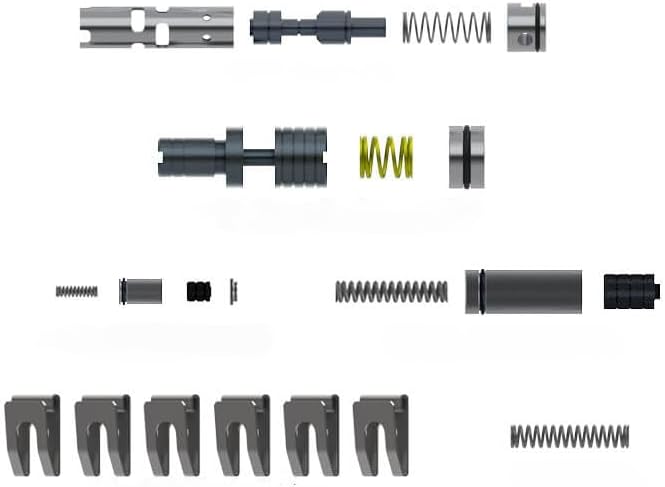
Sonnax explains the wear. Bore wear around the TCC regulator valve reduces converter apply flow, converter release flow and cooler flow at the same time, and boost sleeve wear causes signal fluid loss that keeps the converter from locking up. Its oversized TCC regulator valve kit, 105740-16K, fits Gen. 1 10L60, 10L80 and 10L90 units with a ridge mark on the OE valve, installs with tool kit F-105740-TL16 and the VB-FIX fixture, and lists the complaints you hear at the counter: TCC apply and release concerns, low TCC apply pressure in full lockup, and converter shudder with TCC slip. On a Gen. 2 10L90 the matching part is the oversized TCC regulator and boost valve kit 105740-17K. Sonnax also lists TCC priority valve kits (105740-03K, oversized 105740-22K) for TCC slip codes and overheated fluid.
My bench opinion: that wear pattern is the reason a new converter on a worn valve body comes back. The new clutch clamps against the same low, unsteady apply pressure and starts to shudder again within a few thousand miles. If the graph says valve body, fix the bore.
When it really is the converter
Some 10L90 converters do fail, and GEARS identifies a specific one. Clark writes that on GM vehicles with Dynamic Fuel Management and the 10L90, units with as few as 70,000 to 80,000 miles can have the rivets in the damper assembly come loose, which makes the converter non-rebuildable and calls for an OE replacement. GEARS also explains why those converters are built differently: GM diesel and DFM applications add a Centrifugal Pendulum Accumulator (CPA) to absorb vibration, and if a non-CPA converter goes into one of those vehicles, noticeable vibration comes through whenever the converter is operating. A shudder that starts right after someone else's converter job is a part-number check before it is anything else.
GM itself tracked 10L90 converters. Preliminary Information PIP5573A put 10L80 and 10L90 torque converters 24288828 and 24286575 on parts restriction through GM's Product Quality Center effective June 25, 2018, listing the 2017–2019 Camaro with RPO MGL alongside the Escalade, Tahoe, Suburban and Yukon Denali. PIP5677 did the same for 2020 10L60, 10L80 and 10L90 Gen. II transmission assemblies from September 24, 2019, and names the Camaro (MI1, MI2, MI4), CT4, CT5 and CT6. A restriction is not a recall; it means the dealer had to open a PQC case before replacing that part so engineering could study the failures.
Fluid, and the 8-speed flush that does not apply
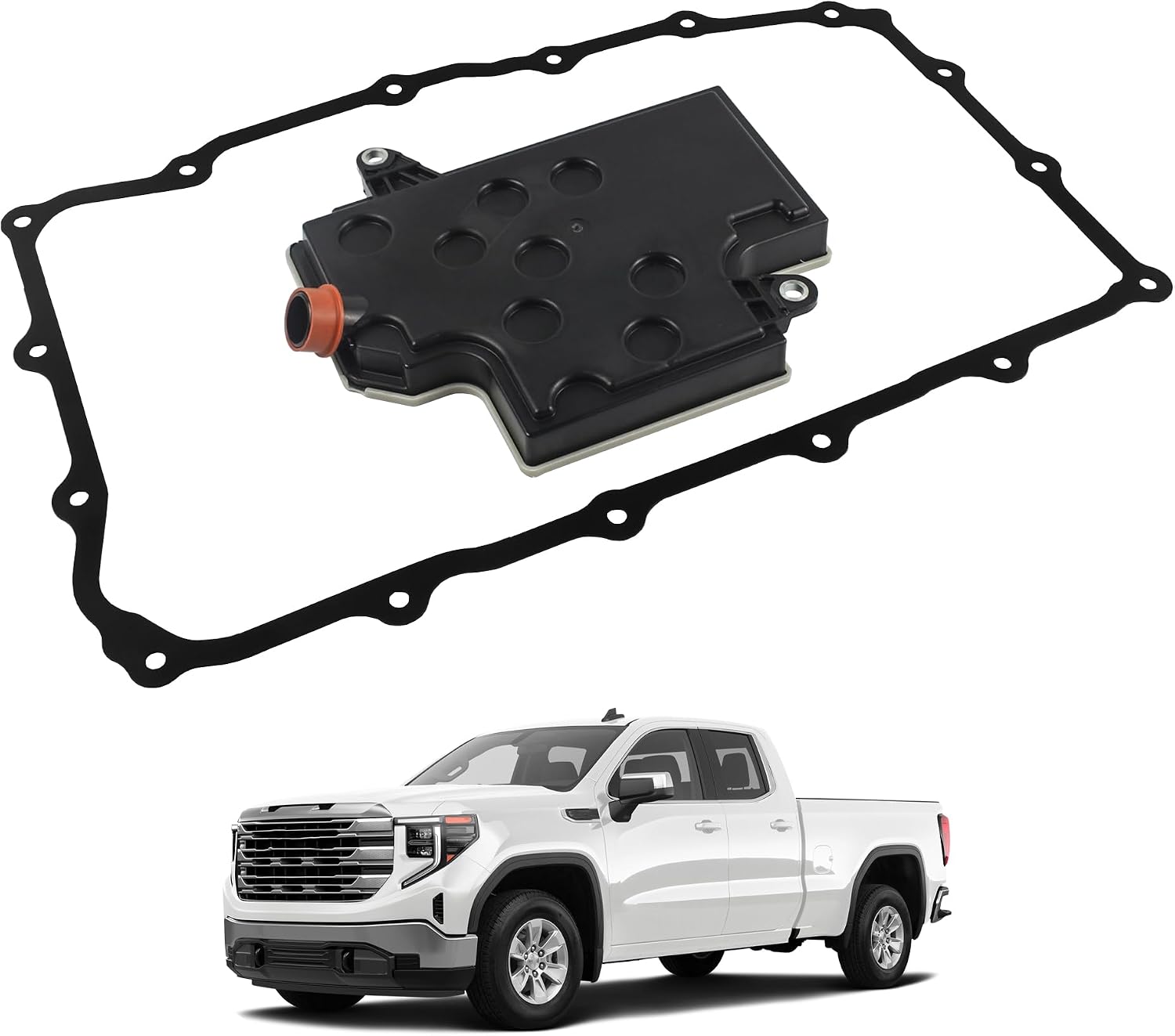
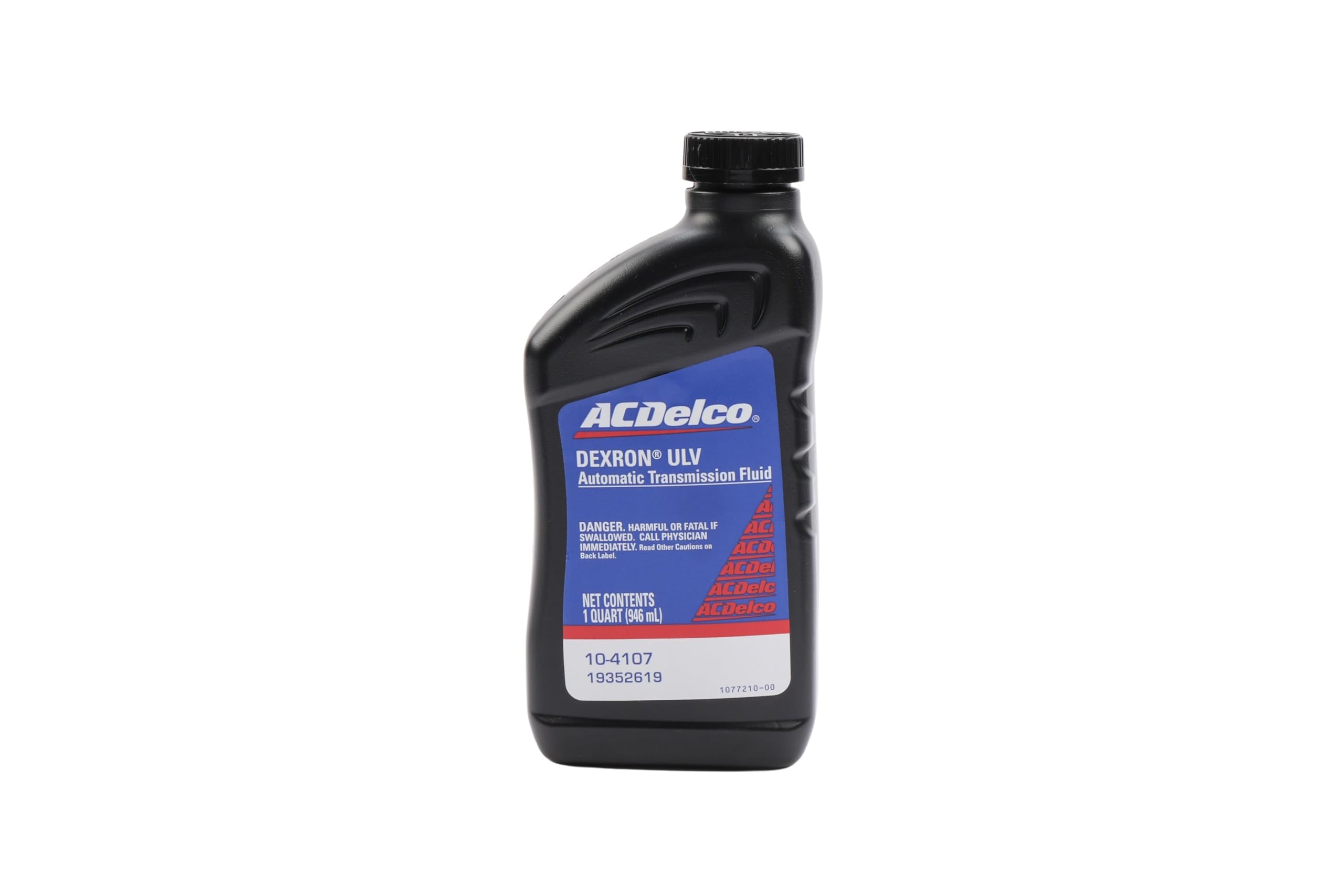
The 10L90 takes DEXRON ULV only. Chevrolet Performance's 10L90 installation instructions (19420481) call for P/N 19352619 (US) or 19352620 (Canada), say not to use DEXRON VI or DEXRON HP, and give 7.7 liters (8.1 quarts) for a pan and filter service.
Do not carry the 8L90 shudder fix over. The well-known Mobil 1 LV ATF HP fluid exchange was an 8-speed repair for a fluid chemistry problem. The 10-speed bulletin is a diagnostic tree, not a flush. Fresh ULV is right when the fluid is dark, but it will not fix a worn TCC regulator bore.
The order I work a 10L90 shudder
- Scan every module. Fix engine and transmission codes first, including cam actuator and misfire codes.
- Look at the cooler lines for a twist, check for P27EC on ETRS trucks, and watch fluid temperature against the 143°F (61°C) TBV opening point.
- Duplicate the complaint at the customer's speed and throttle, then repeat it in manual L9.
- Log engine torque, engine speed, ISS, pedal and TCC pressure with the shudder present, and match the graph to GM's signatures.
- If it is the valve body, pull the pan, read the filter, and vacuum test the TCC regulator bore. Repair the bore with the right Sonnax kit or replace the valve body.
- If it is the converter, confirm the replacement is the correct CPA or non-CPA type for the vehicle, and fix valve body wear at the same time if you find it.
- Refill with DEXRON ULV and set the level at temperature at the check plug.
10L90 Sonnax Oversized TCC Regulator Valve Kit (105740-16K)
If the graph says valve body and the vacuum test finds a worn TCC regulator bore, this kit restores converter apply pressure without buying a whole valve body. Gen. 1 units with the ridge-marked OE valve.
See the 105740-16K kit →FAQ
What speed does 10L90 torque converter shudder happen at?
GM bulletin 22-NA-015, which lists the 10L90 as RPO MHO, defines the complaint as a shudder, shake or vibration from about 25 to 50 mph under steady or light throttle, plus a coasting version near 15 mph. That is the range where the converter clutch runs in controlled slip. A vibration that only shows up well above that speed or under hard throttle usually points somewhere else in the driveline.
Is 10L90 shudder usually the torque converter?
No. GM states in 22-NA-015 that warranty claim reviews show vehicles often come back for more engine or transmission repairs after a converter is replaced for shudder, and that in most cases the converter is not the cause. Of the six graph signatures in the bulletin, only one ends at the converter. Two point at the valve body and two at the engine.
How do I tell a 10L90 valve body shudder from a converter shudder?
Log engine torque, engine speed, input shaft speed and TCC pressure. A valve body fault shows input speed following engine speed with engine torque flat inside plus or minus 25 Nm, or a TCC pressure command stuck at 100 kPa with slip near zero that goes away in manual L9. A converter fault shows steady TCC pressure with high slip, and engine RPM rising while input speed stays steady, logged in manual 9th.
Will a fluid change fix 10L90 shudder?
Only if the fluid is the problem. The 10L90 takes DEXRON ULV only, 7.7 liters for a pan and filter service per Chevrolet Performance, and fresh fluid helps when the old fluid is degraded. It will not fix a worn TCC regulator valve bore, which Sonnax says reduces converter apply flow and causes shudder and TCC slip. The 8-speed Mobil 1 LV HP flush is an 8L45 and 8L90 repair, not a 10-speed one.
Sources
- General Motors — Service Bulletin 22-NA-015, “Diagnostic Tips on GDS Graphing after Road-Test, for Shake and/or Shudder During Steady and/or Light Throttle Acceleration Between 25 and 50 MPH,” September 2023 (NHTSA-hosted). Backs the 25–50 mph and 15 mph complaint definition; the 2021–2024 Escalade with L84/L87 and RPO MHO, added January 26, 2023; the DFM caveat and manual L9 method; the ±25 Nm engine torque threshold; the under-15,000-mile valve body pattern; the 100 kPa TCC pressure command drift pattern; the converter pattern logged in manual 9th; the fuel injector pattern; and the note that in most cases the converter is not the cause. View source (PDF)
- General Motors — Service Bulletin 22-NA-182, “Information on 6L80, 6L90, 8L90, 10L80, 10L90, 10L1000 Equipped Vehicles with A Harsh Shift, Shudder, Surge, Stall, Neutral/Flare, Transmission Overheating,” June 2024 (NHTSA-hosted). Backs the twisted cooler line cause, P27EC on RPO MHS and MQC, the Escalade L87/LT4 MHO listing, and the 143°F (61°C) 10-speed TBV opening point inside the valve body. View source (PDF)
- General Motors — Preliminary Information PIP5573A (June 19, 2019) and PIP5677 (NHTSA-hosted). PIP5573A backs the PQC restriction of 10L80/10L90 converters 24288828 and 24286575 effective June 25, 2018 on the 2017–2019 Camaro (MGL) and the Escalade, Tahoe, Suburban and Yukon Denali. PIP5677 backs the restriction of 2020 10L60/10L80/10L90 Gen. II assemblies effective September 24, 2019 on the Camaro (MI1, MI2, MI4), CT4, CT5 and CT6. PIP5573A (PDF) • PIP5677 (PDF)
- ATRA / GEARS Magazine — Keith Clark, “Lock Up Madness! GM and Ford Torque Converter Clutch Control.” Backs the TCC regulator valve and stator shaft seal, TCC apply in all forward ranges and on deceleration, the Centrifugal Pendulum Accumulator on diesel and DFM vehicles, the vibration from a non-CPA converter, the damper rivet failure at 70,000–80,000 miles on DFM 10L90 vehicles, and the ULV-only requirement. View source
- Sonnax — Oversized TCC Regulator Valve Kit 105740-16K, and GM 10L90 Gen. 1 and Gen. 2 unit pages. Back the bore and boost sleeve wear mechanism, the Gen. 1 ridge-mark fitment, tooling F-105740-TL16 and VB-FIX, the listed shudder and TCC slip complaints, and the related parts 105740-17K, 105740-29, 105740-06K, 105740-03K and 105740-22K. 105740-16K • 10L90 Gen. 1 • 10L90 Gen. 2
- Chevrolet Performance — 10L90 Transmission Kit for LT1/LT4 Crate Engines, installation instructions 19420481. Backs DEXRON ULV only (P/N 19352619 US, 19352620 Canada), no DEXRON VI or HP, and the 7.7 L (8.1 qt) pan and filter capacity. View source (PDF)