A harsh shift on a 10L90 is one of the most misread complaints in the GM lineup. The same bang into gear can come from a cold engine running its catalyst warm-up routine, a battery that sagged overnight, a twisted cooler hose, a TCM that never finished learning, a worn bore in the valve body, or clutch packs set up loose on the last rebuild. Only the last two need the transmission opened. The rest are fixed with a scan tool, a charger or a wrench on a cooler line, and every one of them has been blamed on "a bad valve body" at some point.
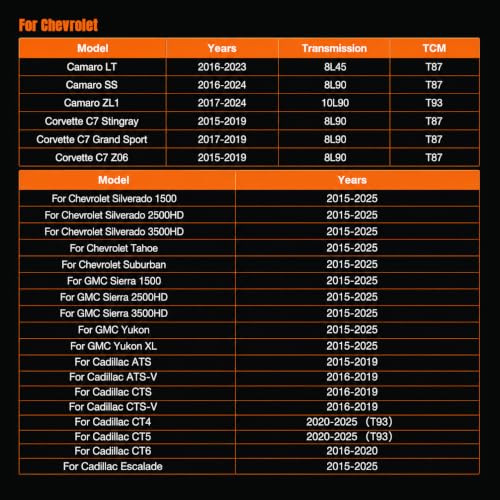
This guide covers the 10L90 as it is actually installed: Camaro SS and ZL1, Cadillac CT4-V, CT5-V and CT6, and the Escalade. Facts come from GM service bulletins, GM TechLink, the NHTSA recall filing, ATRA's GEARS magazine and Sonnax, all listed at the bottom. Where something is my bench opinion, I say so.
| When it happens | Most likely cause | First check |
|---|---|---|
| First engagement after a cold start, then fine | Catalyst light-off strategy, normal | Coolant temperature at start, time since start |
| Delayed thud 400–700 ms after key-on or a shift into gear | C2 clutch applied at high line pressure in Park | TCM calibration level |
| Harsh after a battery swap, TCM flash or repair | Adapts reset or never learned; weak system voltage | Battery and charging test, then Service Fast Learn |
| Harsh shifts plus high fluid temperature | Twisted cooler line or stuck thermal bypass valve | Cooler hoses, fluid level at temperature (GM 22-NA-182) |
| Harsh on every shift, high line pressure on the scan tool | Worn LPC signal damper bore or piston | Commanded vs. actual line pressure, valve body |
| Harsh downshifts, worse hot, P0747, 5th gear limit | Feed limit low valve wear (recall 25V-148) | VIN recall status, valve body |
| Harsh after an overhaul | Clutch clearance out of spec, reused sealing rings | Rebuild records, clutch clearance |
Why a 10L90 feels every mistake
Keith Clark's 10L diagnostic article in GEARS puts the key number on the table: the TCM controls the oncoming and off-going clutch through an overlap of roughly 0.3 seconds. There is no band and no sprag doing the timing for it. Every shift is a pressure handoff between two clutches, controlled by linear solenoids reading a pressure curve the TCM learned for that particular unit. If the oncoming clutch gets too much pressure too early, or the off-going clutch holds too long, the result is a bind that the driver feels as a bang. If the handoff is late, the engine flares and then the clutch grabs, which also feels like a bang. Clark's point is that the two feel almost identical from the driver's seat, and that is why you log data instead of trusting the road test alone.
The practical takeaway: on this unit, "harsh" is usually a pressure-control problem, not a worn-out friction problem. The fixes follow from that.
Cause 1: Cold start strategy, which is normal
Qualify the complaint before anything else. Per GEARS, when engine coolant is below 158°F (70°C) at start-up, the engine runs a catalyst light-off routine for 25 to 90 seconds: raised idle, retarded spark, extra fuel. A driver who fires up a cold Camaro and drops it straight into Reverse during that window gets a firm engagement, and the transmission is doing what it was told. Clark also notes that running the unit for long periods below the temperature range where adaptive learning is allowed causes harsh or binding shifts on its own. Ask when it happens. If the answer is "only the first shift of the morning," you may be done.
Cause 2: The garage shift clunk GM already recalibrated
GM TechLink's January 2025 10-speed diagnostic tips, which list the 10L90 applications by RPO (MHO on Escalade, MHX on CT5), describe an infrequent audible thud delayed 400 to 700 milliseconds after a key start or a garage shift. GM ties it to the C2 clutch applying at high line pressure, which stops the rotating parts in Park too quickly, and says the severity depends on driveline load. GM's answer was a calibration change so the C2 knockdown area is pressurized in Park and Neutral while C2 applies. If the complaint is a single delayed clunk and not a harsh shift while driving, check the TCM calibration level against the current release before anything else.
Cause 3: Adapts that never learned, and the battery behind it
A 10L90 shifts on learned values. After a TCM flash, a battery disconnect, a valve body or solenoid replacement, or an overhaul, those values are either reset or wrong for the hardware, and the unit shifts firm until it relearns. GM's tool for that is the scan-tool Service Fast Learn. Sonnax's fast learn article lists the conditions that have to be met, and they are the checklist for any harsh shift after a repair:
- Fluid temperature between 167°F (75°C) and 185°F (85°C), per current TCM programming.
- Line pressure normal, 55–60 psi minimum in Drive with pressure rise on throttle.
- ATF level correct and verified, and the fuel tank between 1/4 and 3/4 full.
- No stored powertrain, ABS or engine codes, and no misfire.
- Stable system voltage. Sonnax lists a failing battery, low alternator output, and power or ground faults as reasons fast learn will not complete.
Sonnax adds two things I agree with from the bench. Do not install a thermal bypass device until fast learn and the adapts are done, because it slows the warm-up the process depends on. And even after fast learn completes, some values such as TCC adapts can take 200 to 300 miles of driving to settle. A customer who picks up the car and complains about the first ten miles has not given it a fair chance yet.
On voltage: in my shop, performance cars that sit between drives are the ones that show up with weak batteries. A weak battery gives the linear solenoids unstable current, and unstable current means unstable pressure. Load test the battery and check charging output before you call anything inside the case.
If the valve body or solenoids were replaced, there is one more step. Each 10L90 TCM is programmed with the characterization data for the solenoids in that transmission. A TCM running the old unit's solenoid data will command pressures that do not match the new hardware, and in my experience fast learn will not fully cover that up. Program the new data first, then learn.
Cause 4: Twisted cooler line or thermal bypass (GM 22-NA-182)
GM Service Bulletin 22-NA-182 (it replaced PIP5792E) lists harsh shifting first in its condition list, next to shudder, surging, stalling, neutral/flare and overheating, and says the complaint can show up before or after an overhaul. The March 2024 version covers the 2021–2024 Escalade with RPO MHO, which is the 10L90. The stated cause on low-mileage vehicles is a twisted rubber cooler line. GM's instructions are to inspect the lines (the underbody panels may have to come off), untwist the line at the auxiliary cooler, replace it if it stays misshapen, and then check fluid level per service information. On ETRS transmissions (RPO MHS, MQC) a twisted line may set P27EC.
If the lines are good and the unit still runs hot, the same bulletin points at the thermal bypass valve. On the 10L80, 10L90 and 10L1000 it sits inside the valve body and opens at 143°F (61°C). Hot fluid thins, pressure control drifts, and shift feel goes with it. Fix the heat before you judge the shifts.
Cause 5: Worn LPC signal damper, or high line pressure
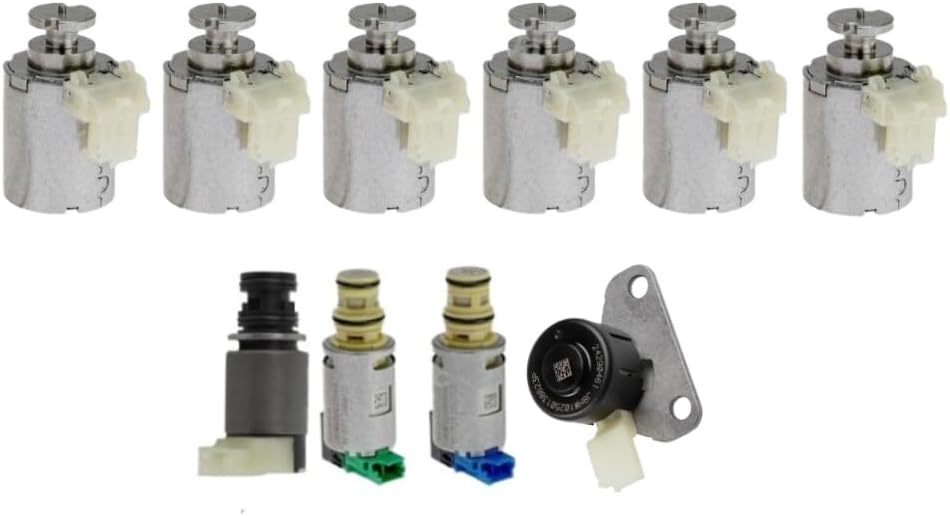
When the harshness is on every shift and your scan data shows line pressure running above command, look at the LPC signal damper in the lower valve body. Sonnax describes its job as damping pressure spikes in the LP signal (EPC) circuit before they reach the main pressure regulator valve. When the damper bore or piston wears, that signal leaks to exhaust and the regulator loses control of main line pressure. Sonnax lists the two results as harsh shifts and high line pressure.
The repair does not require a new valve body. Sonnax offers a drop-in LPC signal damper piston kit with an O-ringed piston and a wear-resistant sleeve that seals a worn bore without reaming. The fit depends on valve body generation: 105740-05K is for the Gen. 2 10L80 and 10L90, and 105740-04K is for the Gen. 1 10L80/10L90 and the Ford 10R family. Identify the casting before you order. Our 10L90 common problems guide covers how the generations differ.
Clark's GEARS article puts the LPC accumulator bore on the high-mileage failure list too, along with weak or broken solenoid retainer clips and sticking linear pintle solenoids and clutch control valves. His warning is worth repeating: accumulator and linear pintle bore wear can call for a valve body, and the linear pintle solenoids are not sold separately.
Cause 6: Feed limit low valve wear and the recall
If the harsh shift is a downshift, gets worse hot, and comes with P0747 or a 5th-gear limit, you are looking at the recall pattern. GM's Part 573 filing for NHTSA campaign 25V-148 (GM recall N242480630) covers 90,081 vehicles with the 10-speed: 2020–2022 Camaro, 2020–2021 CT4 and CT5, and 2019–2020 CT6. GM describes a transmission control valve that can wear over time and cause harsh shifting, and in rare cases a momentary wheel lock-up on a downshift from 8th. The remedy is software that detects the wear early and limits the transmission to 5th gear. The worn part is the feed limit low valve, and the full breakdown is in our 10L90 won't shift into overdrive guide. Run the VIN before quoting any valve body work.
Cause 7: Clutch clearance and sealing rings after a rebuild
Clark is direct about this: if clutch clearances are out of specification, the transmission strategy cannot compensate, and harsh shifts or no upshifts follow. Adaptive learning has a range, and a loose pack pushes the TCM outside it. The same article warns that reused sealing rings will leak and cause intermittent shift quality problems. In my experience, a 10L90 that shifts harshly right after an overhaul is almost always one of those two, or the fast learn was never run. Measure clearances with the correct selective snap rings, replace every rotating sealing ring, and air check each drum before it goes into the case.
A scan tool sequence that sorts it out
- Qualify the complaint. Cold only, delayed clunk, after repair, hot only, or all the time. That one question rules out half the list.
- Run the VIN for recall 25V-148 and any current TCM calibration.
- Test the battery and charging system. Stable voltage comes before any shift diagnosis.
- Scan every module. Clark notes that codes outside the TCM change shift strategy, and P175E means shift limiting is active.
- Check fluid level at temperature using the running check-plug procedure, and inspect the cooler hoses per 22-NA-182.
- Log line pressure, commanded vs. actual, along with input and output speed during the shift. Line pressure above command points at the LPC damper circuit. A flare before the bang points at the handoff.
- Run Service Fast Learn with every precondition met, then drive it.
- Only then pull the valve body: LPC damper and accumulator bores, feed limit valves, solenoid retainers, the separator plate, and clutch clearance if the unit has been apart.
Most 10L90 harsh shift complaints end at step 7. The ones that make it to step 8 usually trace to a worn bore that a Sonnax kit fixes without replacing the valve body.
10L90 Sonnax LPC Signal Damper Piston Kit 105740-05K
The drop-in repair for the worn damper bore behind harsh shifts and high line pressure on Gen. 2 10L90 valve bodies. No reaming and no new valve body. Gen. 1 units take 105740-04K.
See the 10L90 LPC damper kit →FAQ
Why does my 10L90 shift hard when it is cold?
Often it is normal. GEARS magazine documents that when coolant is below 158 degrees F at start-up, the engine runs a catalyst light-off routine for 25 to 90 seconds with raised idle and retarded spark, so an immediate shift into gear feels firm. Running for long periods below the temperature where adaptive learning is allowed can also make shifts harsh. If it only happens on the first shift of the day, the transmission is probably fine.
Will a transmission relearn fix harsh shifting on a 10L90?
It fixes harshness caused by reset or wrong adaptive values, which is common after a battery disconnect, TCM flash or repair. Sonnax lists the Service Fast Learn conditions: fluid at 167 to 185 degrees F, at least 55 to 60 psi line pressure in Drive, correct fluid level, a quarter to three-quarter tank of fuel, no codes and stable voltage. It will not fix worn valve body bores or out-of-spec clutch clearance.
Can a bad battery cause harsh shifts on a 10L90?
Yes. The linear solenoids control clutch pressure with current, so unstable voltage gives unstable pressure. Sonnax lists a failing battery, low alternator output and power or ground faults as reasons the fast learn process will not complete. Load test the battery and check charging output before diagnosing anything inside the transmission.
What part causes harsh shifts and high line pressure on a 10L90?
A worn LPC signal damper bore or piston in the lower valve body is a common one. Sonnax says the wear lets LP signal pressure leak to exhaust so the main pressure regulator loses control, causing harsh shifts and high line pressure. Its drop-in kit 105740-05K fits Gen. 2 10L90 valve bodies and 105740-04K fits Gen. 1, with no reaming required.
Is the GM 10-speed recall related to harsh shifting?
Yes. GM's filing for NHTSA recall 25V-148 describes a transmission control valve that can wear and cause harsh shifting, and in rare cases a momentary wheel lock-up on a downshift from 8th. It covers 2020-2022 Camaro, 2020-2021 CT4 and CT5, and 2019-2020 CT6. The remedy software limits the unit to 5th gear when it detects the wear, so run the VIN before paying for valve body work.
Sources
- General Motors — Service Bulletin 22-NA-182, “Information on 6L80 6L90 8L90 10L80 10L90 10L1000 Equipped Vehicles With A Harsh Shift, Shudder, Surge, Stall, Neutral/Flare, Transmission Overheating and/or High Transmission Fluid Temperature,” March 2024, Version 4 (replaces PIP5792E; NHTSA-hosted). Backs harsh shifting in the condition list before or after overhaul, coverage of the 2021–2024 Escalade with RPO MHO, the twisted cooler line cause on low-mileage vehicles, P27EC on ETRS units (MHS, MQC), the untwist or replace and fluid level correction, and the 10-speed thermal bypass valve inside the valve body opening at 143°F (61°C). View source (PDF)
- General Motors — GM TechLink, “10-Speed Automatic Transmission Diagnostic Tips,” Mid-January 2025. Backs the covered 10L90 RPOs (MHO, MHX), the garage shift clunk delayed 400–700 ms after key start or garage shift, its link to C2 clutch application at high line pressure in Park, and the C2 calibration change. View source (PDF)
- NHTSA — Part 573 Safety Recall Report 25V-148, General Motors LLC (GM recall N242480630). Backs the 90,081 covered 10-speed vehicles (2020–2022 Camaro, 2020–2021 CT4 and CT5, 2019–2020 CT6), control valve wear causing harsh shifting and rare lock-up on a downshift from 8th, and the remedy software limiting the unit to 5th gear. View source (PDF)
- GEARS Magazine (ATRA) — Keith Clark, “Diagnosing the 10L Series Transmission.” Backs the roughly 0.3-second clutch overlap, catalyst light-off below 158°F (70°C) for 25–90 seconds, harsh or binding shifts below adaptive learning temperature, P175E shift limiting, out-of-spec clutch clearance the strategy cannot compensate for, weak solenoid retainer clips, sticking linear pintle solenoids, LPC accumulator bore wear, linear pintle solenoids not sold separately, and leaking reused sealing rings. View source
- Sonnax — “Tips for Success with the GM Transmission Fast Learn Process.” Backs the 167–185°F (75–85°C) fast learn window, 55–60 psi minimum line pressure in Drive, verified fluid level, the 1/4 to 3/4 fuel requirement, code, misfire and voltage blockers (battery, alternator, power and ground), installing a thermal bypass only after learning, and TCC adapts taking 200–300 miles. View source
- Sonnax — LPC Signal Damper Piston Kit 105740-05K (with 105740-04K cross-reference). Backs the damper's role keeping LP signal (EPC) spikes away from the main pressure regulator, bore and piston wear causing harsh shifts and high line pressure, the drop-in repair without reaming, and the fit split: 05K for Gen. 2 10L80/10L90, 04K for Gen. 1 10L80/10L90 and Ford 10R units. View source