"It's whining somewhere" is not a diagnosis, and the GM 10L90 gives you more ways to be wrong about it than most transmissions on the road. This unit shares its pump drive, case architecture, and most of its noise complaints with its 10L60 and 10L80 siblings, which is exactly why GM bundled all three into one sound-to-component bulletin instead of writing three separate ones. Pull the pan before you know which sound you actually have, and you will spend a flat-rate hour chasing a part that was never the problem. Here is every documented 10L90 whine and the one clunk, in the order GM wants you to check them.
The Documented Noise Complaints, at a Glance
GM's TechLink bulletin 24-NA-264 (November 2024) covers 2020-2025 CT4, CT5, Escalade, Camaro, Silverado 1500, Tahoe, Suburban, Sierra 1500, and Yukon models built with the shared 10L60/80/90 family, including the CT5 and Escalade variants that carry the 10L90 (transmission codes MHX and MHO). Pair that with GM's earlier pump-gear-specific bulletin and you get a short, specific list instead of a vague "it's noisy" complaint:
| Sound | When it happens | Likely source |
|---|---|---|
| Whine/growl/grind at idle, worsens with RPM, ~15k+ miles | Idle and up, any time engine is running | Oil pump driven gear or idler gear wear (22-NA-232) |
| Whine that tracks engine RPM, in Park or driving | Idle to 2,500 RPM, worse hot | Oil pump gear mesh (3-gear helical spur drive) |
| Thud 400-700 ms after key start or garage shift | Cold start / shift into gear | C2 clutch applying at high line pressure |
| Erratic whine in Park, uneven and inconsistent | Any time, often after a fluid or filter service | Pump aeration (air at the inlet) |
| Rattling, whirling, roaring, or grinding | 650-1,500 RPM sweep, hot fluid | Pump cavitation (low fluid, bad filter O-ring, max line pressure) |
| Whine, moderate accel, 4th-5th gear, 20-35 MPH | Light-moderate throttle | Normal reaction gearset whine |
Whine #1: Oil Pump Drive Gear Wear (22-NA-232)
This is the older, more specific bulletin, and it names the 10L90's CT5 transmission code (MHX) directly. GM bulletin 22-NA-232, "Diagnostic Tip for 10 Speed Oil Pump Drive Gear," covers 2020-2022 CT5, 2021-2022 CT4, and 2021-2022 Escalade, along with a range of Silverado, Sierra, Tahoe, Suburban, and Yukon builds from 2019-2022. The condition is a whine, growl, or grind noise present at idle that increases in intensity with engine RPM, and GM notes it typically shows up at approximately 15,000 miles and higher. The stated cause is the transmission's oil pump drive gears.
GM's diagnostic procedure is physical, not a sound test: remove the transmission oil pan, valve body, and oil pump, then inspect the oil pump driven gear for abnormal wear or tooth damage and the oil pump idler gear for abnormal wear, tooth damage, and side-to-side movement. The bulletin's own photos document a worn idler gear with visible side play and a driven gear with tooth damage. If damage shows up on both gears, GM notes the driven gear's bore in the front cover is likely damaged as well, which changes the repair from a gear swap to a front cover replacement.
Whine #2: Oil Pump Gear Mesh Whine (24-NA-264)
This is the newer, broader bulletin and it is where GM explains why this family whines in the first place. Unlike the previous-generation 6-speed heavy-duty units, the 10-speed Allison-based design uses a three-gear helical spur arrangement, driven off the torque converter, to spin the oil pump. Because of that helical gear design, some transmissions may exhibit a whine while in Park or while driving, and the noise can get louder as engine speed or transmission temperature increases. GM's isolation test is simple: with the vehicle in Park, slowly sweep engine speed from base idle up to 2,500 RPM. If the whine reproduces and tracks engine speed in Park, that points to the pump gears rather than something driven by road speed. If it reproduces, GM states that replacing the transmission front support and/or the transmission oil pump often corrects the complaint. One wrinkle worth knowing: on 4-cylinder CSS engines (RPO LSY and L3B, used in some Cadillac applications sharing this bulletin's vehicle list), balance shaft or timing drive noise can mimic or mask this whine, so confirm the sound tracks with the transmission in Park specifically before you condemn the pump.
The failure mechanism behind both bulletins is the same physical part: Transmission Digest's Wayne Colonna documented it directly on a 2021 GMC Yukon's 10L80, tracing an unusual front-of-transmission noise to the idler gear that drives the pump's driven gear. That idler gear and its ball bearing assembly are press-fit into the stator shaft support housing (front cover), and on the failed unit the idler gear could be lifted straight off the bearing with finger pressure while the bearing itself stayed tight in the housing -- the gear had worked loose and was spinning around the bearing's outer race. Colonna noted a second 10L80 came in with the identical complaint shortly after. GM's own 24-NA-264 groups the 10L60, 10L80, and 10L90 under one noise bulletin precisely because they share this pump-drive architecture, so a 10L90 with the same idle whine is worth inspecting the same way before you assume it is unique to the 10L90.
A related interchange warning from the same author: many parts from a Ford 10R80 will physically fit a 10L80/90, but the pump drive assembly is not one of them. GM's design uses helical gears for quieter operation, while Ford's 10R80 uses straight-cut gears, and a Ford pump driven gear will not correctly mesh with GM's helical idler gear. A cheaper Ford front cover assembly is not a safe substitute if you are chasing this specific whine.
The Clunk: Garage Shift Thud
GM's TechLink bulletin 24-NA-264 separately documents a clunk complaint distinct from either whine above: an infrequent thud occurring roughly 400 to 700 milliseconds after a key start or a garage shift (shifting out of Park), louder when there is driveline load on the vehicle. GM's prior root-cause work found the noise is related to the C2 clutch applying at high line pressure, causing the rotating components in Park to stop too quickly. The fix GM documents is a calibration change: C2 clutch calibration has been modified to assure the C2 knockdown area is pressurized in Park and Neutral when C2 is being applied. Practically, that means checking for the current TCM calibration before you chase this as a mechanical problem -- a reflash may be the entire fix, with no parts involved.
Sounds That Are Normal: Don't Chase These
GM's bulletin explicitly lists several sounds as generally normal so you do not open a transmission that does not need it. On start/stop-equipped vehicles, the 10LXX family uses an electronic auxiliary pump (G5) to maintain fluid pressure during auto start/stop events, and hearing it cycle for roughly 20 seconds as you approach or unlock the vehicle in a quiet garage is normal operation, not a fault. A faint, non-rhythmic chirp from underneath the vehicle in Park only, at roughly 1,000 RPM on units with the electronic transmission range selector (ETRS), is caused by the Return-to-Park blow-off valve unseating from line pressure spikes during clutch command cycling in Park, and is considered normal if it occurs just off idle. A whine during light to moderate acceleration in 4th or 5th gear, typically 20-35 MPH, with pitch that changes as the transmission shifts, is normal reaction gearset whine -- the bulletin notes this gearset is active in gears 3-6 and 8-10, so it can show up outside 4th/5th depending on severity, but it should not be present in 7th gear since that ratio runs 1:1 locked. If you hear a comparable whine specifically in 7th, that is not this normal condition and points to a different cause, such as the idler gear bearing fit noted above.
Two more conditions sound alarming but are fluid-related rather than mechanical. Aeration is air introduced into the fluid at the pump inlet, and it produces an erratic whining sound because the air is not evenly distributed through the fluid. Cavitation happens when a drop in fluid pressure at the pump outlet forms vapor cavities, and it can sound like rattling, whirling, roaring, or grinding rather than a clean whine. GM's bulletin lists the common causes behind cavitation as low fluid level, a plugged or mis-installed filter, a torn or damaged filter O-ring, and the transmission running at max line pressure because of unrelated DTCs. Confirm fluid level, filter installation, and the O-ring before condemning a pump or gear set over a noise that fluid alone can cause. The correct fluid is DEXRON ULV only, and per GM's current TechLink capacities chart the 10L90 (transmission codes MHX and MHO) takes a 7.7-liter (8.1-quart) service fill -- our 10L90 fluid type and capacity guide covers the full fill procedure.
A Practical Diagnostic Order
- Confirm the noise isn't the normal auxiliary pump prime cycle, the RTP blow-off chirp, or normal reaction gearset whine in 4th-5th gear before treating it as a fault at all.
- Check fluid level and condition. Confirm DEXRON ULV, correct level, and a clean filter with an intact O-ring to rule out aeration and cavitation noise first -- it's the cheapest check and the most common false alarm.
- With the vehicle in Park, sweep engine RPM from idle to 2,500 and listen for a whine that tracks RPM -- that isolates oil pump gear mesh whine (24-NA-264) from road-speed-dependent noises.
- If the whine is present at idle and worsens with RPM, and the vehicle has roughly 15,000+ miles, follow 22-NA-232: pull the pan, valve body, and pump, and inspect the driven and idler gears for wear, tooth damage, and side-to-side movement.
- For a clunk 400-700 ms after key start or a garage shift, check for the current TCM calibration before planning any teardown -- this is a software fix first.
- Only replace the front support, oil pump, or front cover once you've matched the symptom to a specific bulletin above -- guessing on this unit wastes a flat-rate hour on a part that often was not the cause.
Shop 10L90 filters, valve bodies, and the correct fluid — shipped fast from the USA.
Shop 10L90 parts →FAQ
What is the most common whine complaint on a GM 10L90?
A whine, growl, or grind that is present at idle and gets louder as engine RPM rises, typically showing up around 15,000 miles or more. Per GM bulletin 22-NA-232, this is diagnosed by removing the pan, valve body, and oil pump, then checking the oil pump driven gear and idler gear for tooth damage and side-to-side movement. If both gears show wear, the driven gear bore in the front cover is damaged too.
How do I isolate oil pump gear mesh whine on a 10L90 without pulling the pan first?
Per GM bulletin 24-NA-264, put the vehicle in Park and slowly sweep engine speed from base idle up to 2,500 RPM. The 10-speed Allison-based design drives its oil pump through a three-gear helical spur set off the torque converter, and if the whine reproduces in Park and tracks engine speed, it points at the pump gears rather than a road-speed-dependent source. If it reproduces, replacing the transmission front support and/or oil pump often corrects it.
What causes a clunk on a 10L90 after a cold start or garage shift?
GM's bulletin 24-NA-264 describes an infrequent thud occurring 400 to 700 milliseconds after a key start or a garage shift (shifting out of Park), worse under driveline load. The documented cause is the C2 clutch applying at high line pressure while the rotating components in Park stop too quickly. GM's fix is a C2 clutch calibration change that pressurizes the knockdown area in Park and Neutral, so check for the current TCM calibration before planning a teardown.
Is whine in 4th or 5th gear on a 10L90 something to worry about?
Usually not. GM's bulletin lists reaction gearset whine during light to moderate acceleration in 4th or 5th gear, typically 20-35 MPH, as a normal condition, with the pitch changing as the transmission shifts gears. The bulletin specifically notes that if the same whine shows up in 7th gear, it is not this normal condition, because 7th gear runs locked 1:1 and should be quiet -- that points to a different cause, such as the idler gear's bearing fit.
Need Parts for This Job?
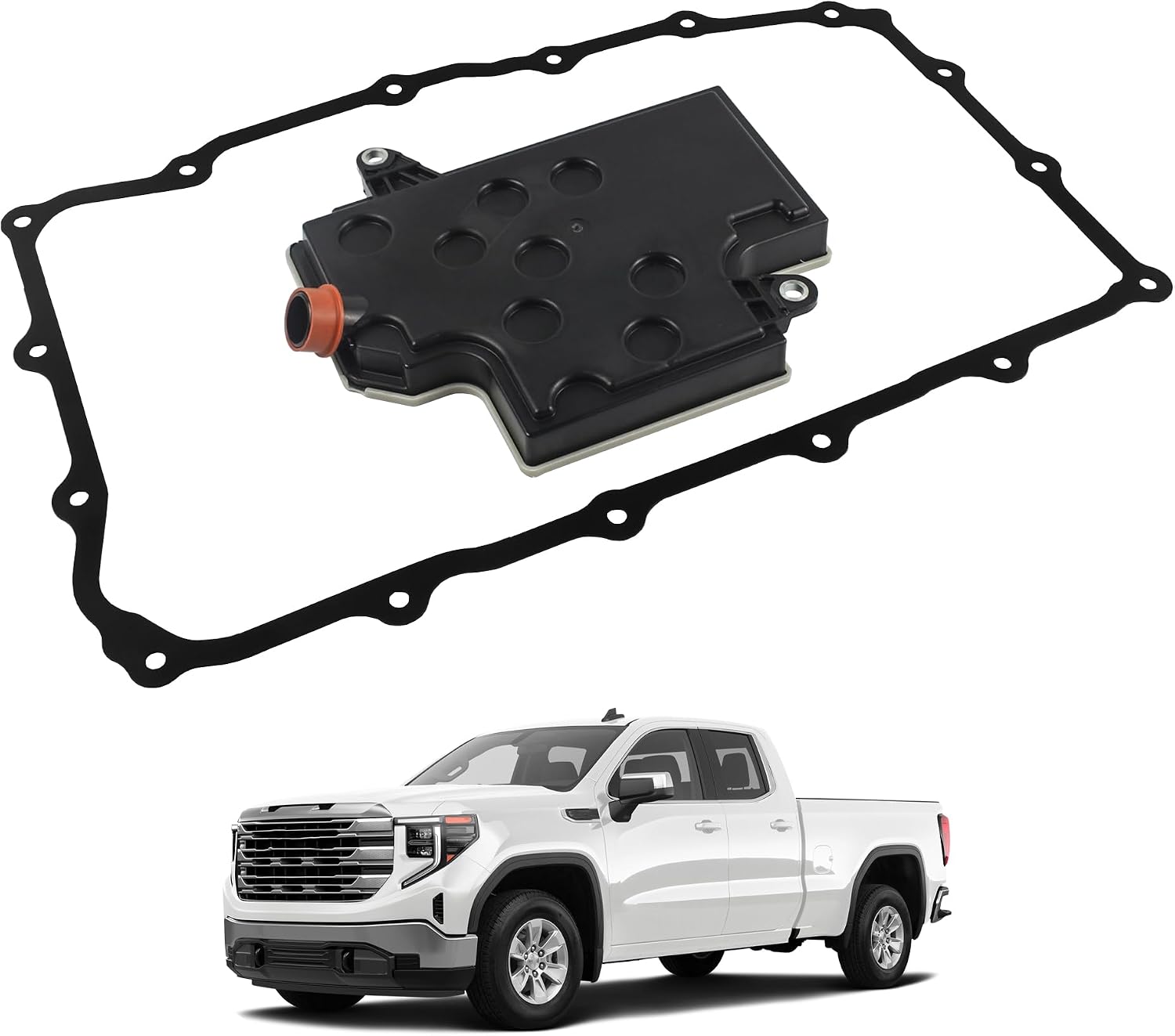
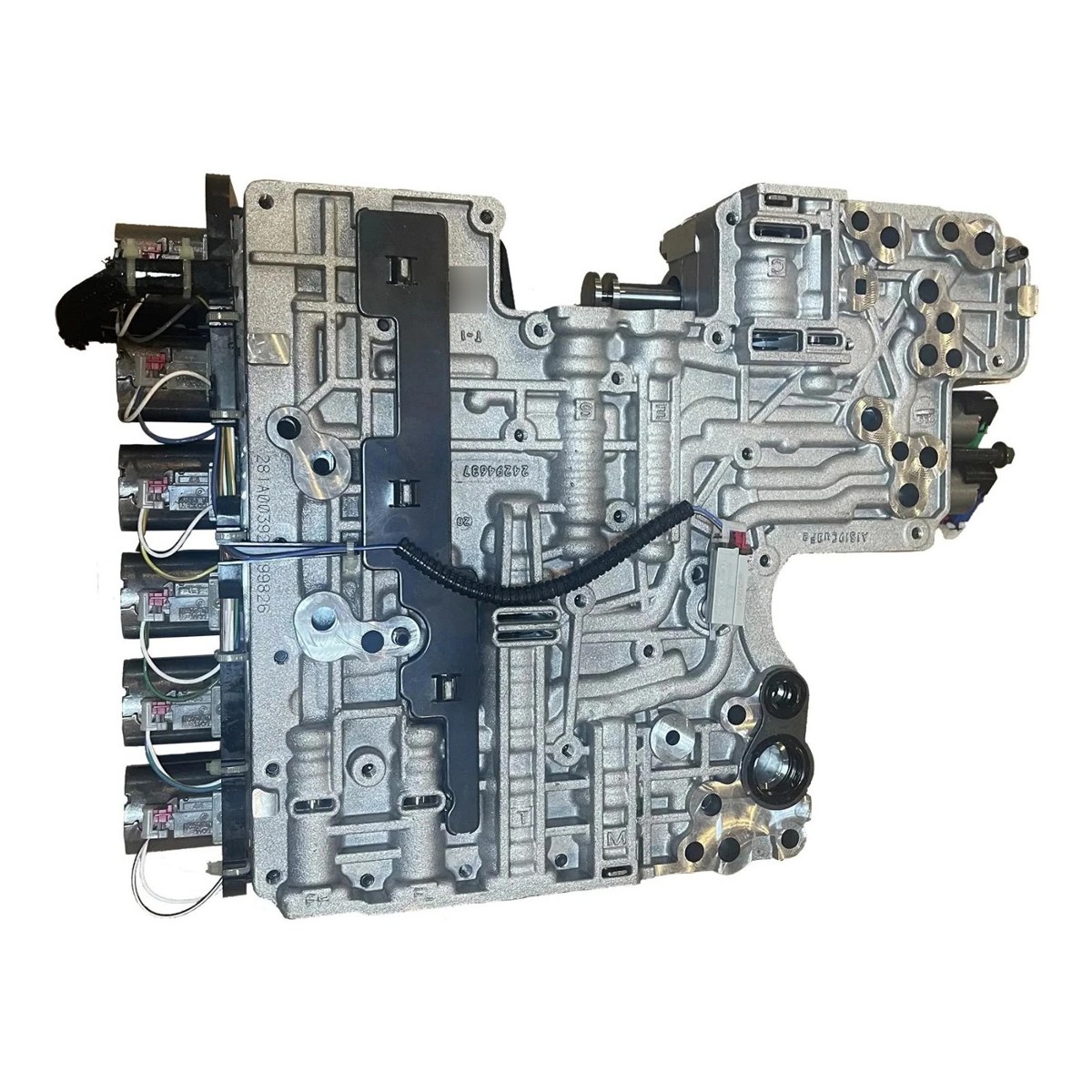
For the GM 10L90, our sister store gearboxinsider.com stocks the filter and pan gasket kit, valve body, and rebuild components to close out this diagnosis with secure, on-site checkout.
Need parts for this job?
Filters, pan gaskets, valve bodies, and the correct fluid for this unit — shipped fast from the USA on secure checkout.
Shop 10L90 parts →Shop the 10L90 Transmission Filter → Or browse all 10L90 parts →
Related 10L90 guides
Sources
- GM TechLink — "Diagnostic Tips for 10L60/80/90 Transmission Noise," bulletin #24-NA-264 (November 2024). Backs the shared sound-to-component guide for 2020-2025 CT4/CT5/Escalade/Camaro/Silverado 1500/Tahoe/Suburban/Sierra 1500/Yukon, the three-gear helical pump drive design, the oil pump gear mesh whine RPM sweep test, normal reaction gearset whine in 4th-5th gear at 20-35 MPH, the auxiliary pump prime and RTP blow-off chirp as normal noises, the garage shift clunk tied to C2 clutch application at high line pressure, and aeration/cavitation causes. static.nhtsa.gov – GM Bulletin 24-NA-264 (PDF)
- General Motors — "Diagnostic Tip for 10 Speed Oil Pump Drive Gear," bulletin #22-NA-232 (January 2023). Backs the idle whine/growl/grind condition tied to oil pump drive gear wear on 2020-2022 CT5 (transmission code MHX, used on the 10L90), the roughly 15,000-mile onset mileage, and the teardown procedure to inspect the driven and idler gears for tooth damage and side-to-side movement. static.nhtsa.gov – GM Bulletin 22-NA-232 (PDF)
- Transmission Digest — "GM 10L80: A new kind of pump noise," Wayne Colonna (Aug. 8, 2022). Backs the documented case of the idler gear spinning loose on its front cover ball bearing on a 2021 GMC Yukon, the shared pump-drive mechanism behind the gear-wear whine covered in GM's bulletins above. transmissiondigest.com – GM 10L80: A new kind of pump noise
- Transmission Digest — "10L80 and 10R80 pump gear differences," Wayne Colonna (Feb. 19, 2024). Backs the helical-gear construction of GM's 10L80/90 pump drive versus Ford's straight-cut 10R80 equivalent, and the warning against substituting a Ford front cover assembly when chasing this whine. transmissiondigest.com – 10L80 and 10R80 pump gear differences
- Sonnax (via GEARS Magazine) — "New Sonnax 10L/10R LPC Signal Damper Piston Kits" (Jan. 10, 2024). Backs the existence of Gen 1 and Gen 2 line-pressure-control damper kits specific to the GM 10L80/90 platform, confirming GM groups these two transmissions under one pump/valve-body parts architecture. gearsmagazine.com – New Sonnax 10L/10R LPC Signal Damper Piston Kits
- General Motors — TechLink "2026 Transmission Capacities & Fluids" (U.S. and Canada). Backs the DEXRON ULV fluid specification and 8.1-quart (7.7-liter) service fill capacity for the 10L90 (transmission codes MHX and MHO), used here to rule out fluid-related aeration/cavitation noise before condemning hard parts. gm-techlink.com – 2026 Transmission Capacities & Fluids (PDF)