
A P0741 on a 200-4R stops most people cold, because this transmission is older than the OBD-II system that code belongs to. The 200-4R was built from 1981 through 1990, when GM vehicles used the ALDL connector and a completely different trouble-code scheme, not the standardized P0xxx codes the EPA mandated starting in 1996. So if a laptop or scan tool just handed you a genuine P0741 ("Torque Converter Clutch Circuit Performance or Stuck Off") on a car running a 200-4R, the code is not coming from any factory computer this transmission ever shipped with. It is coming from whatever is actually controlling the transmission now, and figuring out what that is comes before any wrench touches the pan.
Where This Code Actually Comes From on a 200-4R
Two situations put a real P0741 on a 200-4R-equipped vehicle. The first is a transmission swap into a later chassis that kept its original OBD-II PCM, where the factory computer is managing lockup through its own generic DTC set and simply doesn't know the transmission under it is a 200-4R. The second, and the one we see most from builders on muscle cars and trucks, is a standalone controller: a Holley Terminator X Max, a FiTech system, a Compushift, or a similar aftermarket EFI/transmission combo installed specifically to run a 200-4R or 700R4 with electronic control it never had from the factory. These controllers manage TCC apply themselves and report faults through the same generic code set every modern vehicle uses, which is exactly where P0741 comes from.
That distinction matters for diagnosis, not just trivia. On a factory-ECM car, the stock harness, pressure switch and TCC solenoid are a known, fixed circuit. On a swap, the wiring, the pressure switch input, the solenoid driver, and the logic deciding when to command lockup were all built or configured by whoever did the install - and any one of those is a legitimate place for the code to originate that has nothing to do with the transmission's internal condition.
What the Code Technically Means
P0741 is a generic, manufacturer-independent code: the controller commands the torque converter clutch to apply, then checks whether the engine and transmission input shaft speeds actually converge the way they should. If the measured slip stays above the calibration's threshold for too long, the code sets. The exact numbers vary by application - one OEM service manual for a similar-era GM-derived powertrain defines the stuck-off fault as two consecutive drive cycles showing no lockup after the engine has warmed up, while generic references for this code describe a sustained speed difference in the 100-200 rpm range as the trigger on other platforms. Treat those figures as illustrations of the logic rather than a 200-4R factory spec, since this transmission never had one.
What doesn't vary is the circuit this logic is watching. The 200-4R uses a single on/off TCC solenoid, not the PWM-duty-cycled solenoid pair found on later units like the 4L60-E. In an on/off circuit the converter clutch is fully applied or fully released with no commanded slip in between, so there's nothing to graph the way you can graph slip on a PWM system - the controller either sees the RPMs converge within its window, or it doesn't, and P0741 is what happens when it doesn't.
Step One: Confirm What the Controller Is Actually Commanding
Before touching the transmission, verify the commanded side of the circuit. Pull up live data on the scan tool or the controller's own laptop software and watch the TCC command parameter against engine and vehicle speed - confirm the controller is actually trying to apply lockup at the point in the drive cycle where you'd expect it to, and isn't simply configured with a lockup speed or gear condition that never gets met in your test conditions. A code that looks like a hardware failure is sometimes a controller calibration that's commanding lockup under conditions the vehicle never reaches.
If the command is there and lockup still doesn't happen, move to the wiring the way a shop tech would on a factory-wired car: back-probe the connector at the controller or PCM for the TCC solenoid control circuit, confirm the signal is actually switching, then follow it to the solenoid itself and confirm it's receiving both the switched signal and a solid ground. Transmission Digest's own case walkthrough of a TCC-related code on a General Motors transmission used exactly this approach - checking the PCM connector pins for the on/off solenoid control circuit with a meter before ever touching the valve body - and that sequence holds just as well on a swapped 200-4R, since an open or shorted wire between the controller and the solenoid produces the identical stuck-off symptom as a bad solenoid, for a lot less labor.
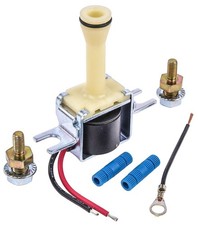
700R4 / 2004R Torque Converter Lockup Control Kit
If the 200-4R in your swap never had a complete, dedicated lockup circuit installed - no brake-cutout switch, no clean 12V feed, no proper ground - this kit builds the whole control circuit the factory would have used instead of chasing a wiring problem one splice at a time.
View the lockup control kit →Step Two: Rule Out Fluid Level Before Anything Mechanical
Low fluid level is a cheap, easy-to-miss cause of a stuck-off code on this transmission. The 200-4R's TCC apply valve needs real line pressure behind it to stroke over and route oil to the converter clutch piston; if the pump is cavitating because the fluid level is low, that pressure drops and the valve can fail to fully stroke even though the solenoid, the wiring and the controller are all doing their jobs correctly. Check the level and condition with the vehicle at operating temperature and on level ground per the dipstick procedure, top off with a Dexron III/Mercon-compatible automatic transmission fluid if it's low, and road test again before assuming a parts failure.
Fluid type matters here too, not just level. Valvoline's own product data sheet for its Dex/Merc-spec ATF documents that fluid's friction modifiers and base oils as built specifically to support clean, consistent clutch application and prevent clutch wear - the right fluid, at the right level, is part of what lets the apply valve and solenoid do their job the way the circuit was designed to work.
Step Three: Test the TCC Solenoid Itself
With fluid and wiring cleared, test the solenoid. An open coil reads infinite resistance and a shorted coil reads at or near zero ohms; either one is a legitimate, standalone cause of P0741, since a solenoid that can't be energized or can't hold a signal can't apply the converter clutch no matter what the controller commands. What a resistance test won't catch is a solenoid that reads fine electrically but is mechanically gummed up with varnish from old fluid and physically won't move on command - that failure needs the pan dropped and the solenoid pulled for a hands-on check, not just a meter across the terminals.
Step Four: Check the TCC Apply Valve in the Pump
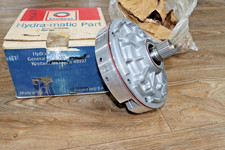
If the controller is commanding lockup correctly, the wiring checks out, and the solenoid tests good, the remaining suspect is the TCC apply valve inside the pump - and on this specific transmission, that's a documented failure, not a guess. Sonnax's own reference listing for the 200-4R includes "no lockup" directly in its published symptom set for this valve, alongside falling out of lockup once hot and lockup applying too early, all tied to the same worn bore. As the aluminum bore wears, converter signal oil and converter feed oil cross-leak past the valve; past a certain point that cross-leak can keep the valve from stroking far enough to fully open the apply circuit, which reads on a scan tool exactly like a stuck-off TCC - the clutch commanded on, and never actually applying.
Sonnax sells a direct fix for this exact wear point: part number 77805-K, a hardened-steel replacement valve with a PTFE seal that restores the sealed fit in a worn bore, for non-PWM 200-4R, 4L60 and 4L60-E pumps. It's a bench job with the pump off and apart, which is exactly why it belongs at the end of this list - there's no reason to split the case over a valve if the real problem was a loose wire or a quart of fluid.
| What you see | Likely cause | Where to check |
|---|---|---|
| P0741 only under specific conditions, controller command never triggers | Lockup calibration/enable logic in the standalone controller | Controller setup, not the transmission |
| Command is present, no voltage or ground reaches the solenoid | Open or shorted wiring between controller and solenoid | Harness, connectors, grounds |
| Wiring is good, fluid is low or discolored | Low line pressure from pump cavitation, can't stroke apply valve | Fluid level and condition, dipstick check at temp |
| Fluid and wiring both good, solenoid reads open or shorted | Dead TCC solenoid coil | Solenoid resistance test at the connector |
| Everything above checks out, still no lockup | Worn TCC apply valve bore, cross-leak prevents full stroke | Pump assembly, Sonnax 77805-K territory |
The Order I Work It
- Confirm the controller is actually commanding lockup at the speed/gear/throttle condition you're testing, not a calibration that never triggers in real driving.
- Back-probe the wiring from the controller to the solenoid for a clean switched signal and a solid ground before suspecting any part.
- Check fluid level and condition at operating temperature. Top off or service if low or discolored, then road test again.
- Pull the solenoid and test resistance for an open or shorted coil. Replace if out of range.
- Only after the first four are confirmed good should the pump come off to inspect the TCC apply valve bore for wear.
Worked in that order, a P0741 on a swapped-in 200-4R is usually a controller setting or a wiring problem, occasionally a fluid level issue, and only sometimes an actual internal failure. The expensive mistake is pulling the pump first because the code sounds like a transmission problem, when on this particular unit the odds favor something outside the case entirely.
Shop 200-4R TCC solenoids, valve bodies, pumps, lockup control kits and rebuild kits — shipped fast from the USA.
Shop 200-4R parts →FAQ
Why would a 200-4R throw a P0741 code if it's an old, non-computer transmission?
It can't throw P0741 from its original factory system. The 200-4R was built from 1981-1990, before OBD-II and its standard P-code set existed in 1996, so a stock ALDL-equipped car never generates a genuine P0741. In practice this code shows up on 200-4R applications today because the transmission has been swapped behind a later OBD-II vehicle's PCM, or because it is running a standalone EFI and transmission controller such as a Holley Terminator X Max, FiTech, or Compushift unit. Those controllers manage TCC lockup themselves and report faults using the standard generic DTC set, which is where P0741 actually comes from on this transmission.
What's the difference between 200-4R torque converter shudder and a P0741 stuck-off code?
Shudder is a feel complaint from a converter clutch that applies unevenly; the transmission still locks up, just roughly. P0741 (TCC stuck off) means the controller commanded lockup and it never happened at all, or slip stayed abnormally high the whole time, so the clutch effectively never engaged. They can share a root cause, like a worn apply valve bore, but a shuddering 200-4R is not usually throwing P0741, and a 200-4R throwing P0741 is not usually shuddering - it is just not locking up.
Can low transmission fluid cause a false P0741 code?
Yes, and it is the cheapest thing to rule out first. The 200-4R's TCC apply valve needs enough line pressure behind it to stroke and route oil to the converter clutch piston. Low fluid level causes pump cavitation and a drop in line pressure, which can leave the apply valve unable to fully stroke even when the solenoid and wiring are both working correctly, so the controller sees no lockup and sets the code on a transmission that has no internal failure at all.
Will a resistance test on the 200-4R TCC solenoid confirm a P0741 failure?
It will catch the two most common electrical failures. An open circuit reads infinite resistance and a shorted coil reads at or near zero ohms; either one means the solenoid cannot do its job and is a legitimate P0741 cause on its own. What a resistance test will not catch is a solenoid that measures fine at rest but is mechanically restricted or gummed up with varnish so it will not exhaust oil on command, which is a separate failure mode from a bad coil and needs the valve body apart to confirm.
Does fixing a 200-4R P0741 code always mean rebuilding the valve body?
No. Work the cheap and likely causes first: confirm the controller is actually commanding lockup and the wiring is getting power and ground to the solenoid, check fluid level and condition, and test the solenoid itself. Sonnax's own documented failure for this circuit, a worn TCC apply valve bore in the pump, is a real cause of no lockup at all, but it is a pump-apart repair that should be the last stop, not the first, on a code that is just as often wiring or a controller configuration issue on a swapped application.
Related guides
- 200-4R Torque Converter Lockup Shudder Fix
- 200-4R Common Problems and Fixes
- 200-4R Delayed Engagement: Causes and Fix
- 200-4R No Reverse: Diagnosis and Fix
- 200-4R Valve Body Symptoms and Testing
Sources
- Sonnax — GM 200-4R Transmission unit reference page. Backs the published 200-4R TCC symptom list used in this article, including "no lockup" as a documented symptom of the pump's TCC apply valve bore wearing out of tolerance. sonnax.com
- Sonnax — TCC Apply Valve Kit 77805-K product page. Backs the apply-valve failure mechanism (bore wear letting TCC signal oil and converter feed oil cross-leak), the resulting no-lockup symptom, and the non-PWM 200-4R/4L60/4L60-E application scope for the 77805-K repair. sonnax.com
- Sonnax — "GM TCC Circuits" tech resource. Backs the distinction between the 200-4R/700-R4/4L60's single on/off TCC solenoid design and the later enable-plus-PWM designs used on units like the 4L60-E, which is why this transmission has no commanded slip to graph on a scan tool. sonnax.com
- Transmission Digest — "Verify What the Scan Tool Is Telling You," R&R Tech, Oct. 1, 2017. Backs the wiring-first diagnostic method used in Step One: back-probing the PCM/controller connector for the on/off TCC solenoid control circuit and confirming the signal actually switches before condemning the solenoid or valve body. transmissiondigest.com
- Valvoline — Dex/Merc Automatic Transmission Fluid Product Data Sheet. Backs the role of correct fluid type and condition in supporting clean TCC clutch application, and the GM Dexron III/Ford Mercon qualification relevant to the 200-4R's fluid specification. cdn.shopify.com (Valvoline)
- Saab WIS (factory service information) — DTC P0741/P0742 fault diagnosis reference. Used only to illustrate how a GM-era PCM structures the generic stuck-off/stuck-on code pair (two consecutive drive cycles, no lockup after warm-up) as general SAE-standard code logic; cited as background on how the generic code works, not as a 200-4R-specific spec, since this transmission predates OBD-II. saabwisonline.com