The Ram 3500 is where a 47RE gets pushed hardest. These are the dually and single-rear-wheel one-tons that pull fifth-wheels, goosenecks and flatbeds for a living, and on 1996-2002 trucks the only automatic behind the 5.9L Cummins was the 47RE. Automatic trucks got the standard-output engine ratings; the high-output 24-valve package of 2001-2002 was tied to the manual gearbox. So the transmission was never asked to handle the hottest engine, but it is asked to handle the heaviest loads, and on a 3500 that load almost always shows up as heat before it shows up as a slip.
This guide is written for the 3500 specifically. If you want the general walk-through, see our 47RE slipping causes and fix guide, and for the lighter-duty truck see the 47RE Ram 2500 Cummins slipping article. Here the order of work is built around a truck that tows heavy: find out when it slips (cold, hot, loaded, empty), find out which element is letting go, prove the hydraulics with a gauge, and only then decide whether it needs a band adjustment, a valve body or a full rebuild.
Hot-and-Loaded Slip vs Slip All the Time
Ask the owner one question before anything else: does it slip when it is cold and empty, or only after twenty minutes on a grade with the trailer on? The answer splits the job in half.
- Slips all the time, cold or hot, loaded or not: something is already damaged or badly out of adjustment. Burnt frictions, a loose band, a broken overdrive direct spring, a cracked piston or a TV cable that is far out of adjustment. A road test will usually point straight at it.
- Only slips hot and loaded: the unit is marginal and heat is finishing the job. Thin fluid leaks past worn valve bores and seal rings, line pressure sags at the clutch, and the overdrive clutch or converter clutch is the first to give, because that is where the 47RE has the least clamping margin. These trucks can often be saved before the packs are cooked, if you catch the pressure loss.
On a 3500 the second case is the common one. The truck drives fine around town, then flares on the 3-4 shift or starts creeping rpm in fourth halfway up a long pull. That is a pressure and heat problem first, and a clutch problem second.
Map the Slip to the Element
The 47RE is a three-speed TorqueFlite with a bolt-on overdrive section, so every range has a short list of parts holding it. Road test with a scan tool showing engine rpm and output speed, and write down exactly where the rpm flare happens.
- First in Drive, fine in manual 1: overrunning (low sprag) clutch. Manual 1 adds the rear band, so a hold in manual 1 clears the band and points at the sprag.
- Flare on the 1-2 or slip in second under load: front (kickdown) band, its adjustment, its strut and anchor, or the front servo.
- Slip in third and in Reverse: front (direct) clutch, its piston and seals, or a cross-leak feeding it.
- Slip in Reverse, plus no engine braking in manual 2 or 1: overdrive direct clutch and its apply spring.
- Flare on the 3-4 or slip only in fourth: overdrive clutch.
- Rpm creeps at cruise with lockup on, drops when you tap the brake: torque converter clutch, not a transmission pack.
The overdrive direct clutch deserves a special mention on a 3500. It is applied by a large spring, not by oil, and it is held in every range except fourth. TransGo's technical page for its replacement spring lists the symptom set exactly: slip or no Reverse, reduced or no coast braking in manual second or first, and burnt overdrive direct clutch plates, and notes the spring loses clamping force when it gets hot. [1] A one-ton that has spent its life towing has had that spring hot more than most. The replacement spring goes in without removing the transmission, so it is a cheap thing to rule in or out before quoting a rebuild.
Fluid, Level and Bands: the Ten-Minute Checks
Check the level hot, in Neutral, on level ground. The 47RE takes Mopar ATF+4 (Chrysler MS-9602). A normal pan drop and filter service takes about 3.8 L (4 qt); a dry unit with converter and cooler takes far more, and a 3500 with an added auxiliary cooler takes more again, so set the final level on the dipstick, not by counting jugs. Pull a little fluid on a white rag. Dark fluid with a burnt smell and friction material in the pan means a pack is already damaged and no adjustment will fix it.
Then adjust both bands, because on a lot of these trucks nobody has touched them in a decade. Factory procedure is tighten the front band adjuster to 72 in-lb and back off 1-7/8 turns, and tighten the rear band adjuster to 72 in-lb and back off 3 turns. A loose front band gives exactly the soft or flared 1-2 and slipping 3-2 kickdown that towing customers complain about. If the adjuster runs out of threads or the band will not hold after adjustment, the lining is gone and the unit needs to come out.
Prove Line Pressure, and Know What the 47RE Does Not Have
The 47RE has no electronic line pressure control. GEARS points this out in its case study of a 1999 Ram 2500 Cummins: the 47RE uses a governor pressure solenoid, not a line pressure control solenoid. [2] Line pressure comes from the pump and pressure regulator and is raised with throttle by the TV (throttle valve) cable. So before any pressure test, make sure the TV cable moves freely and is adjusted per the service manual. A cable that tells the valve body the throttle is closed while the driver is in it keeps line pressure low under exactly the load where a 3500 needs it most.
Then put a gauge on the line pressure tap and compare to the factory chart for your year. Here is why the 3500 runs out of margin in fourth. Sonnax's comparison of the RE valve bodies shows that on the 46/47RE the regulator raises line pressure only about 10-15 psi in third with the converter clutch applied and in fourth, against about 22-28 psi on the 48RE that replaced it in 2003. Sonnax also notes that a 46/47RE valve body put in a 48RE can come back later with a failed converter clutch or overdrive clutch. [3] The 47RE's overdrive and lockup clamping was always thin for diesel torque. Add heat and a little wear and those two are where it shows.
Valve body wear that feels like a clutch slip
A worn valve body bore leaks pressure that never reaches the clutch, and a hot, thin fluid makes the leak worse. Sonnax ties specific wear points to specific complaints in its 46RE/47RE vacuum test guide: a worn line pressure plug and sleeve shows up as Reverse slip, poor line pressure control, weak forward and Reverse engagement and low cooler charge at idle; a worn lockup boost valve bore shows up as TCC slip under load, no line pressure rise during TCC apply in fourth, an overheated converter and TCC cycling. [4] That second list reads like a description of a tired 3500 on a long grade. Vacuum testing those bores on the bench tells you whether a valve body repair, not a rebuild, is the actual fix.
Rule Out Governor Pressure
A governor problem rarely burns a clutch by itself, but owners often call a missed or late shift "slipping," and a governor fault can send the unit into third-gear starts that do burn things up if the truck keeps working. Dave Skora's GEARS article on troubleshooting the 42-47RE lays out the check. Governor pressure should read zero at a stop and rise about 1 psi per mph up to about 40 mph; above that, mainline is routed to the governor port. With a scan tool and a gauge on the governor tap, compare three values on a drive: Governor Desired Pressure (the PCM command), Governor Measured Pressure (the transducer signal) and the gauge reading. All three should agree. [5]
Skora also points out that there should be no governor pressure at all in Park, Reverse or Neutral, because the manual valve closes the feed in those ranges. Pressure there means a cross-leak in the case, valve body or governor body, and a loose or warped governor body is a common one. His bottom line is the useful part for a slip complaint: if governor pressure is okay, look for a transmission problem such as sticking shift valves or burnt clutches. [5] A good governor reading moves the diagnosis firmly back onto pressure and the packs.
Heat, Cooler Flow and Converter Clutch Slip
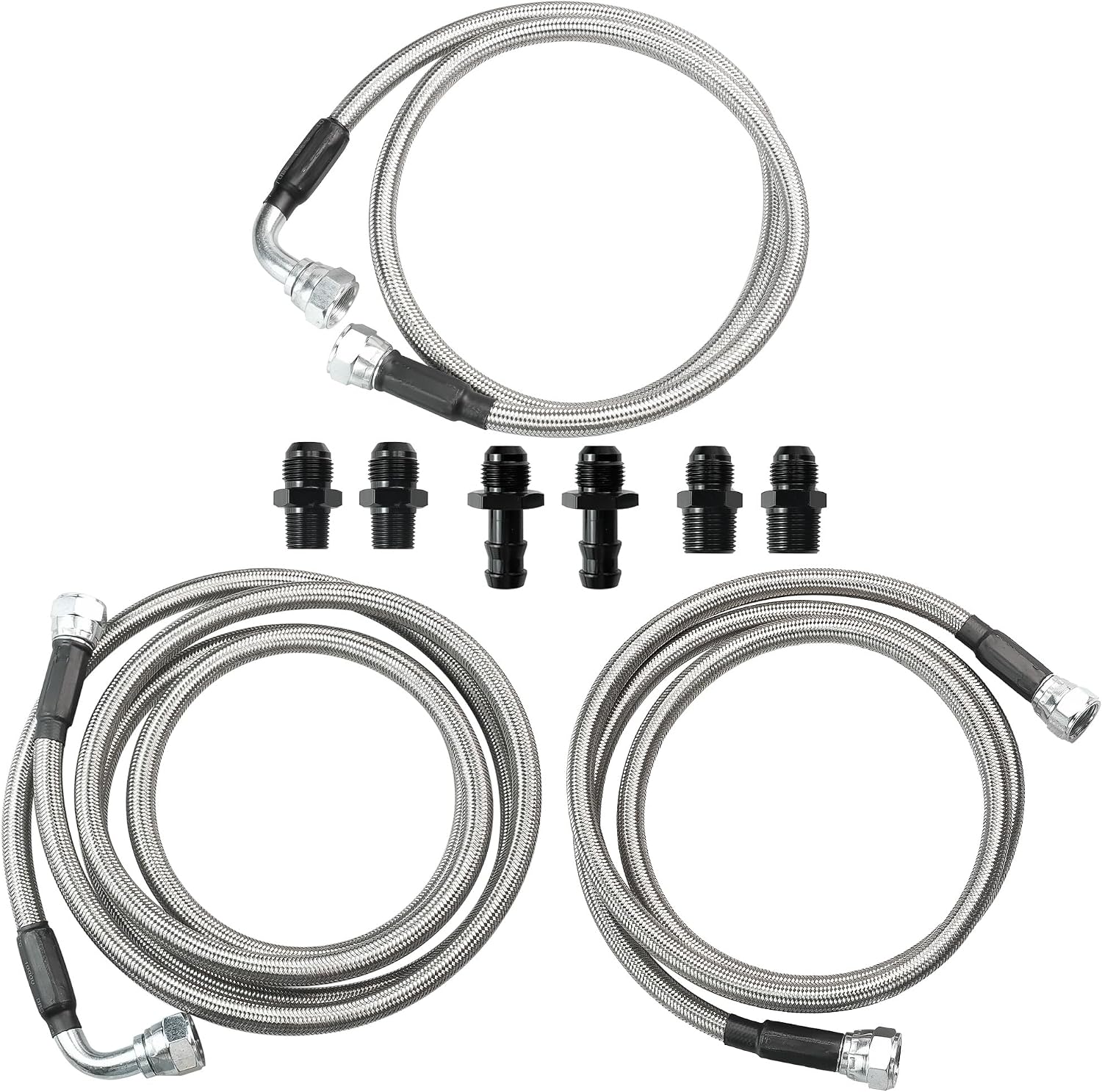
On a 3500, start the converter clutch check with the cooler. Sonnax's write-up on 46/47RH-RE cooler and converter flow lists TCC slip at high torque, delayed engagements, slow converter fill, excessive stall speed and 740/1740 codes as symptoms of restricted flow, and names cooler restriction as the most common issue. Restriction starts to cause trouble as head pressure approaches about 80 psi. The test is simple: temporarily bypass the cooler circuit and retest. If the complaint goes away, the problem is in the cooler, the lines or an aftermarket cooler stacked in series. [6] One-ton trucks often have the factory radiator-tank cooler, an auxiliary cooler and years of debris from a previous failure in between. Flush or replace the cooler after any rebuild, or the new unit eats itself on the old debris.
Flow matters for more than the converter. The cooler return feeds lube to the overdrive section on the back of the case, and a 3500 that lived with a plugged cooler usually has a glazed overdrive pack and a blue overdrive planet by the time it slips in fourth.
A cross-leak at the front of the unit can rob the same oil. In the GEARS 47RE case the cause of a lockup-related stall turned out to be a warped stator support on the pump; air applied to the front clutch circuit came out of both converter passages. The author checked the pump halves for flatness with a flat file and confirmed with compression film. [2] If a front clutch or lockup slip keeps coming back after parts, air-check the circuits and put the pump on a flat surface before you blame a converter.
The Fix, by What You Found
- Low level, wrong fluid, loose bands, packs still healthy: refill with ATF+4, adjust both bands, set the TV cable, and road test loaded. Many hot-only slips on lightly worn units stop here.
- Reverse slip with no coast braking, unit otherwise healthy: overdrive direct spring, and inspect the overdrive direct plates while you are in there. [1]
- Low line pressure or lockup slip with good packs: fix the cooler restriction first, then vacuum test and repair or replace the valve body. A worn lockup boost valve or line pressure plug and sleeve is a valve body job, not a rebuild. [4] [6]
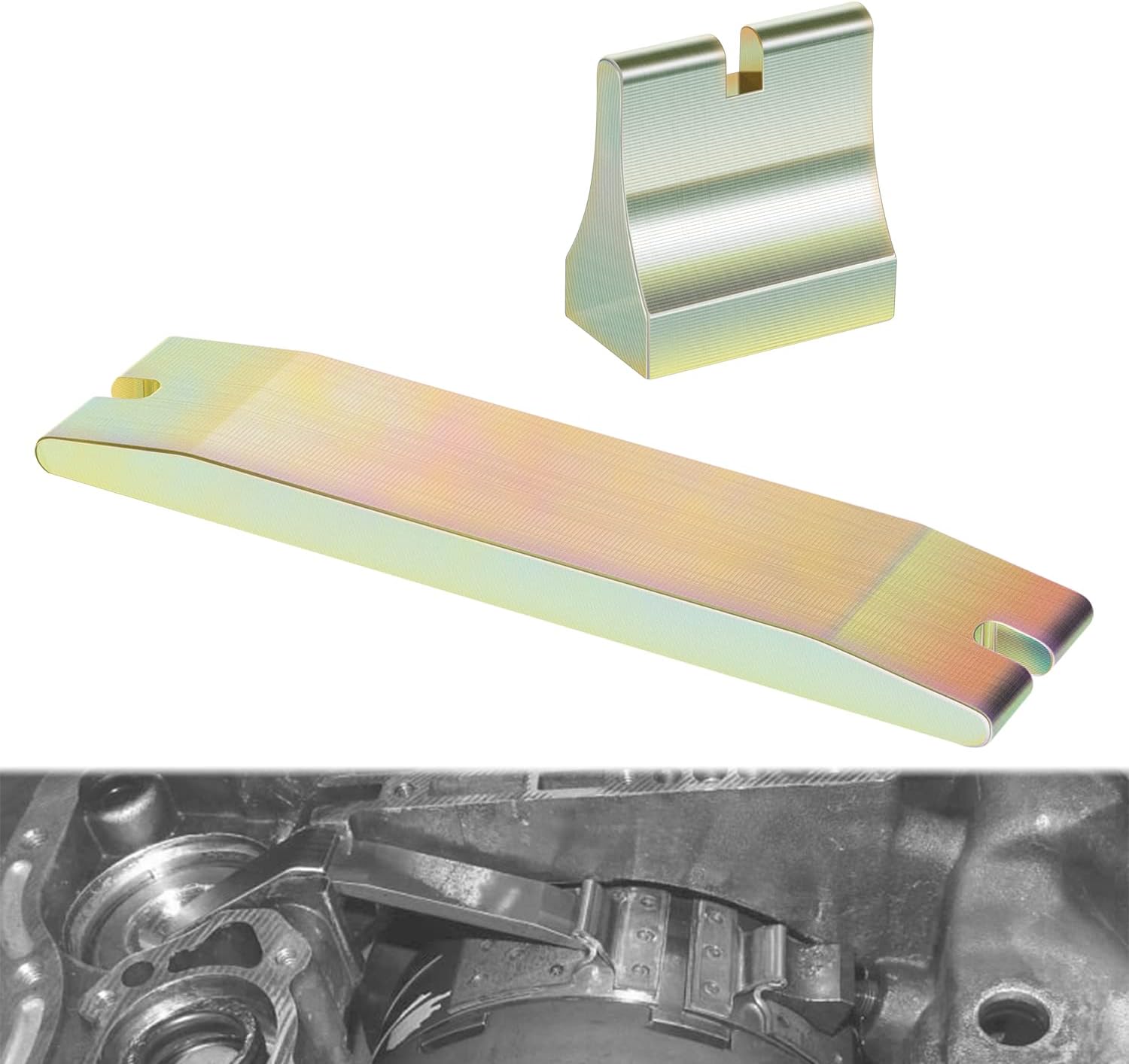
- Burnt fluid, flared shifts in more than one gear, friction material in the pan: rebuild. On a 3500, build it for the work: new frictions and steels with correct clearances, a heavy-duty band strut and anchor, a fresh front servo, a new overdrive direct spring, and a flushed or new cooler.
If the truck has been tuned or the owner is adding fuel, also plan on the input shaft. The OE two-piece input shaft is a known weak point behind added power: the splines twist and the shaft can break, and a twisting shaft can feel like an intermittent clutch slip before it turns into no movement at all. Our 47RE towing upgrades guide covers the parts that hold up behind more power.
Keeping a 3500's 47RE From Slipping Again
- Service it on a towing schedule: pan, filter and fluid with a band adjustment at each service. The bands wear faster on a heavy truck and a two-minute adjustment saves the lining.
- Watch temperature, not just the gauge cluster: a transmission temperature gauge or a scan tool reading on the pan or cooler outlet tells you when you are cooking it on a grade.
- Drop out of overdrive on long grades and when the converter is hunting: third gear with lockup off is better than fourth with the overdrive clutch and converter clutch slipping at full load.
- Keep the cooler circuit clean: check flow at every service. Restriction is the most common cause of converter clutch slip on these units. [6]
- Use ATF+4 only: keep the factory fluid in it, and keep a transmission fluid spec chart handy for the rest of the fleet.
47RE master rebuild kits, band struts and anchors, valve bodies, cooler line kits and solenoids for the 1996-2002 Ram 3500 Cummins — shipped fast from the USA.
Shop 47RE parts →Shop the part for this fix
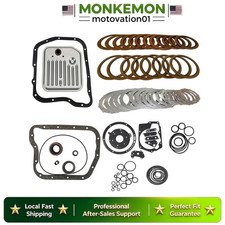
When the 3500 has burnt packs and the band will not hold, the 1990-2002 RE overhaul kit has the frictions, seals and gaskets to put a 47RE back together for towing.
Shop the 90-02 overhaul kit → All RE-series partsFAQ
Why does my 47RE only slip when towing up a long grade?
That is usually heat and pressure loss, not a broken part yet. Hot, thin fluid leaks past worn valve body bores and seal rings, and the 47RE only raises line pressure about 10-15 psi in fourth and with lockup on, so the overdrive clutch and converter clutch let go first. Check cooler flow, the TV cable and line pressure before the packs get cooked.
What should I check first on a slipping 47RE in a Ram 3500?
Check the fluid level hot in Neutral, look and smell for burnt ATF+4, then adjust both bands: front band 72 in-lb and back off 1-7/8 turns, rear band 72 in-lb and back off 3 turns. Make sure the TV cable moves freely and is adjusted. Those checks take minutes and fix more slips than people expect.
Why does my 47RE slip in Reverse and have no engine braking in manual 2?
Those two symptoms together point at the overdrive direct clutch and its apply spring. The spring loses clamping force when it gets hot, and the plates burn. The replacement spring can be installed without removing the transmission, so it is worth checking before you quote a rebuild.
Is a slipping torque converter clutch the same as a slipping transmission?
No. If engine rpm creeps up at cruise while the PCM is commanding lockup, and drops when you tap the brake, the converter clutch is slipping. Restricted cooler flow is the most common cause, so bypass the cooler and retest, and check the lockup boost valve bore in the valve body before replacing the converter.
Related 47RE guides
Sources
- TransGo — High-Temp Overdrive Direct Clutch Spring, technical product page. Backs the overdrive direct clutch being spring-applied, the spring fading with heat, the slip/no-Reverse and reduced coast braking in manual 2nd and 1st symptoms, burnt overdrive direct plates, and in-vehicle installation. transgo.com
- ATRA GEARS Magazine — "A Dead Stop: A Typical Dodge 47RE Problem with an Unexpected Solution." Backs the 47RE using a governor pressure solenoid rather than a line pressure control solenoid, and the warped pump stator support cross-leak found by air testing the front clutch circuit. gearsmagazine.com
- Sonnax Tech Resources — "Dodge 48RE Hydraulic Features Revealed." Backs the 46/47RE line pressure rise of about 10-15 psi in third with TCC on and in fourth versus about 22-28 psi on the 48RE, and the TCC/overdrive clutch failures seen when a 46/47RE valve body is used in a 48RE. sonnax.com
- Sonnax Tech Resources — Chrysler 46RE/46RH/47RE/47RH Vacuum Test Guide. Backs the line pressure plug and sleeve wear symptoms (Reverse slip, poor line pressure control, weak engagements, low cooler charge at idle) and the lockup boost valve wear symptoms (TCC slip under load, no line rise during TCC apply in fourth, overheated converter, TCC cycling). sonnax.com
- ATRA GEARS Magazine, October 2006 — "Troubleshooting the 42-47RE Transmissions," Dave Skora. Backs governor pressure at zero stopped and about 1 psi per mph to about 40 mph, the Governor Desired / Governor Measured / gauge comparison, no governor pressure in Park, Reverse or Neutral, and the advice to look for sticking shift valves or burnt clutches when governor pressure is okay. atracom.blob.core.windows.net (PDF)
- Sonnax Tech Resources — "46-47RH/RE Cooler and Converter Flow." Backs TCC slip at high torque, delayed engagement and 740/1740 codes as restricted-flow symptoms, cooler restriction as the most common issue, the roughly 80 psi head pressure threshold, and the cooler bypass test. sonnax.com
Band adjustment figures (front 72 in-lb, back off 1-7/8 turns; rear 72 in-lb, back off 3 turns) and the 3.8 L (4 qt) service refill are from Chrysler’s 1998 Ram Truck 1500-3500 Service Manual, Group 21 (46/47RE), archived at archive.org. See also our 47RE fluid guide.