A 48RE that drops into gear with a normal engagement thump, holds RPM steady when you step on the brake and hit the throttle, and still goes nowhere in Drive, Reverse, or either manual range is a different animal than one that's just slipping in third. When every range is dead, the fault almost never lives in a single clutch pack. It lives upstream, in the pump, the valve body, or a mechanical part that every gear shares, and chasing clutches first on this complaint wastes a teardown.
Why "No Movement in Every Gear" Rules Out a Single Clutch
The 48RE builds each range from a different combination of the forward (rear) clutch, the direct (front) clutch, the overrunning clutch, and the rear band. Lose one of those and you typically lose the range or ranges that depend on it — no overdrive, no reverse, a flare on the 1-2 shift. A complaint of zero movement in Drive, Reverse, and both manual ranges at once has to come from something every range shares: the pump that generates line and converter charge pressure, the torque converter's fluid coupling between the engine and the input shaft, or a mechanical part like the input shaft itself. Start the diagnosis there, not at the clutch packs.
The Stuck Switch Valve That Starves the Converter
ATSG's Transmission Digest technical editor documented a textbook case of this on an RE-series unit: a vehicle stopped moving suddenly soon after an overhaul. The fluid level checked in Neutral read over full, and pulling the return cooler line confirmed cooler flow was present, which pointed the tech toward a healthy pressure regulator valve, filter, and pump. With hydraulics seemingly fine, the transmission came out for a mechanical inspection — and the turbine shaft splines in the converter checked out good too.
The actual fault was a single piece of debris holding the switch valve open in the valve body. On this hydraulic layout, converter charge pressure from the pressure regulator valve is supposed to route to the torque converter; with the switch valve stuck, that same pressure was instead directed into the cooler circuit. The converter never received charge oil, so the fluid coupling between the engine and the input shaft never formed, and the transmission had nothing to transmit torque with in any range. The writeup is explicit that cooler flow being present does not confirm the converter itself got charged — a detail that cost the shop a full R&R with a second torque converter before the valve body got pulled and the debris found.
Pump Failure: The Usual Suspect That Looks Fine
Across the Dodge/Jeep RE-series family, techs are most familiar with this failure as an engine stall in reverse when the transmission is hot, and ATSG's own technical reporting says plainly that the usual cause is a defective pump, with a restricted cooler as the occasional alternative. If the stall or no-move condition shows up in both reverse and forward, the same source lists a defective pump, a restricted cooler, a bad torque converter, or a stuck TCC switch valve as the candidates — the same switch valve covered above.
What makes pump failure hard to catch on a visual inspection is that a bad pump frequently looks perfect. ATSG's technical editor describes using pressure-indicating film from Sensor Products, sandwiched between the pump halves during reassembly, to reveal mating surfaces that are out of flat even on pumps that look pristine to the naked eye. The film's microcapsules change color intensity under compression, exposing low-pressure contact areas that bleed internal pressure without ever showing visible wear. GEARS Magazine, ATRA's trade publication, backs this up from the parts side: Sonnax's 48RE pump gear set (#22530-D) exists specifically to repair and prevent pump gear failure, with both the inner and outer gears precision machined from 4340 billet steel in a 10/11 lobe, OE-sized design built to keep pressure and volume loss to a minimum — evidence that gear wear inside an otherwise normal-looking pump body is common enough to need a dedicated fix.
GEARS Magazine documented the same pattern on a 47RE that stalled the engine when put in gear. The cooler checked clear: with the lines looped, air at no more than 40 psi went into the rear cooler fitting with little resistance. The fault turned out to be a warped pump stator support. Air applied to the front clutch came out of both converter passages, because the warpage was right at the feed holes and cross-leaked oil between circuits (GEARS, "A Dead Stop!"). Lay a straightedge across the stator support face, not just the pump body.
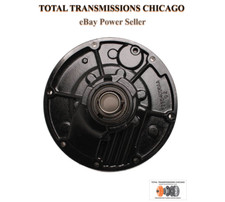
48RE Pump, 2003-2008
If a line-pressure check comes back low or absent with the engine running and in gear, and the switch valve and converter check out, the pump is the next and most likely suspect — especially since a worn pump can look completely normal on a visual inspection.
View the 48RE pump →The 48RE's Own TCC Circuit Is Wired Differently
When Dodge replaced the 46/47RE with the 48RE for its heavy-duty trucks starting in 2003, the change went well beyond a stronger pump stator and higher clutch-drum torque capacity. The valve body's converter-clutch hydraulics changed significantly: the channel plate and spacer plates were redesigned and the No. 2 checkball was eliminated so the TCC solenoid could be fed by forward-clutch pressure instead of second-gear oil off the 1-2 shift valve, the way every other RE transmission still works. That change lets the computer apply the converter clutch as early as first gear in the manual 1 and 2 positions for better pulling power at low RPM.
It also creates a failure mode unique to the 48RE: if the TCC solenoid becomes restricted, the converter clutch can fully apply the moment Drive is selected, stalling the engine or killing movement in a way that reads identically to a pump problem. ATSG's reporting notes shops have replaced a known-good pump chasing this symptom before realizing the solenoid, not the pump, was at fault — and that a bad pump and a bad TCC solenoid can coexist, with the pump causing a stall in reverse and the solenoid causing one in Drive on the same truck. If a pump swap only clears the complaint in one direction, check the TCC solenoid before going any further.
Mechanical Disconnect: Input Shaft and Converter Splines
On trucks that have been tuned or towing heavy loads well above stock torque, a no-move complaint can be purely mechanical rather than hydraulic. Sonnax documents "spline twist and shaft breakage" on the 47RH, 47RE, and 48RE input shaft under massive torque and 1,000-plus horsepower applications — the shaft that carries torque from the converter's turbine hub into the gearset. When it twists or shears, the engine runs fine, the converter spins normally, and line pressure can even test correctly, but no torque reaches the clutches in any range because the mechanical link between the converter and the input gearset is broken. Sonnax's fix is a 35-spline Smart-Tech Big Input Shaft Kit (22121B-08K), built as a direct OE-fit replacement rated 35% stronger than the 23- or 29-spline heavy-duty shafts it's meant to replace, with no shaft or converter machining required as long as the converter has a matching 35-spline turbine hub.
Diagnostic Order That Doesn't Waste a Teardown
- Check fluid level with the engine running at operating temperature. Significantly overfull on the dipstick, as in the switch-valve case above, suggests the pump is making pressure but it isn't reaching the converter; critically low suggests starvation or an external leak.
- Pull any stored codes and specifically note P0740/P1740, which both point at the TCC/pump circuit on this family.
- Hook up a mechanical gauge at the line-pressure test port with the engine running and the transmission in gear. Low or absent pressure points at the pump or a filter restriction before anything else.
- Pull the pan and valve body and check cooler flow, but don't stop there — cooler flow being present does not confirm the converter itself is charged, per the documented switch-valve failure above. Inspect the switch valve bore for debris or scoring. Keith Clark's GEARS article on the RE valve body adds that the line pressure plug and sleeve wear badly on high-mileage units, causing delayed engagement, slip in Reverse and poor converter and cooler charge, and that a switch valve past 100,000 miles is suspect for converter problems (GEARS, RE valve body). If the cooler flow is low, temporarily bypass the cooler: Sonnax calls cooler restriction the most common flow problem on this family and the bypass the most effective test (Sonnax).
- If pressure and flow test normal and it still won't move, pull the transmission and air-check it in Park: clamp the turbine shaft, apply shop air to the forward clutch feed passage, and confirm the shaft won't turn. Repeat on the direct clutch and rear band feed for reverse capability. If both hold, suspect the input shaft or converter splines next.
- On a modified or heavily loaded truck, move the input shaft and converter spline check earlier in the sequence — it's the more likely cause on a unit that's seen torque well above stock.
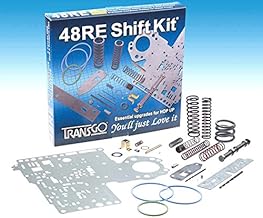
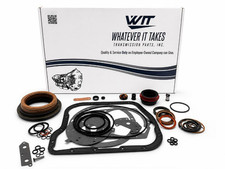
Shop 48RE pumps, valve bodies, and full rebuild kits — shipped fast from the USA.
Shop 48RE parts →FAQ
What causes a 48RE to not move in any gear?
The most common causes are a worn or failed pump (gears or a warped mating surface that leaks internally), a stuck switch valve in the valve body that diverts torque converter charge oil to the cooler circuit instead of the converter, or a mechanical disconnect such as a sheared input shaft or stripped converter turbine splines. All three stop torque transfer before it ever reaches the clutches, so the symptom shows up in every gear rather than just forward or just reverse.
Why does no movement in every gear point away from a bad clutch?
Each forward gear and reverse uses a different combination of clutches and the band, so a single worn clutch pack or servo normally only kills the range or ranges that depend on it. A fault that removes movement in Drive, Reverse, and the manual ranges all at once has to be upstream of the clutches themselves: the pump that makes line pressure, the converter charge circuit that couples the engine to the input shaft, or a mechanical part shared by every range like the input shaft.
Can a 48RE show full line pressure and still not move?
Yes. A documented ATSG case found cooler flow present and the pressure regulator valve, filter, and pump all working normally, yet the vehicle still would not move, because a stuck switch valve had rerouted converter charge oil to the cooler circuit instead of the torque converter. The technical writeup notes explicitly that having cooler flow on this valve body design does not confirm the converter itself received charge oil, so a clean pressure and flow check does not rule out this failure.
How do you tell a hydraulic no-move from a mechanical one without a full teardown?
With the valve body off and the unit in Park, clamp locking pliers on the turbine shaft and apply shop air to the forward clutch feed passage while trying to turn the shaft; if it will not turn, the forward clutch is mechanically capable of holding first gear. Repeat on the direct clutch and the rear band feed to confirm reverse capability. If both air checks hold, the fault is hydraulic, upstream in the pump or valve body, not a broken shaft or stripped splines.
Is a 48RE pump failure always obvious on inspection?
No, and this is the detail that causes the most wasted diagnostic time. ATSG's technical editor has documented pumps that looked flawless to the eye but had a mating surface out of flat enough to cause internal leakage, confirmed only by sandwiching pressure-indicating film between the pump halves during reassembly. A pump that looks pristine can still be the cause of a no-move or stall complaint.
Shop the 48RE pump assembly at CoreTransmissionParts →
Related 48RE guides
Sources
- Transmission Digest (ATSG, Wayne Colonna) — "Chrysler/Dodge/Jeep 4XRE Transmissions No Movement," Transmission TECH/TALK, published January 14, 2021. Backs the documented stuck switch-valve case: converter charge pressure diverted to the cooler circuit instead of the torque converter, the air-check method using locking pliers on the turbine shaft and shop air at the forward clutch and rear band feeds to confirm mechanical capability, and the note that cooler flow alone does not confirm converter charge. transmissiondigest.com
- Transmission Digest (ATSG, Wayne Colonna) — "A Significant Departure: the 48RE Transmission," Technically Speaking, published August 1, 2012. Backs pump failure as the usual cause of RE-series engine stall/no-move complaints, the Pressurex pressure-indicating film method for finding a warped pump mating surface that looks normal on inspection, and the 48RE-specific change feeding the TCC solenoid from forward-clutch pressure instead of second-gear oil, which creates a stall/no-move cause unique to this transmission. transmissiondigest.com
- Sonnax — "Smart-Tech Big Input Shaft Kit: The End of 48RE Input Shaft Failure," tech resource. Backs input shaft spline twist and shaft breakage as a documented mechanical failure on the 47RH, 47RE, and 48RE under high-torque applications, and the specifications of the 35-spline replacement kit (part 22121B-08K). sonnax.com
- GEARS Magazine (ATRA) — "Sonnax Chrysler 48RE Pump Gear Set," published June 10, 2026. Backs the existence and specification of the Sonnax #22530-D pump gear set built to repair and prevent 48RE pump gear failure, including the 4340 billet steel construction and 10/11 lobe OE-sized design. gearsmagazine.com
- ATRA GEARS Magazine — "A Dead Stop! A Typical Dodge 47RE Problem With an Unexpected Solution." Backs the stall-in-gear case traced to a warped pump stator support cross-leaking at the feed holes, air applied to the front clutch exiting both converter passages, and the looped-line cooler air check at no more than 40 psi. gearsmagazine.com
- Keith Clark, ATRA GEARS Magazine — "Bringing it Back to Life: A Logical Approach to the RE Valve Body." Backs line pressure plug and sleeve wear causing delayed engagement, Reverse slip and poor converter and cooler charge, and the switch valve being suspect past 100,000 miles. gearsmagazine.com
- Bob Warnke, Sonnax — "46-47RH/RE Cooler and Converter Flow." Backs cooler restriction as the most common flow problem in the RH/RE family and the temporary cooler bypass as the most effective verification test. sonnax.com